Quranic Answer
The Holy Quran, as a comprehensive guide for human life, consistently invites humanity to adopt a balanced and holistic lifestyle that addresses both physical and spiritual needs. Unlike some philosophical schools that separate body and soul or prioritize one over the other, Islam adopts a unified and integrated view of human beings. In the Quranic perspective, humans are composed of both body and soul, and both require proper nourishment and cultivation to achieve perfection and well-being. On one hand, the Quran places significant emphasis on healthy and lawful physical nourishment. Numerous verses refer to the permissibility and wholesomeness of sustenance, encouraging people to benefit from Allah's pure blessings. Allah explicitly states in the Quran: "O mankind, eat from whatever is on earth [that is] lawful and good and do not follow the footsteps of Satan. Indeed, he is to you a clear enemy" (Al-Baqarah: 168). This verse not only emphasizes the lawfulness (halal) of sustenance but also introduces the characteristic of 'tayyib,' meaning pure, wholesome, and pleasing, which includes being hygienic, beneficial, and desirable. This type of physical nourishment lays the foundation for physical health and strength, enabling individuals to perform their religious and social duties effectively. Furthermore, the Quran prohibits extravagance and excess in eating and drinking: "And eat and drink, but be not excessive. Indeed, He likes not those who commit excess" (Al-A'raf: 31). This principle of moderation is vital not only for physical health but also for self-control and avoiding heedlessness. The purpose of caring for the body is not merely hedonistic pleasure, but rather to preserve the instrument through which the soul operates in this world and achieves growth. A healthy body provides a suitable vessel for a healthy and vibrant soul. On the other hand, and indeed with greater emphasis, the Quran stresses spiritual nourishment, which holds a higher importance as it quenches the thirst of the human soul and heart, guiding it towards true perfection. Spiritual nourishment in the Quran is achieved through several primary channels: 1. Dhikr (Remembrance of Allah): One of the most fundamental forms of spiritual nourishment is the constant remembrance of God. The Quran states: "Those who have believed and whose hearts are assured by the remembrance of Allah. Unquestionably, by the remembrance of Allah hearts are assured" (Ar-Ra'd: 28). The remembrance of Allah brings peace to hearts and frees individuals from worldly anxieties and worries. Dhikr fosters a continuous awareness of God's presence in life and prevents heedlessness. 2. Salah (Prayer) and Worship: Prayer is the pillar of faith and the ascension of the believer. This direct connection with the Creator purifies the human soul and cleanses it from impurities. The Quran explicitly emphasizes the establishment of prayer, considering it a source of tranquility and guidance. Prayer is not merely physical movements; it is a profound conversation with the Lord that nourishes the soul and reminds one of the purpose of life. 3. Recitation and Contemplation of the Quran: The Quran itself is a vast source of spiritual nourishment. Allah says: "And We send down from the Quran that which is a healing and a mercy to those who believe" (Al-Isra: 82). Reciting its verses, pondering over their meanings, and acting upon its commands enlighten the heart, awaken the intellect, and fill the soul with divine light. The Quran is light, healing, and guidance for attaining spiritual insight. 4. Fasting (Sawm): Fasting is not merely physical abstinence; it is primarily a spiritual and disciplinary act of worship. The Quran states the purpose of fasting as "that you may become righteous (Taqwa)" (Al-Baqarah: 183). Fasting disciplines the self, strengthens willpower, awakens empathy for the needy, and brings individuals closer to self-knowledge and God-centeredness. 5. Infaq (Spending in Charity) and Helping the Needy: Generosity and benevolence, in addition to their social impacts, have a profound effect on the human soul and heart. Spending in charity liberates the human spirit from stinginess and material attachments, guiding it towards higher values. This act is a form of self-purification and a nourishing act of grace for the soul. 6. Good Morals and Righteous Deeds: Adherence to ethical virtues such as honesty, justice, patience, kindness, and avoidance of moral vices leads to self-purification and spiritual growth. The Quran repeatedly invites people to perform righteous deeds and adorn themselves with good character, as these lead to closeness to Allah and His pleasure. The connection between physical and spiritual nourishment in the Quran is very deep. The body is an instrument that the soul uses to perform righteous deeds and acts of worship. A healthy and strong body has a greater capacity for servitude and service. Conversely, a pure and tranquil soul guides the body towards what is lawful and wholesome and deters it from prohibitions. These two are complementary; one cannot completely abandon the body, nor can one achieve perfection without nourishing the soul. The Quran aims to cultivate a complete human being who is both physically strong and spiritually elevated, so that they can lead a thriving and productive life in this world and accumulate provisions for their afterlife. The Quran teaches us to always remember that worldly life is a bridge to the hereafter, and physical health must serve spiritual perfection. This comprehensive perspective makes life meaningful and purposeful, freeing individuals from superficiality and preoccupation solely with outward appearances.
Related Verses
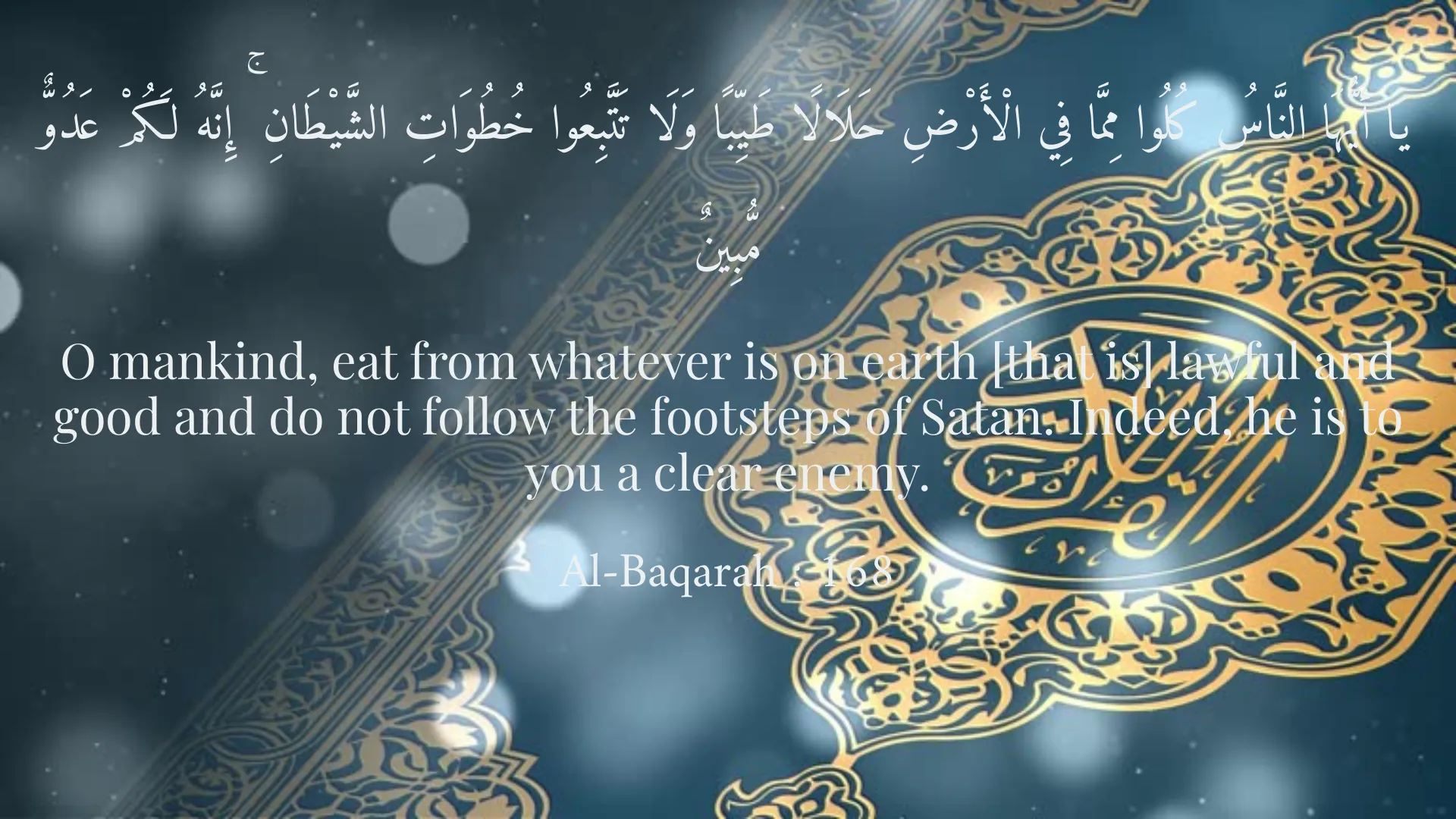
يَا أَيُّهَا النَّاسُ كُلُوا مِمَّا فِي الْأَرْضِ حَلَالًا طَيِّبًا وَلَا تَتَّبِعُوا خُطُوَاتِ الشَّيْطَانِ ۚ إِنَّهُ لَكُمْ عَدُوٌّ مُّبِينٌ
O mankind, eat from whatever is on earth [that is] lawful and good and do not follow the footsteps of Satan. Indeed, he is to you a clear enemy.
Al-Baqarah : 168
الَّذِينَ آمَنُوا وَتَطْمَئِنُّ قُلُوبُهُم بِذِكْرِ اللَّهِ ۗ أَلَا بِذِكْرِ اللَّهِ تَطْمَئِنُّ الْقُلُوبُ
Those who have believed and whose hearts are assured by the remembrance of Allah. Unquestionably, by the remembrance of Allah hearts are assured.
Ar-Ra'd : 28
يَا بَنِي آدَمَ خُذُوا زِينَتَكُمْ عِندَ كُلِّ مَسْجِدٍ وَكُلُوا وَاشْرَبُوا وَلَا تُسْرِفُوا ۚ إِنَّهُ لَا يُحِبُّ الْمُسْرِفِينَ
O Children of Adam, take your adornment at every masjid, and eat and drink, but be not excessive. Indeed, He likes not those who commit excess.
Al-A'raf : 31
وَنُنَزِّلُ مِنَ الْقُرْآنِ مَا هُوَ شِفَاءٌ وَرَحْمَةٌ لِّلْمُؤْمِنِينَ ۙ وَلَا يَزِيدُ الظَّالِمِينَ إِلَّا خَسَارًا
And We send down from the Quran that which is a healing and a mercy to those who believe, but it adds nothing to the wrongdoers except loss.
Al-Isra : 82
Short Story
It is narrated that a pious man lived in the city of Shiraz, whose body was thin and weak, but he possessed an illuminated heart and a lofty spirit. He lived each day on the simplest food available to him, spending most of his time in worship, remembrance of God, and contemplation of divine verses. In the same city, there lived a king who enjoyed every kind of luxury and delicious food, possessing a robust and strong body, yet his heart was constantly restless and his mind troubled. One day, the king was strolling in his garden, complaining about his inner turmoil. One of his courtiers said, “O King, in a certain alley of Shiraz, there is a dervish whose body is frail, but his spirit is vibrant and serene. Perhaps he has a remedy for your ailment.” The king went to the pious man and asked him, “With all these blessings and capabilities, why is my heart not at peace, and how are you, with your weak body, so joyful and serene?” The pious man smiled and replied, “O King, you feed your body daily and have forgotten your soul. But I give my body only what it needs, and I quench my soul with the remembrance of God, prayer, recitation of the Quran, and good deeds. The body is the mount of the soul, and if you endlessly fatten the mount while neglecting the rider, it will fail to reach its destination. Physical health is for the sake of spiritual health, so that the soul may soar towards perfection. My serenity comes from the nourishment of the soul, which never perishes.” The king took heed of this counsel and from then on, alongside nourishing his body, he also paid attention to nourishing his soul, and thus tasted true peace.