Quranic Answer
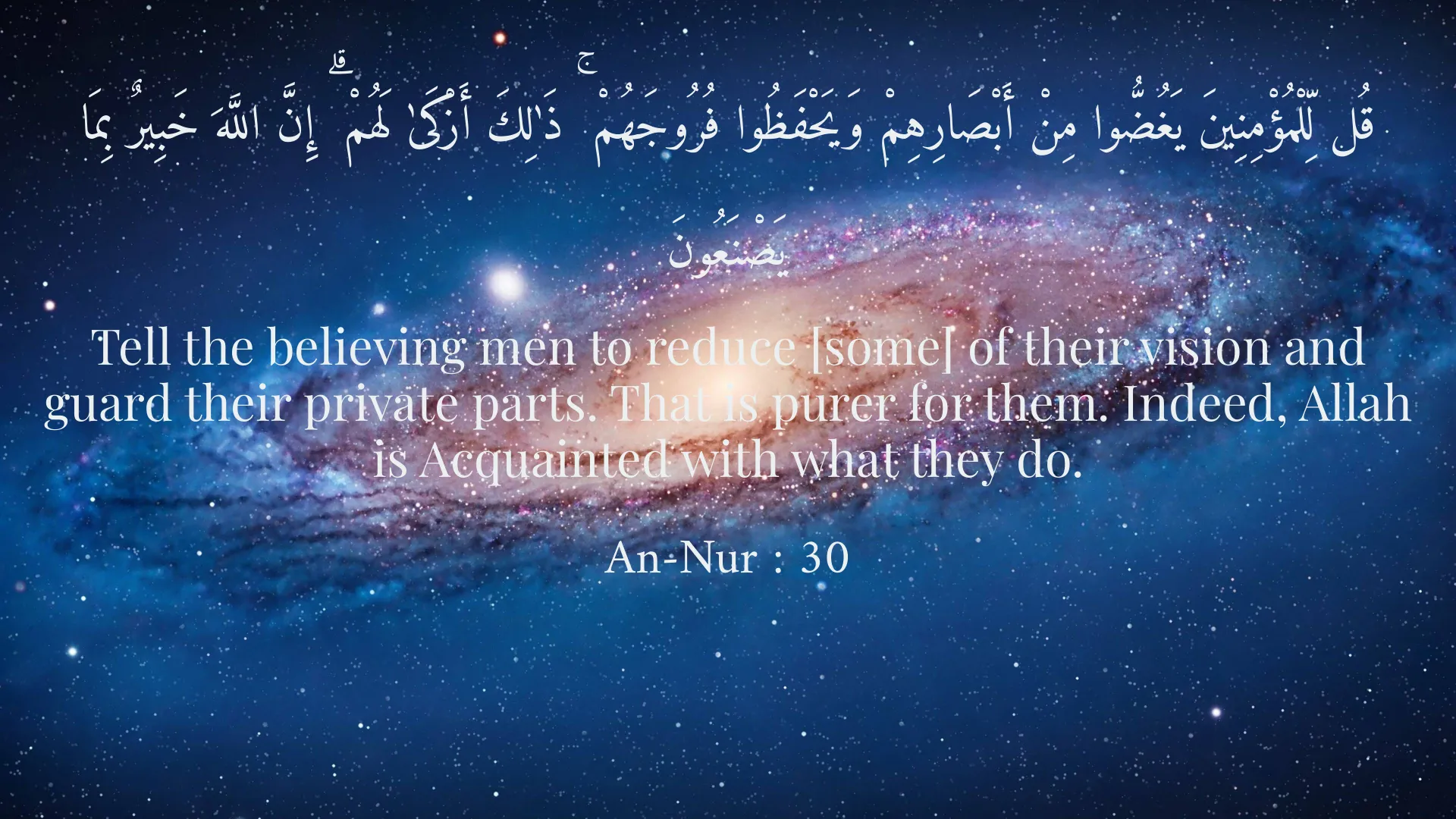
In the rich and profound teachings of the Holy Quran, modesty (Haya) and chastity (Iffah) are considered among the loftiest ethical and spiritual values, consistently emphasized for both individual and societal well-being. The Quran recommends these two virtues not merely as good qualities, but as fundamental pillars of a healthy and faith-filled society, for both men and women. Haya, meaning shame or shyness in the face of God and people, involves restraining oneself from indecencies. Iffah, on the other hand, signifies purity and self-restraint against carnal desires and temptations. These two concepts, like two wings for soaring to the peaks of piety and human perfection, are complementary, and the Quran addresses their various dimensions with unparalleled subtlety. The Holy Quran first addresses the importance of lowering the gaze (ghadd al-basar) for both men and women. In Surah An-Nur, verse 30, believing men are commanded to lower their gaze and guard their private parts: "Tell the believing men to reduce [some] of their vision and guard their private parts. That is purer for them. Indeed, Allah is Acquainted with what they do." This verse clearly states that lowering the gaze is a factor for purity and spiritual growth. Subsequently, in verse 31 of the same surah, the same recommendation is extended to believing women: "And tell the believing women to reduce [some] of their vision and guard their private parts and not expose their adornment except that which [necessarily] appears thereof and to draw their headcovers over their chests." These verses not only refer to guarding the gaze but also, by emphasizing the preservation of private parts, support chastity and avoidance of illicit relationships. This Quranic view of Haya and Iffah is balanced and comprehensive, addressing both genders and entrusting both with the responsibility of preserving boundaries. Iffah is not limited to sexual purity; it encompasses refraining from any form of excess or sin. In Surah Al-Isra, verse 32, Allah explicitly forbids approaching unlawful sexual intercourse: "And do not approach unlawful sexual intercourse. Indeed, it is ever an indecency and is evil as a way." This verse not only prohibits Zina (fornication/adultery) but also forbids even approaching its causes and preliminaries, as it believes the path of sin is an ugly and blameworthy way. This demonstrates that Islam places great importance on prevention for preserving Haya and Iffah, blocking paths that could lead to corruption. Furthermore, the Quran pays special attention to modesty in speech and conduct. In Surah Al-Ahzab, verse 32, the wives of the Prophet, and generally believing women, are advised not to speak in a soft, alluring manner, lest those with sick hearts should be tempted: "So do not be soft in speech [to men], lest he in whose heart is disease should covet, but speak with appropriate speech." This shows that Haya and Iffah must be observed not only in dress and gaze but also in the manner of verbal and social interactions. This teaching is very important because inappropriate speech can be a gateway to moral corruption. In contrast, appropriate and respectful speech helps preserve the dignity of the individual and society. One of the beautiful examples of Haya in the Quran is the story of the daughters of Shu'aib (peace be upon him), mentioned in Surah Al-Qasas, verse 25. When one of Shu'aib's daughters comes to invite Moses (peace be upon him), the Quran describes her as "walking with modesty" (tamshi 'ala istihya'). This description indicates the value and status of Haya as a prominent and praiseworthy characteristic for women. Haya here does not mean weakness or isolation, but rather dignity, composure, and preservation of self-respect in encountering non-mahram individuals. This verse presents a beautiful image of a virtuous Quranic woman who, while performing her duty, maintains her composure and modesty. Moreover, the Quran emphasizes the quality of chastity and purity when describing worthy spouses for believers. In Surah An-Nisa, verse 25, men are permitted to marry free and chaste women, even if they are slave-women, provided they are "muhsanat," meaning chaste and pure. This indicates that chastity is one of the primary criteria for choosing a spouse and forming a family based on divine values. The Quran believes that a society founded on pure and chaste families will be a healthier and more flourishing society. In summary, the Quran's recommendations regarding Haya and Iffah offer a comprehensive framework for individual and social structure. These virtues help individuals guard against the commanding self (nafs al-ammarah) and satanic temptations, leading to a life full of peace and dignity. Haya and Iffah are not mere restrictions; rather, they are protectors that prevent individuals from falling into the abyss of sins and spiritual and physical harm. These teachings encourage members of society to treat each other with mutual respect and create a safe and healthy environment for spiritual and moral growth. The Quran asks us to make Haya and Iffah our guiding principles in all aspects of life, from gaze and speech to dress and conduct, so that we may prosper in this world and the hereafter. These commands are not for hardship, but for elevating humanity to a high station worthy of being God's vicegerents.
Related Verses
قُل لِّلْمُؤْمِنِينَ يَغُضُّوا مِنْ أَبْصَارِهِمْ وَيَحْفَظُوا فُرُوجَهُمْ ۚ ذَٰلِكَ أَزْكَىٰ لَهُمْ ۗ إِنَّ اللَّهَ خَبِيرٌ بِمَا يَصْنَعُونَ
Tell the believing men to reduce [some] of their vision and guard their private parts. That is purer for them. Indeed, Allah is Acquainted with what they do.
An-Nur : 30
وَقُل لِّلْمُؤْمِنَاتِ يَغْضُضْنَ مِنْ أَبْصَارِهِنَّ وَيَحْفَظْنَ فُرُوجَهُنَّ وَلَا يُبْدِينَ زِينَتَهُنَّ إِلَّا مَا ظَهَرَ مِنْهَا ۖ وَلْيَضْرِبْنَ بِخُمُرِهِنَّ عَلَىٰ جُيُوبِهِنَّ
And tell the believing women to reduce [some] of their vision and guard their private parts and not expose their adornment except that which [necessarily] appears thereof and to draw their headcovers over their chests.
An-Nur : 31
وَلَا تَقْرَبُوا الزِّنَا ۖ إِنَّهُ كَانَ فَاحِشَةً وَسَاءَ سَبِيلًا
And do not approach unlawful sexual intercourse. Indeed, it is ever an indecency and is evil as a way.
Al-Isra : 32
Short Story
It is recounted that one day Sheikh Sa'di, in his Golestan, narrated: "There was a nobleman who had a daughter of great beauty, modesty, and chastity. A suitor came forward, a renowned man from a noble family. The father, a wise man himself, said to his daughter: 'O daughter, this man is outwardly good and of repute, but what do you know of his inner character?' The daughter replied: 'O father, if good character and virtues reside within me, whoever seeks my hand in marriage will pursue nothing but the path of chastity, and whoever possesses modesty will preserve their honor through self-respect.'" Sa'di concludes from this anecdote that modesty and chastity originate from within and serve as a guardian against indecencies, enabling one to recognize the right path and remain steadfast upon it, even when unseen by others.