Quranic Answer
The Holy Quran, as a divine guide, masterfully integrates two seemingly paradoxical concepts: "freedom" and "servitude" (or worship/devotion). At first glance, these two notions might appear to be at odds; freedom implies liberation from constraints, while servitude suggests submission and bondage. However, the Quran, with its profound divine insight, reveals that true freedom is not found in unrestrained license or a complete absence of rules, but rather in a conscious, willing, and loving submission to the only absolute power: Allah Almighty. In essence, servitude to Allah (عبودیت لله) is the gateway to the highest echelons of human liberty, and this delicate balance between free will and submission is the core essence of the Quran's perspective on humanity's place in the universe. The concept of 'Ibadah' (servitude/worship) in the Quran is by no means synonymous with slavery or the stripping away of free will. On the contrary, 'Ibadah' signifies a complete and unreserved submission to the divine will and commands, a submission that stems not from fear but from love, profound understanding, and an acute awareness of the Creator's infinite wisdom. By consciously choosing to be a servant of Allah, humanity liberates itself from subjugation to all other forms of bondage. This includes liberation from the shackles of carnal desires, the enslavement of materialism, the fear of transient earthly powers, the servitude to erroneous thoughts and ideologies, and indeed, from anything that impedes human growth and perfection. The Quran fundamentally teaches that if a human being is not a servant of God, they will inevitably become a servant to something else – be it money, power, fame, their own ego, the opinions and wills of other individuals, or even self-defeating habits. It is precisely at this juncture that 'Ibadah' acts as a grand liberator, freeing humanity from these insidious, hidden prisons. This liberation manifests not only on an individual level but also socially. A society whose members truly comprehend and embody genuine servitude to God will find release from oppression, exploitation, and discrimination, for in the sight of the One Creator, all are equal, and no one holds superiority over another except through piety and righteous deeds. This type of servitude brings dignity and self-respect. The freedom advocated by the Quran is a responsible freedom. Human beings are created free to choose their path, whether it leads to felicity or wretchedness. The famous verse, "There shall be no compulsion in [acceptance of] the religion" (2:256), serves as a clear testament to this freedom of choice. Allah invites humanity to faith and devotion but never forces it; the choice is left to the individual. This freedom of choice is the cornerstone of human accountability. However, this freedom does not imply being unrestrained or devoid of any rules and regulations. Rather, true freedom finds its meaning and purpose within the framework of divine limits. These limits are not restrictive but rather protective and guiding, designed to lead humanity towards true prosperity and well-being. Analogous to a boat on a boundless ocean, which, although free to roam, requires a compass and a map to reach a safe shore and avoid sinking. Divine laws are precisely that compass and roadmap, saving humanity from misguidance and destruction, and guiding them towards perfection. These laws guarantee human dignity and the mutual rights of individuals within society, enabling individuals to live a constructive life in complete tranquility and security. When a person adheres to divine laws, they not only preserve their individual freedom but also respect the freedom and rights of others, thereby fostering a society built on justice, morality, and empathy. In fact, only under the shadow of these divine laws can individual freedom be prevented from devolving into chaos and oppression. The Quran emphasizes that true freedom is freedom from the bondage of worldly attachments and egoistic desires. This is the essence of 'self-governance' and 'autonomy' that liberates individuals from the tyranny of the commanding self (nafs al-ammara) and satanic whispers. Servitude to Allah means submitting one's will to the wise divine will, and this submission, far from limiting, actually fosters the blossoming of human talents and existential potentials. This is because the Creator knows best what is good and beneficial for His creation. When a person recognizes themselves as a servant of God, they are freed from arrogance and pride, cultivate humility, and instead of engaging in endless material competitions, greed, and covetousness, they achieve inner peace and contentment. This peace is the fruit of true freedom from unnecessary worldly concerns and a focus on the higher purpose of life. For instance, Salat (prayer), one of the pillars of servitude, liberates individuals from daily worries and materialistic pursuits, offering them an opportunity to connect with their Creator and, through this connection, find renewed spiritual energy and a deeper sense of purpose and meaning in life. Sawm (fasting) frees individuals from the chains of carnal desires and physical needs, bestowing upon them the power of will and self-restraint. Hajj (pilgrimage) liberates individuals from regional and racial attachments, showcasing global solidarity among Muslims. Each of these acts of worship is, in its own way, an exercise in achieving freedom from worldly constraints and attaining true liberty. Therefore, the Quran does not see freedom in opposition to servitude to God; rather, it considers it the only path to absolute freedom and perfection. This means freedom from every bond and chain except the bond with God—freedom from the servitude of the self, from materialism, from earthly powers, and from the servitude of fears and ignorance. This astonishing combination elevates humanity to the highest ranks of dignity and honor, bringing forth a life filled with purpose, tranquility, and felicity. Servitude itself is a free choice that leads to the pinnacle of human freedom and dignity, and this is humanity's primary mission in existence.
Related Verses
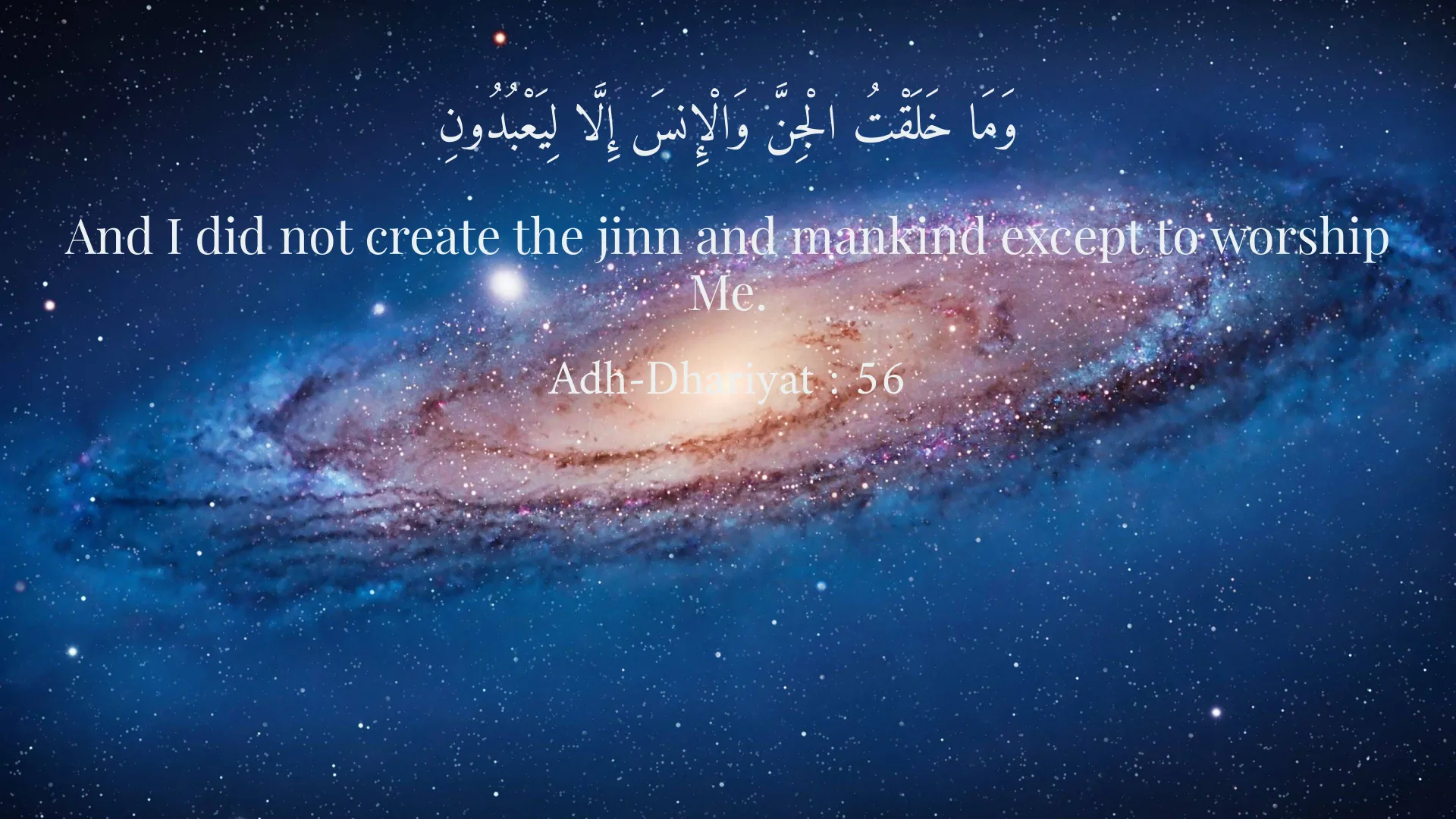
وَمَا خَلَقْتُ الْجِنَّ وَالْإِنسَ إِلَّا لِيَعْبُدُونِ
And I did not create the jinn and mankind except to worship Me.
Adh-Dhariyat : 56
لَا إِكْرَاهَ فِي الدِّينِ ۖ قَد تَّبَيَّنَ الرُّشْدُ مِنَ الْغَيِّ ۚ فَمَن يَكْفُرْ بِالطَّاغُوتِ وَيُؤْمِن بِاللَّهِ فَقَدِ اسْتَمْسَكَ بِالْعُرْوَةِ الْوُثْقَىٰ لَا انفِصَامَ لَهَا ۗ وَاللَّهُ سَمِيعٌ عَلِيمٌ
There shall be no compulsion in [acceptance of] the religion. The right course has become clear from the wrong. So whoever disbelieves in Taghut and believes in Allah has grasped the most trustworthy handhold with no break in it. And Allah is Hearing and Knowing.
Al-Baqarah : 256
وَقُلِ الْحَقُّ مِن رَّبِّكُمْ ۖ فَمَن شَاءَ فَلْيُؤْمِن وَمَن شَاءَ فَلْيَكْفُرْ ۚ إِنَّا أَعْتَدْنَا لِلظَّالِمِينَ نَارًا أَحَاطَ بِهِمْ سُرَادِقُهَا ۚ وَإِن يَسْتَغِيثُوا يُغَاثُوا بِمَاءٍ كَالْمُهْلِ يَشْوِي الْوُجُوهَ ۚ بِئْسَ الشَّرَابُ وَسَاءَتْ مُرْتَفَقًا
And say, "The truth is from your Lord, so whoever wills - let him believe; and whoever wills - let him disbelieve." Indeed, We have prepared for the wrongdoers a Fire whose walls will encompass them. And if they call for relief, they will be relieved with water like murky oil which scalds [their] faces. Wretched is the drink, and bad is the resting place.
Al-Kahf : 29
Short Story
One day, a king asked an ascetic dervish, 'Why do you live in these mountains in such a disheveled and contented state, while I am the king of seven climes?' The dervish smiled and said, 'O King, the difference between us is that you are constantly worried and striving for your kingdom, you fear losing it, and you need thousands of subjects and armies to maintain it. But I am a servant of God, free from every king, my heart is attached to nothing but Him, and this very attachment to Him has made me independent of every other servant and master. You are a slave to your crown and throne, but I am free and have no servitude other than to God.' The king pondered this deeply and understood in his heart that the dervish, despite his simple appearance, was freer and more at peace than he.