Quranic Answer
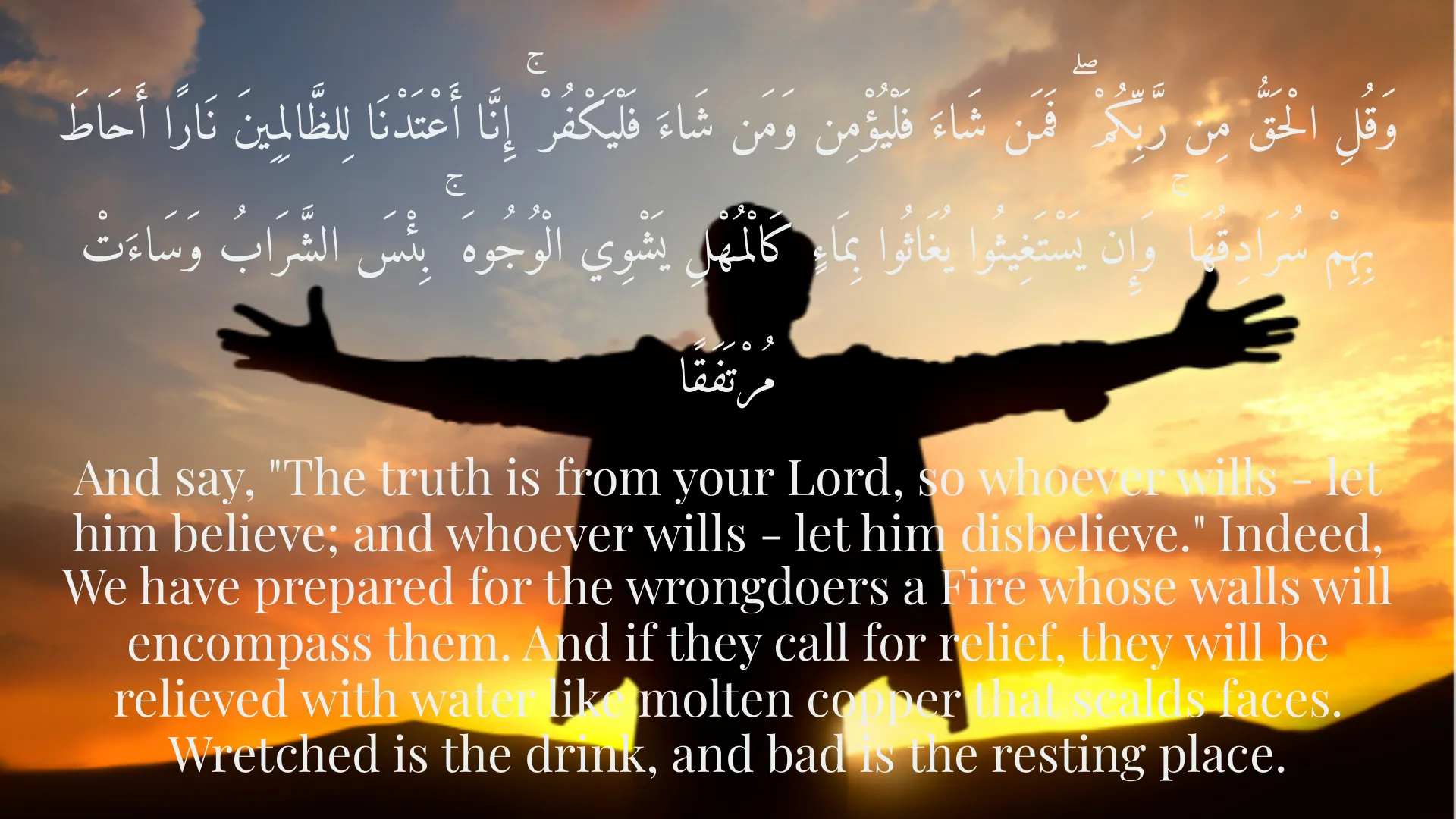
Individual freedom is a concept that has been interpreted in various ways throughout human history. In the modern Western worldview, freedom is often understood as the absence of external constraints and the unlimited right of an individual to do whatever they please, as long as it does not harm the freedom of others. However, the Holy Quran offers a deeper and more comprehensive understanding of individual freedom that not only differs from this definition but redefines it and elevates it to a higher level. From the Quranic perspective, true freedom lies not in liberation from divine laws, but in their conscious acceptance and obedience. This is an apparent paradox that, upon reflection on divine wisdom, transforms into a clear truth. The Quran strongly emphasizes the element of "free will" (ikhtiyar) and human agency. God states in numerous verses that humanity is a creature of choice, and the paths of good and evil have been shown to them. This freedom of choice is the cornerstone of human responsibility. For instance, in Surah Al-Kahf, verse 29, Allah says: "And say, 'The truth is from your Lord, so whoever wills - let him believe; and whoever wills - let him disbelieve.'" This verse clearly indicates that individuals have complete freedom in their path of belief or disbelief, but this freedom comes with a heavy responsibility. This freedom does not mean liberation from the consequences of one's choices but rather the right to choose a path and bear its outcomes. This concept of freedom elevates humanity from mere determinism, transforming them into beings of dignity and choiceworthiness. This dignity stems from the fact that God has granted humanity the power of discernment and decision-making, enabling them to choose their life path based on reason, conscience, and ultimately, divine guidance. This power of choice distinguishes them from other creations and places upon them a great trust, which is the responsibility for their own actions. However, this freedom of choice finds its meaning within the framework of divine guidance. The Quran does not view Sharia and divine laws as fences that restrict freedom; rather, it sees them as a path that liberates individuals from internal and external bondage. A truly free person, from the Quranic perspective, is not someone who does whatever they desire, but rather someone who has freed themselves from the servitude of the commanding self (nafs al-ammara), desires, fears, greed, and the worship of created beings. This internal liberation is the true freedom, attained through sincere and conscious servitude to God. When a person sees themselves as solely a servant of God, they are liberated from the servitude of everything else. They no longer worry about people's approval, are not enslaved by wealth and status, and do not fear death. This is "spiritual freedom." In Surah Adh-Dhariyat, verse 56, we read: "And I did not create the jinn and mankind except to worship Me." This worship is not a humiliating servitude but a conscious one that leads to the pinnacle of freedom and perfection. For it is only by connecting to the source of existence and the eternal divine power that one can be freed from one's weaknesses and limitations. This servitude is a form of true liberation, freeing the individual from the shackles of all that is perishable and connecting them to the boundless source of power and honor. Individual freedom in the Quran is also intertwined with "social responsibility." An individual is not merely free to go in any direction; rather, they are accountable for their actions before God and society. Their freedom should not harm the freedom of others or lead society to corruption. This accountability is another dimension of true freedom because a responsible person is, in fact, self-mastered and acts based on higher principles and values rather than momentary impulses. Freedom in the Quran is not a license for chaos but a framework for individual and societal growth and elevation. This framework includes enjoining good and forbidding evil, justice, benevolence, and respecting the rights of others. These rules are not merely restrictions but guarantees of everyone's freedom and dignity. Indeed, a society where individuals are responsible and utilize their freedom for the collective good will be a dynamic and flourishing society where the rights of all members are respected. Furthermore, the Quran clarifies the concept of "freedom from compulsion" (in matters of faith and destiny). Humanity possesses a degree of freedom not only before God but also in relation to divine destiny and decree. Although divine will encompasses everything, this does not mean the deprivation of human free will. Individuals can influence their destiny through prayer, effort, and changes in their intentions and actions. In Surah Ar-Ra'd, verse 11, we read: "Indeed, Allah will not change the condition of a people until they change what is in themselves." This freedom to change and transform opens up horizons of hope and dynamism for humanity, liberating them from despair and hopelessness. They know that their efforts and choices are not in vain and can lead them on the path to perfection. Ultimately, the Quran presents individual freedom not as an ultimate goal but as a means to achieve proximity to God and eternal felicity. True freedom is that which enables a person to traverse the misleading paths of the world and attain the meeting with Allah. This freedom is directed and purposeful, finding its meaning and concept in the light of divine guidance. Therefore, the Quran transforms our understanding of freedom from a purely instinctive and sensual concept into a spiritual, responsible, and purposeful one, in which every step taken towards God is a step towards freedom and liberation from worldly bonds and captivities. This perspective frees humanity from illusory cages and invites them towards the boundless horizons of conscious and free servitude, where human dignity is manifested at its peak, and the individual achieves true tranquility.
Related Verses
وَقُلِ الْحَقُّ مِن رَّبِّكُمْ ۖ فَمَن شَاءَ فَلْيُؤْمِن وَمَن شَاءَ فَلْيَكْفُرْ ۚ إِنَّا أَعْتَدْنَا لِلظَّالِمِينَ نَارًا أَحَاطَ بِهِمْ سُرَادِقُهَا ۚ وَإِن يَسْتَغِيثُوا يُغَاثُوا بِمَاءٍ كَالْمُهْلِ يَشْوِي الْوُجُوهَ ۚ بِئْسَ الشَّرَابُ وَسَاءَتْ مُرْتَفَقًا
And say, "The truth is from your Lord, so whoever wills - let him believe; and whoever wills - let him disbelieve." Indeed, We have prepared for the wrongdoers a Fire whose walls will encompass them. And if they call for relief, they will be relieved with water like molten copper that scalds faces. Wretched is the drink, and bad is the resting place.
Al-Kahf : 29
وَمَا خَلَقْتُ الْجِنَّ وَالْإِنسَ إِلَّا لِيَعْبُدُونِ
And I did not create the jinn and mankind except to worship Me.
Adh-Dhariyat : 56
إِنَّا هَدَيْنَاهُ السَّبِيلَ إِمَّا شَاكِرًا وَإِمَّا كَفُورًا
Indeed, We guided him to the way, whether grateful or ungrateful.
Al-Insan : 3
Short Story
One day, a wealthy man came to Sheikh Saadi and boasted, 'I am the freest of people, for I have all that I desire, and no one can command me.' The Sheikh smiled and said, 'O man, do you not wake up each morning desiring a specific food? And are you not sometimes distressed by the lack of something?' The man replied, 'Yes, that is so.' The Sheikh then said, 'Then you are still a slave to your own desires. True freedom is to free the heart from the bonds of everything but the Truth. A bird imprisoned in a golden cage is not free, but a bird that roams the desert and feeds on grains wherever it finds them, that one is truly free. As long as your desires command you, you are a slave, even if you appear to be a king. But if you master your desires, then you are truly free, even if you possess nothing.' The man was moved by the Sheikh's words and pondered that true freedom lies in mastering oneself, not in owning the world.