Quranic Answer
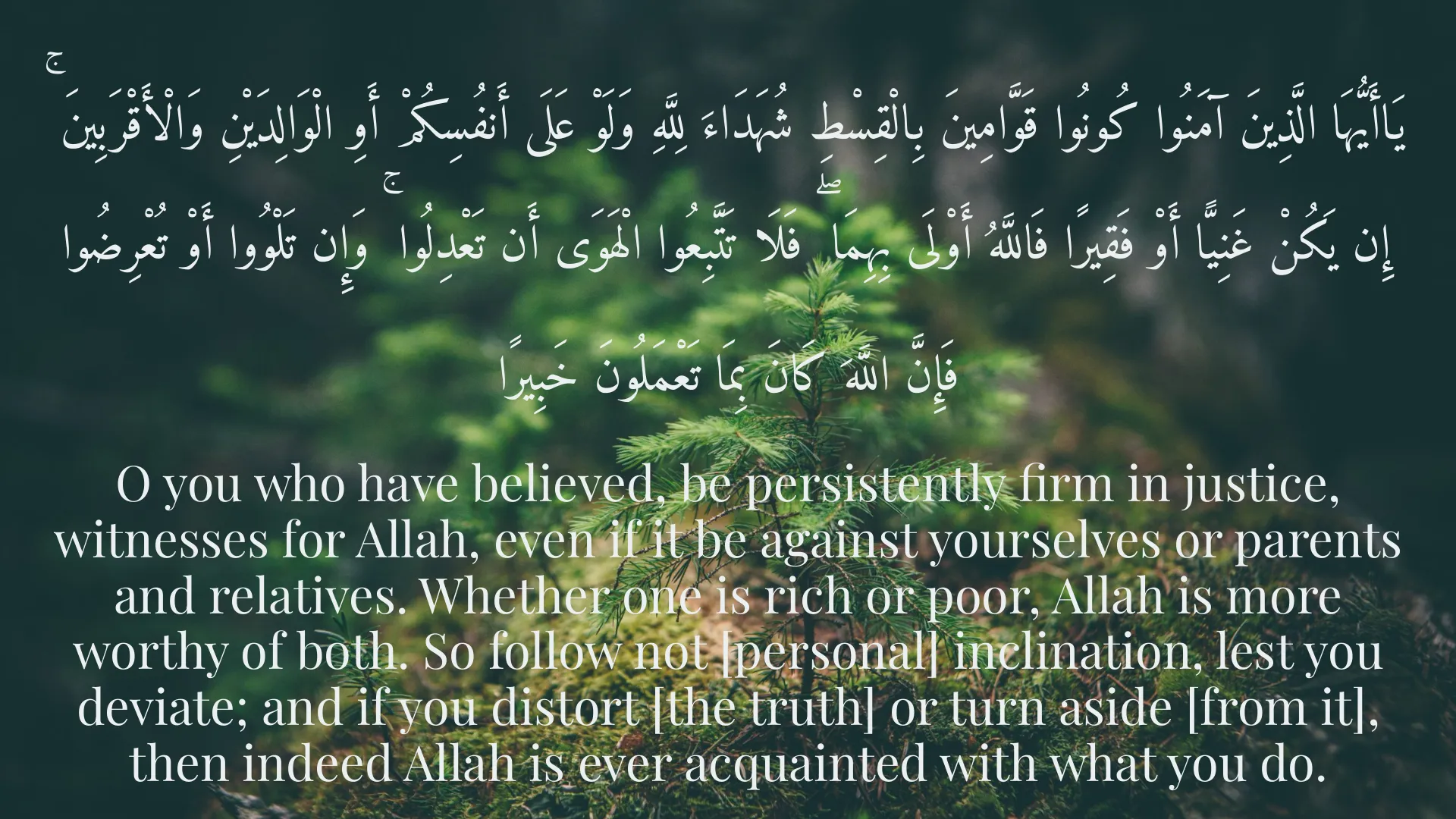
The Holy Quran, as a divine guide, places immense importance on the concept of justice, particularly justice in judgment. This is not merely an ethical directive but is considered the backbone of a healthy and stable society. From the Quranic perspective, justice (Adl) is the essence of humanity's relationship with God and with fellow human beings. Allah Almighty is Just, and He expects His servants to uphold justice in all matters of life, especially in the role of judging and arbitrating. This concept extends beyond mere legal dispute resolution; it encompasses any decision-making and evaluation that affects the lives of others. The Quran's emphasis on justice in judgment stems from the understanding that if justice is not upheld in a society, the seeds of oppression and injustice will be sown, leading to the loss of peace and security. In the Islamic worldview, a judge is not just an enforcer of law but a representative of divine justice on earth and must perform their duty with utmost precision and responsibility. One of the most fundamental principles of justice in judgment emphasized in the Holy Quran is the principle of absolute impartiality. A judge or arbiter, regardless of their position, must not be influenced by personal feelings, family interests, friendships, or enmities. This principle is clearly articulated in several verses. Verse 135 of Surah An-Nisa explicitly states this: “O you who have believed, be persistently firm in justice, witnesses for Allah, even if it be against yourselves or parents and relatives. Whether one is rich or poor, Allah is more worthy of both. So follow not [personal] inclination, lest you deviate; and if you distort [the truth] or turn aside [from it], then indeed Allah is ever acquainted with what you do.” This verse calls believers to stand firm in justice and bear witness for Allah, even if it is against themselves, their parents, or their relatives. This is an unparalleled guideline for a judge and anyone in a position of judgment; it means prioritizing divine welfare and the implementation of truth over any personal or group interest. The emphasis that “Allah is more worthy of both (rich and poor)” signifies that the wealth or poverty of the parties should not influence the verdict, and both must be considered equally. Furthermore, the Quran even requires Muslims to practice justice towards their enemies, which represents the pinnacle of impartiality and fairness. In verse 8 of Surah Al-Ma'idah, we read: “O you who have believed, be persistently firm for Allah, witnesses in justice, and let not the hatred of a people prevent you from being just. Be just; that is nearer to righteousness. And fear Allah; indeed, Allah is Acquainted with what you do.” This verse clearly states that animosity and hatred towards a group should not prevent the observance of justice. This level of justice, which includes impartiality even towards opponents, is a sublime and very challenging ethical principle that can only be achieved through piety and fear of God. The ultimate goal is to achieve righteousness (Taqwa), as being just is the closest path to it. This demonstrates that justice is not merely an external command but an internal virtue stemming from faith. The Quran also places great importance on accuracy in judicial matters. A judge must issue rulings based on clear evidence and strong proofs, not on suspicion, speculation, or rumors. Moreover, the principle of equality before the law and in the judicial court is another foundational principle. All individuals, regardless of social status, race, or wealth, must be treated with equal respect and consideration. Bribery and any form of corruption in the judicial system are strictly prohibited, as these actions not only undermine justice but also destroy the foundation of public trust and foster oppression. Verse 188 of Surah Al-Baqarah warns: “And do not consume one another's wealth unjustly or send it [in bribery] to the rulers in order that you may knowingly consume a portion of the wealth of others sinfully.” This verse underscores the fact that consuming people's wealth unjustly, by bribing rulers to achieve illicit gains, is a great sin and completely disregards justice. In addition, a judge must possess sufficient knowledge and act with wisdom and insight in their decision-making. Haste in judgment is forbidden, and all aspects of the matter must be considered, with sufficient investigation. The Quran advises Muslims to first seek reconciliation and settlement in disputes, but if this is not possible, then a just ruling should be issued based on Sharia and Quranic principles. The ultimate goal of the Quran's emphasis on justice in judgment is to create an orderly, secure, and mutually trusting society where the rights of all individuals are preserved and oppression is eradicated. Justice in judgment is a manifestation of Allah's attribute of “Al-Adl” (The Just) on earth, and its implementation will lead to divine pleasure and worldly and otherworldly prosperity. This is not merely about judging in courts but applies to any decision-making that affects other individuals, from family decisions to economic ones, all of which must be based on fairness and equity. In essence, justice in judgment is a comprehensive principle that encompasses all aspects of individual and social life, guaranteeing human dignity and mutual rights. Adhering to these principles not only promotes individual fairness but also strengthens the foundations of society and paves the way for spiritual and material growth and development. The Quran emphasizes that justice must be implemented, even if it is bitter, to prevent corruption and ensure individuals receive their rights. This requires moral courage and deep piety so that a judge can, free from any external pressure or internal desires, only consider the satisfaction of Allah and the implementation of truth. Ultimately, justice in judgment is the foundation upon which the edifice of a just and balanced Islamic society is built, a society where everyone receives their due and no one is oppressed.
Related Verses
يَاأَيُّهَا الَّذِينَ آمَنُوا كُونُوا قَوَّامِينَ بِالْقِسْطِ شُهَدَاءَ لِلَّهِ وَلَوْ عَلَى أَنفُسِكُمْ أَوِ الْوَالِدَيْنِ وَالْأَقْرَبِينَ ۚ إِن يَكُنْ غَنِيًّا أَوْ فَقِيرًا فَاللَّهُ أَوْلَى بِهِمَا ۖ فَلَا تَتَّبِعُوا الْهَوَى أَن تَعْدِلُوا ۚ وَإِن تَلْوُوا أَوْ تُعْرِضُوا فَإِنَّ اللَّهَ كَانَ بِمَا تَعْمَلُونَ خَبِيرًا
O you who have believed, be persistently firm in justice, witnesses for Allah, even if it be against yourselves or parents and relatives. Whether one is rich or poor, Allah is more worthy of both. So follow not [personal] inclination, lest you deviate; and if you distort [the truth] or turn aside [from it], then indeed Allah is ever acquainted with what you do.
An-Nisa : 135
يَاأَيُّهَا الَّذِينَ آمَنُوا كُونُوا قَوَّامِينَ لِلَّهِ شُهَدَاءَ بِالْقِسْطِ ۖ وَلَا يَجْرِمَنَّكُمْ شَنَآنُ قَوْمٍ عَلَى أَلَّا تَعْدِلُوا ۚ اعْدِلُوا هُوَ أَقْرَبُ لِلتَّقْوَى ۖ وَاتَّقُوا اللَّهَ ۚ إِنَّ اللَّهَ خَبِيرٌ بِمَا تَعْمَلُونَ
O you who have believed, be persistently firm for Allah, witnesses in justice, and let not the hatred of a people prevent you from being just. Be just; that is nearer to righteousness. And fear Allah; indeed, Allah is Acquainted with what you do.
Al-Ma'idah : 8
إِنَّ اللَّهَ يَأْمُرُ بِالْعَدْلِ وَالْإِحْسَانِ وَإِيتَاءِ ذِي الْقُرْبَىٰ وَيَنْهَىٰ عَنِ الْفَحْشَاءِ وَالْمُنكَرِ وَالْبَغْيِ ۚ يَعِظُكُمْ لَعَلَّكُمْ تَذَكَّرُونَ
Indeed, Allah commands justice and good conduct and giving to relatives and forbids immorality and bad conduct and oppression. He admonishes you that perhaps you will be reminded.
An-Nahl : 90
Short Story
In ancient times, there was a just king in a land whose fame for justice had spread far and wide. One day, two men came to his court to settle a dispute. One was wealthy and influential, while the other was a poor and solitary man. The king instructed the city's judge to hear their case. The judge, who had been trained in the king's school of justice, listened carefully to both men's words and weighed their arguments. Although the wealthy man attempted to deceive and offer a bribe, the judge, without any wavering in his heart and recalling the divine verses that forbid bribery and command justice, ruled in favor of the poor man, based on truth. The wealthy man was enraged by this verdict, but the king said: "Our judge's eyes are fixed only on the scales of justice and divine command. He knows that the ultimate judge is God, and in His presence, no wealth holds any value." This story resonated deeply with the people, and they understood that in this land, justice prevailed above all else, and the right of the oppressed would always be upheld.