Quranic Answer
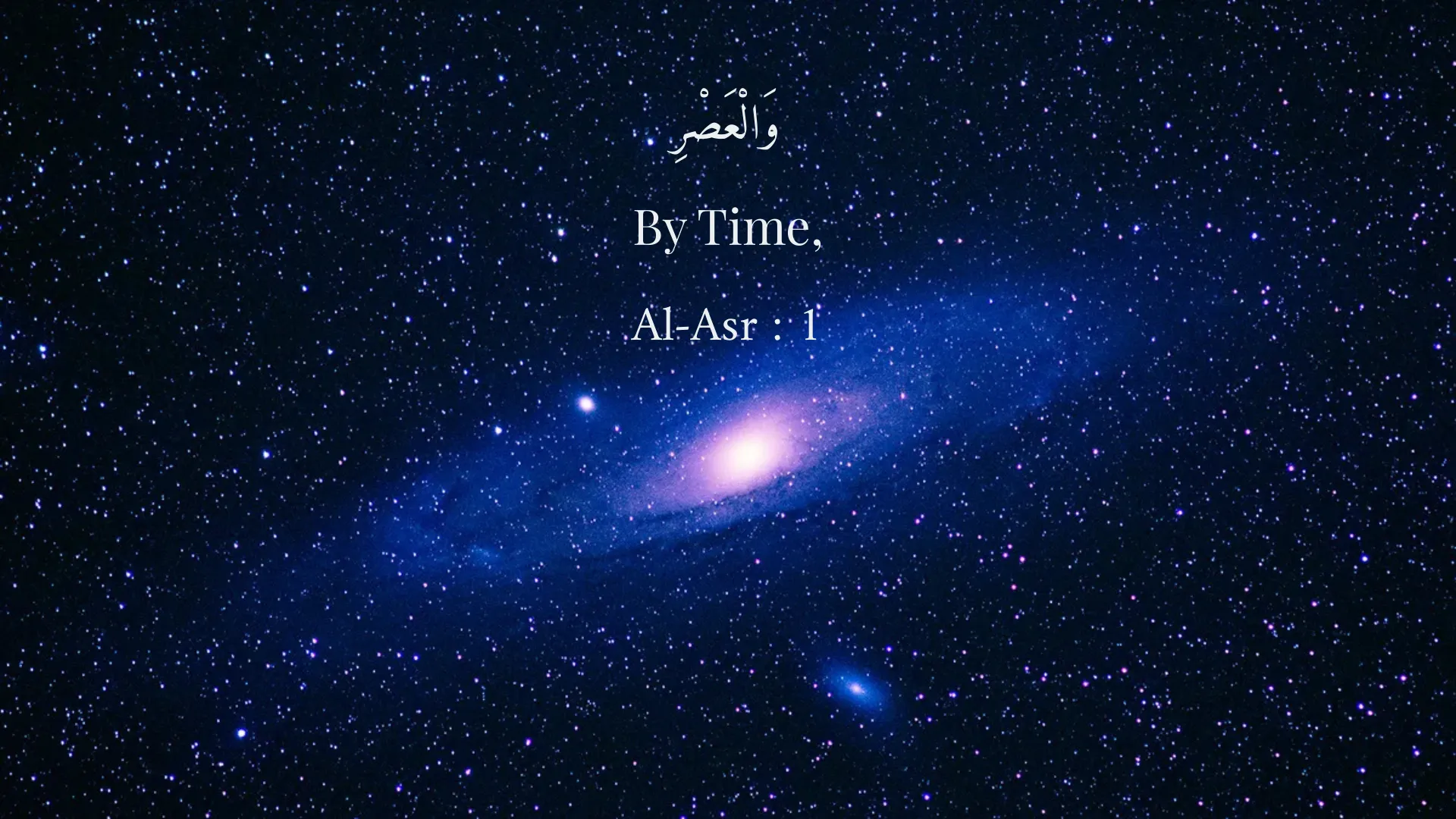
The Holy Quran emphasizes the immense value of time in various ways. This emphasis is evident not only directly, but also through references to temporal phenomena, oaths by time, and statements about the consequences of utilizing or wasting it. The Quran teaches us that human life is an unparalleled and precious capital, every moment of which must be carefully managed and spent towards the sublime purpose of creation: servitude to and proximity with Allah. One of the most prominent and explicit references in the Quran to the value of time is Surah Al-Asr (The Declining Day). In this short yet profound surah, Allah Almighty swears by 'Al-Asr': 'By Time, indeed, mankind is in loss.' This oath itself is a testament to the extraordinary greatness and importance of time, for Allah only swears by things of immense significance. Quranic exegetes have interpreted 'Al-Asr' in various ways, including time in general, the time of day (especially late afternoon/evening, when tasks conclude), or even the era of Prophet Muhammad (PBUH). However, the common thread among all these interpretations is the emphasis on the passage of life and its opportunities. Following this oath, Allah makes a crucial declaration: 'Indeed, mankind is in loss.' This verse serves as a serious warning. Humanity is inherently on a path towards loss, unless individuals save themselves from this predicament. The path to salvation from this loss is outlined in the subsequent verses: 'Except for those who have believed and done righteous deeds and advised each other to truth and advised each other to patience.' These four principles (faith, righteous deeds, advising truth, and advising patience) delineate the correct way to utilize time and the path to salvation in this world and the hereafter. This surah explicitly states that time is an arena for acquiring these qualities and performing these actions, and every moment not spent in this pursuit is tantamount to losing a valuable capital and moving towards ultimate loss. The Quran also implicitly highlights the value of time by referring to the transient nature of worldly life and its ultimate end. The world is depicted as a bridge to cross over to the eternal abode. In Surah Al-Kahf, verse 45, Allah says: 'And present to them the example of the life of this world, [being] like water which We send down from the sky, and the vegetation of the earth mingles with it and [then] it becomes dry remnants, scattered by the winds. And Allah is over all things competent.' This verse likens worldly life to water sent down from the sky, with which earth's vegetation becomes intertwined, only to dry up and be scattered by the winds. This analogy symbolizes the swift passage of life and the fleeting nature of worldly pleasures, teaching humanity not to waste their lifespan on trivial matters, but rather to utilize this limited opportunity to sow the seeds of eternal bliss. Another point emphasized by the Quran is the concept of 'respite.' Allah grants humans a period of grace to repent, perform good deeds, and return to Him. However, this respite is not eternal; its duration is fixed. Verses 99 and 100 of Surah Al-Mu'minun point to the reality that at the moment of death, individuals will regret lost opportunities and wish to return to the world: 'Until, when death comes to one of them, he says, 'My Lord, send me back that I may do righteousness in that which I have left.' No! It is but a word he is saying; and behind them is a barrier until the Day they are resurrected.' These verses clearly indicate that earthly time is a unique opportunity that cannot be compensated for in the hereafter. The regret of the deceased in the afterlife is not for wealth or status, but for lost opportunities to perform righteous deeds. Furthermore, the Holy Quran emphasizes accountability for one's life on the Day of Judgment. Although there isn't a direct verse explicitly stating 'questioning about time,' numerous verses refer to the accountability for deeds and human responsibility for blessings. Time is the greatest blessing and capital bestowed upon humanity, and undoubtedly, its utilization will be questioned. Surah At-Takathur, verse 8, states: 'Then you will surely be asked that Day about pleasure.' Time and the opportunity of life are undoubtedly among the greatest blessings that will be inquired about. The Quran also warns humanity against heedlessness and preoccupation with worldly matters that distract them from the remembrance of Allah and the primary purpose of life. In Surah Al-Munafiqun, verses 9-11, it is stated: 'O you who have believed, let not your wealth or your children divert you from remembrance of Allah. And whoever does that - then those are the losers. And spend [in the way of Allah] from what We have provided you before death comes to one of you, and he says, 'My Lord, if only You would delay me for a brief term so I would give charity and be among the righteous.' But never will Allah delay a soul when its time has come. And Allah is Acquainted with what you do.' These verses clearly state that wealth and children should not hinder the remembrance of Allah, and one must spend in Allah's way and perform righteous deeds before death arrives. This emphasis on 'before death comes' itself signifies the limited nature of time and the importance of utilizing it optimally. The Quran also points to the passage of time and its importance by using natural and cosmic phenomena. The alternation of night and day, the rising and setting of the sun, and the changing seasons are all signs of Allah's power and the order governing the universe. These phenomena serve as a reminder that time is constantly moving, and nothing remains static. In Surah Yunus, verse 5, Allah says: 'It is He who made the sun a shining light and the moon a [reflected] light and determined for it phases that you may know the number of years and [how to make] account [of time]. Allah has not created this except in truth. He details the signs for a people who know.' This verse clearly indicates that one of the purposes of creating this cosmic system and temporal phenomena is for humans to measure time and benefit from it in their lives. Knowing the number of years and accounting for time is essential not only for worldly affairs but also for regulating worship and religious duties, helping humans gain a better understanding of the passage of life and the opportunities ahead. In conclusion, the value of time in the Quran transcends a mere material concept or worldly scheduling. Time in the Quran is a divine vessel in which human actions take shape and eternal destiny is determined. The Quran reminds humanity that they are trustees of this precious capital and are accountable for its utilization. Every moment is an opportunity to draw closer to Allah, serve creation, and build a good hereafter. Therefore, a true believer is one who is constantly mindful of the passage of their life, does not spend it in heedlessness or idleness, and strives to make each day better than the last, so that they may appear before Allah with a full and honorable record. This perspective instills in humans a deep sense of urgency and responsibility regarding their lives, freeing them from the captivity of transient worldly desires and guiding them towards higher and lasting goals. The Quran's ultimate message is that life is short and full of trials, and only those who correctly utilize their time in the path of faith, righteous deeds, and inviting to truth and patience will attain salvation.
Related Verses
وَالْعَصْرِ
By Time,
Al-Asr : 1
إِنَّ الْإِنسَانَ لَفِي خُسْرٍ
Indeed, mankind is in loss,
Al-Asr : 2
إِلَّا الَّذِينَ آمَنُوا وَعَمِلُوا الصَّالِحَاتِ وَتَوَاصَوْا بِالْحَقِّ وَتَوَاصَوْا بِالصَّبْرِ
Except for those who have believed and done righteous deeds and advised each other to truth and advised each other to patience.
Al-Asr : 3
وَاضْرِبْ لَهُم مَّثَلَ الْحَيَاةِ الدُّنْيَا كَمَاءٍ أَنزَلْنَاهُ مِنَ السَّمَاءِ فَاخْتَلَطَ بِهِ نَبَاتُ الْأَرْضِ فَأَصْبَحَ هَشِيمًا تَذْرُوهُ الرِّيَاحُ ۗ وَكَانَ اللَّهُ عَلَىٰ كُلِّ شَيْءٍ مُّقْتَدِرًا
And present to them the example of the life of this world, [being] like water which We send down from the sky, and the vegetation of the earth mingles with it and [then] it becomes dry remnants, scattered by the winds. And Allah is over all things competent.
Al-Kahf : 45
حَتَّىٰ إِذَا جَاءَ أَحَدَهُمُ الْمَوْتُ قَالَ رَبِّ ارْجِعُونِ
[For them is the state of denial] until, when death comes to one of them, he says, 'My Lord, send me back'
Al-Mu'minun : 99
لَعَلِّي أَعْمَلُ صَالِحًا فِيمَا تَرَكْتُ ۚ كَلَّا ۚ إِنَّهَا كَلِمَةٌ هُوَ قَائِلُهَا ۖ وَمِن وَرَائِهِم بَرْزَخٌ إِلَىٰ يَوْمِ يُبْعَثُونَ
That I may do righteousness in that which I have left behind. No! It is but a word he is saying; and behind them is a barrier until the Day they are resurrected.
Al-Mu'minun : 100
يَا أَيُّهَا الَّذِينَ آمَنُوا لَا تُلْهِكُمْ أَمْوَالُكُمْ وَلَا أَوْلَادُكُمْ عَن ذِكْرِ اللَّهِ ۚ وَمَن يَفْعَلْ ذَٰلِكَ فَأُولَٰئِكَ هُمُ الْخَاسِرُونَ
O you who have believed, let not your wealth or your children divert you from remembrance of Allah. And whoever does that - then those are the losers.
Al-Munafiqun : 9
وَأَنفِقُوا مِن مَّا رَزَقْنَاكُم مِّن قَبْلِ أَن يَأْتِيَ أَحَدَكُمُ الْمَوْتُ فَيَقُولَ رَبِّ لَوْلَا أَخَّرْتَنِي إِلَىٰ أَجَلٍ قَرِيبٍ فَأَصَّدَّقَ وَأَكُن مِّنَ الصَّالِحِينَ
And spend [in the way of Allah] from what We have provided you before death comes to one of you, and he says, 'My Lord, if only You would delay me for a brief term so I would give charity and be among the righteous.'
Al-Munafiqun : 10
وَلَن يُؤَخِّرَ اللَّهُ نَفْسًا إِذَا جَاءَ أَجَلُهَا ۚ وَاللَّهُ خَبِيرٌ بِمَا تَعْمَلُونَ
But never will Allah delay a soul when its time has come. And Allah is Acquainted with what you do.
Al-Munafiqun : 11
Short Story
It is narrated that one day a king asked a wise man: "In this fleeting abode, which possession is the most precious?" The wise man did not hesitate and replied: "O King, it is time!" The king was surprised and said: "How can that be? Wealth and status can be regained, but what good is time once it passes?" The wise man smiled gently and said: "This is its wisdom! If wealth is lost, it can be recovered with effort; and if status diminishes, it can be achieved again with perseverance. But a breath that has departed will never return, and an opportunity that has slipped away will never be repeated. Therefore, the wise person is one who values every moment of their life and dedicates it to good deeds and the remembrance of Allah, for this is an everlasting capital and a path to eternal felicity." The king was enlightened by these words and understood that the value of every moment lies in the action performed within it, and every breath is a gateway to eternity.