Quranic Answer
This question touches upon a profound and perennial human challenge, deeply rooted in our natural need for belonging and social acceptance. Many of us, often unconsciously, weigh ourselves on the scales of others' perceptions, defining our worth based on what those around us think of us. This dependency can lead to anxiety, despair, and a loss of true identity. However, the sublime religion of Islam, particularly the Holy Quran, offers a clear and robust path to liberation from this bondage, providing a stable source for inherent human value. This path involves anchoring one's self-worth to the Creator of the universe and to divine standards and principles. 1. Trust and Reliance on the Eternal Divine Being: The Only True Reference for Worth The first and most fundamental step towards freeing oneself from dependence on the views of others is to grasp the truth that the only true source of value and honor is Allah Almighty. Real honor and dignity are found neither in the praise and adoration of people nor in their approval and acceptance. Rather, they reside in the connection with the Being who is the source of all goodness and perfection. The Holy Quran explicitly states: "And to Allah belongs [all] honor, and to His Messenger, and to the believers" (Surah Al-Munafiqun, 63:8). This verse illuminates the fact that true honor and power belong to Allah, then to His Messenger, and then to the believers. A believer is one who has surrendered their heart to God and whose gaze is directed towards the Creator, not the creation. When a person comprehends this concept and wholeheartedly accepts that their honor and worth originate from God, they no longer feel the need to depend on the approval and admiration of others to gain self-worth and respect. This reliance on Allah bestows upon an individual an inner strength that protects them from wavering in the face of fluctuating and sometimes malicious human opinions. They know that if an action has been performed for the sake of Allah, whether people praise or condemn it, its true value remains preserved, and its reward is with God. This approach brings deep peace to the individual, as they are no longer worried about losing their worth with every shift in people's opinions. Their worth is tied to an unshakeable rock that no storm can perturb. 2. Taqwa (Piety/God-consciousness): The True Criterion of Superiority in the Sight of Allah The Holy Quran clearly specifies the criterion for human superiority: "Indeed, the most noble of you in the sight of Allah is the most righteous (pious) of you" (Surah Al-Hujurat, 49:13). This pivotal verse forms the cornerstone of understanding true human value. Allah Almighty has placed the standard of superiority and dignity not in wealth, beauty, social status, race, nor in the number of likes or comments from others, but in "Taqwa." Taqwa signifies self-restraint, piety, and a conscious fear of God that leads to fulfilling divine commands and abstaining from His prohibitions. When an individual realizes that their true worth in the eyes of their Creator is solely determined by their level of Taqwa and righteousness, they will no longer seek to gain people's approval through empty and superficial deeds. They will focus all their effort and concern on cultivating divine virtues and performing good deeds with pure intention (Ikhlas), not to be seen or heard by people, but to gain the pleasure of the only Being who truly knows and judges worth. This perspective bestows upon a person an independent and inner identity that remains stable and authentic, regardless of social ups and downs. A person who possesses Taqwa feels intrinsically valuable and dignified, even if they are subjected to unkindness or unjust judgment from others, because they know who truly recognizes and assesses their worth. 3. The Purpose of Creation and Individual Accountability: Focus on Duty, Not Others' Judgment The Holy Quran repeatedly emphasizes the purposeful nature of human creation and individual responsibilities. Humanity was created for worship and servitude to Allah: "And I did not create the jinn and mankind except to worship Me" (Surah Adh-Dhariyat, 51:56). This servitude does not merely encompass prayer and fasting but extends to all aspects of life; from one's conduct with oneself and family to interactions with society and the environment. When an individual perceives their primary life goal as serving God and fulfilling their duties, they no longer feel the need to seek the approval and satisfaction of others for every action and decision. They know that ultimately, they are accountable for their own deeds, and the final judgment will come only from Allah: "Every soul, for what it has earned, is retained" (Surah Al-Muddaththir, 74:38). This awareness grants them intellectual and practical independence. Instead of worrying about people's perceptions, they will be concerned with the quality of their actions and Allah's pleasure with them. This perspective leads a person to prioritize inner sincerity and purity of intention (Ikhlas) over outward show and pretense. They are no longer enslaved by superficial and fleeting judgments of people but remain steadfast on the path of truth. 4. The Transience of This World and the Permanence of the Hereafter: Distinguishing Worldly and Eternal Values The Holy Quran frequently emphasizes the temporary and fleeting nature of this world and all its attachments, including wealth, status, and even people's opinions, contrasting them with the permanence and eternity of the Hereafter and divine rewards. When an individual grasps the truth that people's judgments, praises, or condemnations in this ephemeral world are like unstable and worthless bubbles, they attach less importance to them. "And what is the life of this world except the enjoyment of delusion" (Surah Al-Hadid, 57:20). This profound view of existence frees a person from attachment to transient things and helps them seek real and enduring values that are with God and will manifest in the Hereafter. Focusing on what remains with Allah gives a person a sense of self-confidence and independence, as they are no longer worried about losing worldly approvals. They know that their reward is from the Creator, not from the creation. Practical Steps Derived from Quranic Teachings: * Strengthen your connection with Allah: Draw closer to Allah by performing prayers with presence of heart, reciting and reflecting on the Quran, engaging in supplication (Du'a) and remembrance (Dhikr), and striving to understand His Names and Attributes. The stronger this connection becomes, the less dependence you will feel on people. * Cultivate Sincerity (Ikhlas) in Actions: Perform all your deeds solely for the pleasure of Allah. This sincerity is the essence of servitude and saves a person from hypocrisy and pretense. When your intention is pure, you no longer care what others say. * Self-Purification and Character Building (Tahdhib al-Nafs): Instead of trying to change others' perceptions, focus on improving yourself and rectifying your inner flaws. It is this self-purification that increases your true value in the sight of Allah. * Avoid Comparison: Refrain from comparing yourself to others, especially based on superficial and worldly criteria. Every human being's worth is unique, and Allah tests each person in a specific way. * Focus on Your Duties and Individual Mission: Concentrate on what is your duty and your mission in life. Fulfilling your responsibilities correctly, without paying attention to external distractions and others' judgments, gives you a deep sense of worth. * Accept Imperfections: To err is human. Accepting your imperfections and striving to rectify them is a sign of maturity and self-awareness. There is no need to always appear perfect and flawless to gain approval from others. Ultimately, freedom from the shackles of others' views does not mean complete disregard for constructive feedback, but rather the absence of basing one's inherent worth on them. A person who seeks their worth in the sight of God attains deep tranquility, develops a powerful inner self, and lives with dignity, unaffected by the waves of praise or condemnation from people. They know that what endures is only the judgment of God.
Related Verses
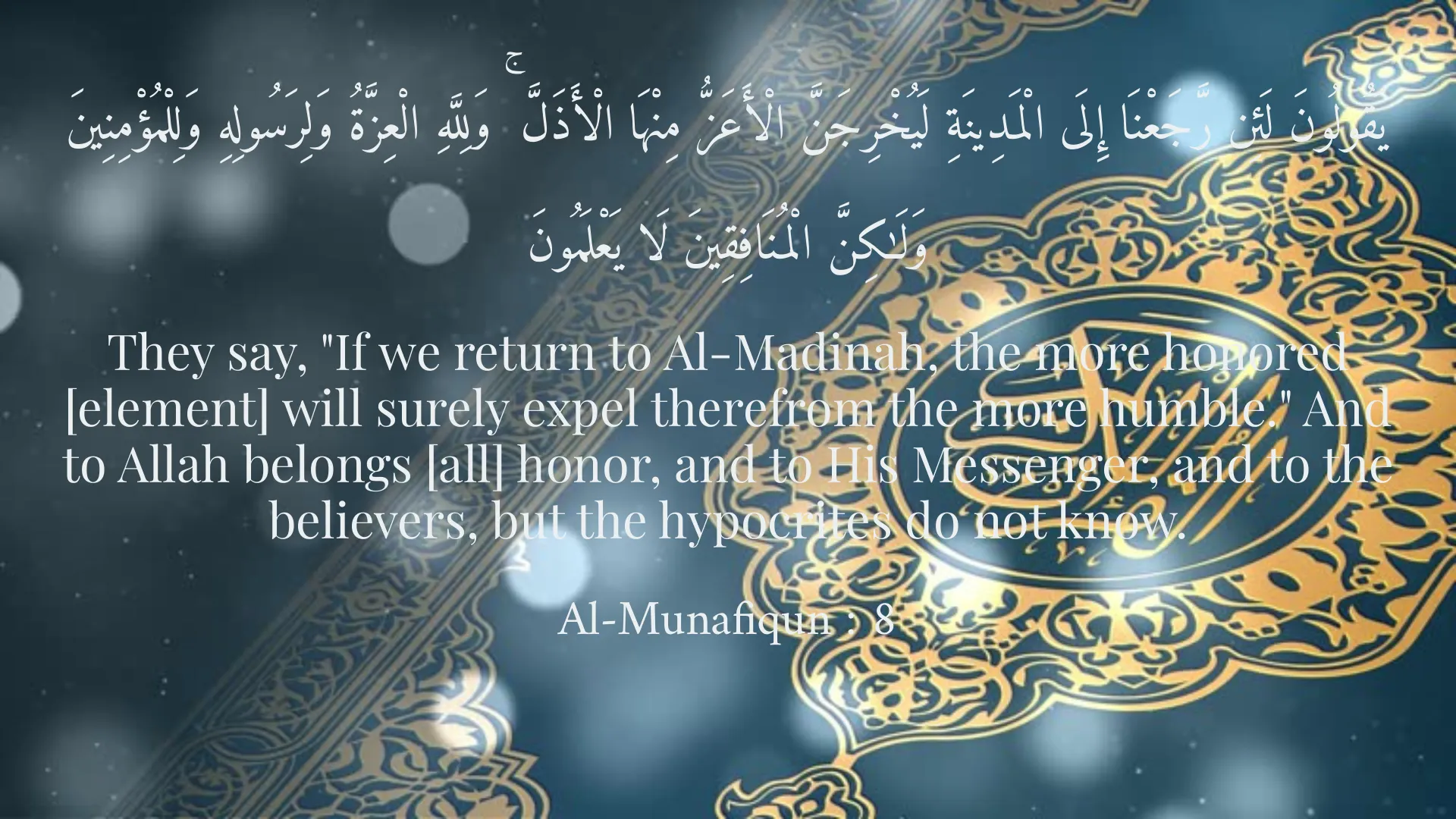
يَقُولُونَ لَئِن رَّجَعْنَا إِلَى الْمَدِينَةِ لَيُخْرِجَنَّ الْأَعَزُّ مِنْهَا الْأَذَلَّ ۚ وَلِلَّهِ الْعِزَّةُ وَلِرَسُولِهِ وَلِلْمُؤْمِنِينَ وَلَٰكِنَّ الْمُنَافِقِينَ لَا يَعْلَمُونَ
They say, "If we return to Al-Madinah, the more honored [element] will surely expel therefrom the more humble." And to Allah belongs [all] honor, and to His Messenger, and to the believers, but the hypocrites do not know.
Al-Munafiqun : 8
يَا أَيُّهَا النَّاسُ إِنَّا خَلَقْنَاكُم مِّن ذَكَرٍ وَأُنثَىٰ وَجَعَلْنَاكُمْ شُعُوبًا وَقَبَائِلَ لِتَعَارَفُوا ۚ إِنَّ أَكْرَمَكُمْ عِندَ اللَّهِ أَتْقَاكُمْ ۚ إِنَّ اللَّهَ عَلِيمٌ خَبِيرٌ
O mankind, indeed We have created you from male and female and made you peoples and tribes that you may know one another. Indeed, the most noble of you in the sight of Allah is the most righteous (pious) of you. Indeed, Allah is Knowing and Acquainted.
Al-Hujurat : 13
وَمَا خَلَقْتُ الْجِنَّ وَالْإِنسَ إِلَّا لِيَعْبُدُونِ
And I did not create the jinn and mankind except to worship Me.
Adh-Dhariyat : 56
Short Story
It is narrated that a pious dervish consistently engaged in worship and solitude, distancing himself from people. Some considered him mad, while others called him devout and righteous. The dervish cared not for what people said, whether good or bad. When asked why he paid no heed to the words of men, he replied: "Those who call me mad are unaware of the state of my heart, and those who praise me are ignorant of my hidden flaws. So what concern have I with the talk of creation? My gaze is fixed upon the sight of Truth, for He is the Knower of the manifest and the hidden." Thus, his heart found peace, and he sought his worth only in the pleasure of the Lord, not in the fleeting tongues of humankind.