Quranic Answer
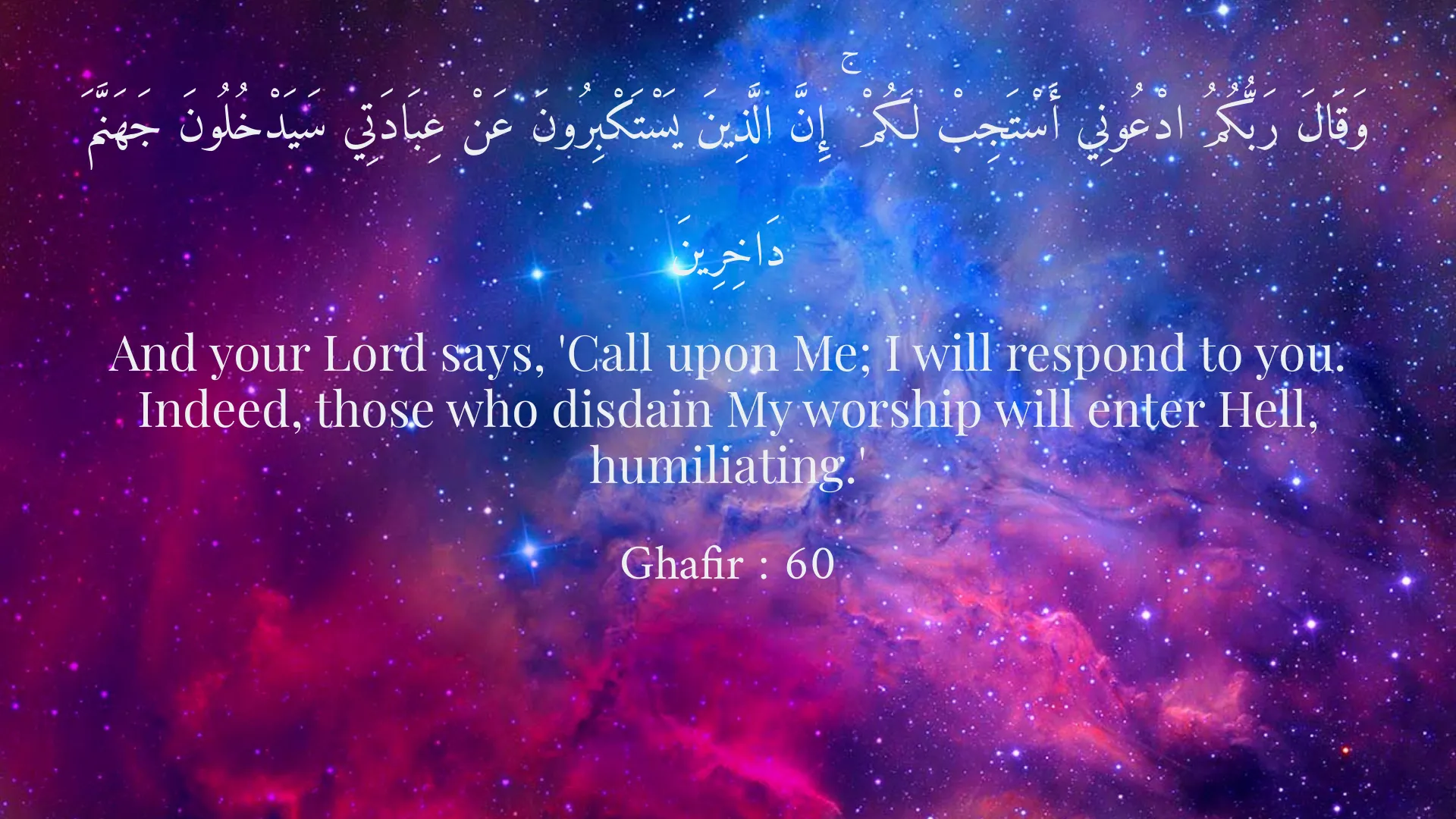
Prayer is a fundamental element in the relationship between humans and God, emphasized throughout the Quran. It serves as a channel of communication, a means of expressing one's devotion, seeking guidance, and forming a connection with the Creator. Understanding the significance of prayer in Islam is crucial for every believer as it lays the foundation for a strong spiritual relationship. The Quran, being the holy book of Islam, places considerable importance on prayer, offering guidance and examples to help believers engage in meaningful supplication. One notable verse that highlights the importance of prayer is found in Surah Ghafir, verse 60, where Allah states, 'And your Lord says, 'Call upon Me; I will respond to you. Indeed, those who disdain My worship will enter Hell.' This verse punctuates the need for believers to reach out to God, assuring them that the Divine is always ready to listen and respond. In the Islamic worldview, prayer is not merely a ritualistic obligation but a vital form of communication with God. The reassurance that prayers will indeed be answered, provided they are offered sincerely, underscores the significance of intention in the act of praying. Sincerity of purpose is paramount—as believers must engage with their innermost emotions, desiring not just answers to their requests, but genuinely seeking God's favor and presence. An integral aspect of the prayer experience in Islam involves invoking God by His beautiful names. In Surah Al-A'raf, verse 180, Allah instructs, 'And to Allah belong the best names, so invoke Him by them.' This verse illuminates the necessity of recognizing and calling upon God through His various attributes, each representing different facets of His nature. When believers invoke these names during their supplications, they deepen their understanding of God's greatness and mercy. Each name, whether it be Al-Rahman (The Most Merciful), Al-Ghafoor (The Most Forgiving), or Al-Hakeem (The All-Wise), serves as a reminder of the qualities that believers should emulate, as well as an invitation to approach God humbly and with reverence. By doing so, it is believed that prayers become imbued with a greater sense of purpose and intimacy. Moreover, the manner in which prayers are offered is as important as the act itself. Believers are encouraged to pray with a pure heart and complete reliance upon God. In times of fear and worry, as indicated in Surah Al-Imran, verse 173, it is vital for believers to place their trust in God and to persist in their prayers. This verse serves as a reminder that during trials and tribulations, prayer acts as a refuge and source of comfort. It reminds believers that God will always support those who turn to Him, reflecting the nurturing aspect of faith. The beauty of prayer lies not only in its potential for supplication but also in its power to cultivate a sense of inner peace and resilience in the face of difficulties. Every utterance, every bow, and every prostration serves to reaffirm a believer's reliance on the Almighty during moments of hardship, reinforcing the idea that God is always present, always listening. Ultimately, one of the essential prerequisites for the acceptance of a prayer is to align oneself fully with God, turning the heart away from external influences and focusing solely on the Creator. In prayer, believers are encouraged to engage their tongues, hearts, and souls with the utmost dedication. It is an act that goes beyond mere words; it is a deeply spiritual endeavor that requires one to pour their feelings, desires, and fears into a sacred dialogue with God. This connection demands authenticity—a heartfelt admission of one’s shortcomings and a sincere plea for guidance and forgiveness. Each prayer should emanate from a place of humility, reinforcing the understanding that humans are mere servants in need of God's grace and mercy. The essence of prayer in Islam transcends the idea of simply making requests. It should be viewed as a manifestation of servitude and an acknowledgment of our inherent dependency on God. As believers engage in prayer, they should embrace it as an opportunity for transformation—a chance to refresh their spiritual state, renew their intentions, and realign their priorities with God's will. The act of praying influences one's path, shaping their character and fostering a sense of gratitude and humility towards the Creator. Through prayer, believers are invited into a deeper relationship with God, creating a bond that cultivates both inner strength and spiritual enlightenment. In conclusion, prayer is not just a ritual or a duty; it is the lifeblood of a Muslim's spiritual existence. The Quran emphasizes the significance of prayer not only in seeking help and guidance but also as a means of building a profound relationship with God. Prayer represents a sacred dialogue characterized by sincerity, invoking God's beautiful names, and an unwavering heart focused on Him. As believers embrace the essence of prayer, they embark on a profound journey of faith that can transform their lives and lead them closer to the Divine. In a world filled with distractions and challenges, the solace and strength found in prayer serve as a testament to the enduring connection between humanity and the Creator, painting a picture of hope, resilience, and unwavering faith.
Related Verses
وَقَالَ رَبُّكُمُ ادْعُونِي أَسْتَجِبْ لَكُمْ ۚ إِنَّ الَّذِينَ يَسْتَكْبِرُونَ عَنْ عِبَادَتِي سَيَدْخُلُونَ جَهَنَّمَ دَاخِرِينَ
And your Lord says, 'Call upon Me; I will respond to you. Indeed, those who disdain My worship will enter Hell, humiliating.'
Ghafir : 60
وَلِلَّهِ الأَسْمَاءُ الْحُسْنَى فَادْعُوهُ بِهَا ۖ وَذَرُوا الَّذِينَ يُلْحِدُونَ فِي أَسْمَائِهِ ۚ سَيُجْزَوْنَ مَا كَانُوا يَعْمَلُونَ
And to Allah belong the best names, so invoke Him by them. And leave the company of those who deny His names; they will be recompensed for what they used to do.
Al-A'raf : 180
الَّذِينَ قَالَ لَهُمُ النَّاسُ إِنَّ النَّاسَ قَدْ جَمَعُوا لَكُمْ فَاخْشَوْهُمْ فَزَادَهُم إِيمَانًا وَقَالُوا حَسْبُنَا اللَّهُ وَنِعْمَ الْوَكِيلُ
The ones to whom the people said, 'Indeed, the people have gathered against you, so fear them.' But it increased them in faith, and they said, 'Sufficient for us is Allah, and He is the best disposer of affairs.'
Al-Imran : 173
Short Story
One day, a friend of mine told me that he felt his prayers were not reaching God. We decided to go to the mosque together and pray. There, when we went into prostration and earnestly sought from God, we felt a sense of peace and purity in our hearts. From that day on, we always remembered that prayer should be made with a pure intention and a calm spirit.