Quranic Answer
Dealing with social injustice from the perspective of the Holy Quran is not merely an ethical obligation but a fundamental divine duty and a cornerstone for building a healthy and dynamic society. The Quran unequivocally presents justice (Adl and Qist) as the foundational pillars of individual and communal life, urging its followers to always walk on the path of justice and abstain from any form of oppression or tyranny. This profound responsibility encompasses both individual and collective dimensions and is reiterated in numerous verses. Initially, it is crucial to understand that the concept of justice in the Quran is expansive, encompassing economic, social, judicial, and even justice in speech and conduct. This comprehensiveness highlights that Islam is not solely limited to devotional aspects but represents a complete way of life that ties worldly and otherworldly felicity to the establishment of justice. Confronting injustice in Islam does not mean passivity or surrender, but rather active and constructive action for reform. This action must be accompanied by wisdom and insight to achieve desired results and prevent further corruption. One of the key principles in confronting injustice is “bearing witness to truth” and “establishing justice.” The Holy Quran explicitly states in Surah An-Nisa, verse 135: “O you who have believed, be persistently standing firm for Allah, witnesses in justice, and do not let the hatred of a people prevent you from being just. Be just; that is nearer to righteousness. And fear Allah. Indeed, Allah is Acquainted with what you do.” This verse not only emphasizes the necessity of testifying to the truth but also mandates this testimony even against oneself, parents, or relatives. This represents the pinnacle of justice-seeking, elevating individuals above biases and personal interests. It signifies that in the face of injustice, one must not remain silent but bravely and fearlessly declare the truth, even if such pronouncements entail consequences for the individual or their loved ones. This requires cultivating a strong spirit and unwavering faith that triumphs over fear and self-interest, pushing individuals towards social responsibility. Speaking the truth, though seemingly difficult at first, ultimately strengthens the foundations of a just society and prevents the spread of oppression. Every individual, according to their abilities and position in society, has a responsibility to be the voice of the oppressed and to stand against tyranny. Another crucial duty for believers is “enjoining good and forbidding evil” (Amr bil Ma'ruf wa Nahy anil Munkar), which is considered one of the primary pillars of a vibrant Islamic society. The Quran refers to this principle in various verses, including Surah Al-Imran, verse 104: “And let there be [arising] from you a nation inviting to [all that is] good, enjoining what is right and forbidding what is wrong, and those will be the successful.” This principle is not just a moral recommendation but a defensive mechanism to preserve the health of society against corruption and injustice. Enjoining good and forbidding evil can take various forms, from friendly advice to civil protests, constructive exposé, and efforts to change oppressive laws through legal and peaceful channels. These actions should be accompanied by wisdom, good counsel, and engaging in debate in the best manner, unless necessity dictates otherwise. The primary objective of this task is to rectify affairs and steer society back onto the path of justice, not merely to condemn. This collective responsibility rests on all Muslims to work together to create an environment where injustice has no place, and any deviation from the path of justice is met with an appropriate response. This means that one should never be indifferent to the violation of others' rights. The Quran also emphatically forbids all forms of “oppression” (Dhulm) and “transgression,” promising severe punishment for oppressors. In Surah Ash-Shura, verse 42, we read: “The blame is only on those who oppress people and transgress in the earth without right. Those will have a painful punishment.” This verse demonstrates that oppression, whether on an individual or societal scale, has dire consequences in this world and the Hereafter and incurs divine wrath. Combating injustice means fighting oppression. This struggle must first begin within oneself; that is, an individual must not contribute to injustice in any way, and then must stand firm against the injustices perpetrated by others. This responsibility also includes supporting the oppressed and striving for the realization of their rights. Helping the needy and those who have been wronged is not just a benevolent act but an inseparable part of confronting injustice. The Holy Quran repeatedly emphasizes the necessity of assisting the poor, the destitute, orphans, and the downtrodden. This aid can include financial, legal, or even moral and psychological support, as the oppressed need to feel that they are not alone and are supported. This practical support can rekindle hope in despairing hearts and pave the way for significant changes. Furthermore, the Quran emphasizes “establishing just systems” within society. Zakat and Sadaqat (charity) are among the mechanisms designed for the equitable distribution of wealth and the reduction of social inequalities. The aim of Islam is to create a society where opportunities are distributed fairly, and no one is deprived of their fundamental rights due to poverty or deprivation. This necessitates the active participation of believers in reforming social and economic structures that may be sources of injustice. Therefore, efforts to enact just laws, combat administrative and financial corruption, and ensure equal access to education and employment opportunities are all manifestations of confronting social injustice from a Quranic perspective. Social justice in the Quran is not a distant ideal, but a practical and achievable goal that requires continuous effort and universal commitment. Finally, “patience and perseverance” are of immense importance in the struggle against injustice. The path of justice-seeking is arduous and fraught with challenges, as oppressors do not easily relinquish their interests. But the Quran invites believers to steadfastness and reliance on Allah. In Surah Al-Baqarah, verse 153, we read: “O you who have believed, seek help through patience and prayer. Indeed, Allah is with the patient.” These verses indicate that standing firm against injustice requires forbearance, steadfastness, and reliance on God. Even in the face of despair, one must have faith in divine promises and not cease striving. For Allah has promised His victory to those who persevere in the path of truth and justice. This steadfastness means continuity in effort, not tiring or despairing, and maintaining a spirit of hope and struggle. In summary, confronting social injustice from a Quranic perspective is a comprehensive and multifaceted approach that includes awareness, courage in speaking truth, active efforts for reform, support for the oppressed, and steadfastness on the challenging path of justice-seeking. This outlook not only brings inner peace and satisfaction to the individual but also contributes to building a more just and God-pleasing society. This struggle is a continuous jihad that will persist until the full establishment of divine justice on earth, and every step on this path brings one closer to the Almighty.
Related Verses
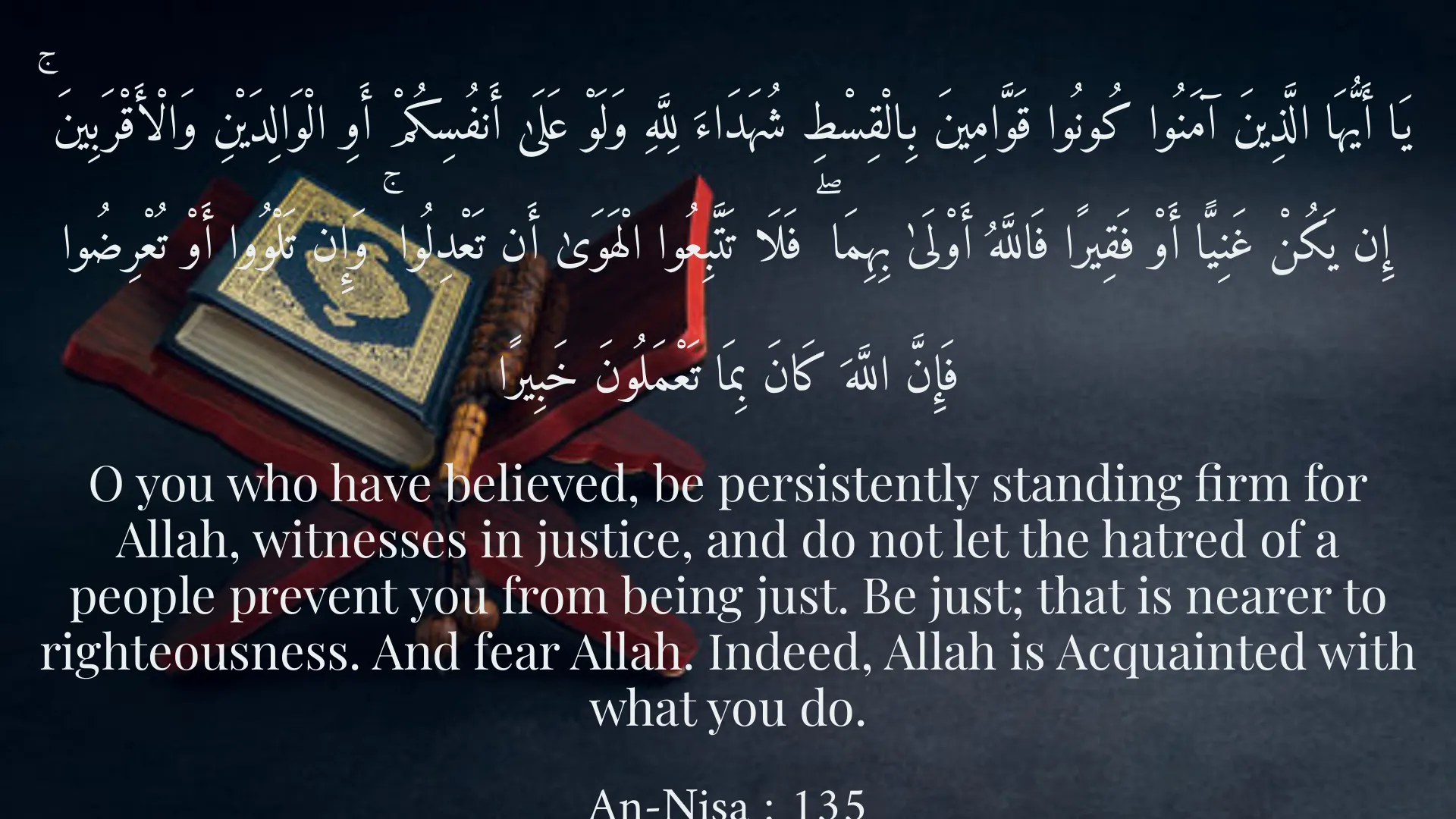
يَا أَيُّهَا الَّذِينَ آمَنُوا كُونُوا قَوَّامِينَ بِالْقِسْطِ شُهَدَاءَ لِلَّهِ وَلَوْ عَلَىٰ أَنفُسِكُمْ أَوِ الْوَالِدَيْنِ وَالْأَقْرَبِينَ ۚ إِن يَكُنْ غَنِيًّا أَوْ فَقِيرًا فَاللَّهُ أَوْلَىٰ بِهِمَا ۖ فَلَا تَتَّبِعُوا الْهَوَىٰ أَن تَعْدِلُوا ۚ وَإِن تَلْوُوا أَوْ تُعْرِضُوا فَإِنَّ اللَّهَ كَانَ بِمَا تَعْمَلُونَ خَبِيرًا
O you who have believed, be persistently standing firm for Allah, witnesses in justice, and do not let the hatred of a people prevent you from being just. Be just; that is nearer to righteousness. And fear Allah. Indeed, Allah is Acquainted with what you do.
An-Nisa : 135
وَلْتَكُن مِّنكُمْ أُمَّةٌ يَدْعُونَ إِلَى الْخَيْرِ وَيَأْمُرُونَ بِالْمَعْرُوفِ وَيَنْهَوْنَ عَنِ الْمُنكَرِ ۚ وَأُولَٰئِكَ هُمُ الْمُفْلِحُونَ
And let there be [arising] from you a nation inviting to [all that is] good, enjoining what is right and forbidding what is wrong, and those will be the successful.
Al-Imran : 104
إِنَّمَا السَّبِيلُ عَلَى الَّذِينَ يَظْلِمُونَ النَّاسَ وَيَبْغُونَ فِي الْأَرْضِ بِغَيْرِ الْحَقِّ ۚ أُولَٰئِكَ لَهُمْ عَذَابٌ أَلِيمٌ
The blame is only on those who oppress people and transgress in the earth without right. Those will have a painful punishment.
Ash-Shura : 42
Short Story
In Saadi's Gulistan, there is a tale of a just king who, during a journey one night, desired sweet water. One of his servants, without permission, took some water from a spring belonging to a poor farmer. Saadi relates that the king, after drinking the water, exclaimed, 'What delicious water!' However, a wise man in the assembly, bowing respectfully, said: 'O King, a single pearl acquired through injustice, though it may turn into a great treasure, its effect on the hearts of the subjects can destroy a kingdom. If a king commits even an iota of injustice, his armies will wreak havoc like dozens of armies.' The king, moved by the wise man's profound words, immediately returned the water to the spring and compensated the farmer. He issued a decree that henceforth, no one, not even by a speck, should infringe upon the rights of others. This story teaches us that injustice, no matter how small, can wither the roots of society, and confronting it with insight and timely action brings stability and peace.