Quranic Answer
The Holy Quran, the eternal word of God, is not merely a book of guidance and a manual for life; it is also an infinite wellspring for attaining inner peace and tranquility. In today's noisy and high-pressure world, where anxiety and apprehension have become an inseparable part of many people's lives, returning to this pure divine source can be a key to solving many psychological and spiritual issues. The Quran, in various ways and from different dimensions, paves the way for humanity to achieve lasting peace. The first, and perhaps most important, way to gain peace from the Quran is through the concept of 'Dhikr Allah,' or the remembrance of God. The Quran explicitly states that hearts find rest only in the remembrance of Allah. This remembrance includes reciting its verses, pondering their meanings, and performing acts of worship such as prayer (Salat) and supplication (Du'a). When a person perceives themselves in the presence of the Almighty and communicates with Him, an unparalleled sense of security and assurance envelops their being. This deep connection with the Creator reminds them that they are not alone and that a superior power is always watching over and protecting them. Regular recitation of the Quran with contemplation and reflection allows the word of God to penetrate one's soul, dispelling any worry or anxiety, as if God Himself is speaking directly to them, inviting them to peace. The second significant aspect is the concept of 'Tawakkul' or reliance on God. The Quran teaches believers to entrust the outcomes to Allah after fulfilling their duties and making their efforts. This reliance does not mean abandoning effort but rather being free from obsession and worry about the results. When a person comes to believe that Allah is the best Disposer of affairs and that nothing happens without His permission, a heavy burden is lifted from their shoulders. They understand that whatever comes their way, there is good and wisdom hidden in it, even if it appears unpleasant. This perspective fosters deep peace in facing life's difficulties and challenges. The third path is 'Sabr' or patience and perseverance. The Quran repeatedly emphasizes the importance of patience in the face of hardships, calamities, and temptations. Human life is full of ups and downs, and everyone encounters difficulties on their path. The Quran teaches believers that patience is the key to relief and tranquility. Allah is with the patient, and He has prepared an immense reward for them. When a person views problems with an approach of patience, they see them not as dead ends but as tests for growth and perfection. This viewpoint not only reduces the intensity of anxiety but also increases one's capacity to cope with them. The fourth factor is 'reflection on divine verses and signs of creation.' The Quran invites humanity to contemplate the creation of the heavens and the earth, the order present in nature, and the complexities of human existence. This contemplation leads a person to understand the greatness and wisdom of the Creator, making them see themselves as a small part of a much larger and orderly system. This insight strengthens feelings of humility and smallness before the infinite divine power, reducing pride and selfishness, which are often the source of many anxieties and discomforts. Understanding this order and aligning oneself with the flow of existence with trust in its Creator bestows an indescribable peace upon the heart. The fifth way is 'detachment from worldly attachments and recognizing the true nature of the world.' The Quran explicitly states that worldly life is fleeting and temporary, and humanity's primary goal is to achieve divine pleasure and the afterlife. When a person frees themselves from excessive material attachments and understands that wealth, status, and worldly beauties are transient, they are liberated from the grief of losing them and the anxiety of attaining them. This liberation from material bondage lightens the heart and brings true peace. Of course, this does not mean refraining from striving for worldly life, but rather not becoming overly attached to it or making it the central focus. Ultimately, it can be said that the Quran, by providing a comprehensive intellectual and spiritual framework, guides humanity towards a pervasive and lasting peace. This peace is attainable not only in the absence of problems but also in the midst of them, because it originates from a source beyond this world. By acting upon the teachings of the Quran, a person's life gains deeper meaning, and their heart becomes filled with assurance in God. The Quran is a healer of spiritual ailments and a balm for the wounds of the heart; whoever seeks refuge in it will experience tranquility and peace.
Related Verses
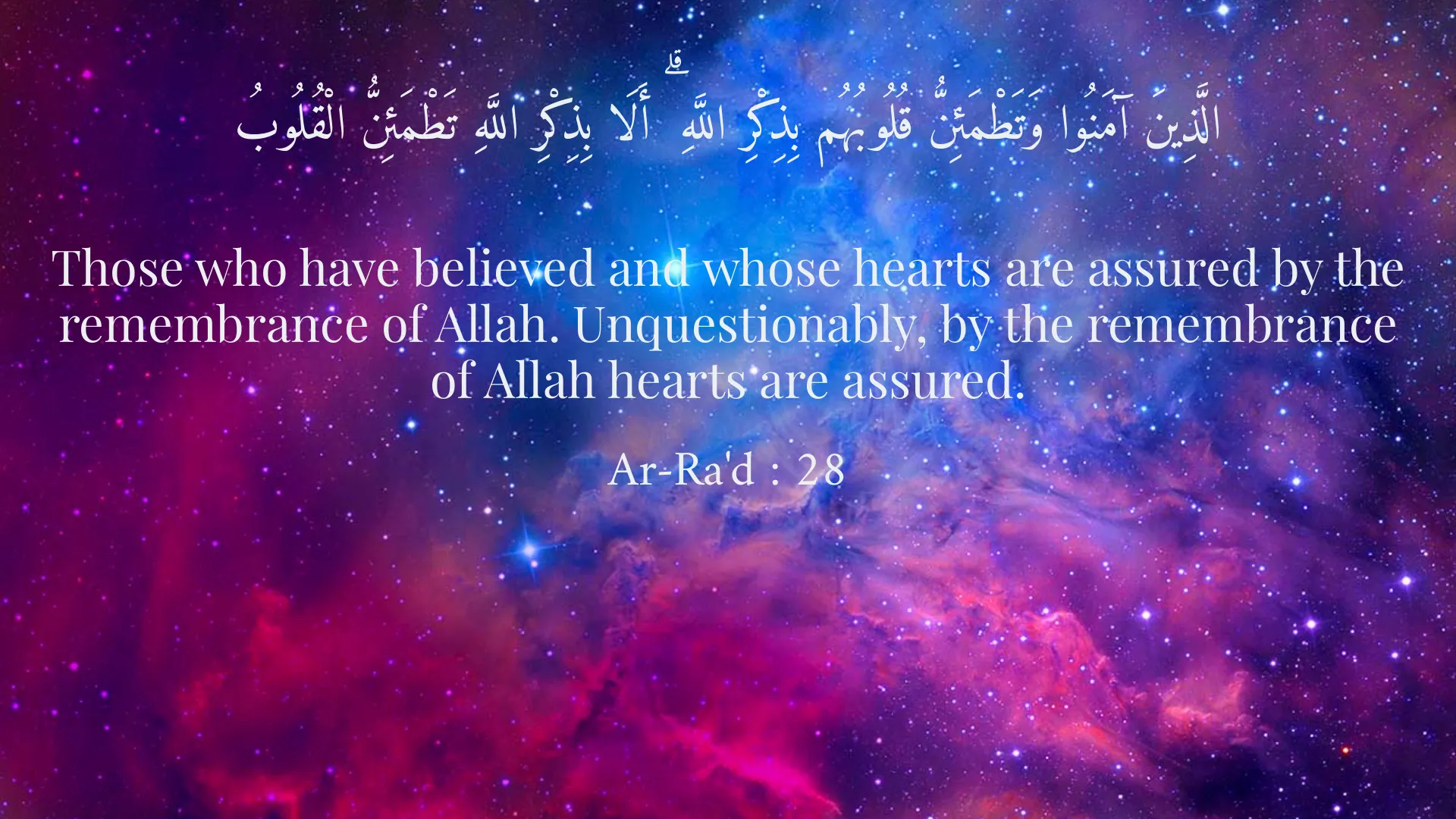
الَّذِينَ آمَنُوا وَتَطْمَئِنُّ قُلُوبُهُم بِذِكْرِ اللَّهِ ۗ أَلَا بِذِكْرِ اللَّهِ تَطْمَئِنُّ الْقُلُوبُ
Those who have believed and whose hearts are assured by the remembrance of Allah. Unquestionably, by the remembrance of Allah hearts are assured.
Ar-Ra'd : 28
هُوَ الَّذِي أَنزَلَ السَّكِينَةَ فِي قُلُوبِ الْمُؤْمِنِينَ لِيَزْدَادُوا إِيمَانًا مَّعَ إِيمَانِهِمْ ۗ وَلِلَّهِ جُنُودُ السَّمَاوَاتِ وَالْأَرْضِ ۚ وَكَانَ اللَّهُ عَلِيمًا حَكِيمًا
It is He who sent down tranquility into the hearts of the believers that they would increase in faith along with their [present] faith. And to Allah belong the soldiers of the heavens and the earth. And ever is Allah Knowing and Wise.
Al-Fath : 4
يَا أَيُّهَا النَّاسُ قَدْ جَاءَتْكُم مَّوْعِظَةٌ مِّن رَّبِّكُمْ وَشِفَاءٌ لِّمَا فِي الصُّدُورِ وَهُدًى وَرَحْمَةٌ لِّلْمُؤْمِنِينَ
O mankind, there has to come to you an admonition from your Lord and a healing for what is in the breasts and guidance and mercy for the believers.
Yunus : 57
Short Story
Once upon a time, a powerful and wealthy ruler lived in his palace. He had everything: coffers full of gold, a vast army, and countless servants. Yet, at night, he couldn't sleep, and his heart was constantly restless. He was always chasing another treasure, new conquests, and more than he already possessed, which plunged him into a whirlpool of anxiety. One day, a pious dervish, clad in tattered clothes, passed by his palace. The ruler saw him and inquired about his state. The dervish, with a cheerful face and a tranquil heart, replied: 'I am so rich that I possess nothing and am attached to nothing. My only possession is the remembrance of God and reliance on Him, which has brought me eternal peace. I fear no loss, nor do I greed for gain.' The ruler, astonished by these words, realized that true peace lies not in wealth or status, but in a vigilant heart free from attachments. From that day on, he strove to follow the dervish's path, and through the remembrance of God and liberation from worldly bonds, he found true peace. His heart became serene. This story reminds us of Sa'di's saying: 'Seek what is within people, not what is outwardly apparent.' And inner peace is a treasure gained through the Quran and the remembrance of God.