Quranic Answer
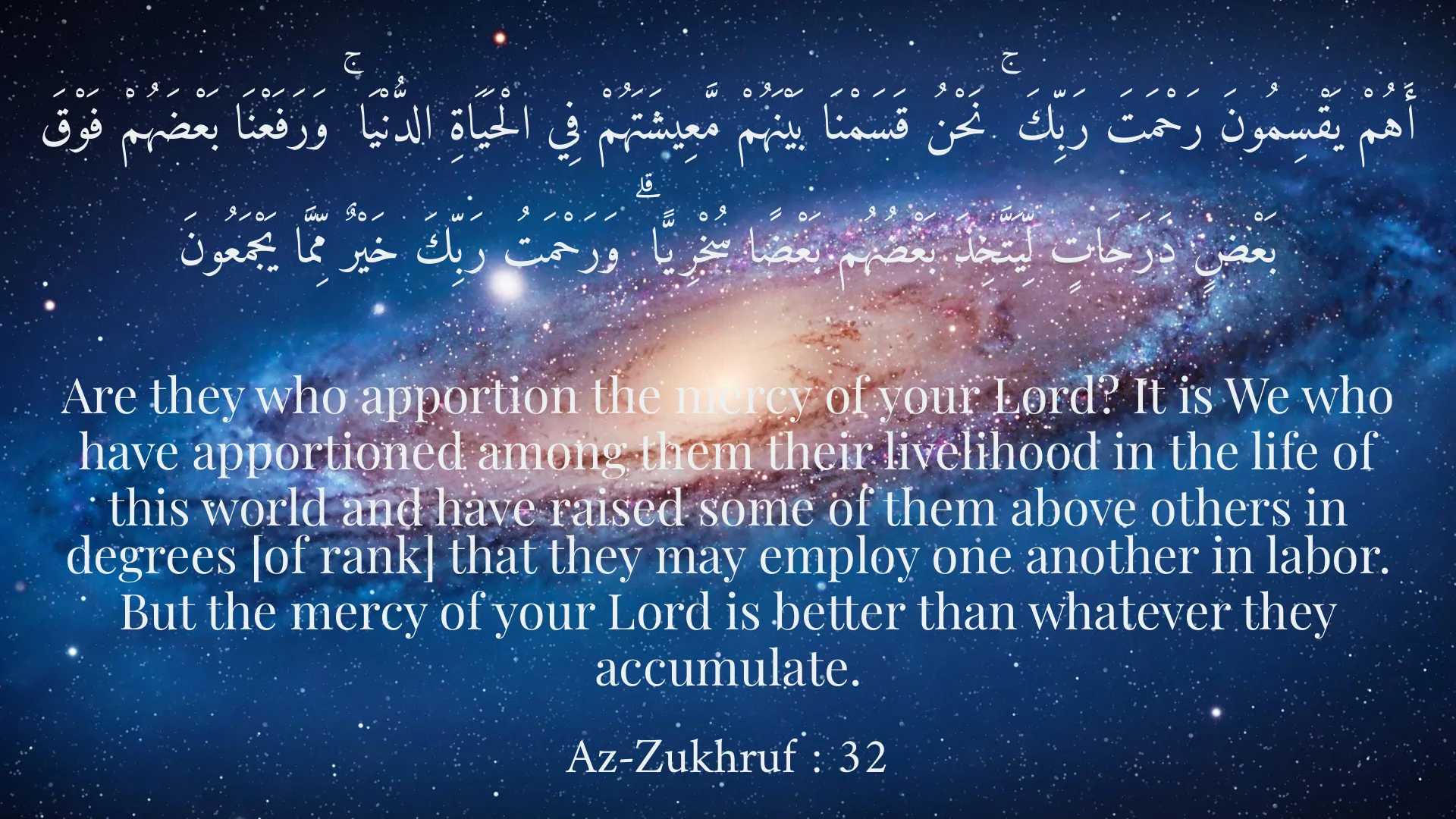
The act of comparing oneself to others, especially within the context of faith and righteous deeds, is a common human challenge that can lead to emotions such as envy, despair, arrogance, or even hypocrisy. The Holy Quran, with its profound teachings, offers comprehensive guidance to overcome this challenge and achieve inner peace, allowing one to focus on their personal spiritual journey. The fundamental key is to grasp the Quranic truth that every human being has a unique path before God, and the criterion for Divine judgment is individual effort and inner piety, not a comparison with the apparent achievements of others. The first and most crucial principle emphasized by the Quran is the concept of 'Qadar' (Divine decree) and Allah's wisdom in distributing provisions and ranks among His servants. In Surah Az-Zukhruf, verse 32, Allah Almighty states: "Are they who apportion the mercy of your Lord? It is We who have apportioned among them their livelihood in the life of this world and have raised some of them above others in degrees [of rank] that they may employ one another in labor. But the mercy of your Lord is better than whatever they accumulate." This verse clearly indicates that the distribution of blessings, talents, opportunities, and even spiritual ranks is based on Allah's will and wisdom. Therefore, comparing what Allah has bestowed upon others with what He has given us is a form of objection to Divine decree and destroys inner peace. Each person has their specific trials and responsibilities, and comparison prevents us from focusing on our own duties and blessings. The second principle is to focus on 'individual accountability' and personal responsibility. The Quran repeatedly emphasizes that each person is responsible for their own actions, and on the Day of Judgment, every soul will be held accountable only for its own deeds. Surah Al-Baqarah, verse 281, states: "And fear a Day when you will be returned to Allah. Then every soul will be compensated for what it earned, and they will not be wronged." This verse and similar ones show that the true measure of success in the sight of Allah is the extent of one's effort and sincerity on the path of piety, not outperforming others in outward matters. Instead of looking at others, we should look within ourselves and ask whether we have presented our best selves in the way of Allah? Have we fallen short in our religious and moral duties? The third Quranic solution is 'gratitude' (Shukr). Being grateful for the blessings and bounties that Allah has bestowed upon us is one of the most potent antidotes to comparison and envy. When a person focuses on what they have and is thankful for it, they pay less attention to what they lack or what others possess. In Surah Ibrahim, verse 7, Allah says: "If you are grateful, I will surely increase you [in favor]; but if you deny, indeed, My punishment is severe." Gratitude not only grants inner peace but also opens the doors of Allah's mercy and blessings. This perspective shifts our outlook from 'what I don't have' to 'what I have and should appreciate.' The fourth principle is to avoid 'wishing for what others have.' The Quran explicitly forbids us from envying and desiring what Allah has given to others. In Surah An-Nisa, verse 32, it is stated: "And do not wish for that by which Allah has made some of you exceed others. For men is a share of what they have earned, and for women is a share of what they have earned. And ask Allah of His bounty. Indeed, Allah is ever, of all things, Knowing." This verse clearly states that the desires of others and what has been granted to them pertain to their own account, and we should ask Allah for His bounty for ourselves. This prohibition not only prevents envy but also directs a person towards prayer and reliance on Allah, to ask Him for their needs, rather than looking at others with longing. The fifth point is 'competing in good deeds and righteous actions,' not in worldly possessions or outward religious appearances. The Quran encourages believers to hasten towards good deeds. In Surah Al-Baqarah, verse 148, we read: "And for every nation is a direction to which [its people] turn. So compete in [all] good deeds. Wherever you may be, Allah will bring you forth all together. Indeed, Allah is over all things competent." This verse defines the correct path for competition: competing in sincere acts of worship, serving creation, acquiring beneficial knowledge, and excelling in anything that brings goodness and Allah's pleasure. This type of competition is constructive and leads to individual and collective growth, unlike worldly competitions that are usually accompanied by envy, arrogance, and strife. Finally, to avoid comparing oneself to others, one must always remember that the criterion of value in Islam is not wealth or worldly status, nor the number of visible acts of worship, but rather 'Taqwa' (piety) and 'sincere faith,' which reside in the hearts and are known only to Allah. Surah Al-Hujurat, verse 13, states: "O mankind, indeed We have created you from male and female and made you peoples and tribes that you may know one another. Indeed, the most noble of you in the sight of Allah is the most righteous of you. Indeed, Allah is Knowing and Acquainted." This verse explicitly identifies piety as the criterion of superiority, something that is neither visible nor comparable through outward appearances. Therefore, focusing on personal piety helps a person free themselves from false self-sufficiency (if they consider themselves superior) or feelings of inferiority (if they consider themselves inferior) and strives only to gain Allah's pleasure. This approach helps us to undertake our spiritual journey with greater peace and confidence, without looking at others with envy or arrogance.
Related Verses
أَهُمْ يَقْسِمُونَ رَحْمَتَ رَبِّكَ ۚ نَحْنُ قَسَمْنَا بَيْنَهُمْ مَّعِيشَتَهُمْ فِي الْحَيَاةِ الدُّنْيَا ۚ وَرَفَعْنَا بَعْضَهُمْ فَوْقَ بَعْضٍ دَرَجَاتٍ لِّيَتَّخِذَ بَعْضُهُم بَعْضًا سُخْرِيًّا ۗ وَرَحْمَتُ رَبِّكَ خَيْرٌ مِّمَّا يَجْمَعُونَ
Are they who apportion the mercy of your Lord? It is We who have apportioned among them their livelihood in the life of this world and have raised some of them above others in degrees [of rank] that they may employ one another in labor. But the mercy of your Lord is better than whatever they accumulate.
Az-Zukhruf : 32
وَلَا تَتَمَنَّوْا مَا فَضَّلَ اللَّهُ بِهِ بَعْضَكُمْ عَلَىٰ بَعْضٍ ۚ لِّلرِّجَالِ نَصِيبٌ مِّمَّا اكْتَسَبُوا ۖ وَلِلنِّسَاءِ نَصِيبٌ مِّمَّا اكْتَسَبْنَ ۚ وَاسْأَلُوا اللَّهَ مِن فَضْلِهِ ۗ إِنَّ اللَّهَ كَانَ بِكُلِّ شَيْءٍ عَلِيمًا
And do not wish for that by which Allah has made some of you exceed others. For men is a share of what they have earned, and for women is a share of what they have earned. And ask Allah of His bounty. Indeed, Allah is ever, of all things, Knowing.
An-Nisa : 32
وَلِكُلٍّ وِجْهَةٌ هُوَ مُوَلِّيهَا ۖ فَاسْتَبِقُوا الْخَيْرَاتِ ۚ أَيْنَ مَا تَكُونُوا يَأْتِ بِكُمُ اللَّهُ جَمِيعًا ۚ إِنَّ اللَّهَ عَلَىٰ كُلِّ شَيْءٍ قَدِيرٌ
And for every nation is a direction to which [its people] turn. So compete in [all] good deeds. Wherever you may be, Allah will bring you forth all together. Indeed, Allah is over all things competent.
Al-Baqarah : 148
Short Story
It is narrated in Saadi's Gulistan that there was an ascetic dervish deeply immersed in his worship and spiritual discipline. One day, he saw another dervish who outwardly seemed to be in a more favorable state and had greater acceptance among the people. The first dervish thought to himself, "Oh, if only I were like him and possessed such high status and respect!" This thought troubled him slightly. His spiritual guide, becoming aware of his state, said: "O friend! That servant whom you see, possesses a station granted by the grace and generosity of God. You too possess a grace that might be hidden from your sight. Attend to your own work with sincerity and avert your gaze from what has been given to others. Whomever God calls to a path and engages in a task, is beloved in that task. Let your aspiration be to attain the pleasure and contentment of the Almighty, not to imitate others or envy what has been bestowed upon them. For God has specialized each person in something and deprived them of another way, so that all may be in need of each other, and the world's wheel may turn. Therefore, occupy yourself with the task to which you have been called and asked for, not with what others do and what you long for."