Quranic Answer
Showing off, a concept known as 'riya' in Islamic terminology, refers to the act of performing good deeds or acts of worship with an ulterior motive, primarily to gain admiration or approval from others rather than sincerely for the sake of God (Allah). This notion is explicitly addressed within the pages of the Holy Quran, which serves as a guideline for Muslims to cultivate faith and engage in righteous acts with pure intentions. The gravity of 'riya,' or ostentation, is highlighted through various verses that direct believers to perform their deeds selflessly and with sincerity. One of the key verses that emphasize this principle is found in Surah Al-Baqarah, verse 264, where Allah cautions: ‘O you who have believed, do not invalidate your charities with reminders or harm.’ This verse serves as a reminder that every good deed, particularly charitable acts, should be isolated from any intentions of seeking validation or praise from others. The act of giving should stem from a sincere desire to please Allah, devoid of seeking recognition or accolades from the community. Furthermore, Surah Al-Ma'idah, verse 54, states: ‘Indeed, Allah will purify humans from hypocrisy and showing off.’ This assertion speaks volumes about the divine promise of purifying believers from the duality of intention often associated with showing off. It requires an individual to engage in self-examination and reflection on their motivations behind their actions. By performing good deeds solely for the pleasure of Allah, believers can attain a higher degree of sincerity and spiritual purity. The Quran’s teachings encourage us to develop an intrinsic motivation to engage in virtuous acts. For instance, charitable donations are most admirable when they are made with the intention of seeking Allah’s pleasure rather than drawing the attention of others. This selfless approach fosters a genuine spirit of generosity and kindness that enriches the fabric of community life and personal spirituality. One might wonder how to avoid 'riya' in our daily lives and interactions. The first step is to cultivate an intentional mindset focused on sincerity and humility. As stated in Surah Al-Ikhlas, ‘Say, He is Allah, [who is] One,’ the Quran emphasizes the Oneness of Allah and the need for believers to align their intentions with His will. This verse underscores the importance of intent and serves as a constant reminder to seek unity with Allah in every action performed. It asserts that true faith cannot coexist with hypocrisy or showing off, as these traits dilute one's connection to the divine. In the context of humanitarian aid, helping those in need should come from a place of empathy and compassion rather than a desire for recognition. True benevolence is demonstrated when an individual’s primary intention is to uplift others through acts of kindness, regardless of whether they receive public acknowledgment for their deeds. Cultivating a spirit of humility involves understanding that one’s worth is not tethered to societal views, but deeply rooted in one’s relationship with Allah. Moreover, the Prophet Muhammad (peace be upon him) exemplified ideal behavior when it came to righteous deeds. He established a benchmark for humility and sincerity, often performing acts of charity discreetly, away from the limelight, reinforcing the need for authenticity in our actions. By studying the life of the Prophet, individuals can learn to infuse their lives with a sense of modesty, transitioning away from superficial gestures towards genuine expressions of care. Social media and modern communication accelerated the human tendency to showcase personal achievements and charitable acts to garner attention. This brings forth an essential conversation about how the contemporary landscape can complicate the intention behind one’s actions. In today’s hyper-connected world, individuals might feel pressured to document their good deeds for the approval and admiration of others. However, it is critical to recognize that authentic intentions are what form the basis of one’s actions and that the approval of Allah supersedes worldly admiration. To deepen this introspective practice, individuals should regularly evaluate their intentions and reflect on their motivations before engaging in acts of charity. Some practical measures could include journaling one’s efforts, ensuring that most acts remain private, or seeking the company of those who emphasize performing deeds for Allah, thus maintaining an environment that discourages ostentation. Additionally, seeking forgiveness for past actions motivated by the desire for recognition can allow individuals to move forward with a clean slate, ready to engage in actions driven by sincere intentions. Engaging in regular prayer and supplication to Allah, asking for guidance, and assistance in maintaining purity of heart can reinforce one’s commitment to perform deeds for His sake. Ultimately, the antidote to showing off lies in nurturing valued attributes such as humility, sincerity, and the desire to serve others without the need for recognition. A societal shift towards celebrating authenticity and selflessness will foster an environment where acts of kindness flourish authentically. Embracing these values will create a ripple effect, inspiring others to focus on their own intentions and practice selflessness in an increasingly ostentatious world. In conclusion, the concept of 'riya' serves as a vital reminder for Muslims and people of all faiths that while it is admirable to perform acts of kindness, one’s intentions hold paramount importance. Distancing ourselves from the temptation to show off is not just a moral obligation but a spiritual necessity. By purifying our intentions and focusing on the pleasure of Allah in our actions, we can create a legacy of genuine service to humanity, driven by the desire to make the world a better place without the desire for external validation.
Related Verses
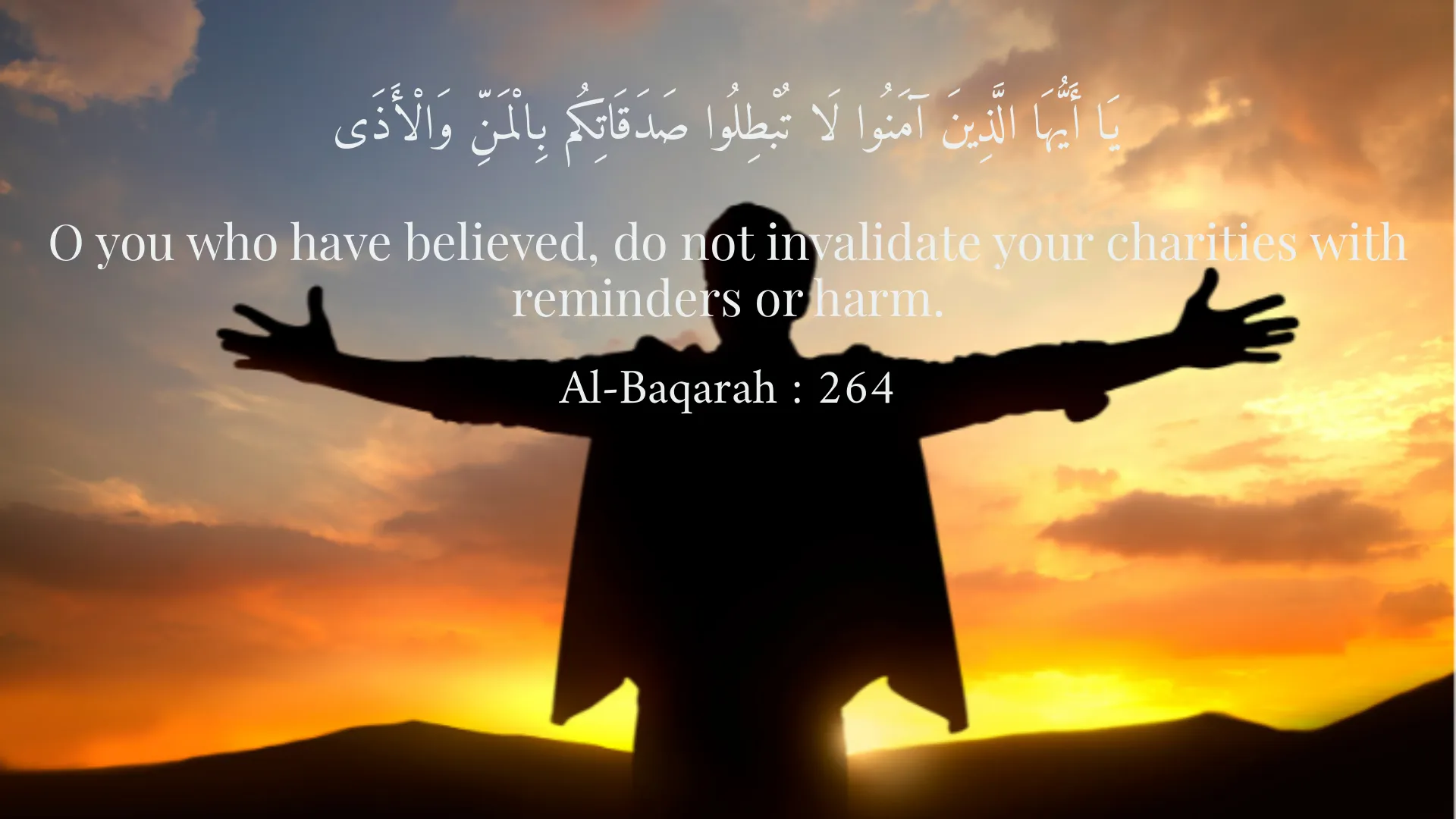
يَا أَيُّهَا الَّذِينَ آمَنُوا لَا تُبْطِلُوا صَدَقَاتِكُم بِالْمَنِّ وَالْأَذَى
O you who have believed, do not invalidate your charities with reminders or harm.
Al-Baqarah : 264
إِنَّ اللَّهَ سَيُطَهِّرُ الْعَبَادَ مِنَ النِّفَاقِ وَالرِّيَاءِ
Indeed, Allah will purify humans from hypocrisy and showing off.
Al-Ma'idah : 54
قُلْ هُوَ اللَّهُ أَحَدٌ
Say, He is Allah, [who is] One.
Al-Ikhlas : 1
Short Story
Once upon a time, a man named Hassan was walking in the market and saw people helping the needy. He decided to join them in their charitable deeds. However, he was reminded that if his intentions were for God, it would bring him more blessings. From that moment on, Hassan began to help others with purer intentions, free from showing off, and he felt a sense of happiness and inner peace.