Quranic Answer
Understanding the balance between truth and inner peace is one of humanity's deepest quests, and the Holy Quran offers clear and guiding answers. This question is not merely a philosophical matter but a practical concern for living in a world full of challenges and uncertainties. From a Quranic perspective, "truth" (Al-Haqq) primarily refers to the absolute truthfulness of Allah Almighty, His oneness, and the veracity of His words and guidance revealed to humanity. This truth encompasses all doctrines, laws, ethics, and realities of existence that Allah has disclosed for human well-being in this world and the hereafter. Quranic truth is not a relative or fluid concept but a stable and enduring light that illuminates the path of life. In contrast, "inner peace" or "tranquility of the heart" (Itmi'nan al-Qulub / Sakina) is a state of calmness, stability, assurance, and contentment of the heart that makes a person resilient against life's adversities, anxieties, and challenges, providing them with confidence. This peace is not merely the absence of anxiety, but an active presence of contentment and submission to divine will. The Holy Quran sees no contradiction between truth and inner peace; rather, it considers them interdependent. In fact, it clearly states that the path to achieving true and lasting peace is nothing but accepting and living by divine truth. Surah Ar-Ra'd, verse 28, explicitly states: "الَّذِينَ آمَنُوا وَتَطْمَئِنُّ قُلُوبُهُم بِذِكْرِ اللَّهِ ۗ أَلَا بِذِكْرِ اللَّهِ تَطْمَئِنُّ الْقُلُوبُ" (Those who have believed and whose hearts are assured by the remembrance of Allah. Unquestionably, by the remembrance of Allah hearts are assured). This pivotal verse forms the cornerstone of our understanding of this balance, indicating that the primary source of peace is faith in Allah and His remembrance. The remembrance of Allah means accepting the truth of His existence, the veracity of His teachings, and submission to His will. When a person aligns with this supreme truth, their heart is freed from anxiety and apprehension and attains peace. This peace is not superficial or fleeting but deep-rooted and profound, as it originates from the most powerful source of tranquility, the Creator of the universe. When faced with life's challenges, a person who remembers Allah and understands that everything is under His will not only finds peace but also gains the ability to overcome difficulties. Truth is a light that illuminates the path, and inner peace is the result of treading that bright and illuminated path. When a person understands the truth that Allah is the Creator, Sustainer, Administrator, and absolute Sovereign, and that all matters, whether seemingly good or bad, are in His hands, and that He is the Most Merciful of the merciful and the Most Just of judges, then worldly concerns, fear of the future, and anxiety stemming from adversities become meaningless. This deep understanding leads to profound reliance on Allah (Tawakkul), which itself is a tremendous source of peace. Surah At-Talaq, verse 3, says: "وَمَن يَتَوَكَّلْ عَلَى اللَّهِ فَهُوَ حَسْبُهُ ۚ إِنَّ اللَّهَ بَالِغُ أَمْرِهِ ۚ قَدْ جَعَلَ اللَّهُ لِكُلِّ شَيْءٍ قَدْرًا" (And whoever relies upon Allah – then He is sufficient for him. Indeed, Allah will accomplish His purpose. Allah has already set for everything a [decreed] extent). This verse assures humanity that by relying on the absolute divine truth, there is no need for worry, as Allah is sufficient and has set a measure for everything. This reliance does not imply inaction but means fulfilling one's duties to the best of one's ability and then entrusting the outcome to Allah. Another aspect of truth that leads to peace is the acceptance of life's realities and the trials that Allah has ordained for His servants. The Quran teaches us that this world is a place of trial and test (Surah Al-Baqarah, verse 155: "وَلَنَبْلُوَنَّكُم بِشَيْءٍ مِّنَ الْخَوْفِ وَالْجُوعِ وَنَقْصٍ مِّنَ الْأَمْوَالِ وَالْأَنفُسِ وَالثَّمَرَاتِ ۗ وَبَشِّرِ الصَّابِرِينَ" - And We will surely test you with something of fear and hunger and a loss of wealth and lives and fruits, but give good tidings to the patient). When this truth is accepted, in the face of hardships and problems, instead of despair, impatience, and anxiety, one turns to patience and perseverance. Patience (Sabr) is not only a moral virtue but also a powerful tool for maintaining inner peace in difficult situations. In Surah Al-Baqarah, verse 153, Allah states: "يَا أَيُّهَا الَّذِينَ آمَنُوا اسْتَعِينُوا بِالصَّبْرِ وَالصَّلَاةِ ۚ إِنَّ اللَّهَ مَعَ الصَّابِرِينَ" (O you who have believed, seek help through patience and prayer. Indeed, Allah is with the patient). This verse offers a practical solution for dealing with challenges and preserving peace: reliance on patience (accepting the reality of hardship and difficulty) and prayer (direct and deep connection with the absolute truth, Allah). Prayer is an opportunity to disconnect from worldly concerns and connect to the source of eternal peace. Furthermore, honesty and truthfulness (Sidq) are an inseparable part of truth that play a crucial role in inner peace. A person who is always truthful and honest has no need for concealment, lies, or worry about truths being revealed. This inner and outer transparency is itself a great source of peace. The Quran commands believers to be truthful: "يَا أَيُّهَا الَّذِينَ آمَنُوا اتَّقُوا اللَّهَ وَكُونُوا مَعَ الصَّادِقِينَ" (O you who have believed, fear Allah and be with the truthful) (Surah At-Tawbah, verse 119). Living by honesty and avoiding hypocrisy and deceit grants a person integrity of character, and this integrity leads to deep peace because the individual does not live in contradiction with themselves and their values. Balancing truth and inner peace does not mean choosing one over the other, but understanding that lasting inner peace can only be achieved within the framework of truth and adherence to it. If a person seeks a false peace based on denial of facts, delusions, or avoidance of responsibilities, that peace will not last and will sooner or later give way to distress, anxiety, and even psychological breakdown. For instance, avoiding the truth of death, the truth of accountability for one's actions, or the truth of social harms, may provide momentary superficial peace, but will ultimately lead to despair, regret, and remorse. True peace is the result of accepting life's bitter and sweet realities and striving for rectification and improvement based on divine truths. So, how is this balance achieved? Through a deep understanding of truth and acting accordingly. This involves several main axes: 1. Understanding Divine Truth: Studying the Quran, pondering its verses, and deeply comprehending Allah's Names and Attributes, which leads to complete Tawhid (oneness of God) and Tawakkul (reliance on God). The deeper one's knowledge of Allah, the greater their assurance and peace will be. 2. Adhering to Divine Laws: Performing obligations and avoiding prohibitions, which gives life a structured and purposeful framework, saving a person from aimlessness and wandering. This adherence provides a sense of responsibility, commitment, and purity, which itself brings a form of peace. 3. Patience and Gratitude (Sabr and Shukr): Accepting the truth of divine decree and reacting appropriately to blessings (gratitude) and hardships (patience). These two align a person with the reality of existence in every state and prevent heedlessness and ingratitude or despair and hopelessness. 4. Remembrance of Allah (Dhikr): Constant remembrance of Allah, performing prayers, supplications (Du'a), and reciting the Quran, which keeps the heart alive, removes its rust, and grants it peace. Dhikr is a renewal of one's covenant with truth. 5. Purification of the Self (Tazkiyah al-Nafs): Cleansing the soul from moral vices (such as envy, malice, falsehood, arrogance, greed) and adorning it with virtues (such as humility, generosity, kindness, justice) which leads to inner clarity and prevents conflict with truth. Moral vices are primary sources of anxiety and distress because they distance a person from the path of truth. In conclusion, truth is like a beacon that illuminates the path to the palace of peace. One who follows this light will never get lost in the darkness of ignorance and anxiety and will always move towards their goal, which is true and everlasting peace. The Holy Quran teaches us that the well-being of this world and the hereafter, and true peace, depend on accepting the absolute divine truth and living by it. This is the true balance: a life connected with truth that brings lasting peace. When a person lives on this foundation, truth is no longer daunting but rather a friend and guide that leads them to the safe haven of peace. This is how not just balance, but complete unity and coherence are established between truth and inner peace, for one is the guide and the other is the destination, and they are inseparable.
Related Verses
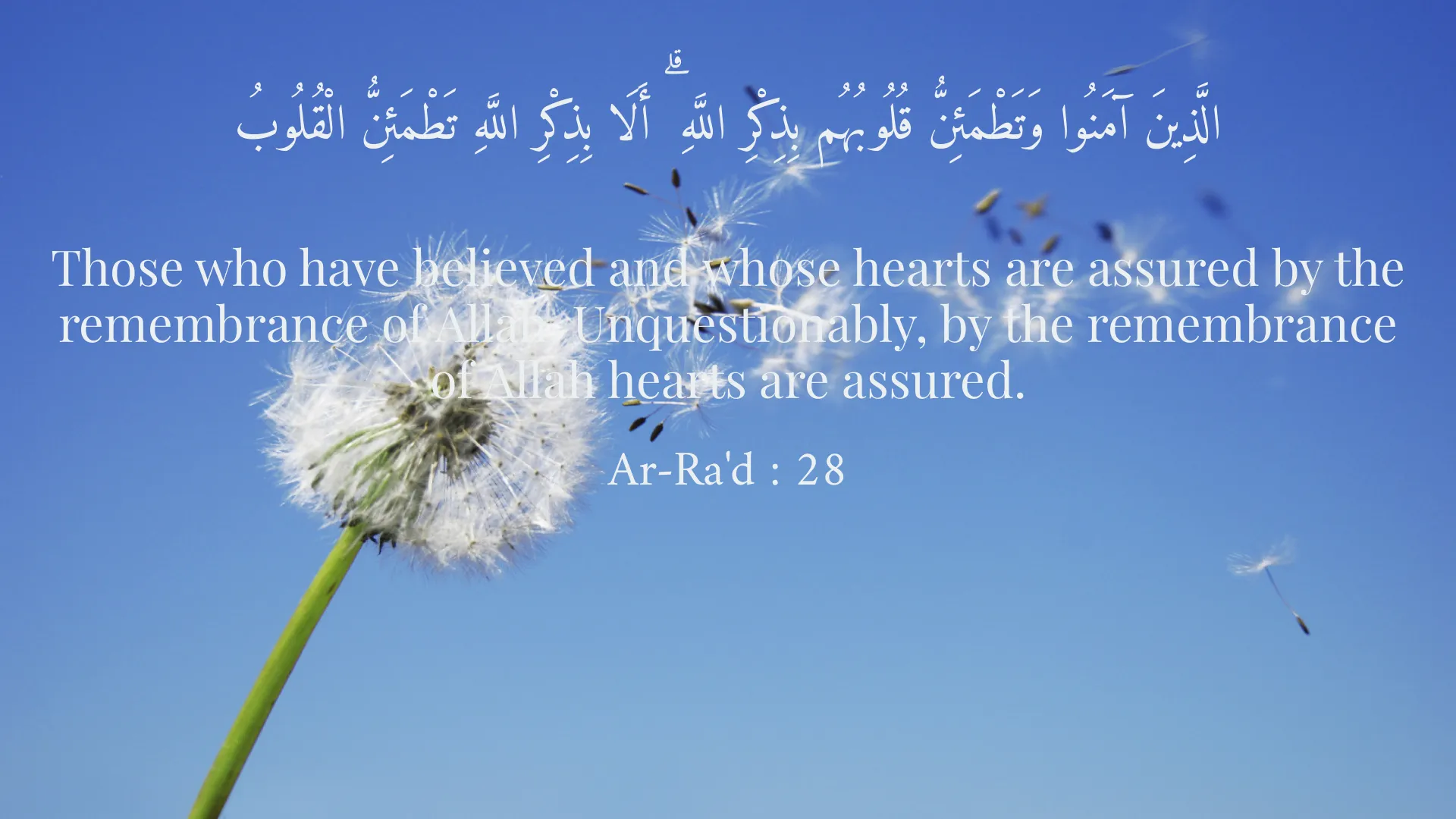
الَّذِينَ آمَنُوا وَتَطْمَئِنُّ قُلُوبُهُم بِذِكْرِ اللَّهِ ۗ أَلَا بِذِكْرِ اللَّهِ تَطْمَئِنُّ الْقُلُوبُ
Those who have believed and whose hearts are assured by the remembrance of Allah. Unquestionably, by the remembrance of Allah hearts are assured.
Ar-Ra'd : 28
وَمَن يَتَوَكَّلْ عَلَى اللَّهِ فَهُوَ حَسْبُهُ ۚ إِنَّ اللَّهَ بَالِغُ أَمْرِهِ ۚ قَدْ جَعَلَ اللَّهُ لِكُلِّ شَيْءٍ قَدْرًا
And whoever relies upon Allah – then He is sufficient for him. Indeed, Allah will accomplish His purpose. Allah has already set for everything a [decreed] extent.
At-Talaq : 3
يَا أَيُّهَا الَّذِينَ آمَنُوا اسْتَعِينُوا بِالصَّبْرِ وَالصَّلَاةِ ۚ إِنَّ اللَّهَ مَعَ الصَّابِرِينَ
O you who have believed, seek help through patience and prayer. Indeed, Allah is with the patient.
Al-Baqarah : 153
Short Story
It is narrated that a great king, possessing immense wealth and a vast retinue, was inwardly always restless and uneasy. Sleep eluded his eyes at night, and during the day, he was sorrowful and lamenting. He had a wise vizier who asked him, 'O King! What troubles you that with all these blessings, you find no peace?' The king sighed and said, 'The worries of the kingdom and its subjects, and the fear of enemies, leave me no rest for a moment.' The vizier replied, 'One night, I saw a dervish sleeping on the ground, as peacefully as kings. I asked him, 'O dervish, why are you so at ease?' He said, 'Because I have understood the truth of poverty and wealth, and I know that everything is from Him and returns to Him. My heart is illuminated by the light of reliance [on God], and I am content with what I have, and not sorrowful for what I do not possess. I have accepted the truth that He is the Sustainer, and I am His servant.' The king pondered over these words and realized that true peace lies in contentment with divine decree and reliance upon Him, not in the abundance of wealth and status. So, he strived to connect his heart with this truth, and gradually, he tasted the true essence of peace.