Quranic Answer
The Holy Quran and the Teachings of Prophet Muhammad (PBUH) on Neighborly Relations The significance of relationships in our daily lives is often conveyed through various religious texts, with the Holy Quran providing a clear framework for how we should interact with those who live nearby. The emphasis on kindness, respect, and compassion towards neighbors is not only a moral duty but also a divine command that enhances the fabric of society. Understanding the true essence of these relationships can foster a sense of community that transcends mere cohabitation. In Surah An-Nisa, verse 36, Allah states, "Worship Allah and associate nothing with Him, and to parents, do good, and to relatives, orphans, the needy, the near neighbor, the neighbor farther away, the companion at your side, the companion along the way, and those whom your right hands possess." This verse lays out a comprehensive approach to social interaction, emphasizing the importance of treating neighbors—both near and far—with utmost respect and benevolence. The Quranic directive encourages individuals to view their neighbors not just as individuals residing next door but as integral members of their larger community. According to this verse, the Quran highlights the interconnectedness of societal roles that we all play. Fulfilling the rights of our neighbors strengthens communal bonds—creating an environment where love and respect flourish. This advocate for neighborly kindness serves to remind believers that by fostering goodwill among those who live around us, we help build a more unified and compassionate society. Moreover, in Surah Al-An'am, verse 151, Allah commands, "And do not transgress the rights of others, and give full measure and weight in justice. We do not burden any soul except according to its capacity. And when you testify, be just, even if it concerns a near relative, and the covenant of Allah fulfill. This has He instructed you that you may remember." These verses indicate that justice in social interactions—including amongst neighbors—is essential. Our behavior towards our neighbors should, therefore, reflect fairness and integrity. This means not only paying attention to their physical needs but also safeguarding their dignity and privacy. The Quran encourages individuals to attend to their neighbors’ needs, which can manifest in various forms, such as offering assistance during times of difficulty, sharing resources, or extending a listening ear. These acts of kindness and generosity contribute significantly to the overall well-being of a neighborhood, creating an atmosphere of harmony and mutual respect. The Prophet Muhammad (peace be upon him) further emphasized the importance of neighborly relations through his teachings and behavior. In a well-known Hadith, he remarked, "Gabriel continued to advise me about neighbors until I thought he would assign them a share of inheritance." This profound statement underscores the high value that Islam places on the rights of neighbors, highlighting just how close they should be in our lives. The notion that neighbors deserve love and consideration on par with family illustrates the spirit of community that Islam seeks to cultivate. The teachings of the Prophet encourage us to be proactive in addressing the needs of our neighbors. A simple act of checking in on a neighbor, inviting them over for dinner, or supporting them in times of grief can help deepen our bond. Such actions are acts of worship in Islam, nurturing goodwill and understanding. Moreover, a culture of neighborly responsibility promotes security and peace within communities. When individuals are aware of their neighbors' lives, there is a lesser chance of conflict, misunderstanding, and distrust. This awareness also provides an opportunity to resolve grievances amicably, creating a space where mutual respect and understanding can thrive. By prioritizing our relations with neighbors, we are likely to encourage an environment where social cohesion prevails, leading to a more stable and prosperous society. Nevertheless, while it is essential to show kindness toward neighbors, it is equally important to avoid causing harm to them. Islam instructs that we must be mindful of our actions and words and ensure they do not negatively impact those around us. This includes respecting their privacy, refraining from gossip, and being conscious of how our actions may affect their well-being. By doing so, we fulfill our religious duties and create a positive environment that fosters collaboration, friendship, and resilience in our communities. The Quranic principles can be practiced daily by engaging with neighbors regularly. Whether it is offering a helping hand, sharing a meal, or simply greeting them with a friendly smile, every small action contributes to building strong relationships. This outreach forms a sense of belonging and trust, essential elements for any thriving community. In conclusion, the significance of neighborly relationships is a core teaching in Islam, rooted in the Holy Quran and the sayings of the Prophet Muhammad (PBUH). The reciprocal nature of kindness, respect, and justice that the Quran encourages us to foster transforms not only individual relationships but also has far-ranging effects on the community. By embracing these teachings, we pave the way for a more harmonious society, where love and compassion reign supreme. Ultimately, it is through our interactions with neighbors that we can truly practice the essence of our faith, create a supportive environment, and contribute positively to the world around us.
Related Verses
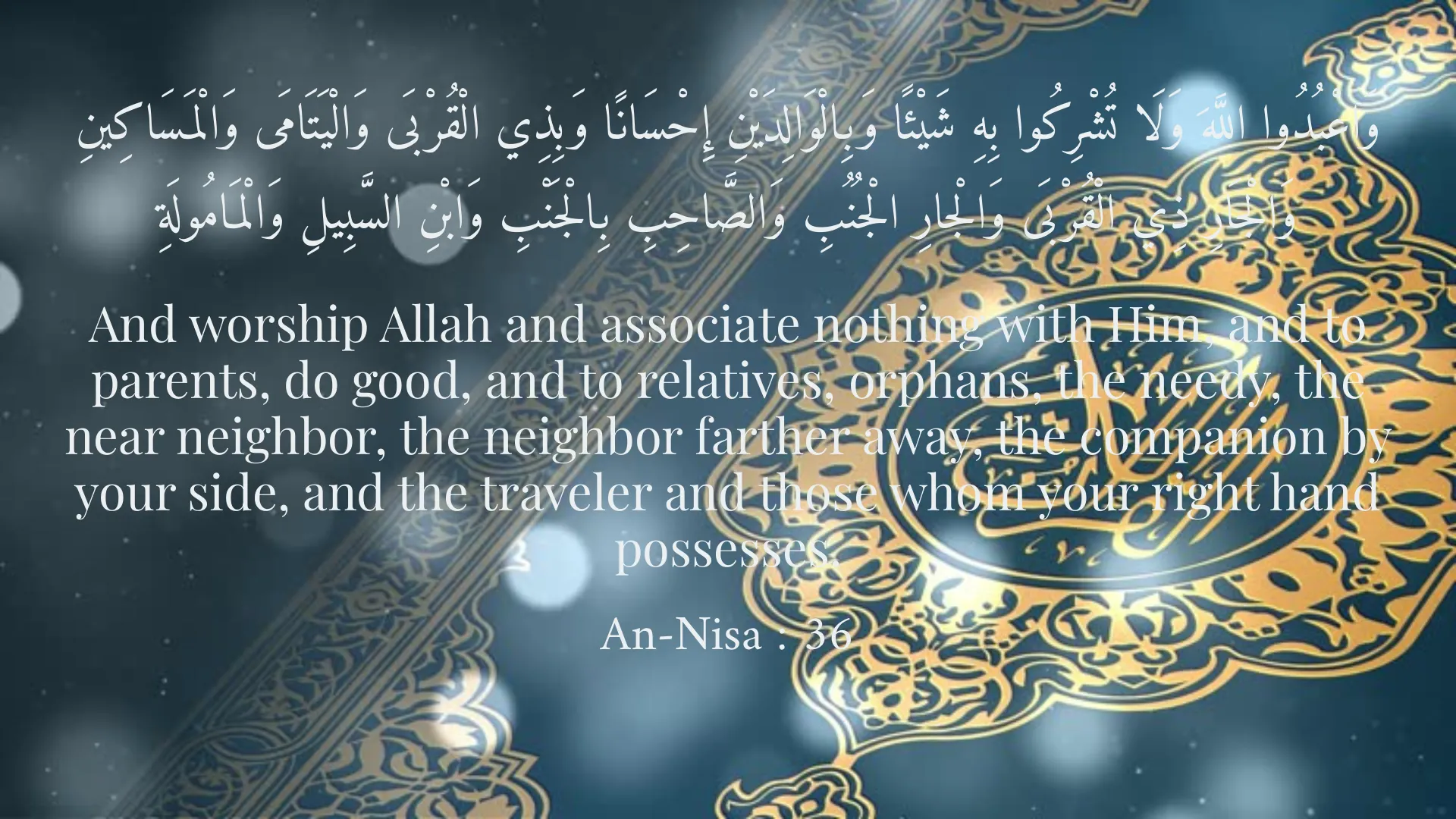
وَاعْبُدُوا اللَّهَ وَلَا تُشْرِكُوا بِهِ شَيْئًا وَبِالْوَالِدَيْنِ إِحْسَانًا وَبِذِي الْقُرْبَى وَالْيَتَامَى وَالْمَسَاكِينِ وَالْجَارِ ذِي الْقُرْبَى وَالْجارِ الْجُنُبِ وَالصَّاحِبِ بِالْجَنْبِ وَابْنِ السَّبِيلِ وَالْمَامُولَةِ
And worship Allah and associate nothing with Him, and to parents, do good, and to relatives, orphans, the needy, the near neighbor, the neighbor farther away, the companion by your side, and the traveler and those whom your right hand possesses.
An-Nisa : 36
قُلْ تَعَالَوْا أَتْلُ عَلَيْكُمْ مَا حَرَّمَ رَبُّكُمْ عَلَيْكُمْ أَلَّا تُشْرِكُوا بِهِ شَيْئًا وَبِالْوَالِدَيْنِ إِحْسَانًا وَأَنْ لَا تَقْرَبُوا مَالَ الْيَتِيمِ إِلَّا بِالَّتِي هِيَ أَحْسَنُ حَتَّى يَبْلُغَ أَشُدَّهُ وَأَوفُوا الْكَيْلَ وَالْمِزَانَ بِالْقِسْطِ ۚ لَا نُكَلِّفُ نَفْسًا إِلَّا وُسْعَهَا ۚ وَأَنفِقُوا فِي سَبِيلِ اللَّهِ وَلَا تُلْقُوا بِأَيْدِيكُمْ إِلَى التَّهْلُكَةِ ۖ وَأَحْسِنُوا إِنَّ اللَّهَ يُحِبُّ الْمُحْسِنِينَ
Say, 'Come, I will recite what your Lord has forbidden to you - that you not associate anything with Him, and to parents, good treatment. And do not approach the orphan's property except in a way that is best until he reaches maturity. And give full measure and weight in justice. We do not burden a soul except with that within its capacity. And speak to people good [words] and establish prayer and give zakah. But turn away from the ignorant.'
Al-An'am : 151
Short Story
One day, a man named Hasan began helping his neighbors in his neighborhood. He greeted his neighbor with a smile and assisted them in their daily tasks. Over time, the neighbors reciprocated Hasan's kindness, and a sense of cooperation and support emerged in the neighborhood. Hasan's experience demonstrated that with love and respect, the living environment turns into paradise.