Quranic Answer
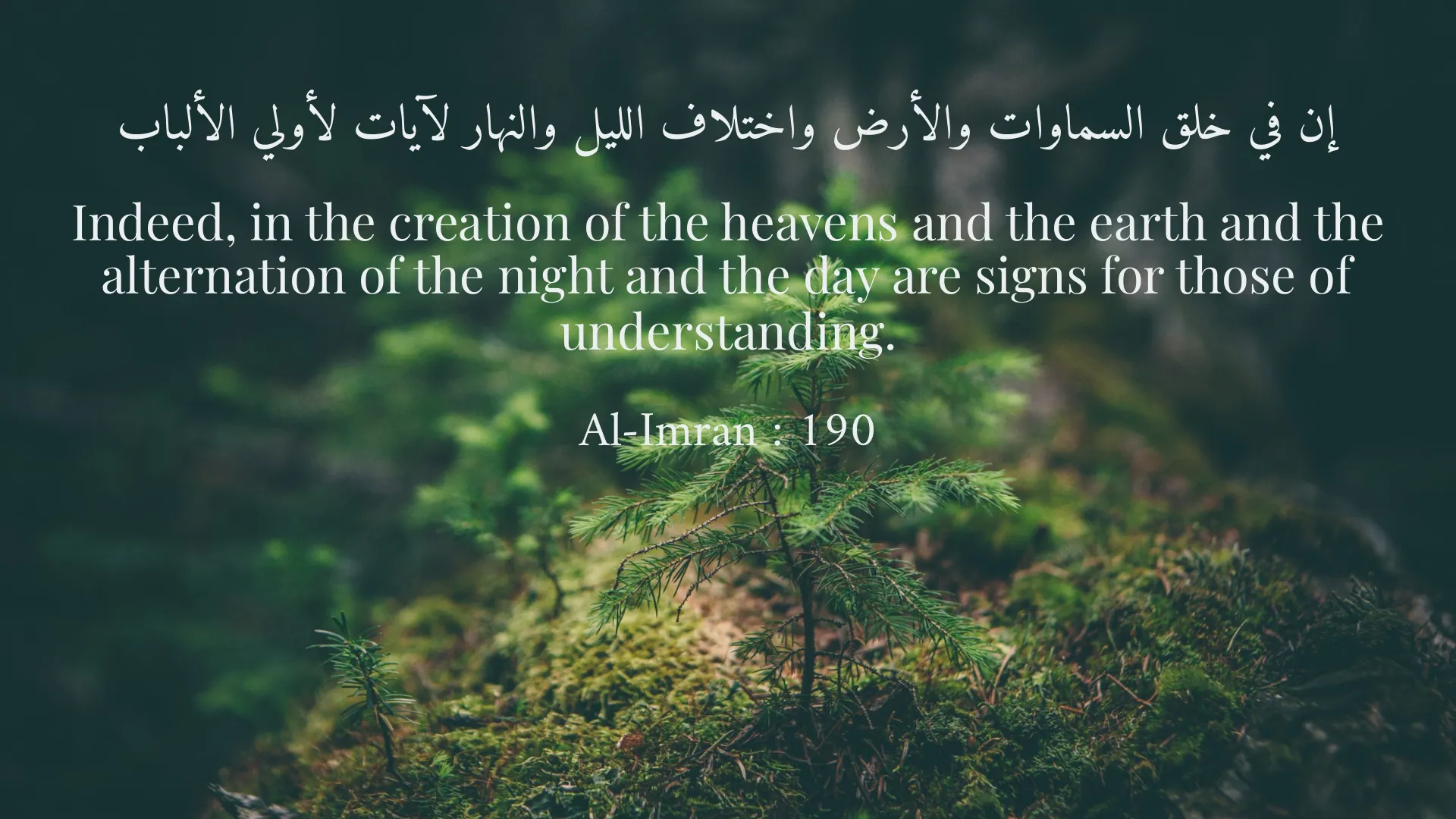
Contemplation and reflection form the cornerstone of a believer's life, as highlighted in the Holy Quran. Engaging deeply with these concepts can lead to profound insights not only about faith but also about the world around us. For many, these are not mere religious exercises, but rather essential practices for personal growth and spiritual development. The Quran, a fundamental text for Muslims, invites its readers to embark on this journey of reflection, urging them to ponder the signs of Allah through the lens of creation itself. Surah Al-Imran, verse 190 beautifully articulates this call: 'Indeed, in the creation of the heavens and the earth and the alternation of the night and the day are signs for those of understanding.' This profound verse serves as a reminder of the intrinsic connection between the act of contemplation and the understanding of divine signs inherent in the natural world. The essence of contemplation, as described in the Quran, transcends superficial thought; it involves a significant depth of understanding and the pursuit of knowledge. When we contemplate, we move beyond the surface and strive to grasp the deeper meanings that lie beneath. This act of pensive deliberation enables believers to recognize the interconnectedness of all creations and the majesty of the Creator. Through meditation on the cyclical nature of day and night, for example, believers can glean lessons about the cycles in their own lives—seasons of growth, periods of struggle, and phases of rest and rejuvenation. Moreover, the Quran does not solely encourage contemplation of the natural world; it places considerable emphasis on the reflection upon the text itself. Surah Muhammad, verse 24 makes this particularly clear: 'Do they not reflect upon the Quran, or are there locks upon their hearts?' This verse starkly questions the attention and focus of believers toward their holy scripture. It poses a crucial inquiry into the mindset of those who engage with the Quran: Are we truly reflecting on its profound teachings, or are we allowing our hearts to be sealed off from its transformative messages? The act of reflection is essential to spiritual growth. It calls upon believers to evaluate their actions, their thoughts, and their understanding of the divine narrative presented in the Quran. To become persons of contemplation and genuine seekers of truth, we must ask ourselves poignant questions—what do these verses mean in our daily lives? How can we embody the teachings found within them? Such introspection pushes us to connect our actions and beliefs, allowing us to cultivate a lifestyle that resonates with the principles of our faith. As we dive deeper into the waters of contemplation, Surah Al-Baqarah, verse 164 directs our attention to the myriad signs of Allah's power that exist across the universe: 'Indeed, in the creation of the heavens and the earth, the alternation of the night and the day, and the ships which sail through the sea with that which benefits people, and what Allah has sent down from the heavens of rain, giving life thereby to the earth after its lifelessness and dispersing therein every [kind of] moving creature and [His] directing of the winds and the clouds controlled between heaven and earth are signs for a people who use reason.' This verse encompasses the abundant signs of Allah’s handiwork, and encourages believers to look beyond the immediate and to appreciate the intricacies and wonders of their surroundings. In nature, we find countless reminders of Allah's existence and omnipotence. For instance, the changing seasons illustrate the power of transformation and resilience, while the cycles of life and death reflect the eternal nature of existence. Each aspect of the world around us prompts a call to reflect on our existence, purpose, and the connection we share with the Divine. By taking the time to notice and appreciate these signs, we not only honor the Creator but also deepen our own understanding and conviction. All living beings are connected by the same fundamental truths; contemplation allows us to assimilate these varying lessons into our lives. Nevertheless, the journey of contemplation is not one that is completed quickly or easily. It requires patience, diligence, and often a re-calibrating of our minds to focus on what genuinely matters. In today’s fast-paced world, where distractions abound and the simplicity of nature is often overshadowed by technology, committing time specifically for reflection and deep thought can be a challenge. Yet, the fruits of such labor are rich and rewarding. In dedicating time to understand our faith, our minds open to receiving the knowledge that can lead us to greater wisdom and peace. In conclusion, contemplation and reflection are emphasized as vital attributes of believers in the Holy Quran. The beauty of these practices lies not only in their spiritual significance but also in their practical applications in our everyday lives. As Surah Al-Imran and Surah Muhammad illuminate, engaging thoughtfully with both the universe around us and the divine text itself can lead to greater understanding and fulfillment. To truly become individuals who embody the spirit of contemplation, we must ask ourselves meaningful questions, dedicate time to these inquiries, and strive to integrate the lessons learned into our daily existence. Through this committed approach, we can cultivate a deeper connection with Allah and a more profound understanding of our purpose in life.
Related Verses
إن في خلق السماوات والأرض واختلاف الليل والنهار لآيات لأولي الألباب
Indeed, in the creation of the heavens and the earth and the alternation of the night and the day are signs for those of understanding.
Al-Imran : 190
أفلا يتدبرون القرآن أم على قلوب أقفالها
Do they not reflect upon the Quran, or are there locks upon their hearts?
Muhammad : 24
إن في خلق السماوات والأرض واختلاف الليل والنهار لآيات لقوم يعقلون
Indeed, in the creation of the heavens and the earth and the alternation of the night and the day are signs for those who use reason.
Al-Baqarah : 164
Short Story
Once upon a time, there was a man named Hasan who acted very hastily in his daily life. One day, he was discussing the verses of the Quran with a friend and realized how confused he was. His friend said to him, "Hasan, why don't you take a moment to contemplate? See the signs of Allah in your life and learn from them!" Hasan decided to set aside time for contemplation and read the Quranic verses carefully. After some time, he felt that his life had changed and he had gained more peace.