Quranic Answer
Success and humility, two valuable and seemingly contradictory traits, might appear difficult to reconcile at first glance. However, in the profound teachings of the Holy Quran, these two concepts are not in opposition but rather complement each other, paving the way for a fruitful and meaningful life. The Quran guides us towards true success; a success that is not limited to material wealth and power, but encompasses inner peace, salvation in the hereafter, and divine pleasure. This holistic form of success is inherently intertwined with genuine humility. The Quran explicitly states that everything a person achieves is a blessing from Almighty God. This perspective forms the foundation of humility. A successful person, according to the Quran, is not one who considers themselves self-sufficient and superior to others, but rather one who, despite attaining high material or spiritual positions, remains constantly grateful to God and acknowledges the Lord as the primary source of all their successes. Arrogance and pride are among the greatest afflictions of success, capable of nullifying blessings and diverting a person from the path of truth. In Surah Al-Isra, verse 37, Allah says: "And do not walk upon the earth exultantly. Indeed, you will not tear the earth [apart] and you will never reach the mountains in height." This verse clearly warns against walking with pride and swagger, considering oneself great; such self-importance has no basis in reality and is insignificant compared to the infinite power of God. True success is achieved when a person recognizes their place in the universe and understands that everything originates from Him and returns to Him. Humility not only eradicates pride but also helps a person remain open and receptive on the path of growth and perfection. A humble individual is more ready to learn from others, accepts their mistakes, and strives to rectify them. These qualities are essential for achieving sustainable success. In Surah Luqman, verse 18, the emphasis on humility and avoiding arrogance is further highlighted: "And do not turn your cheek [in contempt] toward people and do not walk through the earth exultantly. Indeed, Allah does not like everyone self-deluded and boastful." This verse indicates that humility is also crucial in interacting with people and in daily conduct. A person who combines success with humility becomes beloved by others and not only benefits from divine support but also strengthens their human connections. One of the most prominent examples for understanding this balance is the story of Qarun in Surah Al-Qasas. Qarun became arrogant and proud due to his immense wealth, forgetting that this wealth was from God. He not only failed to be grateful but attributed it to his own knowledge and ability. The consequence of his arrogance was his engulfment, along with his treasures, by the earth. This story serves as a lesson, showing how success without humility can lead to destruction and ruin. In contrast, the Quran describes true believers who maintain their humility even at the peak of success. In Surah Al-Mu'minun, verses 1 and 2, one of the characteristics of successful believers is humility in prayer: "Certainly will the believers prosper, who are in their prayer humbly submissive." This humility in prayer symbolizes overall humility before God and in all aspects of life. It is this humility that opens the path to prosperity and salvation. To be both successful and humble, several key steps can be extracted from Quranic teachings: 1. Recognizing the True Source of Blessings: Always remember that every success, knowledge, wealth, or power you acquire comes from God. This belief burns away the roots of pride and plants gratitude in the heart. Gratitude for blessings leads to more blessings. In Surah Ibrahim, verse 7, we read: "If you are grateful, I will surely increase you [in favor]; but if you deny, indeed, My punishment is severe." This verse directly emphasizes the relationship between gratitude and the increase of blessings (success), which is rooted in humility. 2. Serving Others: True success gains meaning when it also benefits others. Helping those in need, educating others, and using one's abilities for good are all examples of serving creation. These actions not only foster humility but also bring blessings and increase success. Prophet Muhammad (PBUH) was a perfect model of humility at the height of power and success, constantly engaged in serving people. 3. Avoiding Self-Praise and Ostentation: Do not use your successes for showing off or boasting. Instead, let your actions and their results speak for themselves. Humility in speech and conduct is a sign of maturity and wisdom. 4. Remembering Death and the Hereafter: Contemplating death and the life after it helps a person detach from worldly attachments and cast aside pride and arrogance. When one realizes the greatness of God and their own insignificance before Him, humility naturally develops. 5. Consultation and Accepting Criticism: A humble person is consultative and openly accepts constructive criticism and suggestions. This quality helps them identify their weaknesses and strive to overcome them, which is itself a factor in increasing success. Ultimately, true success in Islam is accompanied by responsibility and humility. One who reaches this level will not only find good fortune in this world but also pave the way for eternal salvation. This combination is not only possible but is the only path to achieving a sublime and sustainable life.
Related Verses
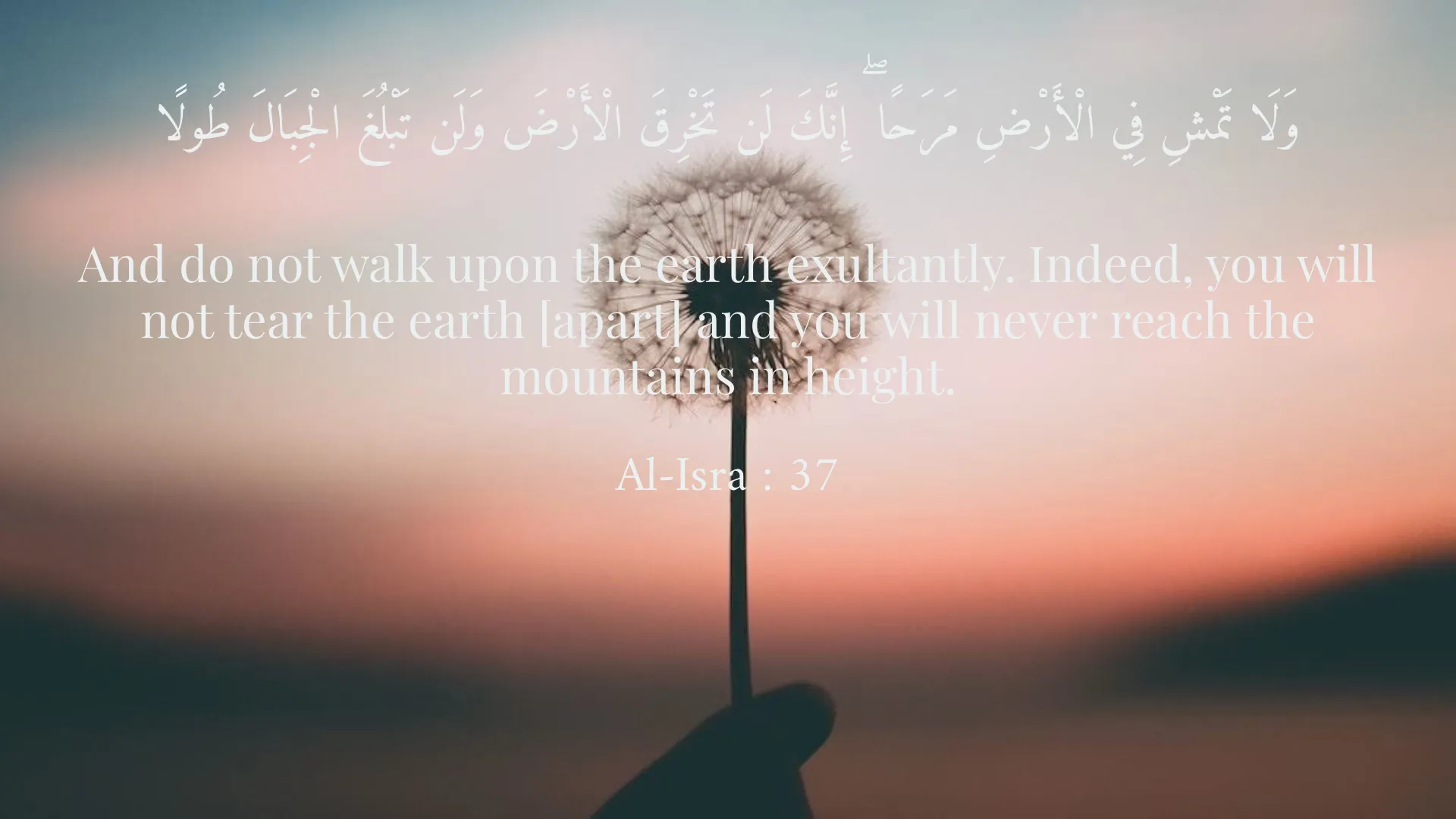
وَلَا تَمْشِ فِي الْأَرْضِ مَرَحًا ۖ إِنَّكَ لَن تَخْرِقَ الْأَرْضَ وَلَن تَبْلُغَ الْجِبَالَ طُولًا
And do not walk upon the earth exultantly. Indeed, you will not tear the earth [apart] and you will never reach the mountains in height.
Al-Isra : 37
وَلَا تُصَعِّرْ خَدَّكَ لِلنَّاسِ وَلَا تَمْشِ فِي الْأَرْضِ مَرَحًا ۖ إِنَّ اللَّهَ لَا يُحِبُّ كُلَّ مُخْتَالٍ فَخُورٍ
And do not turn your cheek [in contempt] toward people and do not walk through the earth exultantly. Indeed, Allah does not like everyone self-deluded and boastful.
Luqman : 18
قَدْ أَفْلَحَ الْمُؤْمِنُونَ
Certainly will the believers prosper,
Al-Mu'minun : 1
الَّذِينَ هُمْ فِي صَلَاتِهِمْ خَاشِعُونَ
Who are in their prayer humbly submissive.
Al-Mu'minun : 2
Short Story
A renowned and successful merchant, one day, found himself swelling with pride over his wealth and sharp mind. He looked down upon others with arrogance, attributing all his successes to his own cleverness. While traveling, he encountered a simple, humble dervish sitting by the roadside, radiating an inexplicable peace. The merchant, in his arrogance, scoffed, "Old man, you have nothing; what do you know of life?" The dervish smiled gently and replied, "I know that the sun shines for all, and the dust beneath our feet is the same for king and beggar. Your wealth may elevate your house, but it does not elevate your soul if humility is absent." The dervish's words struck the merchant's heart. He had gained much, but felt a void. The dervish continued, "True success, my friend, is not in how much you possess, but in how much you serve, and how humbly you acknowledge the source of all blessings. The most fruitful tree is the one whose branches bend the lowest." This encounter softened the merchant's heart. He began to share his wealth, treat his employees with kindness, and always remembered the dervish's words. His success, rather than making him arrogant, now made him a source of good, and he found a peace far greater than any riches could buy.