Quranic Answer
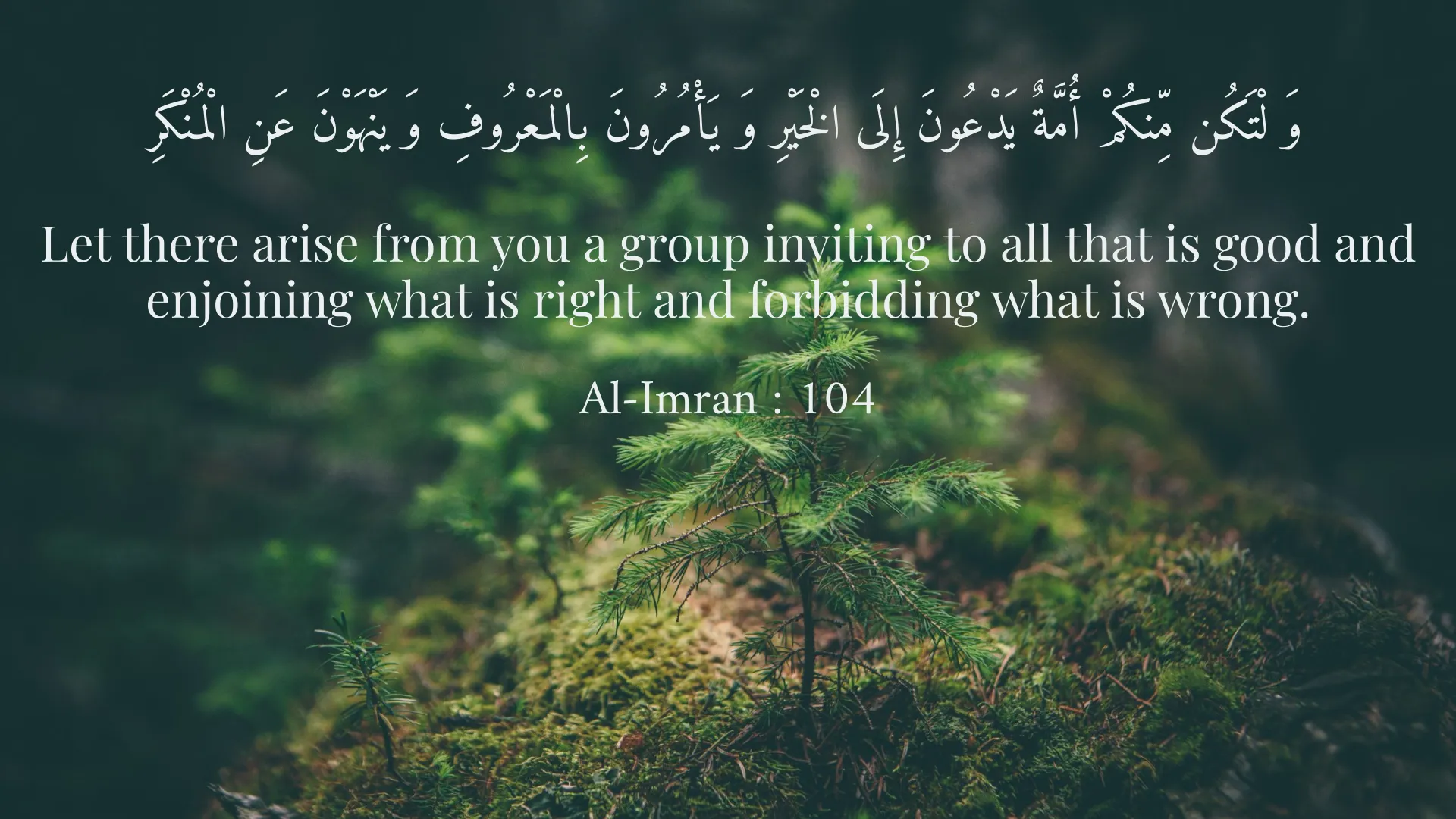
The Holy Quran is not merely a religious text but a comprehensive guide that outlines the responsibilities and roles of believers within society. Its teachings emphasize the profound effects that individuals can have on their communities when they embody the principles of justice, honesty, and collaboration. For Muslims, understanding and implementing the Quranic teachings is crucial in promoting societal well-being and fostering an environment of mutual respect and cooperation. In Surah Al-Imran, verse 104, Allah commands believers to act as facilitators of goodness and advocates for truth. The verse states: "Let there arise from you a group inviting to all that is good and enjoining what is right and forbidding what is wrong." This directive serves as a clarion call for Muslims to engage actively within their communities, encouraging a culture where good is promoted, and wrongdoing is addressed. The importance of this verse cannot be overstated as it provides a foundation for social responsibility; it is a reminder that believers are not mere bystanders in society but active participants who have a duty to influence the world in a positive direction. To fulfill this directive, Muslims are called to embody such virtues in their daily lives. The Quran teaches that believers should not only focus on their personal spiritual growth but also consider the impact their actions have on those around them. This holistic approach to faith compels individuals to strive for excellence not only in their worship but also in their interactions with others. As a result, believers should engage in acts of kindness, promote justice, and ensure that their dealings are characterized by honesty and fairness. Further reinforcing the significance of communal solidarity, Surah Al-Ma'idah, verse 2, emphasizes, "And cooperate in righteousness and piety." This verse calls upon believers to work together towards achieving noble goals. Collaboration, as stated in this verse, is essential for fostering righteousness and fostering a community spirit. By supporting each other in good deeds and striving for piety, Muslims can create a more substantial effect within their societies. Cooperation among community members extends beyond mere collaboration; it cultivates psychological support, brings together various skills, increases resources, and expands opportunities for collective advancement. Consequently, when individuals unite for a common purpose, they magnify their ability to enact change and progress together. In this regard, fostering an environment where cooperation flourishes sets the stage for achieving broader Islamic objectives and aspirations. The role of a Muslim does not end with individual efforts; it involves inspiring others through one’s deeds and guidance based on the Quran and the teachings of the Prophet Muhammad (PBUH). The essence of Islam calls upon its followers to be role models of the highest moral and ethical standards, striving to reflect values such as honesty, kindness, and brotherhood in all interactions. As active participants in society, Muslims are encouraged to portray these qualities consistently. They must understand that their behavior serves as a potent reflection of their faith, capable of influencing others both positively and negatively. In today’s fast-paced world where social interactions often occur through digital platforms, the values espoused in the Quran are more relevant than ever. Social networks and various communication avenues offer a unique opportunity for Muslims to emphasize and disseminate the true meanings of Islamic values. By engaging ethically and meaningfully through these platforms, believers can craft narratives that not only highlight positive behaviors but also inspire others to embody the spirit of cooperation, righteousness, and dedication to goodness. Moreover, in an age characterized by divisive rhetoric and social disparities, the responsibility of Muslims to act as beacons of hope becomes more critical. The need for ethical behavior is paramount; individuals must approach discussions, challenges, and interactions with integrity, fostering a sense of understanding and respect. By being mindful of one's words and actions online and offline, a Muslim can exemplify the teachings of Islam and serve as an admirable ambassador of the faith. In essence, Muslims hold the potential to be transformative figures within their communities when they adhere to the teachings of the Quran and the example set by the Prophet Muhammad (PBUH). By embodying the principles of good conduct, cooperation, and righteousness, believers can make meaningful contributions, ultimately enhancing the quality of life for those around them. The collective efforts of individuals grounded in ethical behavior, sound judgment, and community spirit pave the way for a brighter future, one where social harmony and understanding take precedence. As we reflect on our roles today, each Muslim should strive to be a living embodiment of these principles, ensuring that they act as worthy role models for future generations. The teachings of the Quran offer timeless wisdom on building robust, ethical, and inclusive societies. It is not only our duty to adhere to these teachings for ourselves but to actively promote and instill them within our communities, creating a ripple effect of positivity that transcends cultural and societal boundaries.
Related Verses
وَ لْتَكُن مِّنكُمْ أُمَّةٌ يَدْعُونَ إِلَى الْخَيْرِ وَ يَأْمُرُونَ بِالْمَعْرُوفِ وَ يَنْهَوْنَ عَنِ الْمُنْكَرِ
Let there arise from you a group inviting to all that is good and enjoining what is right and forbidding what is wrong.
Al-Imran : 104
وَ تَعَاوَنُوا عَلَى الْبِرِّ وَ التَّقْوَى
And cooperate in righteousness and piety.
Al-Ma'idah : 2
Short Story
Once upon a time, a young man named Ali sat among his friends, always wishing to be impactful in his community. One day he drew inspiration from the verses of the Quran on how to partake in good actions. He decided to start a group aimed at gathering people for goodness and kindness. Ali and his friends organized programs to assist others and promote a culture of philanthropy and cooperation. Soon, people began to notice positive changes in the community, and Ali was recognized as a role model for goodness.