Quranic Answer
The answer to the question, "How to be with God in the present moment?" stems from the profound and rich teachings of the Holy Quran. The Quran reveals to us that Allah Almighty is always with us, in every time and place. His presence is not something we need to "create"; rather, it is a reality that we must "realize" and "experience." This realization is the cornerstone of a believing life and helps individuals maintain a vibrant and dynamic connection with their Creator at every moment, whether in joy or in hardship.
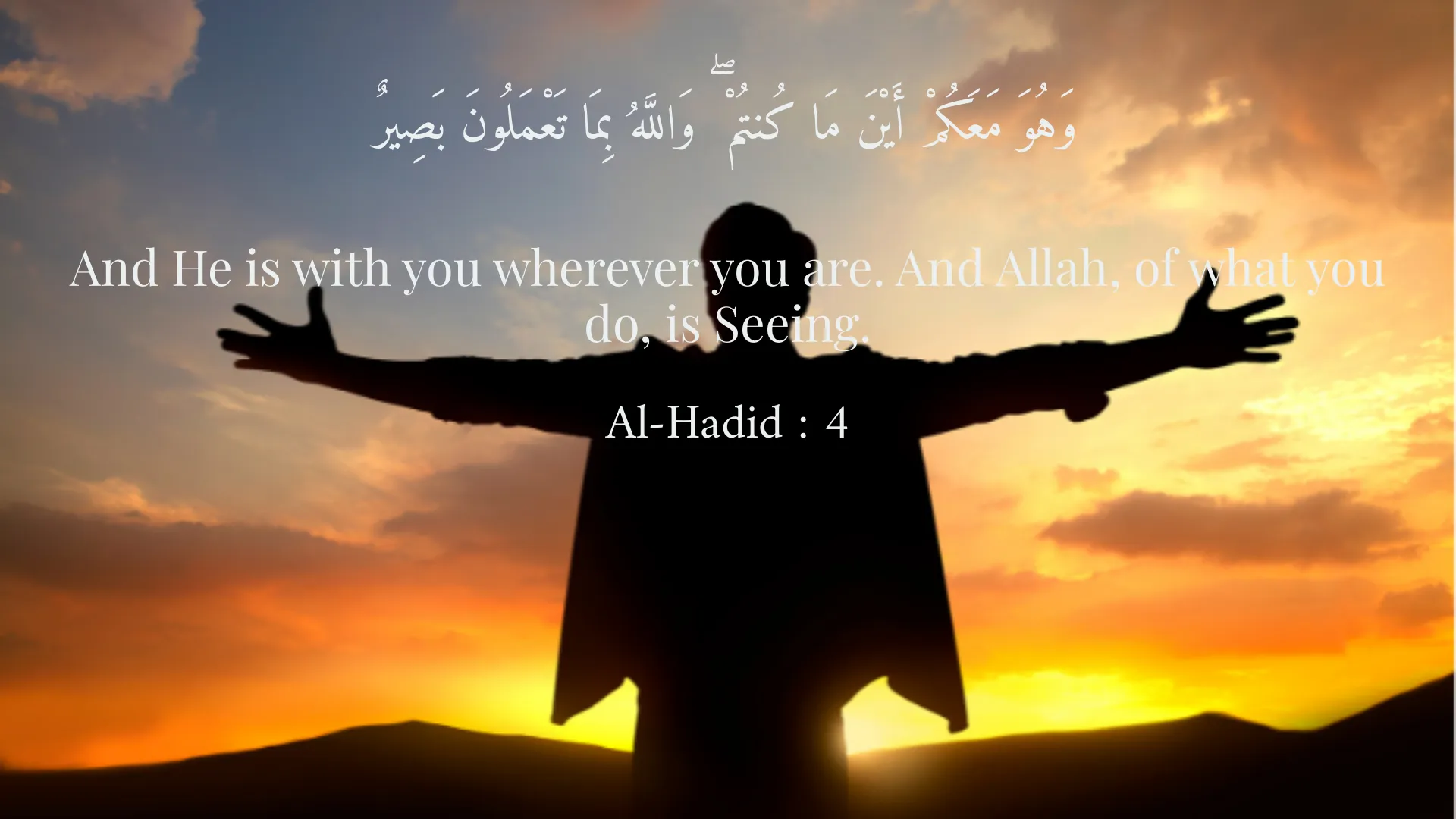
One of the most fundamental bases for this realization is the awareness of God's constant presence. The Quran explicitly states in Surah Al-Hadid, verse 4: "وَهُوَ مَعَكُمْ أَيْنَ مَا كُنتُمْ ۖ وَاللَّهُ بِمَا تَعْمَلُونَ بَصِيرٌ" (And He is with you wherever you are. And Allah, of what you do, is Seeing.) This verse unequivocally declares that Allah is not only aware of our deeds but is Himself present with us, deep within our beings, and throughout all of existence. This presence is not physical but rather a presence of knowledge, power, mercy, and complete encompassing. When a person genuinely comprehends this truth, they no longer feel alone or helpless. In the present moment, even if they are at the peak of difficulties or joys, they know that an infinite and compassionate power is observing and accompanying them. This awareness is the bedrock of being present with God moment by moment. Furthermore, in Surah Qaf, verse 16, we read: "وَلَقَدْ خَلَقْنَا الْإِنسَانَ وَنَعْلَمُ مَا تُوَسْوِسُ بِهِ نَفْسُهُ ۖ وَنَحْنُ أَقْرَبُ إِلَيْهِ مِنْ حَبْلِ الْوَرِيدِ" (And We have already created man and know what his soul whispers to him, and We are closer to him than [his] jugular vein.) This extraordinary closeness indicates that Allah encompasses not only our external actions but also the innermost aspects of our being.
Another way to strengthen this presence is through "Dhikr," or the remembrance of Allah. Dhikr is not merely the repetition of specific words; rather, it signifies recalling and bringing Allah to mind in all aspects of life. The Quran states in Surah Ar-Ra'd, verse 28: "الَّذِينَ آمَنُوا وَتَطْمَئِنُّ قُلُوبُهُم بِذِكْرِ اللَّهِ ۗ أَلَا بِذِكْرِ اللَّهِ تَطْمَئِنُّ الْقُلُوبُ" (Those who have believed and whose hearts are assured by the remembrance of Allah. Unquestionably, by the remembrance of Allah hearts are assured.) This tranquility of the heart is a direct result of being present with God in the current moment. When the heart becomes occupied with the remembrance of Allah, it is freed from past temptations, future anxieties, and worldly clamor, becoming immersed in the profound peace of the Divine presence. Dhikr can include the five daily prayers, which bring us to a spiritual rendezvous with God each day; the recitation of the Quran, which is His direct word; heartfelt supplications and invocations at any time and place; and even glorifying, praising, and thanking Him in the face of life's beauties or adversities. Every action performed with pure intention for Allah is a form of dhikr and draws us closer to Him. This continuous practice of remembrance trains the mind and heart to return to the source of peace and power in every moment, thereby transforming our daily life into continuous worship.
For this presence in the present moment to become deeper and more enduring, the Quran also emphasizes other key concepts: "Sabr" (patience) and "Salah" (prayer). In Surah Al-Baqarah, verse 153, it is stated: "يَا أَيُّهَا الَّذِينَ آمَنُوا اسْتَعِينُوا بِالصَّبْرِ وَالصَّلَاةِ ۚ إِنَّ اللَّهَ مَعَ الصَّابِرِينَ" (O you who have believed, seek help through patience and prayer. Indeed, Allah is with the patient.) Patience here means steadfastness and resilience in the face of life's difficulties and adversities. When a person encounters a problem in the present moment, patience helps them avoid emotional turmoil and face the situation with calm and reliance on Allah. This patience is not a passive act but an active, insightful steadfastness that keeps a person anchored in the present and prevents them from resorting to despair or restlessness. In this state, they realize that Allah is "with the patient," meaning His presence and divine aid manifest more prominently than ever during moments of patience and perseverance. This active acceptance of the current situation with faith in Divine wisdom keeps the heart at peace and prevents distress caused by futile resistance.
Prayer, too, is a manifestation of presence in the moment. Prayer is the pillar of faith and the ascension of the believer. Whenever a worshipper stands before their Lord, they turn to Him with their entire being, distancing themselves from the material world and its preoccupations, and finding themselves in the presence of God. The movements, invocations, and supplications of prayer are all tools that guide a person to heartfelt presence with Allah in the current moment. During these moments, the worshipper thinks neither of the past nor the future; rather, their entire being is focused on connecting with their Creator. This state of "presence of heart" (khushu') in prayer is the pinnacle of what it means to be with God in the present moment. Every prostration, every bowing, and every recitation in prayer is an opportunity to immerse oneself in Divine majesty and find tranquility in His refuge. This daily connection gradually strengthens our mindfulness outside of prayer as well.
Furthermore, the concept of "Tawakkul," or complete trust in Allah, plays a vital role in living in the present moment with Him. In Surah At-Talaq, verse 3, we read: "وَمَن يَتَوَكَّلْ عَلَى اللَّهِ فَهُوَ حَسْبُهُ" (And whoever relies upon Allah - then He is sufficient for him.) Tawakkul means that after effort and planning, a person entrusts the outcome of affairs to Allah and trusts in His power and wisdom wholeheartedly. This reliance helps a person free themselves from unnecessary worries about the future and, with peace of mind, focus on what they can do in the present moment. When we know that all matters are under His control and He wills what is best for us, we can step forward in the moment with confidence, directing our energy towards constructive actions in the present rather than futile anxieties.
Similarly, "Shukr" (gratitude) is a powerful factor for presence. Gratitude compels us to pay attention to the countless blessings and favors we enjoy in this very moment. When a person, instead of focusing on what they lack or distant aspirations, looks at what they possess now and thanks Allah for it, they are effectively filling the present moment with the presence of their Lord. This gratitude manifests both verbally (saying "Alhamdulillah") and practically (using blessings correctly) and leads to an increase in divine favors, as stated in Surah Ibrahim, verse 7: "لَئِن شَكَرْتُمْ لَأَزِيدَنَّكُمْ" (If you are grateful, I will surely increase you [in favor].) Gratitude keeps us away from heedlessness and guides us toward a continuous observation of divine grace.
Ultimately, living in the present moment with God means living with "Taqwa" (God-consciousness). Taqwa implies self-awareness of Allah's presence in all actions and intentions, abstaining from what He has forbidden, and fulfilling what He has commanded. A person with taqwa, in every decision, every word, and every action, considers whether this act is pleasing to their Lord. This continuous self-awareness places the individual in a state of constant "presence" with God. They know that Allah is aware of their innermost thoughts and intentions, and this awareness keeps them on the right path and brings peace to their heart. This is how a person can sense the Divine presence in every breath, every step, and every interaction with the world, experiencing a life full of meaning and tranquility. This path illuminates every moment with divine light and connects the heart to the source of all peace, elevating it to its highest potential.
Related Verses
وَهُوَ مَعَكُمْ أَيْنَ مَا كُنتُمْ ۖ وَاللَّهُ بِمَا تَعْمَلُونَ بَصِيرٌ
And He is with you wherever you are. And Allah, of what you do, is Seeing.
Al-Hadid : 4
وَلَقَدْ خَلَقْنَا الْإِنسَانَ وَنَعْلَمُ مَا تُوَسْوِسُ بِهِ نَفْسُهُ ۖ وَنَحْنُ أَقْرَبُ إِلَيْهِ مِنْ حَبْلِ الْوَرِيدِ
And We have already created man and know what his soul whispers to him, and We are closer to him than [his] jugular vein.
Qaf : 16
الَّذِينَ آمَنُوا وَتَطْمَئِنُّ قُلُوبُهُم بِذِكْرِ اللَّهِ ۗ أَلَا بِذِكْرِ اللَّهِ تَطْمَئِنُّ الْقُلُوبُ
Those who have believed and whose hearts are assured by the remembrance of Allah. Unquestionably, by the remembrance of Allah hearts are assured.
Ar-Ra'd : 28
يَا أَيُّهَا الَّذِينَ آمَنُوا اسْتَعِينُوا بِالصَّبْرِ وَالصَّلَاةِ ۚ إِنَّ اللَّهَ مَعَ الصَّابِرِينَ
O you who have believed, seek help through patience and prayer. Indeed, Allah is with the patient.
Al-Baqarah : 153
Short Story
It is narrated that among the dervishes and great personalities, there was an ascetic man who was never heedless of God's remembrance. He lived in poverty and simplicity, yet his heart was always full of peace. One day, a wealthy and anxious merchant, suffering from worldly worries and fear of the future, saw him and asked, "O dervish, how is it that with so little, you are so calm and carefree?" The dervish smiled and said, "My brother, the tranquility of my heart comes from entrusting it to the Owner of everything and not being heedless of His remembrance. Your heart is attached to what you possess and fears what you lack, thus you are trapped in the anxiety of the past and the worry of the future. But I fill the present moment with the presence of the Truth, and since I know He is always with me, I fear nothing." The merchant gained insight from these words and realized that true happiness lies in the heart's presence with the Eternal Beloved, not in accumulating worldly possessions.