Quranic Answer
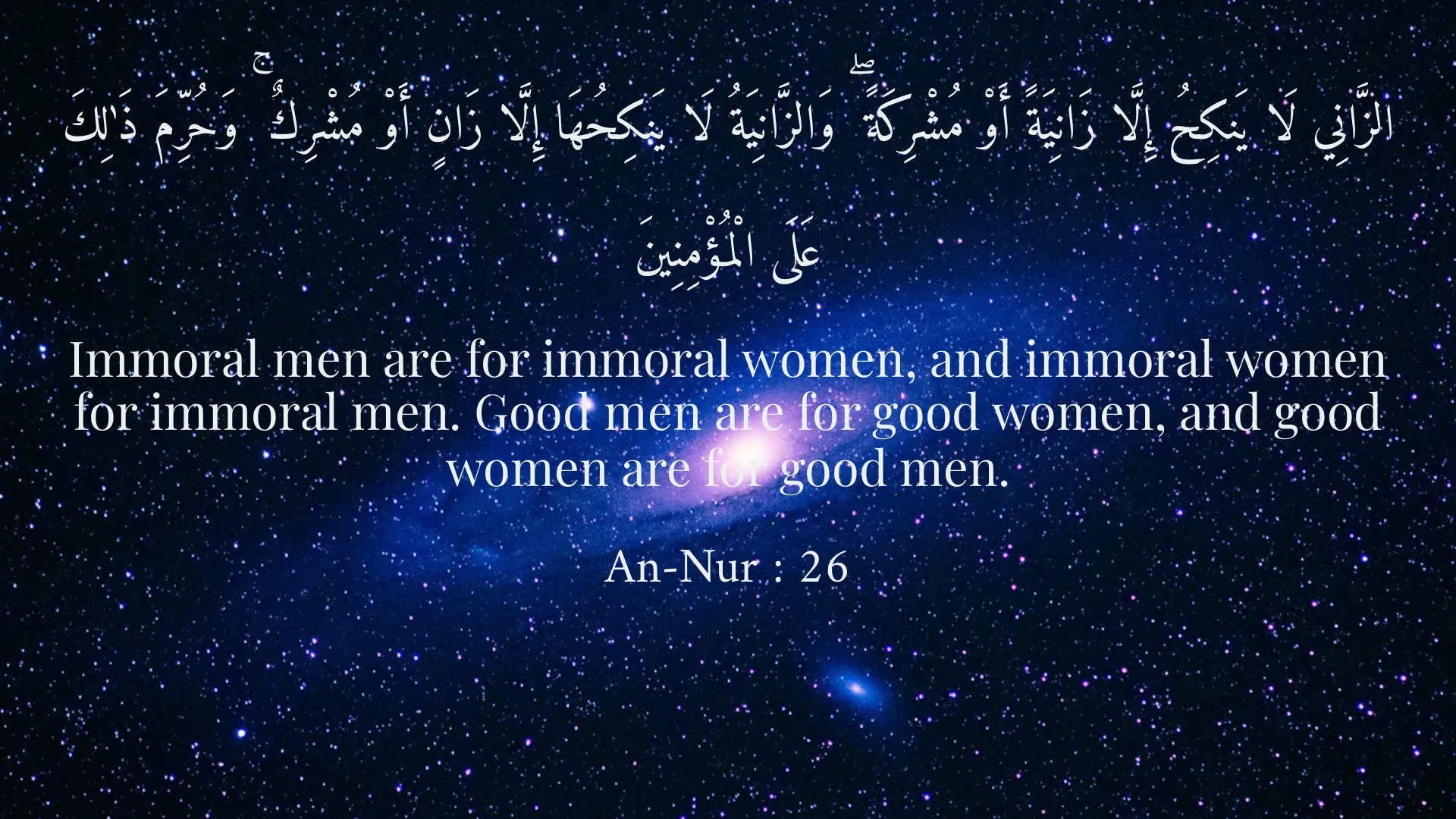
Choosing a believing spouse is one of the most critical decisions in life, and the significance of this choice is underscored in the Holy Quran. Marriage is a fundamental aspect of human life, serving not only as a social contract but also as a profound companionship intended to foster love, support, and spiritual growth between partners. In a world where relationships can be complicated and challenging, the guidelines provided by Islamic teachings offer meaningful insights into how to navigate the often tumultuous waters of choosing a life partner. In Surah An-Nur, verse 26 of the Holy Quran, Allah articulates a crucial principle regarding marriage: 'Immoral men are for immoral women, and immoral women for immoral men. Good men are for good women, and good women are for good men.' This verse serves as a powerful reminder that the choice of a spouse should be anchored in faith and piety rather than superficial traits or societal pressures. The message delivered by this verse is clear; our partners should reflect our own values and beliefs. The spiritual state and ethical behavior of individuals profoundly influence their compatibility in relationships. The Divine wisdom encapsulated in this verse invites every individual to engage in introspection as they seek a partner. It encourages us to cultivate our own morality and spirituality when searching for a spouse, which will ultimately lead us to someone who complements us in our faith journey. This principle not only emphasizes the importance of personal development before entering a marriage but also sets the stage for a harmonious union founded on shared beliefs and values. Furthermore, in Surah Al-Qasas, verse 27, we find a significant example in the story of Prophet Musa and the daughter of Shu'ayb. This narrative highlights how crucial good character and faith are in selecting a spouse. The daughter of Shu'ayb agreed to marry Moses after recognizing his faith, integrity, and noble behavior. This story is particularly instructive as it illustrates that beyond mere appearance or societal standing, the moral and ethical dimensions of a potential partner should be primary considerations. It reassures us that the choice of a spouse based on faith and good character leads to blessings in both this world and the Hereafter. In practical terms, when it comes to choosing a believing spouse, there are several criteria that can assist in making an informed decision. Morality, honesty, and a commitment to religion stand as substantial pillars in this selection process. It is of utmost importance to engage in open communication about shared values and future aspirations with potential partners. Conducting these discussions can guide individuals in understanding not only their compatibility but also how aligned they are in their faith journeys. Moreover, the implications of being in a relationship with a believing spouse extend beyond personal satisfaction or companionship. It plays a pivotal role in establishing a family environment conducive to raising believing and faithful children. The foundation of a child’s moral and spiritual upbringing lies significantly within the familial environment fostered by their parents. Parents who embody faith and piety serve as role models for their children, creating a positive cycle that reinforces the importance of values, beliefs, and good character in their lives. In nurturing a family grounded in faith, it is essential for parents to seek ways to instill these values within their children from an early age. Engaging children in religious practices, community activities, and honest discussions about faith can significantly enhance their understanding and appreciation for religious tenets. Additionally, parents must cultivate an atmosphere of love and support, allowing children to develop their relationship with faith individually while still being anchored in family values. The responsibility of selecting a spouse and creating a righteous family unit is not purely a social obligation; it entails spiritual significance as well. According to Islamic teachings, a believing spouse serves not only to enrich our worldly life but also to have a lasting impact on our afterlife. Supporting each other in spiritual practices, encouraging one another in acts of kindness, and engaging in community service are all ways through which spouses can help each other grow in faith. In conclusion, the journey toward selecting a believing spouse should begin with personal introspection and a commitment to cultivating one's own faith and morality. By prioritizing spiritual compatibility alongside shared values, a couple can create a strong foundation for a successful marriage. The teachings of the Holy Quran guide us to choice wisely, ensuring that both partners contribute positively not only to each other's lives but also to the well-being of their future children. By embodying the principles outlined in these sacred texts, believers can navigate the complexities of marriage with grace, ultimately securing an environment filled with love, support, and faith—a true reflection of a successful Islamic household.
Related Verses
الزَّانِي لَا يَنكِحُ إِلَّا زَانِيَةً أَوْ مُشْرِكَةً ۖ وَالزَّانِيَةُ لَا يَنكِحُهَا إِلَّا زَانٍ أَوْ مُشْرِكٌ ۚ وَحُرِّمَ ذَٰلِكَ عَلَى الْمُؤْمِنِينَ
Immoral men are for immoral women, and immoral women for immoral men. Good men are for good women, and good women are for good men.
An-Nur : 26
قَالَتْ إِنَّ أَبَايَ يُرَادُ أَنْ يُكِنَّ أَجْرَهُ وَعَاقِبَهُ لَكُمَا، فَلَا تَخْشَوْنَ إِنَّا نَسْتَفْتِي لِلْمُؤْمِنِينَ
She said: 'My father desires to marry you to one of my two daughters so that your wage may be given to you and in the end, it will be better for you.' So do not fear; we seek guidance for the believers.
Al-Qasas : 27
Short Story
One day, Samaneh went to the market and while shopping, she met a believing young man. His kind and loving behavior attracted Samaneh. They talked about faith and religious values and realized they shared common thoughts. Samaneh was very happy with this acquaintance and decided to get closer to him and get to know him better. Eventually, this relationship led to a successful marriage and happiness.