Quranic Answer
Choosing a spouse is undeniably one of the most pivotal and consequential decisions a person will face throughout their life. This choice not only affects personal happiness but can also influence familial relationships, social dynamics, and societal roles significantly. In various cultures and religions, including Islam, there are fundamental principles that guide individuals in making this crucial choice. The Holy Quran, as the primary religious text for Muslims, emphasizes several characteristics and criteria that individuals should contemplate when selecting a life partner. Among these qualifications, the foremost aspect to consider is the faith and piety of the potential spouse. A strong foundation of shared beliefs forms the basis for a harmonious relationship. This notion is profoundly highlighted in Surah An-Nur, verse 26, which declares, 'Wicked women are for wicked men, and wicked men are for wicked women.' This verse fundamentally illustrates that virtuous and righteous individuals will invariably find compatibility in one another. This compatibility is vital as it lays the groundwork for mutual respect, understanding, and unity in the relationship. In such unions, both partners are likely to encourage each other to practice their faith, engage in righteous actions, and navigate life’s challenges together through a shared spiritual framework. Moreover, Surah Al-Furqan, verse 74, poignantly highlights, 'And those who say, 'Our Lord, grant us from among our wives and offspring the joy of our eyes.' This verse emphasizes the importance of finding a righteous spouse who brings joy and peace into our lives, framing marriage as not only a legal contract but a source of companionship and fulfillment. Selecting a spouse who embodies faith and piousness ensures that the relationship is fortified with shared values and mutual aspirations. In addition to faith, it is essential to pay attention to the moral and ethical conduct of the chosen partner. The ethical values and the moral compass of an individual heavily influence their behavior, decisions, and interactions not just with their partner but also with others in the community. The teachings of the Prophet Muhammad (peace be upon him) urge individuals to prioritize good character when seeking a spouse. Character traits such as honesty, kindness, patience, and fairness are integral in establishing harmony and peace within the marital bond. A spouse with strong ethical principles fosters trust and strengthens emotional intimacy, serving as the bedrock for a fulfilling companionship. Furthermore, individuals seeking a life partner should pursue relationships grounded in mutual respect, support, and upliftment. A marriage built on these fundamental characteristics will not only endure but will thrive, allowing both partners to grow together and face life's adversities collectively. The significance of seeking guidance from parents and experienced individuals cannot be overstated in the journey of selecting the appropriate companion. Oftentimes, one might overlook critical aspects when blinded by infatuation or emotional connection. Parental advice and insights from seasoned individuals can provide a broader perspective, ensuring the consideration of factors that may otherwise be neglected. These insights often encompass an understanding of family backgrounds, compatibility evaluations, and future aspirations. By involving trusted family members and mentors in this process, prospective couples can make more informed decisions, avoiding potential pitfalls that could arise from hasty choices. Consultation, as encouraged by the teachings in Islamic tradition, brings together diverse viewpoints, facilitating discussions that address not only personal preferences but also cultural and societal expectations. For instance, compatibility regarding financial stability, educational aspirations, and life goals can significantly impact marital satisfaction and success in the long run. Therefore, the process of selecting a spouse should fundamentally hinge on three core principles: faith, character, and consultation. A harmonious relationship built on these foundations will yield a shared life characterized by tranquility, love, and understanding. It is crucial to remember that a successful marriage is not only characterized by the absence of conflict but by the presence of partnership, cooperation, and support in every aspect of life. As such, candidates for spouse selection must be evaluated with care and thoughtful consideration, understanding that this decision will shape lives and define futures. In conclusion, the choice of a spouse is indeed a reflection of one's values and beliefs; thus, individuals should strive to ensure that their selection aligns with a harmonious, fulfilling vision for a shared life.
Related Verses
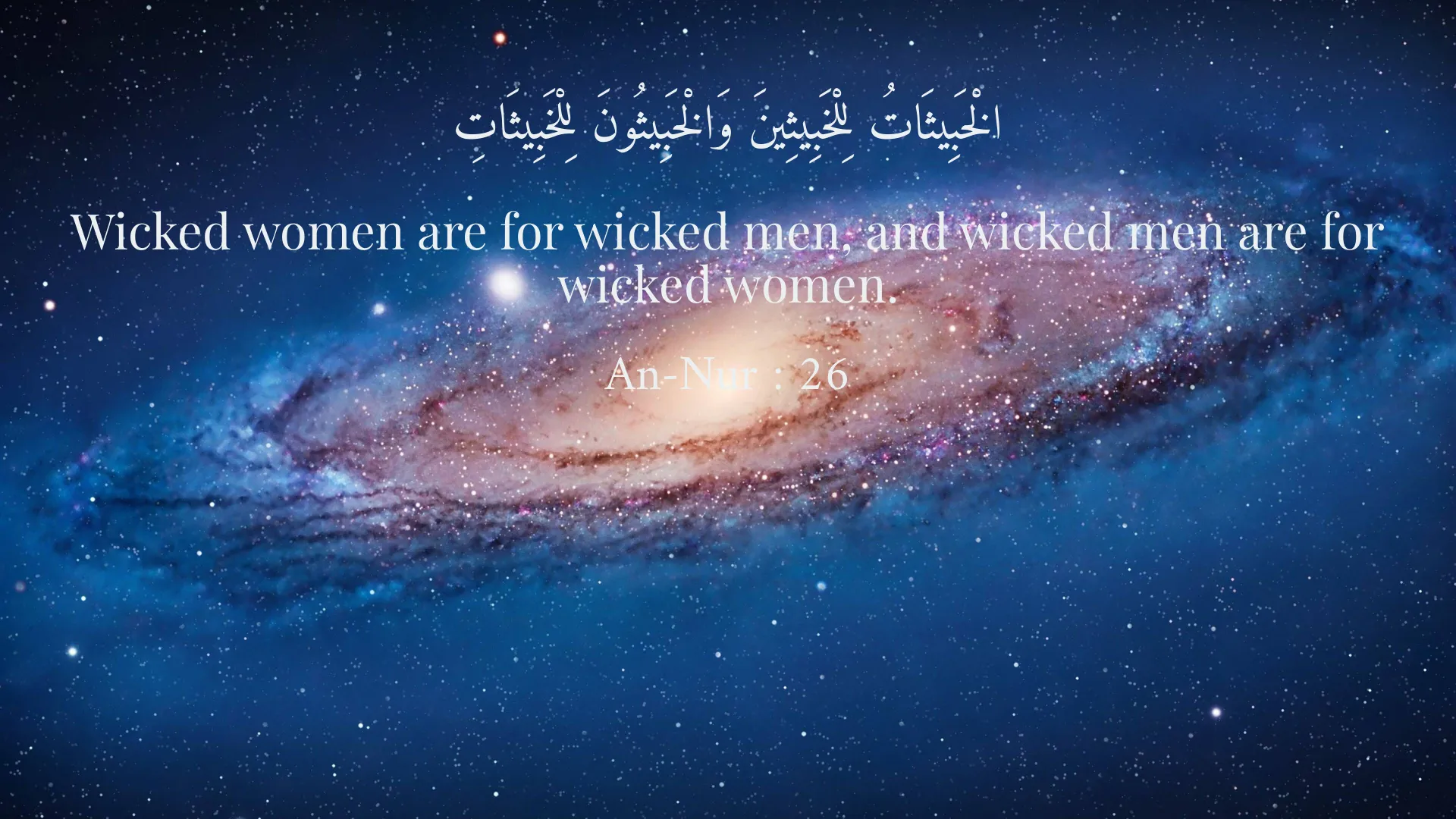
الْخَبِيثَاتُ لِلْخَبِيثِينَ وَالْخَبِيثُونَ لِلْخَبِيثَاتِ
Wicked women are for wicked men, and wicked men are for wicked women.
An-Nur : 26
وَالَّذِينَ يَقُولُونَ رَبَّنَا هَبْ لَنَا مِنْ أَزْوَاجِنَا وَذُرِّيَّاتِنَا قُرَّةَ أَعْيُنٍ
And those who say, 'Our Lord, grant us from among our wives and offspring the joy of our eyes.'
Al-Furqan : 74
Short Story
Sara was a young, skilled girl who always worried about choosing her spouse. One day, she consulted her grandmother, who told her to pay attention to the moral characteristics and piety of her potential partner. Her grandmother said, 'Remember that your spouse should be your soulmate.' Sara listened carefully to this advice and eventually chose a partner with good qualities and faith, leading to a joyful and fulfilling life.