Quranic Answer
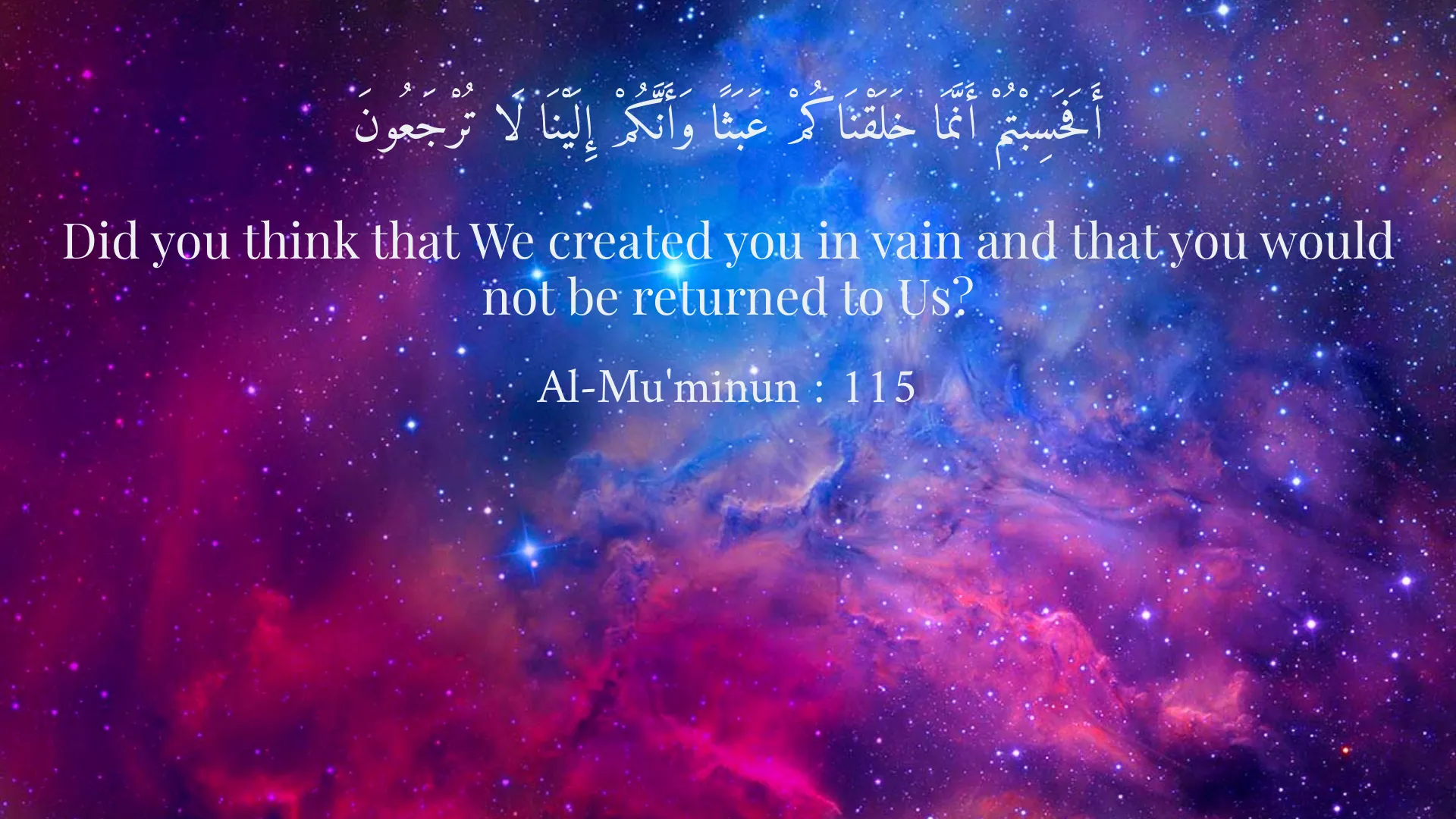
The concept of life's futility has long been a point of contemplation in human history. Many struggle with the idea of existence, questioning our ultimate purpose and the meaning behind our experiences. In the Holy Quran, this feeling is acknowledged as one of the many human struggles, underscoring the profound relationship between humanity and the Divine. Through various verses, the Quran addresses this existential dilemma, providing not only insight but also solace for those grappling with these feelings. One striking verse that encapsulates this topic is found in Surah Al-Mu’minun, verse 115: 'Did you think that We created you in vain and that you would not be returned to Us?' This rhetorical question serves as a profound reminder that life is not devoid of purpose; rather, it is framed by a noble and sacred goal. The phrase 'created you in vain' confronts the notion of futility head-on, urging believers to reflect on the divine intention behind their existence. In a world that is often chaotic and disheartening, this verse reminds us that we are not mere accidents of biology or the result of random chance. Instead, our creation is intentional, a product of Allah's wisdom and design. Understanding this fundamental truth can alleviate the feelings of purposelessness that occasionally dominate human thought, providing a solid framework for personal and spiritual development. Furthermore, the verse speaks to the inevitable return to Allah, a recurring theme throughout the Quran. The notion of returning to the Creator suggests accountability and the importance of one's actions in this life. Our experiences, both positive and negative, craft our character and serve as significant learning opportunities. In Surah Al-Anbiya, verse 35, another impactful reminder awaits us: 'Every soul will taste death, and We test you with evil and good as a trial; and to Us, you will be returned.' This declaration not only emphasizes the inevitability of mortality but also presents life itself as a test. The trials we encounter, whether in the form of suffering or fortune, are pivotal elements of our spiritual journey. They are designed to prepare us for our eventual return to Our Creator, giving weight and significance to our experiences. Life being temporary implies that the struggles we face are transient. They will not define us, nor should they shake our faith in the larger purpose underpinning our existence. This perspective encourages a transformative approach to life's challenges. Rather than succumbing to despair or viewing hardships as meaningless, we are invited to see them as part of a broader journey. Each experience molds us, invites reflection, and questions that lead to personal growth. Moreover, the Quran emphasizes that despair is not the end of the story. In Surah At-Talaq, verse 2, it is stated: 'For indeed, with hardship [there is] ease.' This promise of ease following struggle acts as a beacon of hope for believers navigating the turbulent waters of life. It assures us that every challenge carries within it the seed of relief. This understanding can be incredibly empowering, offering the strength to persevere when faced with adversity. By internalizing this message, individuals can find motivation in their struggles, viewing them through a lens of potential rather than defeat. To cultivate resilience against feelings of futility, it is essential to maintain a robust connection with Allah. Engaging in acts of worship, prayer, and reflection can serve to strengthen this bond, reminding us of the greater purpose attached to our lives. Prayer serves as a direct line to the Divine, facilitating both communication and a deepening faith. Through prayer, believers seek guidance and clarity, and they can find solace during troubling times. Additionally, engaging with community, sharing experiences, and seeking support from fellow believers enhances our journey. Discussions and learning from one another can provide diverse perspectives and insights that combat feelings of disillusionment and isolation. The power of collective faith and shared stories cannot be underestimated as they instill hope and inspire perseverance. Ultimately, it is through our reflections upon our struggles that we begin to comprehend our alignment with Allah's will. Taking time to think about our challenges — why they exist and how we can grow from them — are crucial steps in clarifying our life goals. These reflections enable critical self-analysis and foster spiritual development. The more we seek to understand our struggles, the clearer the path becomes regarding our purposes and objectives. In conclusion, the Quran provides a profound approach to addressing life's futility, intertwining the themes of purpose, trials, and ultimate accountability with practical advice for coping. The acknowledgment of the struggles of humanity is a testament to Allah's understanding and mercy toward His creation. Through the various verses, we are not only reminded of our responsibilities but also empowered to navigate our way through despair with the assurance that hope, ease, and connection to Allah await. Life is not a meaningless journey but rather a beautifully designed experience meant for exploration, growth, and ultimate return to our Creator. Understanding and embracing this allows us to combat feelings of futility and equips us to live purposefully with a vibrant heart and resilient spirit.
Related Verses
أَفَحَسِبْتُمْ أَنَّمَا خَلَقْنَاكُمْ عَبَثًا وَأَنَّكُمْ إِلَيْنَا لَا تُرْجَعُونَ
Did you think that We created you in vain and that you would not be returned to Us?
Al-Mu'minun : 115
كُلُّ نَفْسٍ ذَائِقَةُ الْمَوْتِ ۖ وَنَبْلُوكُم بِالشَّرِّ وَالْخَيْرِ فِتْنَةً ۖ وَإِلَيْنَا تُرْجَعُونَ
Every soul will taste death, and We test you with evil and good as a trial; and to Us, you will be returned.
Al-Anbiya : 35
فَإِن مَّعَ الْعُسْرِ يُسْرًا
For indeed, with hardship [there is] ease.
At-Talaq : 2
Short Story
One day, Sara felt exhausted and futile about her life. She remembered the verses of the Quran and decided to design a new goals chart for herself. By strengthening her connection with God and engaging in worship, she felt that she had a greater purpose in life, and her outlook on life transformed entirely. Now she looks towards tomorrow with hope.