Quranic Answer
Devoting one's time to divine matters is not merely a religious obligation, but a profound path to inner peace and a deeper meaning in life. The Holy Quran clearly states that the primary purpose of human creation is servitude and worship of God. As mentioned in Surah Adh-Dhariyat, verse 56: "And I did not create the jinn and mankind except to worship Me." This verse serves as a guiding light, illuminating our entire lives and reminding us that every moment of our existence can be an opportunity to draw closer to God. Dedicating time to divine matters does not imply abandoning worldly life, but rather infusing all aspects of life with a divine purpose and consciousness. One of the most fundamental pillars of dedicating time to divine matters is establishing prayer (Salat). Prayer is the pillar of faith and the point of connection between the servant and the Lord. The five daily prayers throughout the day and night provide a regular and focused opportunity for the remembrance of God. In Surah Al-Ankabut, verse 45, Allah says: "Recite what has been revealed to you of the Book and establish prayer. Indeed, prayer prohibits immorality and wrongdoing, and the remembrance of Allah is greater. And Allah knows that which you do." This verse not only emphasizes the importance of establishing prayer but also states that prayer is a means of purifying the soul and deterring from sins. Each unit of prayer (rak'ah) is an invitation to contemplation, humility, and presence of heart before the Divine. When we are fully present in prayer, it is as if time stands still, and we are immersed in a spiritual realm that strengthens our spiritual faculties. Beyond obligatory prayers, voluntary (nafilah) prayers also offer unique opportunities to add to one's spiritual reserves and establish a deeper connection with the Creator. After prayer, constant remembrance of God (Dhikrullah) is another significant way to divinize one's time. Dhikr is not limited to merely uttering "La ilaha illallah" (There is no god but Allah) or "Subhanallah" (Glory be to Allah), but encompasses any remembrance of God in speech, action, and thought. This remembrance can be in the form of reciting the Quran, making supplications (Du'a), reflecting on creation, or even expressing gratitude for the countless divine blessings. The Quran emphasizes the importance of Dhikr in numerous verses, including Surah Al-Ankabut, verse 45, which states, "and the remembrance of Allah is greater." Dhikr can be integrated into daily routines, whether in traffic, while cooking, or even before sleep. Constant remembrance brings tranquility to the heart and nourishes the soul, as stated in Surah Ar-Ra'd, verse 28: "Unquestionably, by the remembrance of Allah hearts are assured." This tranquility helps us to be more patient in facing challenges and to view life with a more positive outlook. Charity and helping those in need (Fi Sabilillah) is an inseparable part of dedicating time to divine matters. The Quran repeatedly stresses the importance of spending in the way of Allah. Charity is not just about financial donations; it also includes dedicating one's time, knowledge, skills, and energy to serving God's creation. Helping orphans, assisting the poor, visiting the sick, educating the ignorant, and supporting the oppressed are all forms of spending in the way of Allah. In Surah Al-Baqarah, verse 261, Allah describes the example of those who spend their wealth in the way of Allah as: "The example of those who spend their wealth in the way of Allah is like a seed [of grain] which grows seven spikes; in each spike is a hundred grains. And Allah multiplies [His reward] for whom He wills. And Allah is all-Encompassing and Knowing." This verse illustrates that spending in God's way not only brings worldly and otherworldly blessings but also that the time spent on such acts will be rewarded manifold. When we help others, we are, in essence, helping ourselves to draw closer to the source of divine goodness and blessing. Seeking knowledge is also one of the most crucial ways to spend time on divine matters. In Islam, the pursuit of knowledge is considered an act of worship. This includes religious knowledge to better understand God and His commandments, as well as worldly sciences for the service of humanity and the development of the earth. The Prophet Muhammad (peace be upon him) said: "Seeking knowledge is an obligation upon every Muslim." Spending time studying the Quran, Hadith, the lives of the Imams, and contemporary sciences helps us to develop a deeper worldview and to fulfill our divine duties with greater understanding. Every step we take to learn brings us closer to the truth and provides us with better tools to serve the Creator and creation. Such knowledge acquisition is not only beneficial for ourselves but can also guide others and break the chains of ignorance. Good character and serving humanity are also considered divine matters. The Prophet Muhammad (PBUH) said: "The best of deeds are those that are best in consequence." Good behavior towards parents, neighbors, friends, and even strangers is a vast part of religiosity. Forgiveness, patience, honesty, and trustworthiness are all qualities a Muslim should cultivate, and this cultivation requires time and practice. Every good deed performed with a sincere intention for the pleasure of Allah is weighed in the divine balance. Even smiling at a fellow Muslim or removing an obstacle from people's path can be considered an act of worship. The time we spend improving our relationships, listening to others' problems, and empathizing with them, is truly spent on the divine path. Finally, contemplation and reflection on creation and divine blessings are also instances of spending time on divine matters. The Quran repeatedly invites humans to reflect on Allah's signs in the horizons and within themselves. Observing the beauty of nature, the wonders of the human body, and the exquisite order of the universe can lead us to the greatness and wisdom of God. This reflection increases faith and gratitude and transforms our outlook on life. When we view the phenomena around us with a divine perspective, the entire existence becomes a canvas of the Creator's majesty, and every moment can be dedicated to divine matters through contemplation of these signs. In summary, dedicating time to divine matters means living a conscious and purposeful life where every daily activity can, with sincere intention, be transformed into a great act of worship. This includes performing obligatory worship, constant remembrance, helping creation, acquiring knowledge, and contemplating creation. This approach to life not only blesses our time but also grants us true peace and contentment, preparing us for the eternal life. Let us remember that God has granted us a precious, limited time in this world, and the wise are those who spend this valuable asset in the pursuit of eternity and divine pleasure.
Related Verses
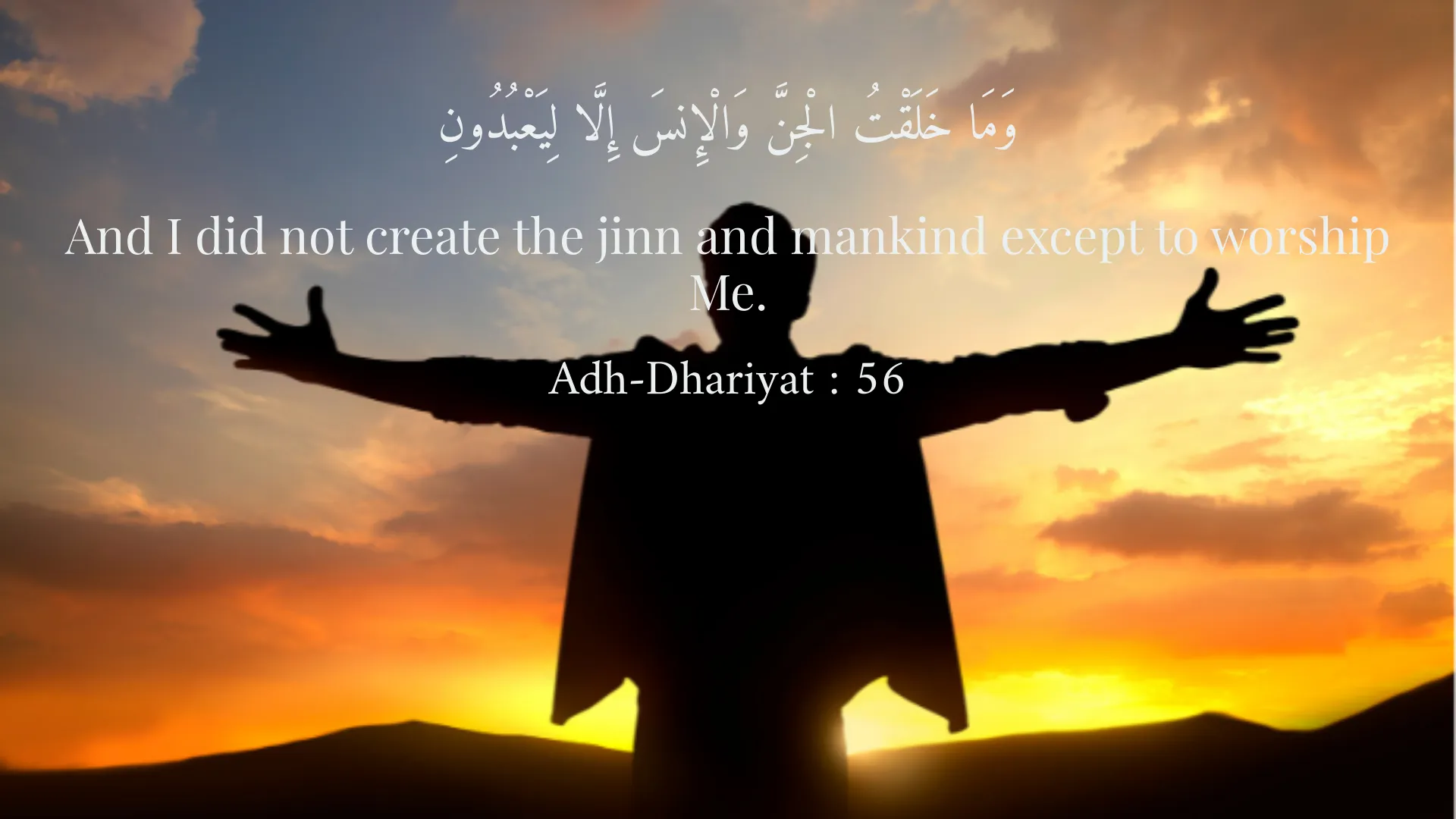
وَمَا خَلَقْتُ الْجِنَّ وَالْإِنسَ إِلَّا لِيَعْبُدُونِ
And I did not create the jinn and mankind except to worship Me.
Adh-Dhariyat : 56
اتْلُ مَا أُوحِيَ إِلَيْكَ مِنَ الْكِتَابِ وَأَقِمِ الصَّلَاةَ ۖ إِنَّ الصَّلَاةَ تَنْهَىٰ عَنِ الْفَحْشَاءِ وَالْمُنكَرِ ۗ وَلَذِكْرُ اللَّهِ أَكْبَرُ ۗ وَاللَّهُ يَعْلَمُ مَا تَصْنَعُونَ
Recite what has been revealed to you of the Book and establish prayer. Indeed, prayer prohibits immorality and wrongdoing, and the remembrance of Allah is greater. And Allah knows that which you do.
Al-Ankabut : 45
مَّثَلُ الَّذِينَ يُنفِقُونَ أَمْوَالَهُمْ فِي سَبِيلِ اللَّهِ كَمَثَلِ حَبَّةٍ أَنبَتَتْ سَبْعَ سَنَابِلَ فِي كُلِّ سُنبُلَةٍ مِّائَةُ حَبَّةٍ ۗ وَاللَّهُ يُضَاعِفُ لِمَن يَشَاءُ ۗ وَاللَّهُ وَاسِعٌ عَلِيمٌ
The example of those who spend their wealth in the way of Allah is like a seed [of grain] which grows seven spikes; in each spike is a hundred grains. And Allah multiplies [His reward] for whom He wills. And Allah is all-Encompassing and Knowing.
Al-Baqarah : 261
Short Story
Once upon a time, in a grand city, there lived a wealthy merchant who spent all his time accumulating riches and expanding his trade. He was so engrossed in worldly affairs that he rarely remembered spiritual matters or his Lord. One day, a wise old dervish came to visit him. The merchant proudly showed off his vast storerooms filled with goods and asked, "O wise one, what do you think of all this prosperity and success?" The dervish replied with a gentle smile: "O son, what good is a treasure that you cannot take with you when you depart from this world? The true wealth is that which you send ahead – righteous deeds and sincere devotion – for only these will endure on the journey to your Lord. Dedicate your time to accumulating <i>that</i> wealth, for worldly possessions will remain behind." The merchant pondered these words deeply, and from that day forward, he began to allocate a portion of his time and wealth to charitable deeds, the remembrance of God, and the pursuit of knowledge. He found a peace he had never experienced amidst his riches.