Quranic Answer
The question of how to discern whether what befalls us is a divine test or a direct consequence of our own actions is one of the deepest and most challenging inquiries that constantly occupies the mind of a believer. This question is not merely an intellectual concern; rather, it is a guiding light for one's life path and helps rectify one's perspective on destiny and free will. The Holy Quran, with profound subtlety and precision, addresses both aspects of "divine trial" (ibtila') and "consequences of actions" (jaza' al-a'mal), providing strategies for proper discernment and response. Firstly, it is crucial to understand that worldly life, for a believer, is fundamentally a series of trials and tests. Allah the Almighty states this truth in numerous verses, emphasizing that humans are put through trials to gauge their patience, gratitude, steadfastness, and the depth of their faith. These trials can manifest in various forms: sometimes through hardships, fear, hunger, loss of wealth, lives, and fruits (as in Surah Al-Baqarah, verse 155), and at other times through blessings and abundance (as a test of gratitude). The purpose of these tests is not merely to inflict hardship, but rather to purify the soul, elevate spiritual status, strengthen faith, and reveal the deeper truths of human existence. In Surah Al-Ankabut, verse 2, Allah says: "Do people think that they will be left alone because they say, 'We believe,' and will not be tested?" This verse clearly indicates that testing is an integral part of the path of faith. Therefore, if you encounter a difficulty for which you cannot find a clear reason stemming from your own mistakes, it is highly likely that this is a divine test for your growth and perfection. In such a situation, the believer's weapons are patience, reliance on God, and steadfastness in the path of truth. Such trials bring a person closer to God and prepare them for higher stations. The divine wisdom behind these afflictions is to elevate the soul and refine faith, so that a person reaches a level of knowledge and certainty where they see God as ever-present and observing, in both ease and hardship. On the other hand, a significant portion of what happens to us is undoubtedly a direct and natural consequence of our own actions and choices. The Holy Quran strongly emphasizes the principle of "recompense for deeds." Surah Ash-Shura, verse 30, explicitly states: "And whatever strikes you of disaster - it is by what your [own] hands have earned, and He pardons much." This verse lays down a general and vital rule: many of the problems, illnesses, financial crises, and social issues we face have roots in our own shortcomings, sins, wrong decisions, or even unwise choices in worldly matters. This may include neglecting obligations, committing prohibitions, oppressing others, disregarding divine and human rights, or even neglecting prudence and rationality in worldly affairs. In these cases, the affliction is not only a natural consequence but also a warning and an opportunity for awakening and returning to the right path. Allah the Almighty says in Surah An-Nisa, verse 79: "Whatever good befalls you is from Allah, and whatever evil befalls you is from yourself." This verse beautifully illustrates human accountability for what happens to them and reminds us that humans are responsible for their actions and that God is just. But how can we distinguish between the two? 1. Deep Self-reflection and Introspection: The first and most important step is to look inward and honestly evaluate our own actions. We must sincerely ask ourselves: Have I done anything in the past that might have led to this outcome? Have I wronged anyone, either through words or deeds? Have I committed a sin that requires repentance, and are its effects now manifesting? If the answer is yes, then this problem is most likely a result of your actions, and it is a precious opportunity for repentance and making amends. Imam Ali (AS) states: "When you are in a state of blessings, be grateful, and when you are afflicted, seek forgiveness." This saying indicates that in difficulties, one should look for the root in one's own actions and return to God with sincere repentance and remorse. 2. The Purposefulness and Origin of Hardship: If, after thorough self-reflection, you find no clear fault on your part that led to this situation, and you are confident that you have been diligent in your servitude and observance of divine rights, and have not been negligent in your duties, then this hardship could be a divine test. In this type of test, the goal is to test your faith, patience, and elevate your status in the sight of God. These afflictions often occur without any preceding sin on your part, and their aim is your spiritual elevation, not punishment. These tests act like a sieve to show the level of sincerity and steadfastness in faith. 3. The Nature of Your Reaction and Spiritual Orientation: Your reaction to hardship can also be an important sign. If the affliction leads you to repentance, correction, and a deeper return to God, this indicates that Allah wants to awaken you, and this could be a result of your actions that, by divine mercy and wisdom, has turned into an opportunity for amends and spiritual growth. These types of problems act like an alarm bell. However, if, despite apparent purity and innocence, hardship befalls you and guides you towards greater patience, gratitude, and reliance on God, and strengthens your faith, this is a sign of a divine test meant for your elevation and the strengthening of your spirit. 4. Seeking Forgiveness and Repentance as a Comprehensive Solution: In any case, whether the hardship is a test or a result of actions, seeking forgiveness (Istighfar) and repentance never hurts. This is because seeking forgiveness and returning to God cleanses sins, attracts divine mercy, and brings peace to the heart. Even in a divine test, seeking forgiveness can help a person through it and facilitate matters, because Allah loves those who repent and provides a way out for them. 5. Positive and Constructive Outlook on Affairs: In both scenarios, a believer should maintain a positive and constructive outlook on events. If it is a test, one should endure it with patience, perseverance, and reliance on God, knowing that "Indeed, with hardship [will be] ease" (Quran 94:5). If it is a result of actions, one should see it as an opportunity for correction, amends, and growth, and learn from it so as not to repeat the same mistakes in the future. No difficulty for a believer is in vain; it either expiates a sin, elevates a degree, or brings about awakening and new insight. In conclusion, understanding these distinctions helps us take greater responsibility for our lives and refrain from unjustly blaming fate or ourselves. More importantly, it ensures that we are always on the path of repentance and seeking forgiveness, and in times of hardship, instead of despair and hopelessness, we turn to Allah for help and assistance, for He is the best helper and guide. In reality, whether it is a test or a consequence of actions, all stem from divine wisdom and justice and are precious opportunities for greater proximity to Him and the elevation of the human soul.
Related Verses
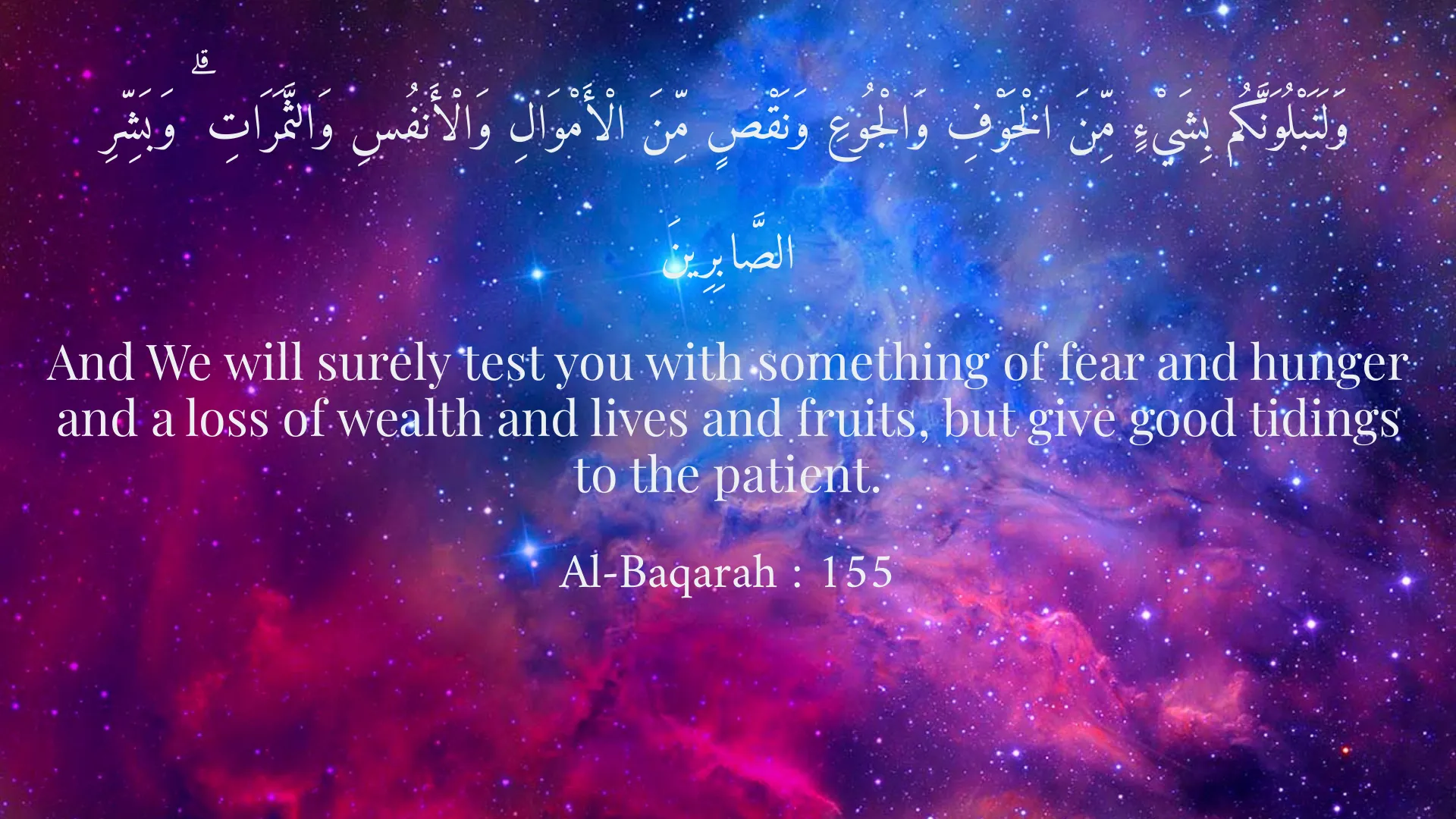
وَلَنَبْلُوَنَّكُم بِشَيْءٍ مِّنَ الْخَوْفِ وَالْجُوعِ وَنَقْصٍ مِّنَ الْأَمْوَالِ وَالْأَنفُسِ وَالثَّمَرَاتِ ۗ وَبَشِّرِ الصَّابِرِينَ
And We will surely test you with something of fear and hunger and a loss of wealth and lives and fruits, but give good tidings to the patient.
Al-Baqarah : 155
أَحَسِبَ النَّاسُ أَن يُتْرَكُوا أَن يَقُولُوا آمَنَّا وَهُمْ لَا يُفْتَنُونَ
Do people think that they will be left alone because they say, "We believe," and will not be tested?
Al-Ankabut : 2
وَمَا أَصَابَكُم مِّن مُّصِيبَةٍ فَبِمَا كَسَبَتْ أَيْدِيكُمْ وَيَعْفُو عَن كَثِيرٍ
And whatever strikes you of disaster - it is by what your [own] hands have earned, and He pardons much.
Ash-Shura : 30
Short Story
They tell a tale from ancient times, of a pious and ascetic man who sat by a stream, his heart troubled by the affairs of the world. Having endured many hardships in his life, he believed these were all divine tests and inwardly complained about his fate. A wise and elderly man passed by. He saw the young man murmuring to himself, lamenting his ill fortune. Approaching kindly, he asked, "Young man, what troubles you so?" The pious man replied, "O wise elder, for years I have strived in obedience and worship, yet afflictions pour upon me from every direction. I do not know if these are divine tests or the consequences of my own actions?" The wise elder smiled and said, "My son, know that God is just. Sometimes hardships are to test one's patience and elevate one's status, and sometimes they are the natural reflection and consequence of our own deeds. If you look closely, some difficulties are the fruit of seeds we ourselves have sown, and others are steps to reach divine proximity. The distinction between the two lies in deep reflection and self-accountability. See if there has been any negligence in your actions? Have you committed any sin? If your answer is no, then know that this is a test and it carries a great reward. But if you see that you yourself were at fault, then repent and strive for betterment. Both situations are opportunities for growth and drawing closer to the Truth." Upon hearing these words, the young man fell into contemplation and inwardly resolved to rectify his deeds. From then on, he viewed life's events with a more open perspective.