Quranic Answer
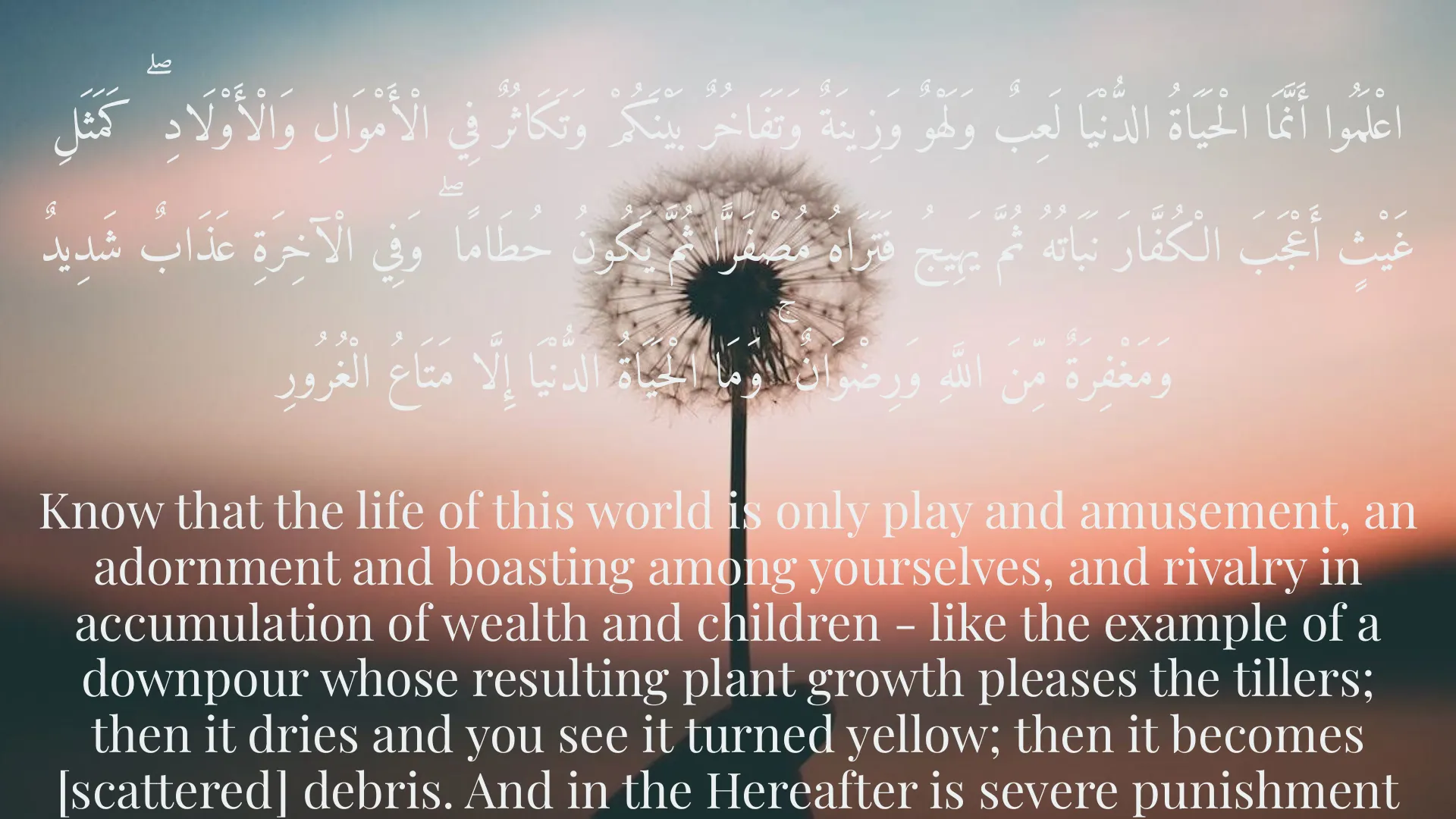
To effectively distance oneself from vain desires and worldly attachments that can deflect a person from their true life's purpose, the Holy Quran offers profound and practical guidance. Vain desires fundamentally represent an excessive attachment to worldly matters, which not only yields no benefit for the afterlife but can also disrupt one's inner peace and spiritual well-being. These desires might encompass envy over others' wealth and status, insatiable cravings, or being consumed by fleeting pleasures that distance an individual from the remembrance of God and the ultimate purpose of creation. The Quran repeatedly emphasizes the transient nature and deceptive allure of this world, warning us not to be swayed by its temporary glamor and thus forget the eternal Hereafter. One of the most crucial Quranic teachings for liberation from vain desires is a precise and deep understanding of the nature of this world (Dunya) and the Hereafter (Akhirah). The Quran describes the world as mere play, amusement, adornment, and boasting, likening it to rain that causes beautiful vegetation to grow, only for it to soon wither and become worthless. In Surah Al-Hadid, verse 20, Allah says: "Know that the life of this world is only play and amusement, an adornment and boasting among yourselves, and rivalry in accumulation of wealth and children - like the example of a downpour whose resulting plant growth pleases the tillers; then it dries and you see it turned yellow; then it becomes [scattered] debris. And in the Hereafter is severe punishment and forgiveness from Allah and [His] approval. And what is the worldly life except the enjoyment of delusion." This verse clearly demonstrates that worldly life is merely a delusive enjoyment, and true value lies in righteous deeds and divine pleasure. This perspective alters one's view of materialism and carnal desires, guiding them towards more enduring values. Another Quranic strategy is to strengthen the remembrance of Allah (Dhikr) in one's heart and daily life. When the heart finds tranquility through the remembrance of God, vain desires and satanic whispers find less room to enter. In Surah Ar-Ra'd, verse 28, it is stated: "Those who have believed and whose hearts are assured by the remembrance of Allah. Unquestionably, by the remembrance of Allah hearts are assured." This verse emphasizes that true peace of heart is attained only through the remembrance of God. Divine remembrance not only includes glorification and prayer but also encompasses every thought, action, and word that is aligned with God's pleasure. When a person is immersed in the remembrance of God, there is no longer space for vain worldly desires to flourish. Focusing on acts of worship, reciting the Quran, and supplicating to Allah purifies the soul from material impurities. Furthermore, the Quran stresses the importance of good deeds and enduring righteous actions (Baqiyat Salihat). In Surah Al-Kahf, verse 46, we read: "Wealth and children are the adornment of the worldly life. But the enduring good deeds are better with your Lord for reward and better for [one's] hope." This verse explicitly states that wealth and children are merely adornments of this world, but lasting good deeds are superior in reward and a better source of hope with your Lord. By concentrating on actions that yield eternal rewards, such as helping the needy, seeking knowledge, spreading goodness, and any virtuous act that brings Allah's pleasure, one can lessen their attachment to fleeting desires and redirect their aspirations towards noble and everlasting goals. This shift in aspirations gradually diminishes the allure of vain desires, replacing them with higher objectives. In addition to these, cultivating contentment (Qana'ah) and gratitude are also Quranic teachings that play a key role in steering clear of vain desires. The Holy Quran states: "And do not extend your eyes toward that by which We have given enjoyment to [various] categories of them, [being but] the splendor of worldly life by which We test them. And the provision of your Lord is better and more lasting." (Taha: 131). This verse teaches us to refrain from comparing ourselves to others and coveting what they possess. Contentment with what one has and gratitude for divine blessings increase inner satisfaction, preventing unnecessary greed and covetousness, which are the roots of many vain desires. Moreover, associating with righteous individuals and those who prioritize spiritual and eternal concerns is highly effective. The Quran calls upon believers to cooperate in goodness and piety. One's environment and companions significantly influence their thoughts and aspirations. Avoiding gatherings that promote heedlessness and seeking out circles of remembrance and knowledge helps a person stay on the right path and remain protected from the temptations of vain desires. Ultimately, through self-awareness and introspection, one can identify the sources of their vain desires and, by resorting to Quranic teachings and strengthening faith and piety, uproot these desires, cultivating a tranquil heart and a lofty soul that seeks only God's pleasure and eternal bliss. This path is an inner journey, where each step taken in the way of Allah brings a person closer to true peace and self-sufficiency.
Related Verses
اعْلَمُوا أَنَّمَا الْحَيَاةُ الدُّنْيَا لَعِبٌ وَلَهْوٌ وَزِينَةٌ وَتَفَاخُرٌ بَيْنَكُمْ وَتَكَاثُرٌ فِي الْأَمْوَالِ وَالْأَوْلَادِ ۖ كَمَثَلِ غَيْثٍ أَعْجَبَ الْكُفَّارَ نَبَاتُهُ ثُمَّ يَهِيجُ فَتَرَاهُ مُصْفَرًّا ثُمَّ يَكُونُ حُطَامًا ۖ وَفِي الْآخِرَةِ عَذَابٌ شَدِيدٌ وَمَغْفِرَةٌ مِّنَ اللَّهِ وَرِضْوَانٌ ۚ وَمَا الْحَيَاةُ الدُّنْيَا إِلَّا مَتَاعُ الْغُرُورِ
Know that the life of this world is only play and amusement, an adornment and boasting among yourselves, and rivalry in accumulation of wealth and children - like the example of a downpour whose resulting plant growth pleases the tillers; then it dries and you see it turned yellow; then it becomes [scattered] debris. And in the Hereafter is severe punishment and forgiveness from Allah and [His] approval. And what is the worldly life except the enjoyment of delusion.
Al-Hadid : 20
الَّذِينَ آمَنُوا وَتَطْمَئِنُّ قُلُوبُهُم بِذِكْرِ اللَّهِ ۗ أَلَا بِذِكْرِ اللَّهِ تَطْمَئِنُّ الْقُلُوبُ
Those who have believed and whose hearts are assured by the remembrance of Allah. Unquestionably, by the remembrance of Allah hearts are assured.
Ar-Ra'd : 28
الْمَالُ وَالْبَنُونَ زِينَةُ الْحَيَاةِ الدُّنْيَا ۖ وَالْبَاقِيَاتُ الصَّالِحَاتُ خَيْرٌ عِندَ رَبِّكَ ثَوَابًا وَخَيْرٌ أَمَلًا
Wealth and children are the adornment of the worldly life. But the enduring good deeds are better with your Lord for reward and better for [one's] hope.
Al-Kahf : 46
وَلَا تَمُدَّنَّ عَيْنَيْكَ إِلَىٰ مَا مَتَّعْنَا بِهِ أَزْوَاجًا مِّنْهُمْ زَهْرَةَ الْحَيَاةِ الدُّنْيَا لِنَفْتِنَهُمْ فِيهِ ۚ وَرِزْقُ رَبِّكَ خَيْرٌ وَأَبْقَىٰ
And do not extend your eyes toward that by which We have given enjoyment to [various] categories of them, [being but] the splendor of worldly life by which We test them. And the provision of your Lord is better and more lasting.
Taha : 131
Short Story
One day, a king asked a dervish: "Why are you so joyful and carefree in this poverty and contentment, while I, with all my wealth and power, am always anxious and troubled?" The dervish smiled and said: "O King! You do not yet possess what you seek, while I am content with what I have. You are constantly striving to increase your worldly possessions, and the more you accumulate, the greater your greed becomes. But I have severed my heart from vain desires and know that true tranquility lies in being independent of the world, not in possessing it. When you surrender your heart to God and detach yourself from everything but Him, you will find a peace that transcends all wealth." The king was moved by the dervish's words and pondered that true peace lies in becoming independent of vain desires, not in pursuing them.