Quranic Answer
From the perspective of the Holy Quran, distinguishing between a natural and legitimate interest in the worldly life (dunya) and an unhealthy, detrimental attachment to it is a fundamental challenge and, at the same time, one of the most crucial religious teachings that defines the path to human well-being. The Quran does not prohibit possessing worldly goods or enjoying lawful blessings; rather, it repeatedly encourages proper utilization and gratitude for these bounties. Fundamentally, God created the world for humanity to benefit from it, to cultivate it, and to use it as a bridge to the Hereafter. This perspective views "worldly interest" as a natural need and a tool for a purposeful life. For instance, in Surah Al-Qasas, verse 77, God says: "But seek, through that which Allah has given you, the home of the Hereafter; and [yet], do not forget your share of the world." This verse clearly indicates that utilizing and enjoying the world is permissible, but it should not be the primary and ultimate goal; instead, it should be a means to achieve a greater purpose, which is the Hereafter. On the other hand, "unhealthy attachment" to the world emerges when the world and its manifestations become the primary goal of life. In this state, instead of considering the world as a means to reach God and the Hereafter, an individual makes it the ultimate aim of their hopes and desires. This excessive and misleading attachment leads to forgetting God, neglecting religious and moral duties, greed, envy, meaningless rivalries, and ultimately the ruin of both worldly and otherworldly lives. The Holy Quran has repeatedly warned about the dangers of such attachment. In Surah Al-Hadid, verse 20, God states: "Know that the life of this world is only play and amusement, a show and boasting among yourselves, and a rivalry in increase of wealth and children." This verse describes the condition of those who have made the world their sole objective, viewing it as a place for diversion, play, and accumulation, rather than a field for cultivating deeds for the Hereafter. Such individuals become so engrossed in accumulating wealth and status that no room remains in their hearts for spirituality and divine values. This excess in worldly attachment prevents a person from achieving true peace and understanding the purpose of creation. The main distinguishing signs between these two states can be examined in several dimensions: First, "Goal-setting." In legitimate worldly interest, the ultimate goal is God's pleasure and achieving otherworldly bliss, with the world serving as a tool for this end. However, in unhealthy attachment, the ultimate goal is the world itself and its fleeting pleasures. Second, "Degree of dependency and peace." An individual with a healthy interest in the world does not lose their peace of mind if they lose wealth or status, as their heart relies on God. But those with unhealthy attachments suffer anxiety, depression, and despair with the slightest worldly loss, because they perceive their entire existence and happiness to be solely within the world. Third, "Manner of acquisition and expenditure." A person with a healthy interest acquires wealth through lawful means and spends it in the way of God and to help others, avoiding what is forbidden. In contrast, someone with unhealthy attachment uses any means to accumulate wealth and neglects divine rights and charity. The Holy Quran offers practical solutions to break free from unhealthy worldly attachment. One of the most important solutions is "remembering the Hereafter." In Surah Al-A'la, verses 16 and 17, it states: "But you prefer the worldly life, while the Hereafter is better and more enduring." These verses explicitly emphasize the priority of the Hereafter. When a person understands that this world is transient and an eternal abode awaits, their view of the world changes, and they refrain from excessive attachment to it. Another solution is "gratitude and contentment." Being grateful for existing blessings and content with what God has provided prevents excessive greed and covetousness. Also, "charity and almsgiving" reduce attachment to wealth and foster a spirit of generosity and selflessness. This act makes a person understand that wealth is not solely for them and that they must also observe the rights of others. In summary, the distinction between worldly interest and unhealthy attachment lies in intention, goal-setting, and its impact on one's soul, psyche, and actions. Legitimate worldly interest leads a person towards righteousness, gratitude, and the utilization of blessings for a greater purpose (i.e., God's pleasure and the Hereafter). Whereas unhealthy attachment traps them in greed, heedlessness, and emptiness. The path to salvation lies in balance, remembrance of the Hereafter, and placing divine pleasure at the forefront of all matters. The Holy Quran teaches this balance so that humans can both benefit from worldly bounties and secure their eternal happiness, preventing them from falling into extremes. Ultimately, a person's heart should be attached to their Creator, not to transient creations and manifestations. This is the fundamental distinction the Quran provides for human well-being.
Related Verses
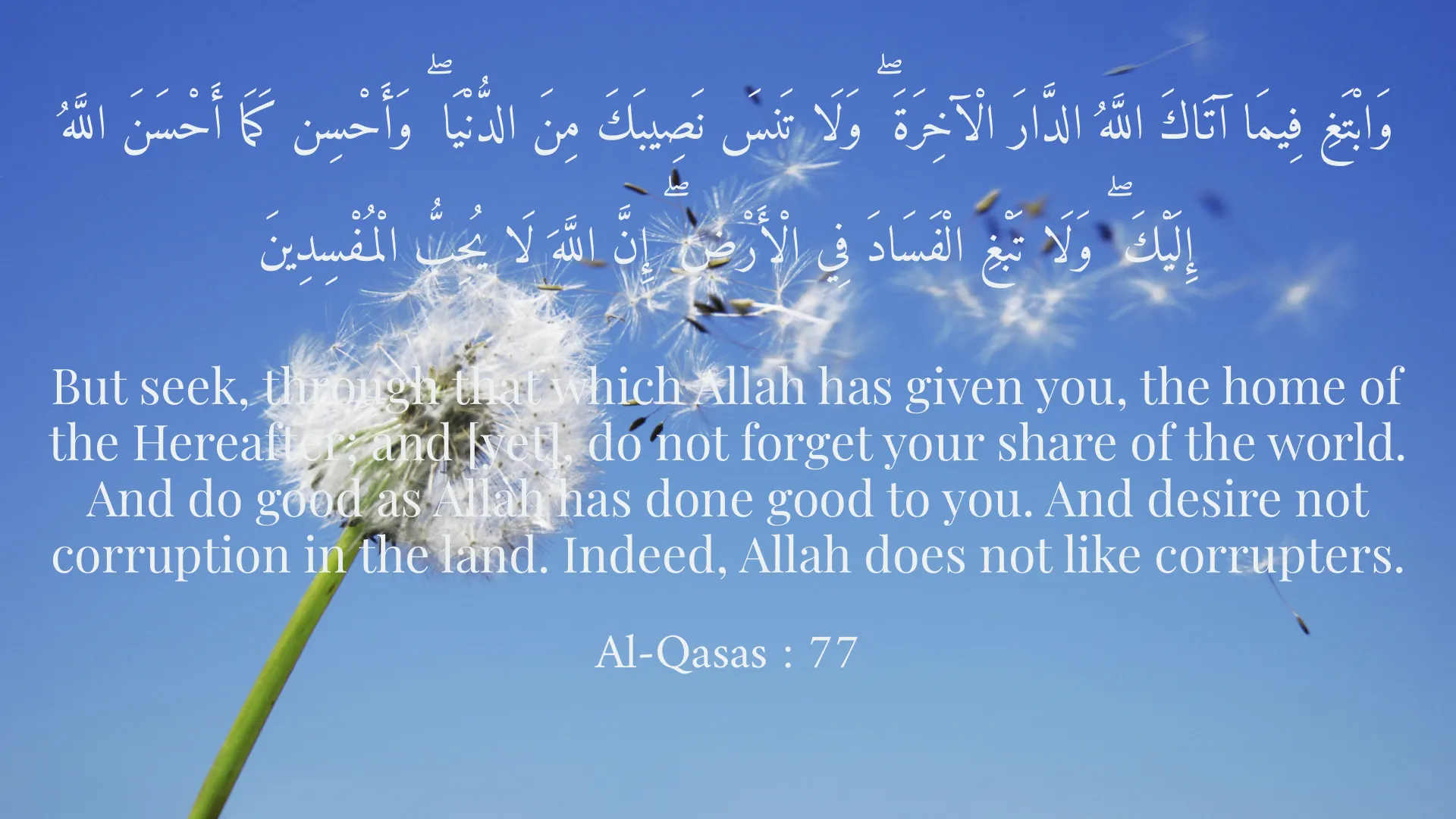
وَابْتَغِ فِيمَا آتَاكَ اللَّهُ الدَّارَ الْآخِرَةَ ۖ وَلَا تَنسَ نَصِيبَكَ مِنَ الدُّنْيَا ۖ وَأَحْسِن كَمَا أَحْسَنَ اللَّهُ إِلَيْكَ ۖ وَلَا تَبْغِ الْفَسَادَ فِي الْأَرْضِ ۖ إِنَّ اللَّهَ لَا يُحِبُّ الْمُفْسِدِينَ
But seek, through that which Allah has given you, the home of the Hereafter; and [yet], do not forget your share of the world. And do good as Allah has done good to you. And desire not corruption in the land. Indeed, Allah does not like corrupters.
Al-Qasas : 77
اعْلَمُوا أَنَّمَا الْحَيَاةُ الدُّنْيَا لَعِبٌ وَلَهْوٌ وَزِينَةٌ وَتَفَاخُرٌ بَيْنَكُمْ وَتَكَاثُرٌ فِي الْأَمْوَالِ وَالْأَوْلَادِ ۖ كَمَثَلِ غَيْثٍ أَعْجَبَ الْكُفَّارَ نَبَاتُهُ ثُمَّ يَهِيجُ فَتَرَاهُ مُصْفَرًّا ثُمَّ يَكُونُ حُطَامًا ۚ وَفِي الْآخِرَةِ عَذَابٌ شَدِيدٌ وَمَغْفِرَةٌ مِّنَ اللَّهِ وَرِضْوَانٌ ۚ وَمَا الْحَيَاةُ الدُّنْيَا إِلَّا مَتَاعُ الْغُرُورِ
Know that the life of this world is only play and amusement, a show and boasting among yourselves, and a rivalry in increase of wealth and children. [It is] like the example of a downpour whose resulting plant growth pleases the disbelievers; then it dries and you see it [become] yellow; then it becomes [scattered] debris. And in the Hereafter is severe punishment and forgiveness from Allah and approval. And what is the worldly life except the enjoyment of delusion.
Al-Hadid : 20
بَلْ تُؤْثِرُونَ الْحَيَاةَ الدُّنْيَا
But you prefer the worldly life,
Al-A'la : 16
وَالْآخِرَةُ خَيْرٌ وَأَبْقَىٰ
While the Hereafter is better and more enduring.
Al-A'la : 17
Short Story
Once upon a time, in a grand city, lived a wealthy man. He owned luxurious houses and had amassed vast treasures. But the more wealth he accumulated, the more anxious he became about losing it, finding no sleep or peace. Saadi, the eloquent, tells a story in his Golestan about a man who had a tree in his garden that bore abundant fruit. However, the man never enjoyed the fruits himself, constantly thinking of saving them for tomorrow or the day after, until the fruits spoiled and nothing remained for him. This tale was reminiscent of the wealthy man's condition. One day, a wise old man, who knew of his plight, said to him, 'O friend, do you imagine your wealth brings you peace? No! These are burdens that weigh heavily on your heart. The world is like the salty sea water; the more you drink, the thirstier you become. Enjoy God's blessings, but do not attach your heart to them, for what remains are your good deeds, not your possessions. From this day forward, give some of your wealth in the way of God and to help the needy, and you will see how the burden on your heart lightens and true peace descends upon you.' The wealthy man took the old man's advice to heart and began to give charitably. Gradually, he found peace taking root within him, and a deeper joy than accumulating wealth emerged in his heart. He understood that the world is a field, and its harvest is reaped in the Hereafter, not that the field itself is the goal.