Quranic Answer
One of the deepest and most fundamental questions every Muslim encounters on their spiritual journey is how to discern and differentiate between true faith (Iman) and mere religious habits (Adah). Faith, linguistically, means inner affirmation and conviction. In Islamic terminology, it encompasses belief in the heart, affirmation by the tongue, and adherence to the pillars of religion. In contrast, habit signifies the repetition of an action without the need for deep thought or a specific heartfelt motivation. Many of our acts of worship, such as prayer, fasting, remembrance (dhikr), and even Quranic recitation, can gradually transform into daily routines, where their spiritual essence and profound connection with the Divine might fade. The Holy Quran repeatedly emphasizes the importance of pure intention, mindfulness, contemplation, and reflection in both worship and daily life, and these concepts serve as crucial keys to distinguishing genuine faith from mere habit. The primary, and perhaps most significant, difference between faith and habit lies in "intention" (Niyyah). Intention is the soul and essence of every action. In true faith, every act is performed with a pure and conscious intention to attain Allah’s pleasure. The Quran, in Surah Al-Bayyinah, verse 5, states: "And they were not commanded except to worship Allah, [being] sincere to Him in religion, inclining to truth, and to establish prayer and to give zakah. And that is the correct religion." This verse explicitly highlights "sincerity" (Ikhlas) in worship. Sincerity means performing an action solely for Allah, without any trace of hypocrisy, showing off, or worldly motives. When an action devolves into a habit, the sincere and conscious intention is replaced by mechanical repetition; the individual performs the action without reflecting on its purpose or meaning. For instance, if prayer is performed merely as a duty, without attention to the meanings of the verses and supplications, it becomes a soulless habit. In contrast, genuine prayer must be performed with mindfulness and the intention of seeking closeness to Allah, as Surah Al-Mu'minun, verse 2, describes the characteristic of true believers: "Those who are in their prayers humble and submissive." Humility (Khushu') denotes a state of profound reverence, tranquility, and complete focus of the heart and mind before the grandeur of Allah. This humility is achieved only through sincere intention and full attentiveness to the worshipped, not through thoughtless repetition of movements and words. The second distinguishing factor is "awareness and reflection." True faith invites individuals to ponder and contemplate Allah's signs in the Quran and across the universe, as well as within themselves. The Quran is a book of guidance that calls for reflection, not blind imitation or mere habit. In Surah Ali Imran, verses 190-191, it states: "Indeed, in the creation of the heavens and the earth and the alternation of night and day are signs for those of understanding. Who remember Allah while standing or sitting or [lying] on their sides and give thought to the creation of the heavens and the earth, [saying], 'Our Lord, You did not create this aimlessly; exalted are You [above such a thing]; then protect us from the punishment of the Fire.'" These verses indicate that a true believer is someone who is constantly engaged in thought, inquiry, and deep contemplation, and whose actions are based on understanding and knowledge, not just inherited repetition. Habits are typically performed without deep reflection, whereas faith entails living with consciousness and insight. The third hallmark of faith is its "impact on character and behavior." Genuine faith brings about an internal transformation that is reflected in all aspects of an individual's life, including their ethics, social interactions, and decision-making. The Quran in Surah Al-Ankabut, verse 45, states: "...Indeed, prayer prohibits immorality and wrongdoing..." This verse illustrates that prayer is not merely physical movements, but should have a deterrent effect against evil and indecency. If a worshipper, after prayer, continues to engage in backbiting, lying, or injustice, it indicates that their prayer was more of a habit than an act of worship stemming from heartfelt faith. Faith is a motivator for performing good deeds, showing kindness to others, upholding justice, and abstaining from sins. Habit might lead to superficial behavioral changes, but faith transforms the roots. The fourth indicator is "heartfelt emotions and attachment." True faith is accompanied by profound passion, love, and devotion towards Allah, the Prophet (PBUH), and religious teachings. A believer enjoys worship, finds tranquility in remembering Allah, and their heart trembles when Allah's verses are recited. In Surah Al-Anfal, verse 2, we read: "The believers are only those who, when Allah is mentioned, their hearts tremble, and when His verses are recited to them, it increases them in faith; and upon their Lord they rely." This description shows that faith is accompanied by an emotional and spiritual response: longing for Allah, tears of joy in worship, and a sense of peace and strength from relying on Him. Habit lacks this deep emotional dimension and can be accompanied by indifference or even boredom. The fifth criterion is "dynamism and growth." Faith is not a static state; rather, it is a dynamic and growing process. A believer constantly strives to increase knowledge, purify the self, and draw closer to Allah. This growth is achieved through acquiring knowledge, performing more righteous deeds, seeking forgiveness and repentance, and enduring challenges with patience. Habit, in contrast, is often static and unchanging. An individual who performs religious acts out of habit might repeat the same actions for years without any change in their quality or depth. Faith calls humanity towards continuous improvement and perfection. To separate faith from habit, it is necessary to constantly self-reflect and ask: "Why am I doing this? What is my intention?" "Is my heart present during worship?" "Do my acts of worship have a positive impact on my behavior and character?" and "Do I feel closeness and love for Allah?" This self-assessment and conscious attention can infuse habitual actions with the spirit of faith, transforming them into living and meaningful acts of worship. Ultimately, faith is a vibrant and active relationship with the Creator, requiring continuous attention, sincerity, awareness, and impact on all dimensions of one's being. Habit, on the other hand, can become an empty shell, unless it is constantly watered with the pure essence of intention and mindfulness.
Related Verses
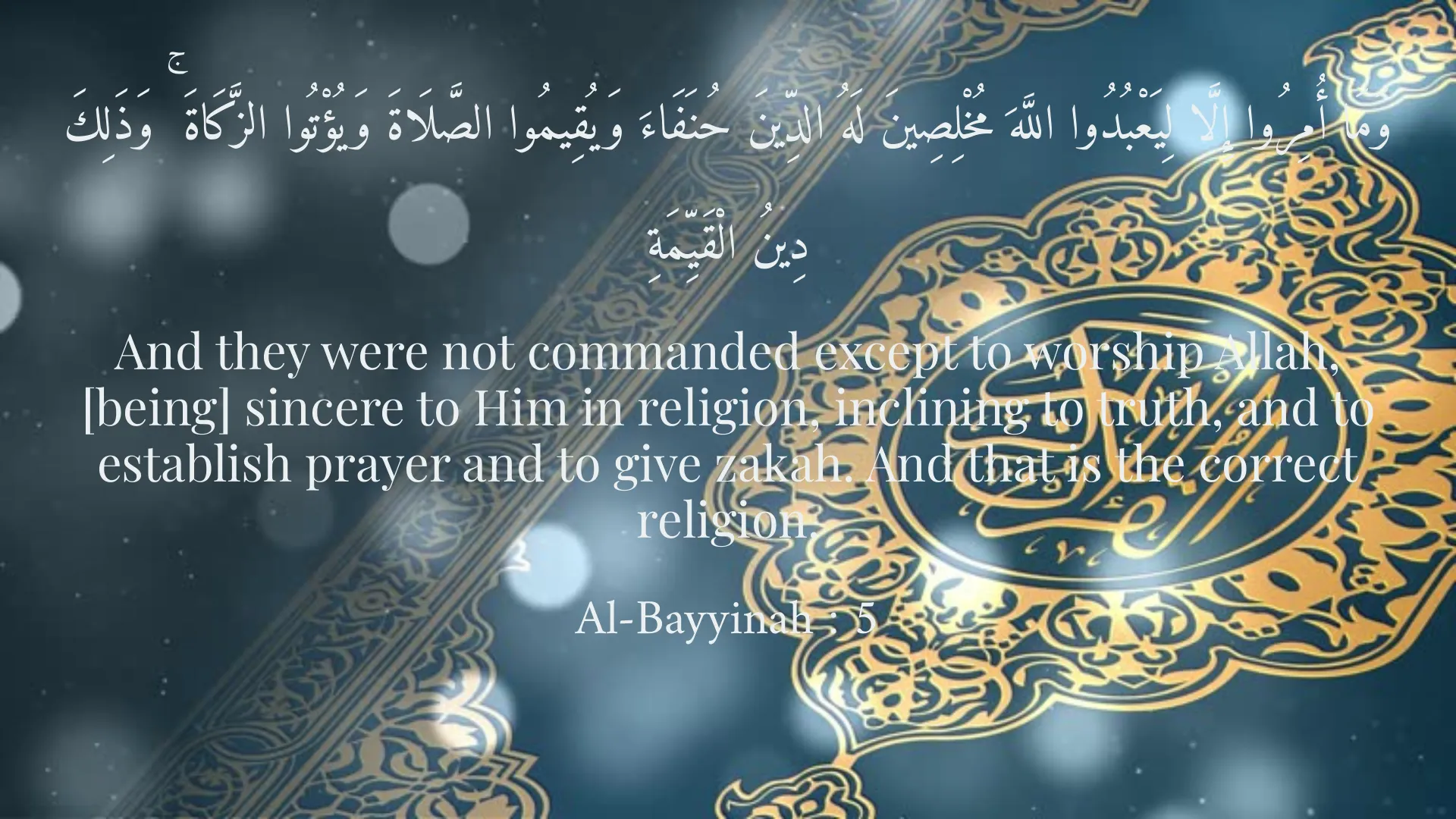
وَمَا أُمِرُوا إِلَّا لِيَعْبُدُوا اللَّهَ مُخْلِصِينَ لَهُ الدِّينَ حُنَفَاءَ وَيُقِيمُوا الصَّلَاةَ وَيُؤْتُوا الزَّكَاةَ ۚ وَذَلِكَ دِينُ الْقَيِّمَةِ
And they were not commanded except to worship Allah, [being] sincere to Him in religion, inclining to truth, and to establish prayer and to give zakah. And that is the correct religion.
Al-Bayyinah : 5
الَّذِينَ هُمْ فِي صَلَاتِهِمْ خَاشِعُونَ
Those who are in their prayers humble and submissive.
Al-Mu'minun : 2
اتْلُ مَا أُوحِيَ إِلَيْكَ مِنَ الْكِتَابِ وَأَقِمِ الصَّلَاةَ ۖ إِنَّ الصَّلَاةَ تَنْهَىٰ عَنِ الْفَحْشَاءِ وَالْمُنكَرِ ۗ وَلَذِكْرُ اللَّهِ أَكْبَرُ ۗ وَاللَّهُ يَعْلَمُ مَا تَصْنَعُونَ
Recite what has been revealed to you of the Book and establish prayer. Indeed, prayer prohibits immorality and wrongdoing, and the remembrance of Allah is greater. And Allah knows that which you do.
Al-Ankabut : 45
Short Story
It is mentioned in Saadi's Gulistan that there was a worshipper who had been devoted to worship for many years, constantly spending his time in the mosque performing prayers and remembrance (dhikr). People knew him for his asceticism and piety, and they spoke highly of him. One day, a friend saw him, upon returning from the mosque, yelling at his neighbor and scolding him over a trivial matter. His friend, with a kind smile, said: 'O friend! All this prayer and remembrance you perform in the mosque is good, but if your heart does not find peace and your tongue does not cease from harming others, then what difference remains between worship out of habit and worship out of faith? Worship with a present heart and a restrained tongue is better than a thousand cycles of prayer where only the body is present and the soul is heedless.' This anecdote reminds us that the true value of worship lies in the presence of the heart and its impact on our behavior, not merely in the repetition of actions.