Quranic Answer
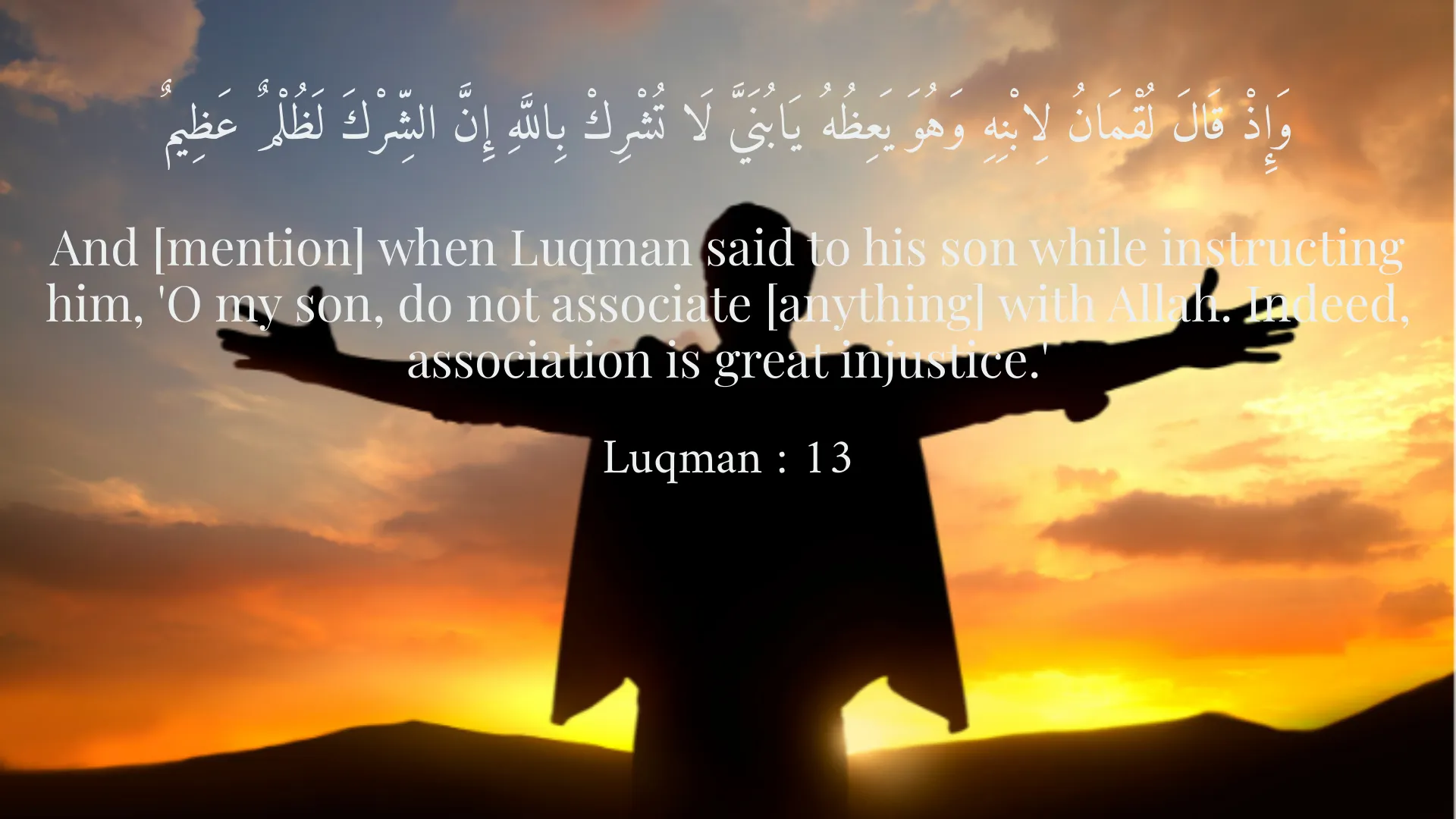
The upbringing of children with moral concepts is a crucial and sensitive responsibility that falls upon the shoulders of parents. The importance of this task cannot be overstated, as the values and principles instilled in children during their formative years will significantly shape their character and influence their actions throughout their lives. Cultural, religious, and ethical teachings are pivotal during this period, and one primary source of such guidance for millions of people around the world is the Holy Quran. Within its verses, there exists a comprehensive framework for educating children in the realm of morality and ethics, emphasizing justice, honesty, kindness, and faith. One of the fundamental duties that Allah outlines for parents is the moral upbringing of their children. For instance, in Surah Luqman, verse 13, Allah states, "O my son, do not associate anything with Allah, for indeed, association is great injustice." This verse underscores the first crucial moral lesson that children should learn: the concept of monotheism, which is the foundation of Islamic faith. By teaching their children the importance of believing in a singular, powerful, and compassionate God, parents not only instill faith but also cultivate a sense of responsibility and ethical behavior rooted in that faith. Teaching children to avoid shirk, or the association of partners with Allah, is a responsibility that highlights the severity and significance of moral teaching. Furthermore, it is essential that parents prioritize the development of other key moral traits such as honesty, fairness, and kindness. Each of these virtues plays a pivotal role in harmonizing relationships and fostering a just society. Honesty, for instance, is the cornerstone of trust in any relationship, be it personal or professional. When children learn the value of truthfulness from a young age, they are more likely to cultivate relationships built on trust throughout their lives. This lesson can be reinforced through daily interactions and by setting examples themselves, as children are highly impressionable and often mimic the behaviors exhibited by their parents. In addition to teaching specific moral concepts, it is vital for parents to practice what they preach. Setting oneself as a role model is an effective strategy for instilling values in children. If children observe their parents engaging in honest behavior, treating others fairly, and showing kindness to those in need, they are more likely to adopt those same behaviors. This aligns with the wisdom conveyed in Surah Al-Imran, verse 110, where Allah says: "You are the best nation introduced to mankind; you enjoin what is right and forbid what is wrong and believe in Allah." Parents should embrace their roles as not only providers but also teachers who continually encourage their children to perform good deeds and to remain steadfast in avoiding actions that are undesirable. Moreover, the relationship between parents and their children is immensely important in the moral education process. Establishing a positive and friendly environment fosters trust and comfort, enabling children to express their thoughts and feelings without fear of judgment or reprimand. A nurturing relationship creates a conducive atmosphere for discussing moral dilemmas, situations they may face in daily life, and the principles that can guide their decisions. Engaging in open conversations where children feel heard can lead to healthier discussions about ethics, values, and beliefs. In conjunction with verbal education, utilizing storytelling and play can serve as an engaging and delightful method for imparting moral lessons to children. Stories, especially those derived from religious texts, folk tales, and historical contexts, provide relatable situations and characters that children can connect with. These narratives often come with underlying moral messages that can spark discussions and reflections on ethical issues and decision-making processes. For example, a story of a character who demonstrates integrity in the face of temptation can serve as an illustrative lesson on the importance of honesty. Play, on the other hand, can be a practical way for children to experiment with social interactions and practice moral lessons in a safe and supportive setting. When parents engage in play activities that encourage sharing, teamwork, and empathy, they are effectively reinforcing moral concepts in an interactive manner that enhances understanding and retention. Furthermore, incorporating cultural and religious celebrations into the upbringing of children can also play a significant role in reinforcing moral principles. Events such as Ramadan and Eid offer opportunities for families to come together and reflect on the importance of charity, gratitude, and community. During these moments, parents can initiate conversations about compassion towards others, the importance of sharing, and recognizing the blessings they have. This not only strengthens familial bonds but also emphasizes the collective responsibility individuals have towards their communities, thereby promoting a sense of belonging and accountability. Ultimately, the moral education of children is a multifaceted endeavor that requires thoughtful consideration and intentional effort from parents. Through a combination of establishing clear moral values in accordance with religious teachings, modeling desired behaviors, fostering positive relationships, engaging in storytelling and play, and incorporating cultural practices, parents can effectively guide their children on a path of virtuous living. By instilling these concepts at an early age, parents lay the groundwork for their children's character development, nurturing responsible, ethical, and compassionate individuals who contribute positively to society and uphold the tenets of their faith. The wisdom contained in the Holy Quran provides the essential tools for parents in this journey, highlighting the sacred duty of raising children who are not only well-versed in moral concepts but also embody them in their everyday lives. As parents embark on this profound and life-altering responsibility, they are not only shaping the future of their children but, ultimately, the future of their communities and the world at large.
Related Verses
وَإِذْ قَالَ لُقْمَانُ لِابْنِهِ وَهُوَ يَعِظُهُ يَابُنَيَّ لَا تُشْرِكْ بِاللَّهِ إِنَّ الشِّرْكَ لَظُلْمٌ عَظِيمٌ
And [mention] when Luqman said to his son while instructing him, 'O my son, do not associate [anything] with Allah. Indeed, association is great injustice.'
Luqman : 13
كُنتُمْ خَيْرَ أُمَّةٍ أُخْرِجَتْ لِلنَّاسِ تَأْمُرُونَ بِالْمَعْرُوفِ وَتَنْهَوْنَ عَنِ الْمُنْكَرِ وَتُؤْمِنُونَ بِاللَّهِ
You are the best nation produced [as an example] for mankind. You enjoin what is right and forbid what is wrong and believe in Allah.
Al-Imran : 110
Short Story
One day, a mother teaches her child about how to interact with others. She tells him a captivating story demonstrating how kindness and honesty can beautify life. The child listens attentively, and day by day, he gains a better understanding of moral concepts. The mother is pleased with these changes and observes her child becoming more virtuous in his behavior.