Quranic Answer
The Holy Quran, as the divine guidance for humanity, provides a comprehensive framework for interacting with all people, including those who do not share the Islamic faith. The concept of empathy, which involves understanding and sharing the feelings of another, is deeply embedded within these Quranic teachings, not as a mere social courtesy but as an intrinsic part of a believer's character. Empathy with non-believers, from an Islamic perspective, is rooted in several fundamental principles: universal human dignity, respect for individual choice in matters of faith, the imperative of justice, and the promotion of peace and good conduct in society. Firstly, the Quran establishes a foundational principle of universal human dignity. Allah states in Surah Al-Isra (17:70): “And We have certainly honored the children of Adam.” This verse underscores that every human being, regardless of their beliefs, race, or background, is inherently honored by their Creator. This divine bestowal of dignity forms the bedrock of empathetic interaction. When a Muslim approaches a non-believer, they are enjoined to recognize this shared human honor, fostering a sense of common ground and mutual respect. This perspective transcends theological differences, allowing for a connection based on shared humanity rather than divisive beliefs. Empathy, in this context, means acknowledging their inherent worth and treating them with the respect due to any honored creation of God. It encourages looking beyond their disbelief to see the human being with their own struggles, hopes, and experiences, fostering compassion rather than judgment. Secondly, the Quran explicitly states the principle of “no compulsion in religion.” In Surah Al-Baqarah (2:256), Allah declares: “There shall be no compulsion in [acceptance of] the religion. The right course has become clear from the error.” This verse is pivotal for understanding empathy towards non-believers. It prohibits forcing anyone to accept Islam, emphasizing that faith must come from conviction and free will. True empathy, therefore, requires respecting an individual's autonomy in their spiritual journey. It means understanding that their disbelief is a choice they have made, and while a Muslim may wish for their guidance, this desire must never translate into coercion, harassment, or condemnation. Instead, empathy manifests as patience, understanding, and a willingness to engage in respectful dialogue, trusting that guidance is ultimately from Allah alone. This approach cultivates an environment of peace and understanding, where differences can exist without leading to hostility or oppression. It reinforces the idea that one's role is to convey the message with clarity and good example, not to enforce belief. Thirdly, the Quran places a strong emphasis on justice and fairness in all dealings, without discrimination based on faith. Surah Al-Ma'idah (5:8) commands believers: “O you who have believed, be persistently [upholders of] justice, witnesses for Allah, even if it be against yourselves or parents and relatives. Whether one is rich or poor, Allah is more worthy of both. So follow not [personal] inclination, lest you not be just. And if you distort [your testimony] or refuse [to give it], then indeed Allah is ever, with what you do, Acquainted.” This principle of unwavering justice extends to interactions with non-believers. Empathy here means ensuring that their rights are upheld, that they are treated equitably in legal, social, and economic matters, and that no prejudice influences one's conduct towards them. A Muslim cannot deny justice to a non-believer simply because they do not share the same faith. In fact, displaying exemplary justice and fairness can be a powerful form of conveying the beauty and universality of Islamic principles, potentially fostering greater understanding and connection. Perhaps one of the most direct verses pertaining to empathetic interaction with non-hostile non-believers is found in Surah Al-Mumtahanah (60:8): “Allah does not forbid you from those who do not fight you because of religion and do not expel you from your homes - from being righteous toward them and acting justly toward them. Indeed, Allah loves those who act justly.” This verse explicitly permits and even encourages “birr” (righteousness, kindness, benevolence) and “qist” (justice, fairness) towards non-believers who are not actively hostile or oppressive. “Birr” implies a profound level of good treatment, compassion, and care, reflecting genuine empathy. It encompasses acts of charity, good neighborliness, offering assistance in times of need, and generally demonstrating excellent character. This verse highlights that empathy is not merely an internal feeling but must translate into tangible acts of kindness and just behavior. It creates a clear distinction between those who are belligerent and those who simply hold different beliefs, opening the door for peaceful coexistence and positive human relationships. Furthermore, the Quran instructs believers on the most effective and empathetic way to invite others to the path of God. Surah An-Nahl (16:125) states: “Invite to the way of your Lord with wisdom and good instruction, and argue with them in a way that is best.” Empathy in da'wah (inviting to Islam) means understanding the other person's intellectual and emotional state, their background, and their potential receptiveness. It means approaching them with gentleness, patience, and compelling arguments presented in the most respectful manner. It involves active listening, seeking to understand their doubts or misconceptions, rather than simply lecturing. An empathetic approach recognizes that people come from different experiences and may have valid questions or concerns that need to be addressed with patience and kindness, not dismissal or arrogance. Finally, the Quran also teaches a form of protective empathy by prohibiting believers from insulting the deities or beliefs of others, as this can provoke reciprocal insults and animosity. In Surah Al-An'am (6:108), Allah warns: “And do not insult those they invoke other than Allah, lest they insult Allah in hostility without knowledge. Thus have We made attractive to every community their own deed. Then to their Lord is their return, and He will inform them about what they used to do.” This command is profoundly empathetic. It prevents a believer from engaging in actions that would unnecessarily offend or antagonize non-believers, thereby closing doors to understanding and dialogue. It recognizes that people are deeply attached to their beliefs, and insulting them only generates hostility, making any future positive interaction or empathetic connection impossible. Instead, it promotes a respectful distance from their practices while maintaining good relations on a human level. In conclusion, empathy towards non-believers in Islam is a multifaceted concept rooted in profound Quranic teachings. It demands recognition of shared human dignity, respect for freedom of belief, unwavering commitment to justice, proactive kindness towards the non-hostile, wisdom in communication, and avoidance of provocative behavior. It is about extending compassion, understanding, and fair treatment, not just as a strategy for da'wah, but as an inherent quality of a true believer. This approach fosters peaceful coexistence, bridges divides, and ultimately reflects the universal mercy and justice that are cornerstones of Islamic faith. It is through embodying these principles that a Muslim truly empathizes, demonstrating the beauty and universality of Islam's message to all of humanity.
Related Verses
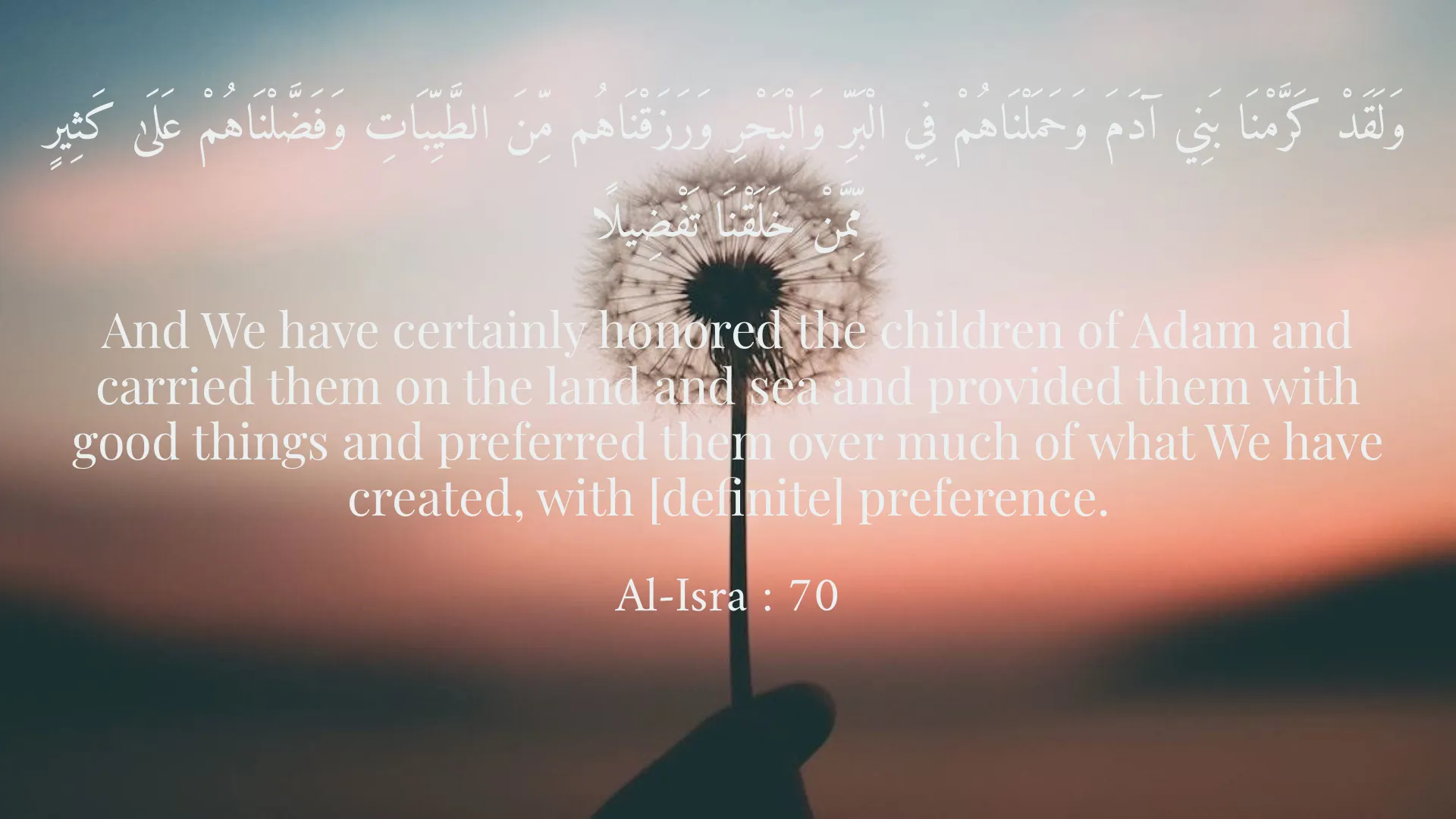
وَلَقَدْ كَرَّمْنَا بَنِي آدَمَ وَحَمَلْنَاهُمْ فِي الْبَرِّ وَالْبَحْرِ وَرَزَقْنَاهُم مِّنَ الطَّيِّبَاتِ وَفَضَّلْنَاهُمْ عَلَىٰ كَثِيرٍ مِّمَّنْ خَلَقْنَا تَفْضِيلًا
And We have certainly honored the children of Adam and carried them on the land and sea and provided them with good things and preferred them over much of what We have created, with [definite] preference.
Al-Isra : 70
لَا إِكْرَاهَ فِي الدِّينِ ۖ قَد تَّبَيَّنَ الرُّشْدُ مِنَ الْغَيِّ ۚ فَمَن يَكْفُرْ بِالطَّاغُوتِ وَيُؤْمِن بِاللَّهِ فَقَدِ اسْتَمْسَكَ بِالْعُرْوَةِ الْوُثْقَىٰ لَا انفِصَامَ لَهَا ۗ وَاللَّهُ سَمِيعٌ عَلِيمٌ
There shall be no compulsion in [acceptance of] the religion. The right course has become clear from the error. So whoever disbelieves in Taghut and believes in Allah has grasped the most trustworthy handhold with no break in it. And Allah is Hearing and Knowing.
Al-Baqarah : 256
لَّا يَنْهَاكُمُ اللَّهُ عَنِ الَّذِينَ لَمْ يُقَاتِلُوكُمْ فِي الدِّينِ وَلَمْ يُخْرِجُوكُم مِّن دِيَارِكُمْ أَن تَبَرُّوهُمْ وَتُقْسِطُوا إِلَيْهِمْ ۚ إِنَّ اللَّهَ يُحِبُّ الْمُقْسِطِينَ
Allah does not forbid you from those who do not fight you because of religion and do not expel you from your homes - from being righteous toward them and acting justly toward them. Indeed, Allah loves those who act justly.
Al-Mumtahanah : 8
Short Story
It is narrated that in days of old, there was a merchant who, during his travels, always treated people of every faith and creed with cheerfulness and kindness. One day, he arrived in a city whose inhabitants followed a different religion than his own. His companions warned him against too much association with them. The merchant smiled and said: "Brothers, the human heart is like a home that graciously accepts the hospitality of love. Although our houses may be far apart, we can bring our hearts closer in the name of humanity." With that same cheerful demeanor and generous help to the needy of that city, whether they were from his own creed or others, he planted such affection in their hearts that even after his departure, his name was still spoken and remembered with goodness. Thus, he showed that empathy and benevolence are a bridge that transforms every separation into connection and binds hearts together.