Quranic Answer
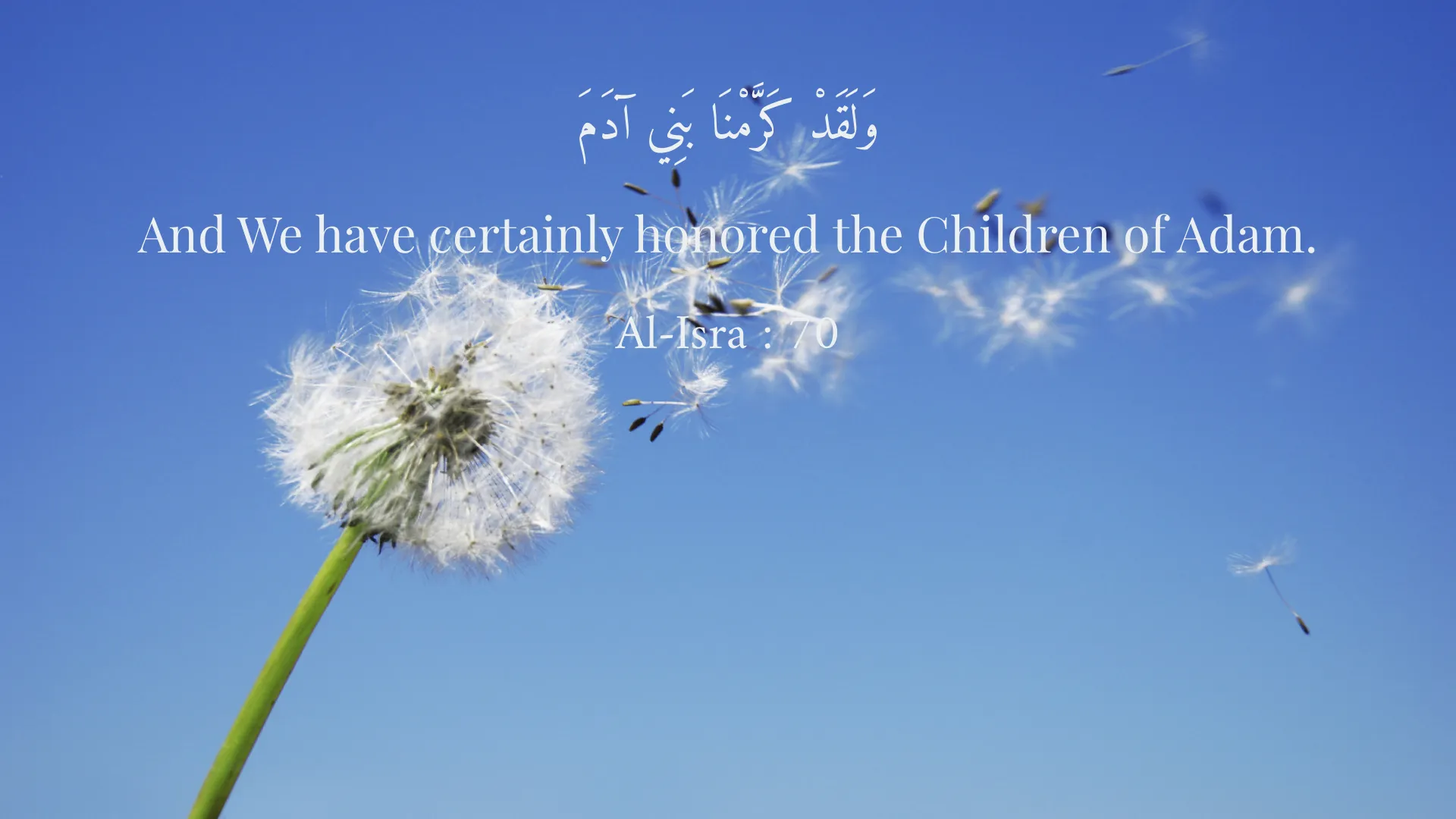
The feeling of worthlessness is a complex psychological challenge that can envelop individuals at various stages of their lives. This sentiment of being devoid of value can stem from myriad sources, including societal pressures, personal failures, or even chronic mental health issues. However, within the pages of the Holy Quran, Allah provides profound reminders of the inherent worth of every human being, which can serve as a beacon of hope and guidance during times of despair. One of the most significant affirmations of human dignity can be found in Surah Al-Isra (17:70), which states, 'And We have certainly honored the Children of Adam.' This verse encapsulates the belief that every individual carries a divine honor bestowed upon them by their Creator. This intrinsic worth is not dependent on external validations, such as accolades, achievements, or social status. Instead, it is a divine decree that underscores the significance of every human life. This perspective is crucial for those grappling with feelings of inadequacy; understanding that one is honored by Allah can offer solace and a renewed sense of self-worth. Furthermore, the Quran doesn't merely acknowledge our inherent dignity; it actively encourages believers to rise above their challenges. In Surah Al-Imran (3:139), Allah states, 'And do not grieve, for you are the highest.' This verse serves as an uplifting reminder that despair is not a destination but rather a temporary state. The call to rise above feelings of worthlessness is not just about superficial positivity; it is about recognizing the spiritual and moral elevation that comes from being a servant of Allah. This recognition can empower individuals to challenge their negative self-perceptions and reinforce their unique place in the tapestry of creation. The establishment of a strong connection with God is a vital strategy in combating feelings of worthlessness. Reassessing one’s faith can bring about significant transformation and healing. Through acts of worship, reflection, and community engagement, individuals can cultivate a deeper understanding of their purpose and value. Engaging with the Quran, participating in prayer, and connecting with fellow believers can reignite a sense of belonging and significance, reminding individuals that they are part of a larger spiritual family. Moreover, patience and prayer are highlighted in Surah Al-Baqarah (2:153), where it is stated, 'Seek help through patience and prayer.' This verse emphasizes that seeking solace through spiritual practices can create a foundation of resilience. Patience in the face of adversity allows individuals to process their feelings and develop coping mechanisms. Simultaneously, prayer serves as a direct line of communication with Allah, providing reassurance and comfort. It is during moments of prayer that believers can express their vulnerabilities and seek guidance, thereby reinforcing their self-worth through divine interaction. In addition to spiritual practices, social support is an integral factor in overcoming the feelings of worthlessness. The role of friends and family cannot be overstated. When individuals surround themselves with loved ones who nurture and uplift them, their self-esteem and confidence can significantly improve. Positive reinforcement from those who genuinely care can help counterbalance negative self-thoughts and foster a sense of belonging. It is vital to remember that opponents of self-worth are often rooted in isolation and a lack of understanding; reaching out and seeking support can drastically alter one’s emotional landscape. Moreover, it is imperative to understand that our self-perception should not be anchored in transient societal views but rather grounded in divine values. Society often presents a skewed sense of worth, defined by material success, physical appearance, or social standing. In contrast, Islamic teachings remind us that true fulfillment comes from recognizing our worth in the light of our relationship with Allah and our adherence to His guidance. Self-worth, therefore, becomes less about individual achievement and more about fulfilling one's moral and spiritual responsibilities. In conclusion, while feelings of worthlessness may pose significant challenges, the teachings of the Quran provide a rich framework for overcoming these emotional struggles. The recognition of one's divine honor, the encouragement to rise above despair, the emphasis on spiritual connection, and the importance of social support work synergistically to uplift individuals. By embracing these principles, individuals can cultivate a healthier self-view that aligns with divine values, ultimately leading to a state of contentment and peace. It is through this holistic approach—rooted in faith, community, and resilience—that we can find refuge from feelings of worthlessness and celebrate our inherent dignity as beloved children of Adam.
Related Verses
وَلَقَدْ كَرَّمْنَا بَنِي آدَمَ
And We have certainly honored the Children of Adam.
Al-Isra : 70
وَلَا تَحْزَنُوا وَأَنْتُمُ الْأَعْلَوْنَ
And do not grieve, for you are the highest.
Al-Imran : 139
اسْتَعِينُوا بِالصَّبْرِ وَالصَّلَاةِ
Seek help through patience and prayer.
Al-Baqarah : 153
Short Story
Once upon a time, a young man named Ali was experiencing feelings of worthlessness in his life. He decided to seek solutions in the Quran. By reflecting on Allah's verses, Ali realized he was honored by his Creator and needed to have faith in himself. Subsequently, he reached out to his friends for support and recognized their encouragement. As a result, Ali moved forward in life with greater courage and developed a stronger sense of self-worth.