Quranic Answer
In the rich and comprehensive teachings of the Holy Quran, the matter of fearing divine punishment while simultaneously maintaining hope in the Lord's mercy is one of the most delicate and crucial spiritual and faith-based balances. This state, known in Islamic terminology as 'Khawf and Raja' (Fear and Hope), is a vital equilibrium between abstaining from sins and striving for closeness to God, while at the same time having complete assurance in His boundless forgiveness. This balance is not only essential for the believer's mental well-being and inner peace but also serves as a strong motivator for righteous deeds and sincere repentance from sins. Fear of divine punishment (Khawf) does not mean paralyzing dread or anxiety. Rather, it is a form of 'Khushya' (reverential awe) and solemn respect in the face of God's absolute majesty, justice, and power. This fear stems from a deep understanding of divine attributes and an awareness of the dire consequences of sin and disobedience. In numerous verses, Allah explicitly speaks of severe punishments and painful recompenses for transgressors and wrongdoers. The purpose of these warnings is not to instill terror, but to awaken the human conscience and to prompt individuals to deviate from paths of destruction and incline towards guidance and salvation. The Quran, through its vivid descriptions of Hell, eschatological punishments, and the hardships of the Day of Judgment, reminds humanity that every action has an accountability, and that this world is a transit point where the results of deeds will become manifest in the Hereafter. This fear should act as a deterrent from sin, slackness in worship, and indifference towards the rights of others (Huquq al-Nas) and the rights of Allah (Huquq al-Allah). For instance, the fear of divine retribution compels a person to avoid oppression, hypocrisy, backbiting, and all moral vices, and to be diligent in fulfilling obligations and abstaining from forbidden acts. This fear cultivates a constant awareness of God’s watchful presence and the Day of Reckoning, prompting individuals to scrutinize their actions at every moment of their lives and to avoid extremism or negligence. Moreover, this fear fosters humility and submission before the Almighty, removing arrogance and self-conceit from the heart. On the other hand, hope in divine mercy (Raja) ensures that the fear of punishment does not transform into despair and hopelessness. The Holy Quran constantly emphasizes Allah's expansive mercy, His boundless forgiveness, and His acceptance of repentance. This hope provides reassurance to individuals that even if they have committed great sins, the doors of repentance and return to the Lord are never closed. Allah Himself states in the Quran, “Say, 'O My servants who have transgressed against themselves [by sinning], do not despair of the mercy of Allah. Indeed, Allah forgives all sins. Indeed, it is He who is the Forgiving, the Merciful.'” (Surah Az-Zumar, 39:53). This verse serves as a guiding light for all those who, due to the multitude of their sins, consider themselves unworthy of forgiveness and have fallen into the whirlpool of despair. Hope in divine mercy empowers a person to rise after every slip, repent, and resolutely strive towards righteous deeds. This hope is an affirmation of the truth that Allah is not only a Concealer of faults but also loves the repentant sinner and paves the way for their return. Raja also helps individuals to endure hardships and calamities with patience and steadfastness, hopeful of God's promises of reward for the patient and the righteous. The balance between Khawf and Raja is the fundamental key. The heart of a believer should be like a bird flying with two wings: fear and hope. If one of these wings is broken, flight is impossible; and if one is stronger than the other, the bird will deviate from its path. Fear of punishment without hope in mercy leads to absolute despair, depression, abandonment of worship, and even disbelief, as one perceives oneself outside the scope of divine grace and loses all motivation for effort and change. Conversely, hope in mercy without fear of punishment can lead to arrogance, heedlessness in sin, and the false presumption that 'God will simply forgive,' ultimately leading to ruin. Such an individual might neglect repentance, relying solely on divine mercy, and become engrossed in sin. To establish and maintain this delicate balance, several practical approaches are outlined in the Quran and the Prophetic Sunnah: 1. Divine Epistemology: A deep understanding of God's attributes, both 'Shadid al-Iqab' (severe in penalty) and 'Ghafur Rahim' (Oft-Forgiving, Most Merciful). The more a person knows God, the more they will tremble before His power and justice, and simultaneously be encouraged by His generosity and forgiveness. 2. Continuous Repentance and Istighfar: Repentance (Tawbah) is the bridge connecting the sinner to God. Whenever the fear of sin overwhelms a person, sincere repentance and seeking forgiveness (Istighfar) open the path of hope. Tawbah not only cleanses sins but also increases divine love and brings inner peace. 3. Pondering over Quranic Verses: Studying and reflecting upon verses that refer to both punishment and mercy. This contemplation aids in a comprehensive and deep understanding of divine teachings and prevents a one-sided perspective. 4. Supplication and Prayer: Seeking forgiveness and mercy from Allah, while also seeking refuge in Him from punishment. Prayer strengthens the sense of neediness and dependence on the Lord. 5. Self-Accountability (Muhasabah al-Nafs): Regularly, perhaps nightly or periodically, review one's actions; acknowledge and be grateful for good deeds, and identify shortcomings and sins for repentance and rectification. This self-assessment transforms the fear of punishment from an abstract concept into a practical, tangible matter. 6. Good Company: Associating with individuals who embody the balance of Khawf and Raja, and who cultivate these two wings in their words and actions, is highly effective. Such individuals serve as practical role models for achieving this equilibrium. Ultimately, this balance between fear and hope is the essence of a believing life. A believer is neither so afraid of punishment that they abandon effort, nor so reliant on mercy that they become engrossed in sin. They always move on the path of moderation; with every sin, they repent with remorse, and with every good deed, they are grateful and hopeful for divine reward. This spiritual state grants a person profound peace, for they know they are under the care of a Lord who is both just and infinitely merciful, and no step taken on the path of guidance and repentance will go unrewarded or without effect.
Related Verses
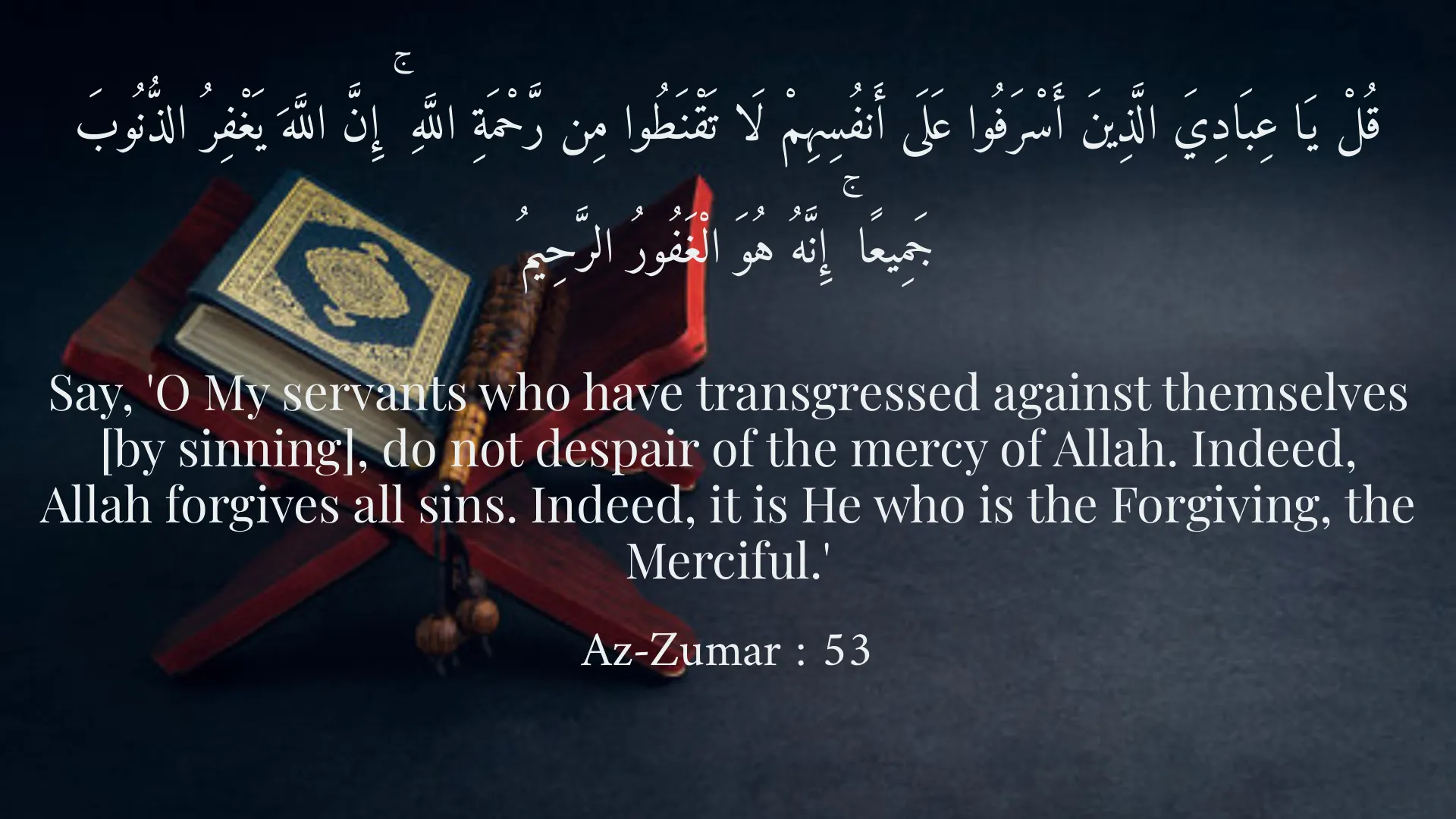
قُلْ يَا عِبَادِيَ الَّذِينَ أَسْرَفُوا عَلَى أَنفُسِهِمْ لَا تَقْنَطُوا مِن رَّحْمَةِ اللَّهِ ۚ إِنَّ اللَّهَ يَغْفِرُ الذُّنُوبَ جَمِيعًا ۚ إِنَّهُ هُوَ الْغَفُورُ الرَّحِيمُ
Say, 'O My servants who have transgressed against themselves [by sinning], do not despair of the mercy of Allah. Indeed, Allah forgives all sins. Indeed, it is He who is the Forgiving, the Merciful.'
Az-Zumar : 53
اعْلَمُوا أَنَّ اللَّهَ شَدِيدُ الْعِقَابِ وَأَنَّ اللَّهَ غَفُورٌ رَّحِيمٌ
Know that Allah is severe in penalty and that Allah is Forgiving and Merciful.
Al-Ma'idah : 98
وَاكْتُبْ لَنَا فِي هَٰذِهِ الدُّنْيَا حَسَنَةً وَفِي الْآخِرَةِ إِنَّا هُدْنَا إِلَيْكَ ۚ قَالَ عَذَابِي أُصِيبُ بِهِ مَن أَشَاءُ ۖ وَرَحْمَتِي وَسِعَتْ كُلَّ شَيْءٍ ۚ فَسَأَكْتُبُهَا لِلَّذِينَ يَتَّقُونَ وَيُؤْتُونَ الزَّكَاةَ وَالَّذِينَ هُم بِآيَاتِنَا يُؤْمِنُونَ
And ordain for us in this world good and in the Hereafter; indeed, we have turned to You.' He said, 'My punishment — I afflict with it whom I will, but My mercy encompasses all things.' So I will decree it [especially] for those who fear Allah and give zakah and those who believe in Our verses.
Al-A'raf : 156
Short Story
They say a man was lost in a vast desert, and a great fear weighed upon his heart due to the multitude of his sins and transgressions. He thought there was no salvation for him and that only punishment awaited him. Despair, like a mountain, pressed heavily upon his chest. In that state, he saw a wise old man sitting by a spring. The man, with a lament, recounted his tale of sins and fear. The elder smiled and said, 'O young man, many a lost soul has returned at the call of repentance and benefited from divine mercy, and many a worshipper has erred out of arrogance. The fear of punishment prevents you from repeating sins, but despairing of mercy is itself a greater sin. The ocean of divine forgiveness is boundless. Fear so that you do not commit a transgression, but do not despair, for whenever you repent, He is the acceptor.' Upon hearing these wise words, the man breathed a sigh of relief. Tears streamed from his eyes; he repented for his past, and with a heart full of hope and renewed determination, he started his journey anew and finally reached the shore of salvation.