Quranic Answer
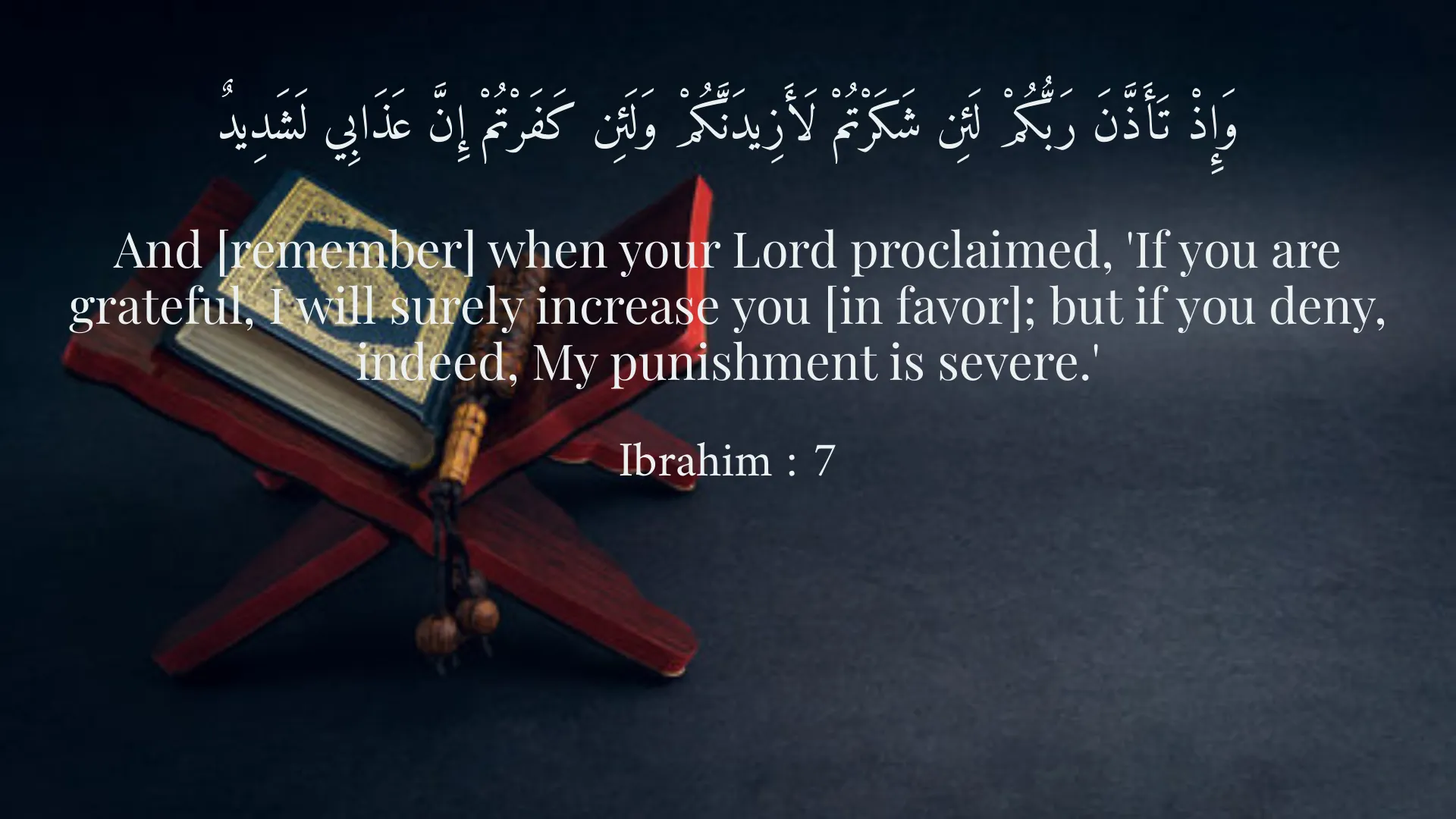
The question, "How to find joy in small blessings?" from an Islamic and Quranic perspective, is deeply intertwined with the concept of shukr (gratitude) and observing the divine signs within ourselves and the cosmos. The Holy Quran not only invites us to express gratitude for grand bounties but also places significant emphasis on appreciating even the most minute favors from Allah. This is because everything in our lives, from the smallest detail to the most significant event, is a gift from our compassionate Lord. True happiness, therefore, is not found in the quantity of material possessions, but rather in the depth of one's spiritual connection to the Creator and a profound appreciation for His endless provisions. The first and most fundamental step towards finding joy in small blessings is "constant remembrance and heartfelt gratitude." Allah states in Surah Al-Baqarah, verse 152: "So remember Me; I will remember you. And be grateful to Me and do not deny Me." This verse clearly indicates that remembering Allah and being grateful to Him is a reciprocal key that causes Allah to remember us. Gratitude is not merely a verbal act; it is a state of heart that compels an individual to see divine wisdom and grace even in the most ordinary and seemingly trivial things. A glass of cold water on a hot summer day, a comfortable breath after exertion, good health, a child's smile, the sunlight, even the ability to see and hear – these are all blessings that we often take for granted. The Quran reminds us in Surah An-Nahl, verse 78: "And Allah has extracted you from the wombs of your mothers while you knew nothing, and He made for you hearing and vision and hearts that perhaps you would be grateful." This verse underscores that even our most basic sensory abilities are immense blessings whose true value we frequently overlook. The second crucial point is "a shift in perspective and outlook." Humans often tend to dwell on what they lack and compare themselves with those who possess more. Such comparisons are a primary source of dissatisfaction and unhappiness. The Quran guides us to look at what we possess and be grateful. In Surah Ibrahim, verse 7, it is stated: "And [remember] when your Lord proclaimed, 'If you are grateful, I will surely increase you [in favor]; but if you deny, indeed, My punishment is severe.'" This divine promise serves as a powerful motivation for gratitude. Gratitude is not merely verbal thanks but also the proper utilization of blessings in a way that pleases Allah. When we use a small blessing, such as a morsel of bread, correctly and do not waste it, we are, in essence, showing gratitude for it. When we use our health to perform good deeds, we are grateful for the blessing of health. This type of practical gratitude leads to an increase in blessings and joy in life. The third strategy is "contemplation and reflection on creation." The Quran repeatedly invites humanity to ponder the divine signs throughout the universe. From the largest galaxies to the smallest particles, each is a sign of the Creator's grandeur and wisdom. When we carefully observe a raindrop, the growth of a seed, or the complexity of a tree leaf, we realize how immense and meaningful every small thing is. This contemplation frees the human mind from material worries and deficiencies, guiding it towards understanding the beauty and order governing existence. This understanding itself is a great source of joy and peace, as one sees oneself as part of this grand and perfect order and knows that Allah has not forgotten them. Every breath we take, every heartbeat, every moment spent in peace and security, all serve as reminders of Allah's boundless grace. Fourth, "avoidance of extravagance and appreciation of sufficiency (qana'ah)." The Holy Quran condemns extravagance and calls for moderation. When a person appreciates the existing blessings and is content with them (the concept of qana'ah), they are freed from greed and covetousness. Contentment does not mean giving up efforts to improve one's life but rather having inner satisfaction with what one currently possesses and not being overly attached to what one lacks. When a person is content with the small blessings they have, they do not feel the need to go to extremes to acquire what they do not have, thereby experiencing less anxiety and worry. This inner peace is, in itself, the greatest source of happiness. Fifth, "articulating blessings and sharing joy." In Surah Ad-Duha, verse 11, we read: "But as for the favor of your Lord, relate [it]." This verse encourages us to speak about the blessings Allah has bestowed upon us. Articulating blessings is both verbal gratitude and a means by which others become aware of them, perhaps leading them to thank Allah as well. This practice not only strengthens one's sense of gratitude but can also inspire others to adopt a positive outlook and see the beauty in their own lives. When we share our small joys with others, these joys expand and deepen. Ultimately, finding joy in small blessings is a conscious choice. This choice is based on faith and a deep understanding of the truth that everything in the universe originates from Allah, and He is the best Giver. Through constant remembrance, a shift in perspective, contemplation of creation, contentment, and the articulation of blessings, we can lead a life full of gratitude, tranquility, and happiness, even if, outwardly, we may not possess much. This path is what the Holy Quran indicates for achieving true success and divine pleasure, guiding humanity towards a blessed life filled with contentment. This outlook not only assists individuals during good times but also prevents despair during hardships, granting them the strength to persevere and be grateful for divine decree. Therefore, appreciating small blessings not only brings joy but also opens a door to a deeper understanding of divine wisdom and an increase in blessings in all aspects of life.
Related Verses
وَإِذْ تَأَذَّنَ رَبُّكُمْ لَئِن شَكَرْتُمْ لَأَزِيدَنَّكُمْ وَلَئِن كَفَرْتُمْ إِنَّ عَذَابِي لَشَدِيدٌ
And [remember] when your Lord proclaimed, 'If you are grateful, I will surely increase you [in favor]; but if you deny, indeed, My punishment is severe.'
Ibrahim : 7
وَاللَّهُ أَخْرَجَكُمْ مِنْ بُطُونِ أُمَّهَاتِكُمْ لَا تَعْلَمُونَ شَيْئًا وَجَعَلَ لَكُمُ السَّمْعَ وَالْأَبْصَارَ وَالْأَفْئِدَةَ لَعَلَّكُمْ تَشْكُرُونَ
And Allah has extracted you from the wombs of your mothers while you knew nothing, and He made for you hearing and vision and hearts that perhaps you would be grateful.
An-Nahl : 78
وَأَمَّا بِنِعْمَةِ رَبِّكَ فَحَدِّثْ
But as for the favor of your Lord, relate [it].
Ad-Duha : 11
Short Story
It is said that there was a dervish who never complained about poverty, save for one occasion when he was barefoot and had no shoes. He walked along, feeling disheartened and sad about his plight. Then he encountered a man on the path who had both his feet amputated and was struggling to walk. Upon seeing this, the dervish immediately prostrated in gratitude and said, 'Oh God! I was complaining about not having shoes, yet this man does not even have feet to walk with. So, I am grateful for the blessing of my healthy feet.' It was at that moment that the dervish became joyful over his small possessions, freed himself from the sorrow of bareness, and understood that true happiness lies within a person, not in what is outside of them.