Quranic Answer
The question you've posed touches upon one of the deepest and most human challenges individuals face on their life's journey. Forgiveness, especially when the wounds of the heart are fresh and painful, is not only difficult but sometimes seems impossible. However, the Holy Quran, with its infinite wisdom, offers invaluable guidance for this internal journey. We must understand that forgiveness in Islam is not merely about overlooking someone else's transgression; rather, it is a profound spiritual and emotional process that ultimately leads to the liberation and inner peace of the forgiver. It is a gift we first give to ourselves, not to the one who hurt us. The Quran repeatedly refers to the concepts of 'Afw' (pardoning) and 'Safh' (overlooking or turning away). 'Afw' means to erase the effect of a sin or mistake, while 'Safh' implies turning away from the offense and not harboring resentment. In Surah An-Nur, verse 22, Allah says: "...and let them pardon and overlook. Would you not like that Allah should forgive you? And Allah is Forgiving and Merciful." This verse is a rhetorical question that conveys the depth of the message: if we desire Allah's forgiveness, how can we withhold forgiveness from others? It is a powerful invitation to reflection and empathy. When the pain is still alive, forgiveness does not mean forgetting. Instead, it means acknowledging that the pain exists, but deciding that this pain and resentment will not define our lives or keep us imprisoned in the past. It is an act of heroic courage and inner strength. The Quran teaches us to practice patience (Sabr) and piety (Taqwa). Patience means enduring hardship and persevering through difficulties. When facing deep pain, patience helps us manage our emotions, avoid hasty decisions, and proceed with contemplation and planning instead of impulsive reactions. In Surah Al-Baqarah, verse 153, Allah says: "O you who have believed, seek help through patience and prayer. Indeed, Allah is with the patient." Prayer (Salat) and remembrance (Dhikr) are a safe refuge for a wandering and hurting soul. Pouring out one's heart to the Creator is soothing and frees the heart from its burden. One of the difficulties in forgiving is the fear of repeated harm. However, forgiveness does not necessarily mean reconciliation or returning the relationship to its previous state. Instead, it can mean cutting the emotional ties that bind you to the offender and the pain. It signifies that you release the heavy burden of anger, resentment, and the desire for revenge. This act liberates you from the captivity of the past. In Surah Ash-Shura, verses 40-43, Allah states: "And the recompense of an evil deed is an evil thereof; but whoever pardons and makes reconciliation – his reward is due from Allah. Indeed, He does not like wrongdoers... And whoever is patient and forgives – indeed, that is of the matters [requiring] determination." These verses emphasize that while there is a right to retaliation, forgiveness and reconciliation hold a higher status, and their reward is directly from Allah. This shows that forgiveness is a powerful choice that demonstrates firm will and resolve. To reach this stage of forgiveness, several steps must be taken: First, accept the pain and validate its legitimacy. Allow yourself to experience your emotions, but do not drown in them. Second, recognize that holding onto resentment harms you more than it harms the other. Resentment is like a poison that gradually contaminates the soul. Third, understand the truth that every human is fallible, and Allah has taught us forgiveness. Fourth, focus on your own healing. This process may involve counseling, prayer, meditation, or any other method that helps you cope with your emotions and move forward. Fifth, remember the immense spiritual reward of forgiveness in the afterlife and the inner peace it brings in this world. Forgiveness is a doorway to inner peace and liberation from the chains of the past, even when the imprint of pain remains in your heart. This process is not an event but a journey, and every small step along this path is a step towards freedom and eternal tranquility.
Related Verses
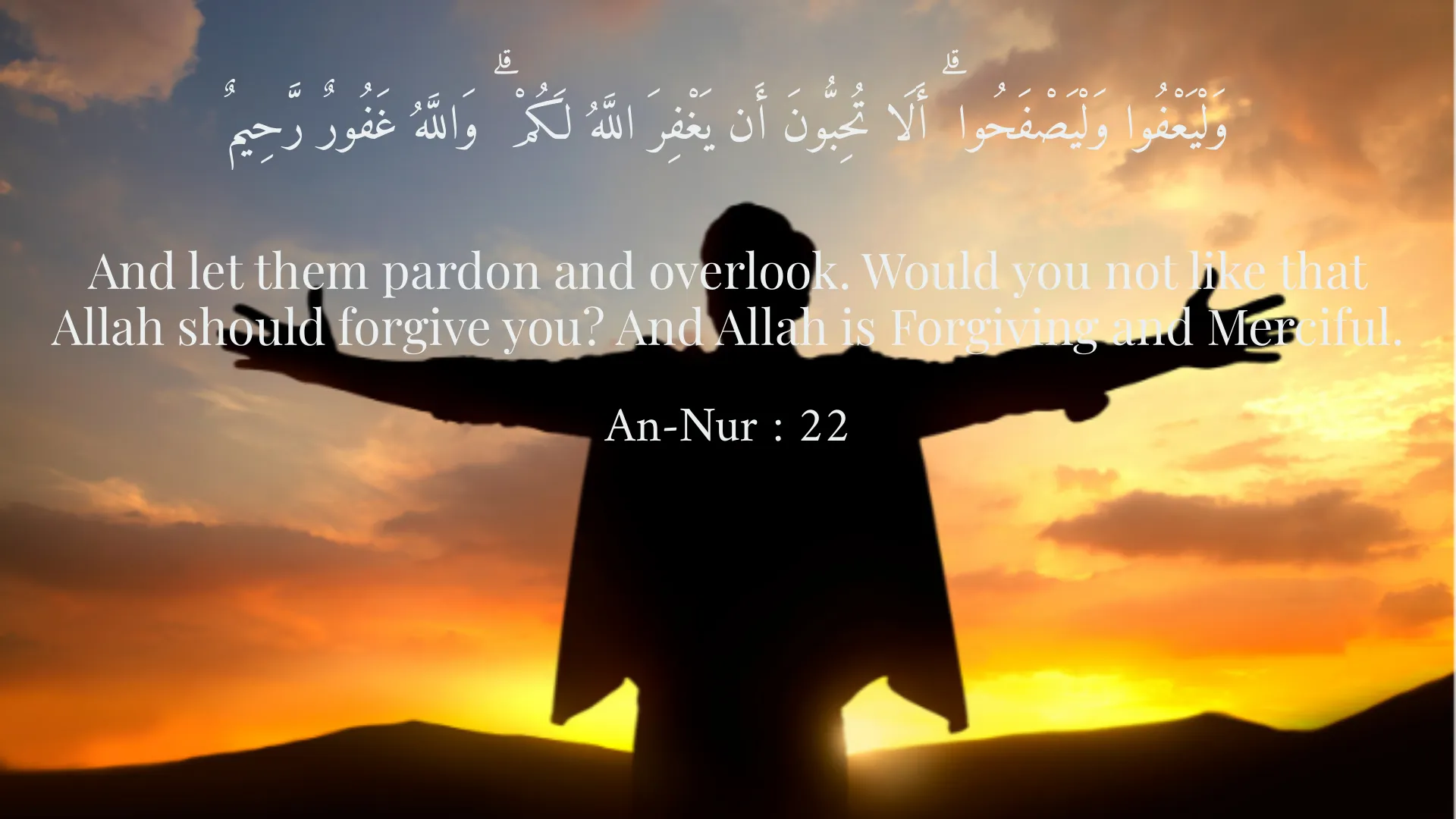
وَلْیَعْفُوا وَلْیَصْفَحُوا ۗ أَلَا تُحِبُّونَ أَن یَغْفِرَ اللَّهُ لَکُمْ ۗ وَاللَّهُ غَفُورٌ رَّحِیمٌ
And let them pardon and overlook. Would you not like that Allah should forgive you? And Allah is Forgiving and Merciful.
An-Nur : 22
وَجَزَاءُ سَیِّئَةٍ سَیِّئَةٌ مِثْلُهَا ۖ فَمَنْ عَفَا وَأَصْلَحَ فَأَجْرُهُ عَلَی اللَّهِ ۚ إِنَّهُ لَا یُحِبُّ الظَّالِمِینَ
And the recompense of an evil deed is an evil thereof; but whoever pardons and makes reconciliation - his reward is due from Allah. Indeed, He does not like wrongdoers.
Ash-Shura : 40
وَلَمَن صَبَرَ وَغَفَرَ إِنَّ ذَلِكَ لَمِنْ عَزْمِ الْأُمُورِ
But whoever is patient and forgives - indeed, that is of the matters [requiring] determination.
Ash-Shura : 43
الَّذِینَ یُنفِقُونَ فِی السَّرَّاءِ وَالضَّرَّاءِ وَالْکَاظِمِینَ الْغَیْظَ وَالْعَافِینَ عَنِ النَّاسِ ۗ وَاللَّهُ یُحِبُّ الْمُحْسِنِینَ
Those who spend [in the way of Allah] in ease and hardship, and who restrain anger and who pardon the people - and Allah loves the doers of good.
Ali 'Imran : 134
Short Story
Once upon a time, a wise man named Sheikh Abu Sa'id, whose heart was filled with pain and bitterness due to a grievance from a close friend, could not sleep at night, and sorrow haunted him by day. One of his disciples, seeing his master distressed, asked with embarrassment: "O Sheikh, you who always speak of patience and forgiveness, why are you so restless yourself?" The Sheikh replied with a bitter smile: "My son, speaking is easy, but acting is difficult, especially when pain is stuck in the throat like a bone." But after long contemplation, the Sheikh told his disciple: "However, I realized something today that I was previously oblivious to. Holding onto resentment is not poison for another, but a fire within our own souls. Every time I think of revenge or recall that pain, it is as if I burn myself even more." He continued: "I understood that forgiveness is not about releasing the other, but about releasing oneself from this chain. Resentment is like a stone tied to one's own foot, expecting the other to limp. Now I have decided to untie that stone from my foot, even if the wound is fresh. May my heart find peace by releasing this heavy burden and taste the sweet tranquility once more." From then on, Sheikh Abu Sa'id did not reconcile with that friend, but he became internally free, and his life took on a different hue, showing that true forgiveness is first about liberating oneself from the prison of resentment.