Quranic Answer
Comparing oneself with others is a common challenge in modern life that can lead to feelings of envy, dissatisfaction, low self-esteem, and even depression. From the perspective of the Holy Quran, while the word 'comparison' is not directly discussed, it offers profound and foundational principles that help us free ourselves from this trap with a divine and constructive outlook, leading to inner peace. The Quran addresses the roots of these feelings, teaching us to focus on our spiritual journey and individual responsibilities rather than on what others possess. One of the most important Quranic foundations for liberation from comparison is a deep understanding of the concept of 'Divine Decree' (Qadar) and 'Trust in Allah' (Tawakkul). The Quran explicitly states that every individual's provision, status, and talents are predetermined by Allah. Every human being in this world has their unique tests and circumstances. When one believes in the truth that everyone's sustenance and blessings are distributed by Divine wisdom, they no longer covet the possessions or lack thereof of others. In Surah Az-Zukhruf, verse 32, Allah says: "Are they the ones who distribute the mercy of your Lord? It is We who have apportioned among them their livelihood in the life of this world and raised some of them above others in degrees [of rank] that they may employ one another in services. But the mercy of your Lord is better than whatever they accumulate." This verse clearly indicates that differences in sustenance and social status are part of Allah's wisdom and should not lead to envy or comparison; rather, their purpose is for testing and cooperation among people. Trust in Allah means that we rely on Divine planning and know that what is destined for us is the best, even if it appears different from others. The second principle is 'Gratitude' (Shukr) and appreciation for existing blessings. The Quran repeatedly emphasizes the importance of gratitude. When a person shifts their gaze from what others possess to the countless blessings they themselves enjoy, their heart becomes filled with contentment and peace. Gratitude transforms one's perspective from scarcity to abundance, eliminating envy and comparison. In Surah Ibrahim, verse 7, it is stated: "If you are grateful, I will surely increase you [in favor]; but if you deny, indeed, My punishment is severe." This verse not only emphasizes the increase of blessings in return for gratitude but also implicitly indicates that ingratitude can lead to dissatisfaction and longing, which are roots of comparison. Gratitude for health, family, opportunities, and even challenges that aid one's growth can liberate the mind from the temptation of comparison. The third Quranic solution is to shift the focus from 'this world' (Dunya) to the 'Hereafter' (Akhirah). Many comparisons stem from an excessive valuation of worldly criteria such as wealth, beauty, social status, and material success. The Holy Quran constantly reminds humanity that worldly life is transient and fleeting, and true worth in the sight of Almighty Allah is based on piety (Taqwa) and good deeds, not material superiority. In Surah Al-Hujurat, verse 13, it says: "O mankind, indeed We have created you from male and female and made you peoples and tribes that you may know one another. Indeed, the most noble of you in the sight of Allah is the most righteous of you. Indeed, Allah is Knowing and Acquainted." This verse clarifies the criteria for true superiority, showing that piety and righteousness, not wealth or status, are sources of honor and distinction. When a person sets their primary goal as gaining Allah's pleasure and success in the Hereafter, the worldly achievements of others appear less significant, and their focus shifts to improving their relationship with God and serving creation. The fourth principle is 'avoiding greed and envy' (Hasad and Tamanni). The Quran explicitly forbids coveting what Allah has given to others and condemns envy. Envy is a flame in the heart that burns away all good and deprives a person of peace. In Surah An-Nisa, verse 32, we read: "And do not covet that by which Allah has preferred some of you over others. For men is a share of what they have earned, and for women is a share of what they have earned. And ask Allah of His bounty. Indeed, Allah is ever, of all things, Knowing." This verse clearly prohibits us from desiring what others possess and instead advises us to ask Allah for His bounty for ourselves. This approach is more constructive and positive; instead of regretting what we do not have, we can strive and supplicate to achieve what we desire, within the framework of Divine wisdom and will. Similarly, Surah Al-Falaq, verse 5, seeks refuge in Allah from the evil of an envier when he envies, which demonstrates the dangerous nature of this moral vice. Finally, the Quran emphasizes 'self-knowledge' and 'individual responsibility'. Every human being is created for a specific purpose and has unique duties. Focusing on personal growth, self-purification, and fulfilling one's own responsibilities prevents one from dwelling on the lives of others. In Surah Al-Mulk, verse 2, it says: "[He] who created death and life to test you – which of you is best in deed – and He is the Exalted in Might, the Forgiving." This verse indicates that the purpose of life is to test our good deeds, not to compete with others over worldly possessions. When a person focuses on their own path and improving their actions, there is no time left for comparison. Consequently, freedom from comparing oneself with others, in light of Quranic teachings, requires a profound shift in perspective from worldly-centricity to Divine-centricity, strengthening reliance on Allah, practicing gratitude, focusing on piety and self-improvement, and avoiding greed and envy. This perspective not only brings inner peace and contentment but also places an individual on the true path of perfection and proximity to Allah.
Related Verses
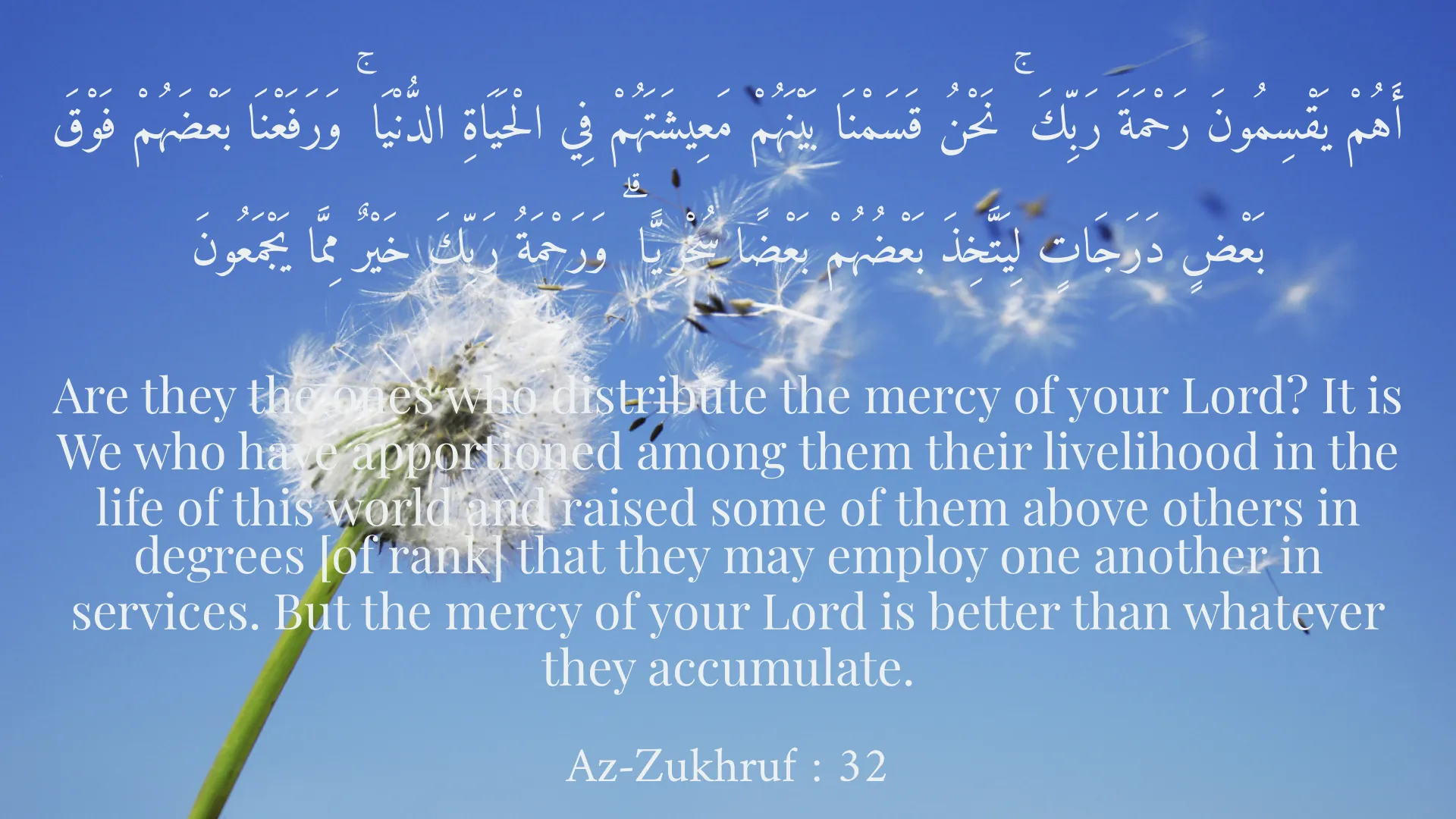
أَهُمْ يَقْسِمُونَ رَحْمَةَ رَبِّكَ ۚ نَحْنُ قَسَمْنَا بَيْنَهُمْ مَعِيشَتَهُمْ فِي الْحَيَاةِ الدُّنْيَا ۚ وَرَفَعْنَا بَعْضَهُمْ فَوْقَ بَعْضٍ دَرَجَاتٍ لِيَتَّخِذَ بَعْضُهُمْ بَعْضًا سُخْرِيًّا ۗ وَرَحْمَةُ رَبِّكَ خَيْرٌ مِمَّا يَجْمَعُونَ
Are they the ones who distribute the mercy of your Lord? It is We who have apportioned among them their livelihood in the life of this world and raised some of them above others in degrees [of rank] that they may employ one another in services. But the mercy of your Lord is better than whatever they accumulate.
Az-Zukhruf : 32
وَإِذْ تَأَذَّنَ رَبُّكُمْ لَئِن شَكَرْتُمْ لَأَزِيدَنَّكُمْ ۖ وَلَئِن كَفَرْتُمْ إِنَّ عَذَابِي لَشَدِيدٌ
And [remember] when your Lord proclaimed, 'If you are grateful, I will surely increase you [in favor]; but if you deny, indeed, My punishment is severe.'
Ibrahim : 7
وَلَا تَتَمَنَّوْا مَا فَضَّلَ اللَّهُ بِهِ بَعْضَكُمْ عَلَىٰ بَعْضٍ ۚ لِلرِّجَالِ نَصِيبٌ مِّمَّا اكْتَسَبُوا ۖ وَلِلنِّسَاءِ نَصِيبٌ مِّمَّا اكْتَسَبْنَ ۚ وَاسْأَلُوا اللَّهَ مِن فَضْلِهِ ۗ إِنَّ اللَّهَ كَانَ بِكُلِّ شَيْءٍ عَلِيمًا
And do not covet that by which Allah has preferred some of you over others. For men is a share of what they have earned, and for women is a share of what they have earned. And ask Allah of His bounty. Indeed, Allah is ever, of all things, Knowing.
An-Nisa : 32
Short Story
It is narrated that in ancient times, there was an ascetic man who never complained about his poverty and was always grateful. One day, he passed by a magnificent mansion and saw a wealthy man looking at his property and possessions with worry and sadness. The ascetic looked at him with a kind smile and said: "My friend, do you think your wealth has brought you peace? By God, I, who have nothing, have a more tranquil heart than you. Whoever is content with their sustenance and does not covet the possessions of others, possesses a treasure in their heart that no king's treasury can equal." The wealthy man pondered over these words and realized that true happiness lies not in comparing oneself to others, but in contentment and satisfaction with what one has.