Quranic Answer
Freeing oneself from the scrutiny and judgment of others is one of the deepest and most vital spiritual and psychological challenges many individuals grapple with throughout their lives. The desire for approval, the fear of criticism, and anxiety about what others think can cast invisible chains upon one's spiritual freedom, preventing an authentic life lived in accordance with one's inner values. From the perspective of the Holy Quran, the key to liberation from this bondage lies in returning to the monotheistic essence, deepening one's relationship with the Creator, and understanding that the only true criterion for assessing human worth is the pleasure and satisfaction of God, not the fleeting and variable affirmations of human beings. The first and most crucial step on this path is cultivating sincerity (Ikhlas) in intention and action. The Quran explicitly emphasizes the importance of pure intentions, deeming any action performed for other than God as worthless. In Surah Al-Bayyinah, verse 5, it states: “And they were not commanded except to worship Allah, [being] sincere to Him in religion, inclining to truth, and to establish prayer and to give zakat. And that is the correct religion.” When a person performs their actions solely for the pleasure of Allah, they are no longer concerned with the judgment or praise of people. They understand that the value of their deed lies not in the superficial gaze of others, but in the purity of their intention before the Lord. This sincerity frees a person from hypocrisy, pretense, and showing off, giving them the courage to live authentically as they truly are. The second foundational principle is the concept of reliance upon Allah (Tawakkul). When one truly relies on God, understanding that all matters are in His hands, they no longer fear the reactions and judgments of people. The Quran states in Surah At-Talaq, verse 3: “And whoever relies upon Allah - He is sufficient for him. Indeed, Allah will accomplish His purpose. Allah has already set for everything a [decreed] extent.” This reliance grants a profound sense of peace, making one realize that the satisfaction and power of people are insignificant compared to the absolute will and power of the Divine. If God is with you, the negative gaze of others does not diminish your worth in the slightest, and if God is not pleased, all the praises of the world are worthless. Third, the fear of Allah must be prioritized over the fear of people. One of the most significant obstacles to freedom from people's gaze is the fear of losing social standing, being ridiculed, or missing opportunities due to being different. The Quran reminds us of this point in various narratives. For example, in Surah Al-Ahzab, verse 37, in the context of the Prophet’s marriage to Zaynab, Allah says: “And you feared the people, while Allah is more deserving that you fear Him.” This verse teaches us that the primary criterion for decisions and behaviors should be the fear of disobeying Allah and striving to gain His pleasure. When this divine fear takes root in the heart, human fears diminish and disappear. A person who fears only Allah bows before no one else and attaches their heart to no other power. Fourth, it is essential to understand that people's judgments are often superficial, incomplete, and based on appearances. People only see the outward manifestation of our actions, not our inner intentions and the sincerity of our hearts. In contrast, Allah is aware of both the hidden and the manifest, and it is He who judges based on true intentions and actions. This awareness lifts the heavy burden of trying to “look good” in the eyes of people. Instead of expending energy on managing others' perceptions, one can dedicate this energy to improving their inner self and spiritual growth. The Quran teaches us not to perform our actions for the sake of showing off to people, as warned in Surah Al-Baqarah, verse 264, not to invalidate charities with reminders or injury, “like one who spends his wealth [only] to be seen by the people.” Fifth, strengthening self-awareness and self-confidence based on divine values. When a person understands their worth in relation to the Creator of the universe and their adherence to moral and spiritual principles, they do not need external validation. This Quranic self-reliance protects them from wavering in the face of others' glances and helps them to live according to divine standards, even if it goes against the general current of society. This does not mean complete disregard for society but rather prioritizing the Creator's pleasure over the creation's pleasure. Ultimately, freedom from people's gaze is an internal journey achieved through increasing knowledge of God, strengthening faith, acting upon Quranic teachings, and purifying the soul. This freedom not only lifts a burden from a person's shoulders but also enables them to live a more authentic, meaningful, and peaceful life, for their sole aim is the satisfaction of the One in whose hands everything lies, and whose gaze is ever upon us.
Related Verses
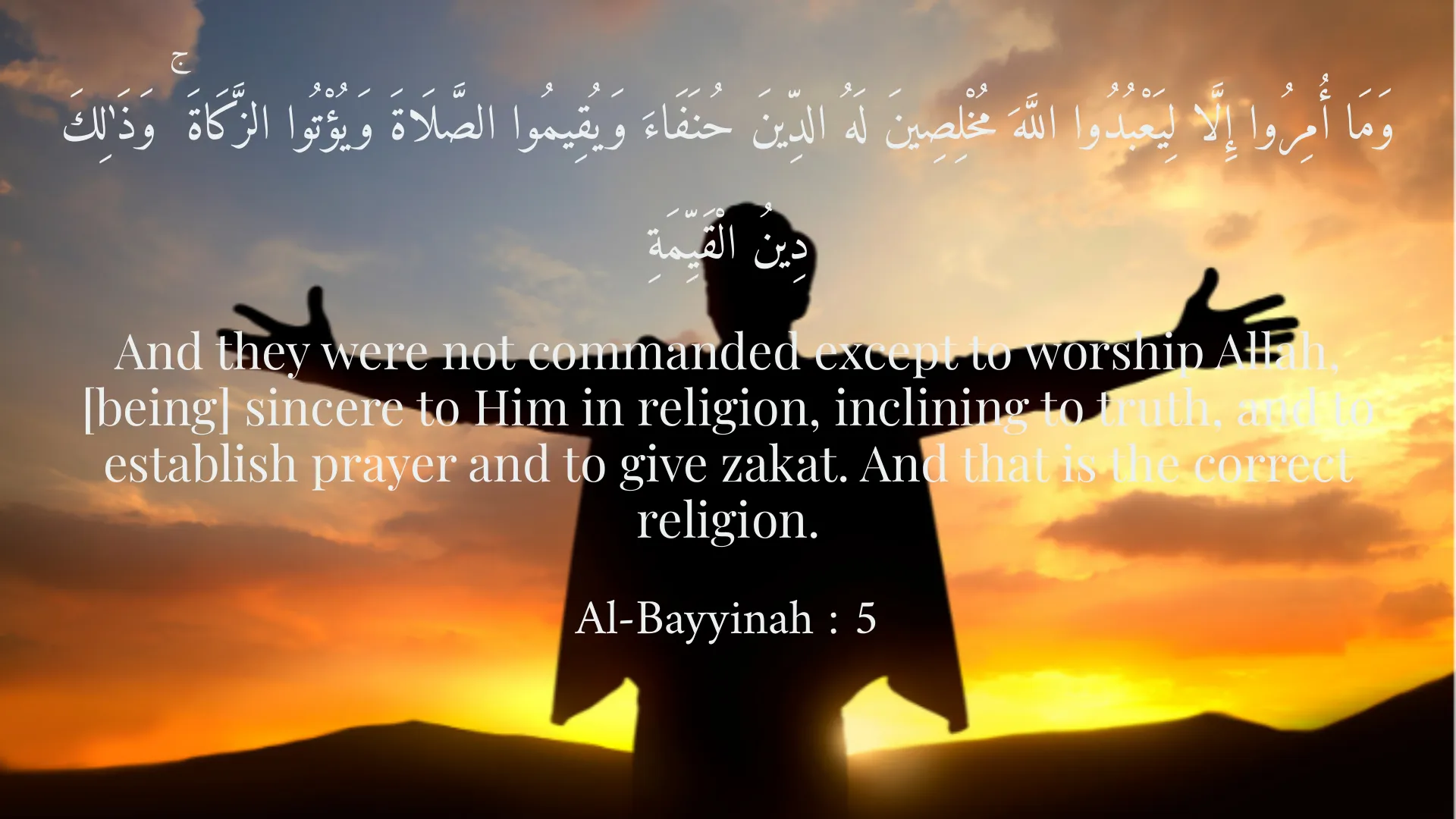
وَمَا أُمِرُوا إِلَّا لِيَعْبُدُوا اللَّهَ مُخْلِصِينَ لَهُ الدِّينَ حُنَفَاءَ وَيُقِيمُوا الصَّلَاةَ وَيُؤْتُوا الزَّكَاةَ ۚ وَذَٰلِكَ دِينُ الْقَيِّمَةِ
And they were not commanded except to worship Allah, [being] sincere to Him in religion, inclining to truth, and to establish prayer and to give zakat. And that is the correct religion.
Al-Bayyinah : 5
وَمَن يَتَوَكَّلْ عَلَى اللَّهِ فَهُوَ حَسْبُهُ ۚ إِنَّ اللَّهَ بَالِغُ أَمْرِهِ ۚ قَدْ جَعَلَ اللَّهُ لِكُلِّ شَيْءٍ قَدْرًا
And whoever relies upon Allah - He is sufficient for him. Indeed, Allah will accomplish His purpose. Allah has already set for everything a [decreed] extent.
At-Talaq : 3
وَإِذْ تَقُولُ لِلَّذِي أَنْعَمَ اللَّهُ عَلَيْهِ وَأَنْعَمْتَ عَلَيْهِ أَمْسِكْ عَلَيْكَ زَوْجَكَ وَاتَّقِ اللَّهَ وَتُخْفِي فِي نَفْسِكَ مَا اللَّهُ مُبْدِيهِ وَتَخْشَى النَّاسَ وَاللَّهُ أَحَقُّ أَن تَخْشَاهُ ۚ فَلَمَّا قَضَىٰ زَيْدٌ مِّنْهَا وَطَرًا زَوَّجْنَاكَهَا لِكَيْ لَا يَكُونَ عَلَى الْمُؤْمِنِينَ حَرَجٌ فِي أَزْوَاجِ أَدْعِيَائِهِمْ إِذَا قَضَوْا مِنْهُنَّ وَطَرًا ۚ وَكَانَ أَمْرُ اللَّهِ مَفْعُولًا
And [remember, O Muhammad], when you said to the one on whom Allah bestowed favor and you bestowed favor, 'Keep your wife and fear Allah,' while you concealed within yourself that which Allah was to disclose. And you feared the people, while Allah is more deserving that you fear Him. So when Zayd had no longer any need for her, We married her to you in order that there not be upon the believers any discomfort concerning the wives of their adopted sons when they no longer have need of them. And ever is the command of Allah accomplished.
Al-Ahzab : 37
يَا أَيُّهَا الَّذِينَ آمَنُوا لَا تُبْطِلُوا صَدَقَاتِكُم بِالْمَنِّ وَالْأَذَىٰ كَالَّذِي يُنفِقُ مَالَهُ رِئَاءَ النَّاسِ وَلَا يُؤْمِنُ بِاللَّهِ وَالْيَوْمِ الْآخِرِ ۖ فَمَثَلُهُ كَمَثَلِ صَفْوَانٍ عَلَيْهِ تُرَابٌ فَأَصَابَهُ وَابِلٌ فَتَرَكَهُ صَلْدًا ۖ لَّا يَقْدِرُونَ عَلَىٰ شَيْءٍ مِّمَّا كَسَبُوا ۗ وَاللَّهُ لَا يَهْدِي الْقَوْمَ الْكَافِرِينَ
O you who have believed, do not invalidate your charities with reminders or [other] injury, like one who spends his wealth [only] to be seen by the people and does not believe in Allah and the Last Day. His example is like that of a [bare] rock upon which is dust and then a heavy rain falls upon it, leaving it smooth. They are unable [to keep] anything of what they earned. And Allah does not guide the disbelieving people.
Al-Baqarah : 264
Short Story
It is narrated in Saadi's Gulistan that a dervish, in worn and tattered clothes, was walking along a path. A group of people saw him, burst into laughter, and mockingly said, "What a state this is!" The dervish, with serenity and a smile on his lips, replied: "Dear friends, you see the outward appearance and judge by it, but I am inwardly engaged in something that, if you were aware of it, you would commend me, not mock me." He added, "I have entrusted my heart to the True Friend, and I am free from the gaze of creation, for I know that His pleasure is worth more than a thousand praises and commendations from you." This story illustrates that when the heart is turned towards God, the gaze and judgment of people become powerless, and a deep inner peace is attained.