Quranic Answer
Responding to this fundamental and profound question delves into the essence of Quranic teachings and forms the core of faith and piety. Freeing oneself from the gaze of people and living solely for divine pleasure is an inner, continuous journey that requires self-knowledge, insight, and boundless reliance on the Almighty Lord. The Holy Quran repeatedly emphasizes the importance of sincerity (Ikhlas) in actions and intentions, warning humanity against ostentation (riya') and showing off. This means that every good deed we perform, every step we take, and every intention we hold in our hearts must be solely for gaining the Creator's pleasure, not to attract the admiration and praise of creation. People's opinions are volatile, unstable, and often based on appearances, whereas Allah's gaze is penetrating, constant, and based on the sincerity of hearts and truthful deeds. One of the most crucial principles the Quran offers for achieving this liberation is the concept of "Tawakkul ala Allah" (reliance on Allah). When a person truly relies on God and entrusts their affairs to Him, they are freed from the worry of people's judgments, criticisms, or praises. They know that the true Provider, Protector, and Helper is Allah alone, not His servants. This reliance brings profound peace to the heart and frees a person from the instability caused by public opinion. In fact, whenever one finds themselves trapped within the confines of others' gazes and judgments, it is a sign of weakness in Tawakkul and dependence on other than God. The Quran teaches us, "And whoever relies upon Allah - then He is sufficient for him" (Surah At-Talaq, 65:3). This verse is a guiding light for liberation from any dependence on other than God, guaranteeing that if we entrust our hearts to Him, we will no longer need external validations. The other principle is "Ikhlas" (sincerity). The Holy Quran, in several verses, invites servants to be sincere in their worship and deeds. In Surah Al-Bayyinah, verse 5, Allah says: "And they were not commanded except to worship Allah, [being] sincerely obedient to Him, inclining to truth, and to establish prayer and to give zakat. And that is the correct religion." Ikhlas means purifying one's intention from any non-divine motive. When a person performs an action solely for Allah, they are neither gladdened by people's praise nor saddened by their blame. The only goal is Allah's pleasure, and this is the highest degree of spiritual freedom. Focusing on the Hereafter (Akhirah) and the ephemeral nature of this world also plays a key role in this liberation. When a person becomes certain that worldly life is fleeting and what remains is righteous deeds performed with sincere intention for Allah, they no longer attach much importance to worldly appearances and social prestige. The Holy Quran repeatedly emphasizes that worldly life is merely play and amusement, and it is the Hereafter that holds eternal life and true reward. This perspective leads one to abandon the race for attention and praise from people and instead dedicate all efforts to preparing for the Day of Judgment, a day when only sincere actions will be saving. In Surah Al-Mulk, verse 2, we read: "[He] who created death and life to test you [as to] which of you is best in deed." This verse shows that the purpose of creation is a divine test to discover the best action, not to gain the approval of others. Furthermore, constant remembrance of Allah (dhikr), through prayer, Quran recitation, and glorification (tasbih), strengthens the heart and distances a person from satanic whispers and concerns related to people's judgments. When the heart finds tranquility in the remembrance of Allah, it will no longer seek false comfort in others' praise and admiration. The Quran states: "Unquestionably, by the remembrance of Allah hearts are assured" (Surah Ar-Ra'd, 13:28). This spiritual tranquility is the greatest factor in freeing oneself from any fear or dependence on other than God. In summary, to free oneself from people's gaze and live solely for God, one must implement four fundamental pillars in life: strengthening reliance on Allah, practicing sincerity in all actions and intentions, focusing on the Hereafter and the transient nature of this world, and persistently engaging in the remembrance of Allah. This path is a spiritual journey that leads a person to the highest degrees of freedom and peace—freedom from the bondage of human judgments and peace derived from divine contentment. This goal not only contributes to mental and spiritual well-being but also makes one's deeds more substantial and effective, as they are no longer tainted by ostentation or showing off, but are performed entirely for the Unique Creator.
Related Verses
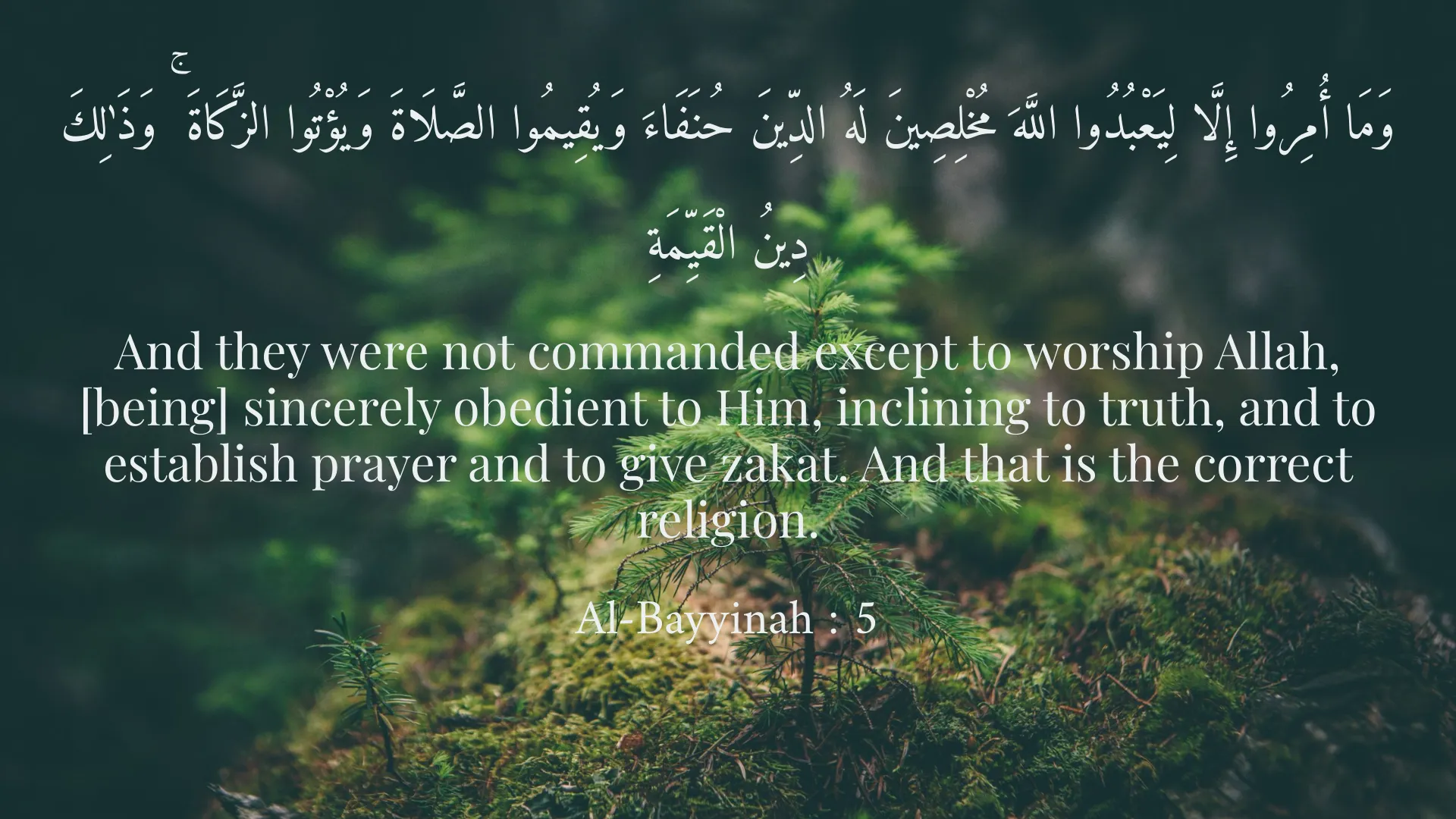
وَمَا أُمِرُوا إِلَّا لِيَعْبُدُوا اللَّهَ مُخْلِصِينَ لَهُ الدِّينَ حُنَفَاءَ وَيُقِيمُوا الصَّلَاةَ وَيُؤْتُوا الزَّكَاةَ ۚ وَذَٰلِكَ دِينُ الْقَيِّمَةِ
And they were not commanded except to worship Allah, [being] sincerely obedient to Him, inclining to truth, and to establish prayer and to give zakat. And that is the correct religion.
Al-Bayyinah : 5
وَمَن يَتَوَكَّلْ عَلَى اللَّهِ فَهُوَ حَسْبُهُ ۚ إِنَّ اللَّهَ بَالِغُ أَمْرِهِ ۚ قَدْ جَعَلَ اللَّهُ لِكُلِّ شَيْءٍ قَدْرًا
And whoever relies upon Allah - then He is sufficient for him. Indeed, Allah will accomplish His purpose. Allah has already set for everything a [decreed] extent.
At-Talaq : 3
الَّذِي خَلَقَ الْمَوْتَ وَالْحَيَاةَ لِيَبْلُوَكُمْ أَيُّكُمْ أَحْسَنُ عَمَلًا ۚ وَهُوَ الْعَزِيزُ الْغَفُورُ
[He] who created death and life to test you [as to] which of you is best in deed - and He is the Exalted in Might, the Forgiving -
Al-Mulk : 2
Short Story
It is narrated that in ancient times, there lived a pious and reclusive Sufi who had dedicated his entire life to worship and the remembrance of God. He had distanced himself from his town and sought refuge in a cave so that no eye might see him and no ear might hear his words. The villagers, having heard of his asceticism, became eager to meet him. When they reached the cave and found the Sufi, one of the elders said to him: "O man of God, why have you hidden yourself in such a way? Good deeds should be made manifest so that people may learn from them and be guided to the right path." The Sufi smiled and said: "My dear friend, what concern is it of yours what is apparent? The One for whom I live and whom I worship is aware of both the hidden and the manifest. If my deed is for the sake of gaining people's attention, it will lack the scent of sincerity. Let people remain unaware of my state, and let my heart find peace solely in the remembrance of God. For every action not done for Him has no weight, and every praise from creation is like a bubble that soon bursts and vanishes. But His satisfaction is eternal and independent of any beholder's gaze."