Quranic Answer
In the Holy Quran, hope and trust in God are fundamental themes that resonate deeply with believers. These themes serve not only as guiding principles in individual lives but also as vital messages that seek to uplift the human spirit in times of adversity. Throughout the Quran, Allah communicates with His creations through verses that emphasize resilience, perseverance, and unwavering faith in divine mercy. This article will explore how hope and trust in God are portrayed in the Quran, their implications on human life, the importance of sharing these values with others, and the associated practices that nurture a hopeful community. ### The Significance of Hope in the Quran Hope, in the context of faith, is not merely a passive longing for a better future. Instead, it encompasses a proactive pursuit of goodness, nurtured by the belief that Allah's mercy endures beyond the difficulties one might face. As outlined in Surah Az-Zumar, verse 53, Allah encourages His followers: "O My servants who have believed, do not despair of the mercy of Allah." This verse encapsulates a profound truth that affirms Allah's accessibility and boundless mercy. It serves as a reminder that despair is counterproductive; instead, believers are urged to cultivate optimism and maintain their faith amidst hardships. ### Trust in Allah's Plan In conjunction with hope, trust (Tawakkul) in Allah plays a vital role in shaping a believer's approach to life's challenges. Surah Al-Imran, verse 139, reassures believers, stating: "Do not grieve, for indeed, you will overcome for the believers." This message emphasizes that grief and despair are not meant to govern the hearts of the faithful; instead, they should inspire action towards a brighter future. Trusting in Allah's plan fosters resilience, allowing individuals to navigate difficulties with courage and dignity. ### The Interconnection of Hope and Action The Quran does not imply that hope is merely an emotional response; rather, it is an active state that drives believers to seek solutions and improve their circumstances. This dimension of hope is articulated in numerous verses throughout the Quran, where Allah commands His followers to engage in good deeds, uphold justice, and support one another emotionally and practically. Hence, instilling hope within ourselves is fundamentally tied to the actions we take to uplift not just our spirits but also those around us. This understanding reinforces that hope is not an isolated experience; it thrives in community. ### Encouraging Solidarity and Compassion As believers strive to embody hope in their own lives, they are also called to share this message with others. Realizing that we are not alone in our struggles is paramount in cultivating a hopeful heart. When individuals witness compassion and support in their community, they are reminded that the trials of life can be borne together. This collective spirit fortifies the bonds of humanity and fosters an environment where hope can flourish. Encouraging others to trust in Allah's mercy through kind words, empathetic listening, and supportive actions is a way of fulfilling our responsibilities as believers. ### The Role of Prayer in Fostering Hope Prayer is a central element in nurturing hope and trust in God. It acts as a direct line of communication with Allah, allowing individuals to express their concerns, seek guidance, and request support. By praying for others, believers reinforce their connectivity and emphasize the importance of community. Supplication is also an acknowledgment that while we may encounter trials, we possess the power to seek assistance from the Most Merciful, who is always present and ready to help those who call upon Him. ### Personal Reflections on Trust and Hope In our personal journeys, embracing hope requires introspection and courage. It involves challenging negative thoughts and reframing our perceptions of adversity. Each struggle presents an opportunity for growth, and with a hopeful outlook, individuals can transform their burdens into lessons that strengthen their faith. Being hopeful ourselves allows us to guide others who may be lost in despair; the ripple effect can extend far beyond personal boundaries. ### Conclusion: A Call to Action In a world where despair can often cloud our judgment and diminish our resolve, the Quran serves as a beacon of light, urging us to hold fast to hope and trust in Allah. The verses invite us not only to nurture hope within ourselves but also to share it with others, fostering a supportive community grounded in faith. As we strive to embody these principles, we are called to remind ourselves and our peers that Allah's mercy is boundless and His support is unwavering. Together, we can rise above our challenges and cultivate an atmosphere where hope thrives, ultimately reflecting the infinite compassion that Allah extends to all His creation. Embracing this journey requires both personal commitment and collective solidarity, reminding us that as long as we trust in Allah, we are never truly alone in our struggles.
Related Verses
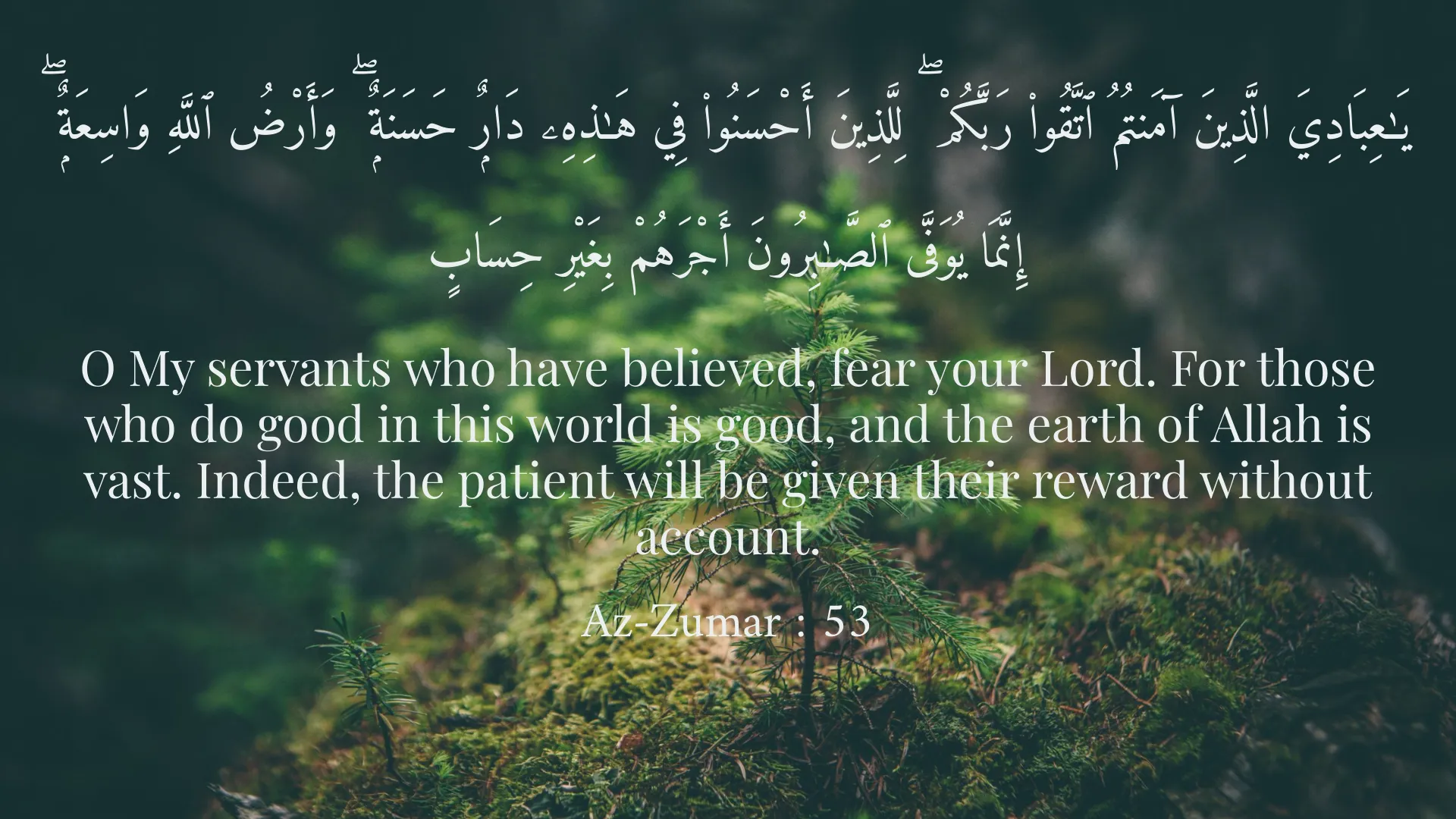
يَـٰعِبَادِيَ الَّذِينَ آمَنتُمُ ٱتَّقُوا۟ رَبَّكُمْ ۖ لِلَّذِينَ أَحْسَنُوا۟ فِي هَـٰذِهِۦ دَارٌۭ حَسَنَةٌۭ ۖ وَأَرْضُ ٱللَّهِ وَاسِعَةٌۭ ۖ إِنَّمَا يُوَفَّى ٱلصَّـٰبِرُونَ أَجْرَهُمْ بِغَيْرِ حِسَابٍ
O My servants who have believed, fear your Lord. For those who do good in this world is good, and the earth of Allah is vast. Indeed, the patient will be given their reward without account.
Az-Zumar : 53
لَا تَحْزَنْ إِنَّ ٱللَّهَ مَعَنَا ۚ إِنَّمَا يُوَفَّى ٱلصَّـٰبِرُونَ أَجْرَهُمْ بِغَيْرِ حِسَابٍ
Do not grieve, indeed Allah is with us. Indeed, the patient will be given their reward without account.
Al-Imran : 139
Short Story
One day, a forlorn man went to the sea and began to pray: 'Oh Lord, there is no one who gives me hope.' Suddenly, the sea cast jewels towards him. Astonished, the man said: 'O Allah, I just needed hope from You.' This story reminds us that when we have hope in God, we can create hope in the hearts of others.