Quranic Answer
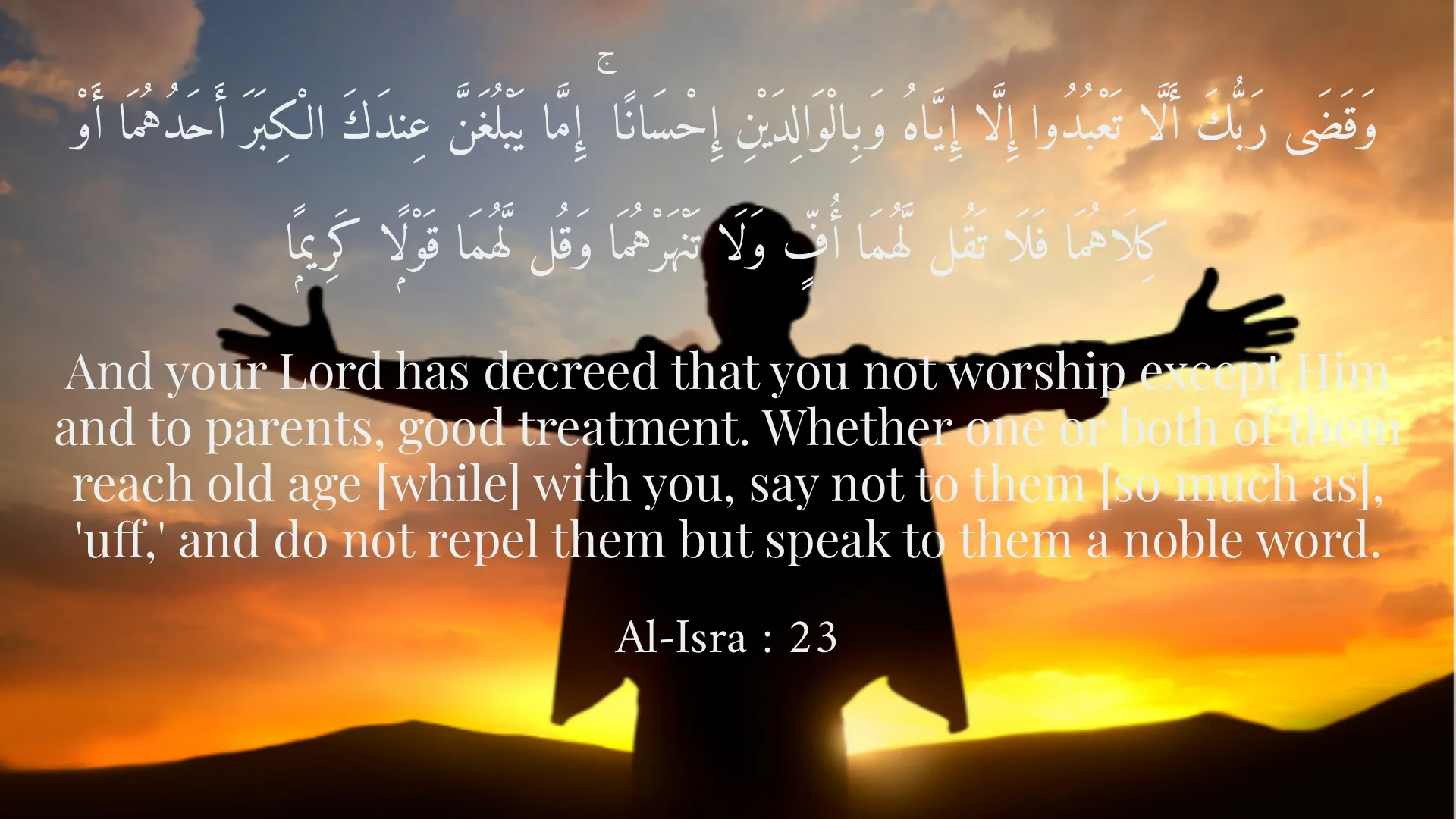
In the Holy Quran, Allah emphasizes the importance of the relationship with parents prominently. This emphasis is not only a mere suggestion but an essential aspect of a person's spiritual and moral development. The significance of treating parents with love and respect is laid out clearly in multiple verses. One of the key verses in this regard is verse 23 of Surah Al-Isra, which states: "And your Lord has decreed that you not worship except Him and to parents, good treatment. Whether one or both of them reach old age [while] with you, say not to them [so much as], 'uff,' and do not repel them but speak to them a noble word." This verse serves as a reminder that one of the most important relationships in our lives is that with our parents. The directive to treat them well is placed in close proximity to the command to worship Allah alone, highlighting the weight of this relationship in the eyes of Allah. The Quran acknowledges the challenges faced in familial relationships, especially as parents age and may require more care and understanding. The term 'uff,' which denotes a sound of annoyance, exemplifies the slightest form of displeasure, showing that even this small act is prohibited in interactions with parents. The message here resonates with many of us, as we may find moments where we feel overwhelmed or frustrated, especially when caring for elderly parents. However, this verse serves as a powerful reminder to ensure that we treat them with kindness and dignity, regardless of our personal feelings at any given moment. The relationship with parents is further elaborated upon in verse 14 of Surah Luqman, which states, "And We have enjoined upon man [care] for his parents. But if they endeavor to make you associate with Me that of which you have no knowledge, do not obey them. To Me is your return, and I will inform you about what you used to do." In this verse, Allah acknowledges the pivotal role of parents in a child's life while situating that reverence within the framework of faith. Essentially, this verse delineates the balance between respecting parental authority and maintaining one’s personal religious obligations. While one should consistently show care and respect to their parents, this respect does not extend to compromising one's belief in Allah. The verse emphasizes the importance of individual accountability, noting that each individual will ultimately return to Allah to account for their actions. One of the beautiful aspects of these teachings is the acknowledgment of parental sacrifices. It is often the case that parents will sacrifice their happiness, comfort, and desires for the sake of their children. This selflessness is not lost in the Quran, and thus, gratitude towards parents becomes a part of worship. When a child recognizes the struggles and hardships endured by their parents, they are more inclined to express appreciation and admiration, which fortifies the bond of love and respect. Family dynamics can often be complicated; nevertheless, striving to show compassion and understanding, as instructed by Allah, can lead to reconciliations and a deeper appreciation of familial bonds. Communication plays an essential role in nurturing relationships with parents. Honest and open discussions about feelings, expectations, and any struggles that arise can significantly soothe misunderstandings and alleviate tensions. This transparent communication doesn't just promote a healthier relationship; it also aligns with the Islamic principle of managing relationships thoughtfully and respectfully. Another layer of this relationship can be observed in the activities undertaken together as a family. Whether it is participating in prayers, discussing matters of faith, or performing acts of charity, engaging in shared activities can foster a deeper understanding and connection. Participating in rituals and traditions strengthens not only the family unit but also enhances the collective spiritual framework. Moreover, showing love and respect toward parents can also serve as a significant means of attaining Allah’s pleasure. The Quran emphasizes that the actions we take in our lives, particularly in relation to others, especially our parents, have a bearing on our spiritual states. Engaging in good deeds with the intention of pleasing Allah is a fundamental part of the Islamic faith. Therefore, improving our relationships with our parents can become a conduit through which we can enhance our relationship with Allah. Furthermore, contemporary society’s fast-paced environment can sometimes erode traditional family values. The relentless pursuit of success, material wealth, and individualism can inadvertently push parental relationships to the back burner. By slowing down and prioritizing time spent with family, individuals can foster a nurturing atmosphere where love and respect can flourish. Acts of service, listening with empathy, engaging in deep conversations, and spending quality time together can have profound effects. It is during these moments that individuals can bond and recognize each other's sacrifices, fears, and aspirations. On a societal level, acknowledging the importance of the parent-child relationship promotes a stronger community overall. Societies flourish when families are united in love and respect. When young individuals learn to honor their parents, they inherently begin to understand the importance of valuing others in society. This acts as a ripple effect, generating relationships built on understanding and compassion, thereby fostering an environment where everyone looks out for one another. In conclusion, the teachings of the Quran compel us to recognize the immense blessings that come from treating our parents with respect, love, and care. The principles embodied within these verses offer guidance on navigating the complexities of familial relationships. Even during challenging times, we are reminded of the importance of honoring and caring for our parents, which in turn draws us closer to Allah. By striving toward effective communication, expressing gratitude, and engaging in shared experiences, we can build a robust foundation for our relationships with our parents. Ultimately, fostering a loving and respectful environment at home is not only beneficial for family dynamics; it also forms the bedrock of a spiritually fulfilling life.
Related Verses
وَقَضَى رَبُّكَ أَلَّا تَعْبُدُوا إِلَّا إِيَّاهُ وَبِالْوَالِدَيْنِ إِحْسَانًا ۚ إِمَّا يَبْلُغَنَّ عِندَكَ الْكِبَرَ أَحَدُهُمَا أَوْ كِلَاهُمَا فَلَا تَقُل لَّهُمَا أُفٍّ وَلَا تَنْهَرْهُمَا وَقُل لَّهُمَا قَوْلًۭا كَرِيمًۭا
And your Lord has decreed that you not worship except Him and to parents, good treatment. Whether one or both of them reach old age [while] with you, say not to them [so much as], 'uff,' and do not repel them but speak to them a noble word.
Al-Isra : 23
وَوَصَّيْنَا الْإِنْسَانَ بِوَالِدَيْهِ
And We have enjoined upon man [care] for his parents.
Luqman : 14
Short Story
One day, a young man named Hasan was contemplating his decisions. He realized he needed to show more respect and love to his parents. Remembering the verses from the Quran, Hasan decided to set aside time each day to sit and talk with them. After some time, Hasan noticed not only had his relationship with his parents improved but he also felt a greater inner peace.