Quranic Answer
Living in a religious family brings with it a sense of purpose, direction, and moral clarity that many find essential for fulfilling their roles and responsibilities within the family unit and society at large. To embody a truly religious lifestyle, particularly within the Islamic faith, there must be steadfast attention to Islamic principles and values that guide behavior and relationships both within and outside the family structure. At the core of this religious life is the establishment of a deep and meaningful connection with God. This connection is nurtured through various acts of worship, daily reminders of God's presence, and a heartfelt desire to follow divine commandments laid out in the Holy Quran and the teachings of the Prophet Muhammad (peace be upon him). As mentioned in Surah Al-Baqarah, verse 177, true piety encompasses more than just ritualistic acts; it requires that one embraces a lifestyle characterized by integrity, compassion, and a commitment to acting for God's sake. This principle should permeate the daily lives of family members, where every action can be transformed into an expression of devotion and service to God. One of the most vital roles in the religious upbringing of children is played by the family. As the primary educational environment, the family serves as a child's first witness to faith in action. That means creating a home atmosphere filled with love, understanding, and constant remembrance of God. This kind of environment not only provides emotional security but also fosters children’s spiritual growth and ethical development. In Surah Luqman, verse 13, Luqman, a wise figure from the Quran, advises his son not to associate anything with Allah. This principle stands as a cornerstone in Islamic education and demonstrates the importance of monotheism (Tawhid) and the understanding of God's uniqueness and sovereignty. Parents should consistently emphasize this central tenet, helping children to understand its implications in their daily lives and interactions. Engaging in collective prayer and other acts of worship within the family unit is another cornerstone of living an Islamic life at home. The beauty of communal worship lies in how it not only strengthens individual faith but also fosters unity and connectivity among family members. When families pray together, they draw closer to God and simultaneously to each other, cultivating a nurturing and supportive environment. In Surah Al-A'raf, verse 31, Allah points out the importance of moderation, particularly in dietary habits. The reminder not to be excessive in consumption goes beyond food; it serves as a broader guideline for moderation in all aspects of life. This principle can assist families in adhering to religious teachings, encouraging them to reflect on their conduct and choices both in their spiritual and physical lives. However, living a religious life within a family is not a one-time endeavor; it demands continuous efforts to implement religious commandments consistently and purposefully. This ongoing commitment requires patience, discussion, and a willingness to grow together in faith. For instance, families can set aside time for Quranic study, fostering discussions on its meanings and applications in daily life. This not only facilitates learning but also inspires devotion and instills a sense of purpose in approaching daily challenges. Additionally, family members should focus not only on individual worship but also on acts of service, kindness, and community engagement. Islam emphasizes the importance of being actively involved in the community and extending compassion to others. Family gatherings can be opportunities to discuss charitable actions and community service volunteerism, allowing children to understand their roles as responsible and caring members of society. To enrich the spiritual atmosphere at home, the recitation of the Quran should be a shared practice. It stands as a pillar of Islamic life, providing guidance, solace, and enlightenment. Regular recitation sessions, where family members can engage with the text, learning passages and their meanings, can significantly enhance their spiritual bond. Whether it's through casual recitation or designated study sessions, making the Quran a central part of home life reinforces its importance in the faith and encourages a lifestyle aligned with its teachings. Furthermore, it is critical to establish an open line of communication within the family about faith-related issues. Families should create a safe space where every member feels comfortable discussing their questions, doubts, and spiritual experiences. Such dialogues may lead to greater understanding, respect for different perspectives, and ultimately a stronger collective faith. Encouraging children and young adults to express their thoughts and feelings related to religious practices or personal experiences can enhance their connection to the faith and prevent feelings of alienation or confusion that sometimes arise during adolescence. In summation, living a religious life within a family requires conscientious efforts to implement divine commandments diligently and compassionately. The environment fostered within the home should promote loving relationships while prioritizing spiritual growth. Through the establishment of collective worship, the consistent emphasis on core Islamic values, communal acts of service, and regular engagement with the Holy Quran, families create a nurturing atmosphere that becomes a shield against external challenges and distractions. The family unit, as the first school of faith, plays a crucial role in shaping the next generation; thus, creating a spiritual home is not just a duty but a blessing. By cultivating such an environment, families not only fulfill their obligations to God but also grow closer to each other, leaving a lasting legacy of faith and devotion that can be passed down through generations.
Related Verses
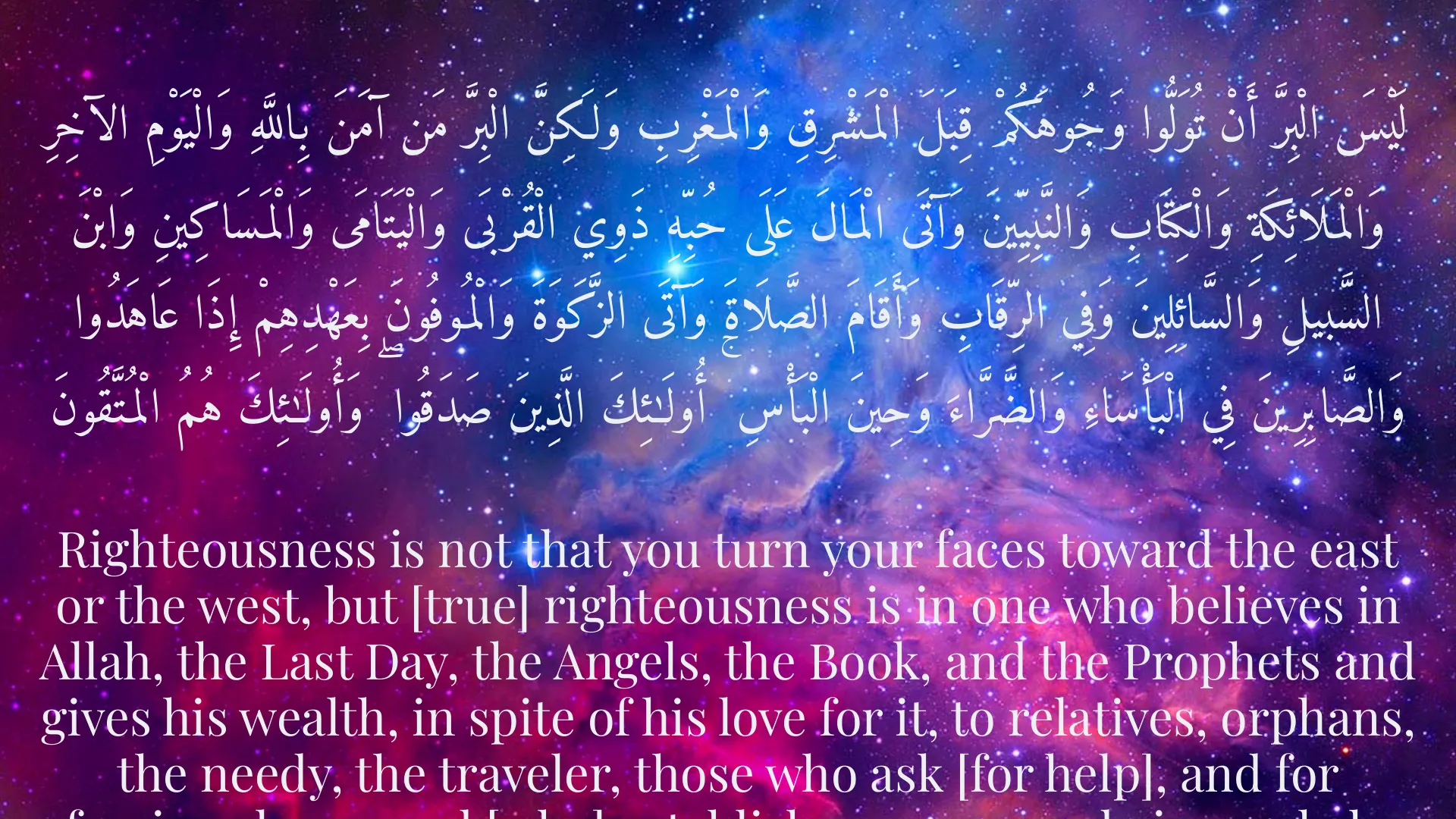
لَيْسَ الْبِرَّ أَنْ تُوَلُّوا وَجُوهَكُمْ قِبَلَ الْمَشْرِقِ وَالْمَغْرِبِ وَلَكِنَّ الْبِرَّ مَن آمَنَ بِاللَّهِ وَالْيَوْمِ الآخِرِ وَالْمَلَائِكَةِ وَالْكِتَابِ وَالنَّبِيِّينَ وَآتَى الْمَالَ عَلَى حُبِّهِ ذَوِي الْقُرْبَى وَالْيَتَامَى وَالْمَسَاكِينِ وَابْنَ السَّبيلِ وَالسَّائِلِينَ وَفِي الرِّقَابِ وَأَقَامَ الصَّلَاةَ وَآتَى الزَّكَوَةَ وَالْمُوفُونَ بِعَهْدِهِمْ إِذَا عَاهَدُوا وَالصَّابِرِينَ فِي الْبَأْسَاءِ وَالضَّرَّاءَ وَحِينَ الْبَأْسِ ۚ أُولَـٰئِكَ الَّذِينَ صَدَقُوا ۖ وَأُولَـٰئِكَ هُمُ الْمُتَّقُونَ
Righteousness is not that you turn your faces toward the east or the west, but [true] righteousness is in one who believes in Allah, the Last Day, the Angels, the Book, and the Prophets and gives his wealth, in spite of his love for it, to relatives, orphans, the needy, the traveler, those who ask [for help], and for freeing slaves; and [who] establishes prayer and gives zakah; those who fulfill their promise when they promise; and [those who are] patient in poverty and hardship and during battle. Those are the ones who have been true, and it is those who are the righteous.
Al-Baqarah : 177
وَإِذْ قَالَ لُقْمَانُ لِابْنِهِ وَهُوَ يَعِظُهُ يَا بُنَيَّ لَا تُشْرِكْ بِاللَّهِ إِنَّ الشِّرْكَ لَظُلْمٌ عَظِيمٌ
And [mention] when Luqman said to his son while he was instructing him, 'O my son, do not associate [anything] with Allah. Indeed, association [with Him] is great injustice.'
Luqman : 13
كُلُوا وَاشْرَبُوا وَلَا تُسْرِفُوا إِنَّهُ لَا يُحِبُّ الْمُسْرِفِينَ
Eat and drink, but be not excessive. Indeed, He likes not those who commit excess.
Al-A'raf : 31
Short Story
Once upon a time, a child was growing up in a religious family. His parents always emphasized the importance of following Islamic principles and taught him to draw closer to God and do good deeds in life. As he reached adulthood, he realized how impactful all his parents' teachings were in his life. Now, he wanted to pass these same principles to his children and create an environment filled with love and faith for them.