Quranic Answer
Living peacefully in a competitive world is a significant challenge in contemporary society. From professional environments to social interactions and academic pursuits, competition is pervasive. While it can be a powerful motivator for progress, innovation, and diligent effort, it frequently becomes a source of immense stress, anxiety, and restlessness. Individuals constantly worry about falling behind, failing, or losing their standing relative to others. These concerns can jeopardize their mental and physical health and strip away life's tranquility. But is there a way to navigate this competitive landscape while maintaining inner peace? The Holy Quran, with its profound wisdom, offers deep and sustainable solutions for achieving tranquility in all circumstances, including amidst worldly competitions. These solutions are not about withdrawing or isolating oneself from the world, but are built upon a correct and fundamental understanding of life, humanity's place within it, and one's relationship with the Creator of the universe. One of the primary Quranic concepts for attaining peace in a competitive world is 'Tawakkul,' or complete reliance on Allah. Tawakkul means placing full trust in God and entrusting one's affairs to Him after having exerted sincere effort and utilized all one's abilities. When a person understands that provision, success, and failure are all ultimately in the hands of Allah, and that He is the Best Disposer of affairs, the anxieties stemming from competition significantly diminish. This does not imply abandoning effort or shirking responsibility; rather, it means entrusting the outcome of one's efforts to God and liberating oneself from unnecessary worries that are beyond our control. Surah At-Talaq, verse 3, states: "وَ مَنْ يَتَوَكَّلْ عَلَى اللَّهِ فَهُوَ حَسْبُهُ إِنَّ اللَّهَ بَالِغُ أَمْرِهِ قَدْ جَعَلَ اللَّهُ لِكُلِّ شَيْءٍ قَدْرًا" which translates to: "And whoever relies upon Allah – He is sufficient for him. Indeed, Allah will accomplish His purpose. Allah has already set for everything a [decreed] extent." This verse provides a divine guarantee for those who rely on Him, instilling a deep sense of peace in their hearts. They know that even though they have striven, the final outcome is left to a wise divine plan that intends nothing but their ultimate good, and moreover, no power in existence can prevent the fulfillment of Divine will. This inner assurance greatly reduces anxiety stemming from competitive outcomes, allowing the individual to continue their journey with a more tranquil mind. The second crucial principle is 'Qana’ah,' or contentment with what Allah has bestowed. In modern competitive culture, there's a constant push to desire more, possess better, and surpass others. This insatiable and infinite cycle is a perpetual source of dissatisfaction and stress because it never ends. The Quran does not advocate against working for a better life and earning lawful provision; rather, it emphasizes avoiding constant self-comparison with others and cultivating inner contentment with what one has. Qana’ah not only reduces greed and covetousness, as well as the inclination towards unhealthy competition, but it also opens a door to gratitude and appreciation for the countless blessings that God has bestowed upon humanity. When a person is content with their possessions and does not envy what others have, their inner peace grows, and they are freed from the evil of envy (hasad), which is one of the greatest destroyers of inner peace and tranquility. As a prophetic saying indicates: "Envy consumes good deeds as fire consumes wood." (Nahj al-Fasaha, Hadith 1118). Qana’ah helps individuals in their path of progress not to cast their eyes and hearts on what others possess, but rather to focus on their own abilities and opportunities, and to pursue their unique path with peace. Thirdly, the Quranic solution for achieving peace is 'Sabr' (patience) and 'Salat' (prayer). These two are strong pillars of resilience, steadfastness, and tranquility in the face of inevitable hardships, failures, and challenges in life, especially in competitive environments. In such settings, there are many failures, disappointments, criticisms, and pressures that can weaken one's spirit. The Quran advises believers to seek help through patience and prayer when confronting these difficulties. Surah Al-Baqarah, verse 153, states: "يَا أَيُّهَا الَّذِينَ آمَنُوا اسْتَعِينُوا بِالصَّبْرِ وَالصَّلاةِ إِنَّ اللَّهَ مَعَ الصَّابِرِينَ" meaning: "O you who have believed, seek help through patience and prayer. Indeed, Allah is with the patient." Patience enables individuals to persevere through adversities, avoid haste and emotional decisions, and view matters with a long-term perspective. Prayer connects them to an infinite source of divine power, wisdom, and mercy. This connection calms the heart and assures individuals that they are not alone and are under divine support and grace. Prayer, more than just an obligation, is a heartfelt and spiritual conversation with the Creator that nourishes the soul, dispels anxieties, and instills a deep sense of security within the human being. These two factors empower individuals to experience the ups and downs of competition with inner peace, without their existential tranquility being jeopardized. The fourth key principle is 'Dhikr Allah,' or the remembrance of God. In Surah Ar-Ra’d, verse 28, Allah says: "الَّذِينَ آمَنُوا وَتَطْمَئِنُّ قُلُوبُهُمْ بِذِكْرِ اللَّهِ أَلا بِذِكْرِ اللَّهِ تَطْمَئِنُّ الْقُلُوبُ" meaning: "Those who have believed and whose hearts are assured by the remembrance of Allah. Unquestionably, by the remembrance of Allah hearts are assured." Amidst the clamor of competition, work pressures, social comparisons, and daily life concerns, the remembrance of Allah acts as an anchor that protects the ship of one's being from relentless turmoil and brings it to the shore of peace. Remembrance of Allah can take many forms: reciting the Quran, uttering supplications, reflecting on divine verses, performing good deeds with divine intention, and even simply having a heartfelt awareness of His presence in life. This constant reminder that everything ultimately returns to Him and that He is capable of all things provides an individual with a broader perspective than fleeting and temporary worldly successes, saving them from being consumed by superficial and valueless competitions. Dhikr Allah ensures that one does not forget the true purpose of life and understands that their true worth lies in their connection with the Creator, not in the extent of their worldly successes. This understanding forms a strong foundation for lasting peace. Furthermore, the Quran emphasizes the importance of 'good manners' (Akhlaq Hasana) and 'justice' (Adl) even within the context of competition. Healthy competition is one where ethical principles, fairness, honesty, and respect for the rights of others are upheld. The Quran strongly condemns any form of cheating, deception, oppression, infringement upon the rights of others, or using illicit means to win. In a competitive world, there might be a temptation to resort to any means necessary to win and cross ethical red lines, but the Quran condemns this approach. It teaches individuals to maintain human dignity, moral values, and divine limits even at the peak of competition. Upholding these ethical principles not only preserves self-respect, a clear conscience, and salvation in the hereafter, but also earns the respect of others and leads to more sustainable and blessed success in the long run. Adhering to these ethical principles is, in essence, an inseparable part of worshipping Allah and brings a deeper, more authentic peace than any superficial and fleeting victory; a peace based on truth and righteousness. Finally, the Quran's view of the world as a temporary passage and the afterlife and Divine pleasure as the ultimate goal helps individuals place worldly competitions in their proper perspective. When one understands that this life is finite and what truly endures are righteous deeds and divine pleasure, they will not exert themselves excessively for material victories, nor will they become overly greedy, nor will they become overly distressed by worldly setbacks. This perspective establishes peace and balance in life, saving individuals from being engulfed in the endless race for more and better, a race that never truly ends and exhausts the soul. The Quran advises: "وَلَا تَتَمَنَّوْا مَا فَضَّلَ اللَّهُ بِهِ بَعْضَكُمْ عَلَىٰ بَعْضٍ" (An-Nisa: 32) meaning: "And do not wish for that by which Allah has preferred some of you over others." This verse directly speaks against envy, comparison, and encourages acceptance of differences in provision and abilities, thereby opening a door to inner peace and contentment with divine decree. Thus, living peacefully in a competitive world is not achieved by fleeing from it, but by being equipped with the weapons of faith, reliance on Allah, contentment, patience, prayer, and the remembrance of God, coupled with a divine and afterlife-oriented outlook on existence. This peace is a lasting, internal, and profound tranquility that no competitive storm or external change can ever dissipate, serving as a safe haven for the human soul and heart in this bustling world.
Related Verses
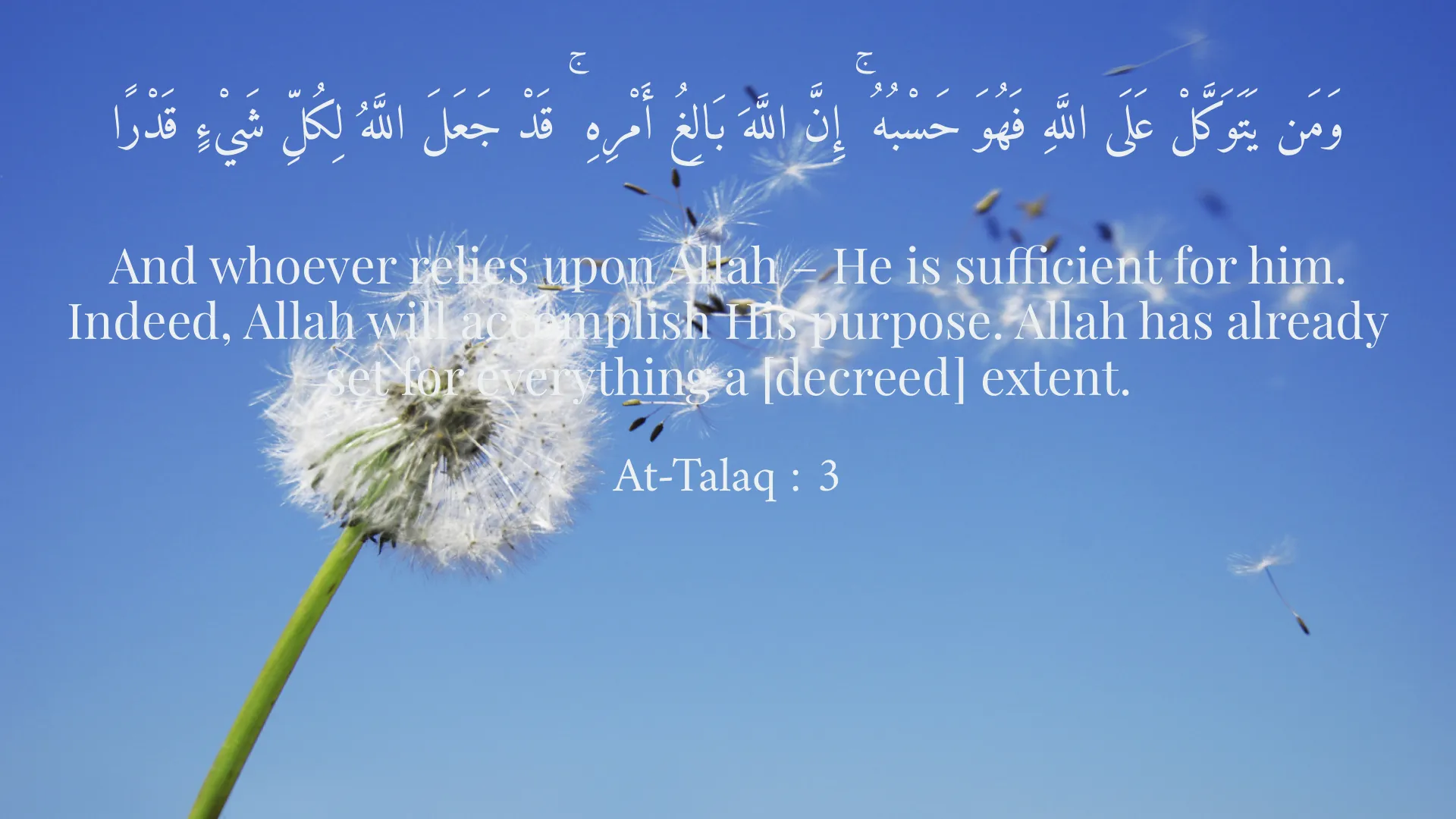
وَمَن يَتَوَكَّلْ عَلَى اللَّهِ فَهُوَ حَسْبُهُ ۚ إِنَّ اللَّهَ بَالِغُ أَمْرِهِ ۚ قَدْ جَعَلَ اللَّهُ لِكُلِّ شَيْءٍ قَدْرًا
And whoever relies upon Allah – He is sufficient for him. Indeed, Allah will accomplish His purpose. Allah has already set for everything a [decreed] extent.
At-Talaq : 3
الَّذِينَ آمَنُوا وَتَطْمَئِنُّ قُلُوبُهُم بِذِكْرِ اللَّهِ ۗ أَلَا بِذِكْرِ اللَّهِ تَطْمَئِنُّ الْقُلُوبُ
Those who have believed and whose hearts are assured by the remembrance of Allah. Unquestionably, by the remembrance of Allah hearts are assured.
Ar-Ra'd : 28
يَا أَيُّهَا الَّذِينَ آمَنُوا اسْتَعِينُوا بِالصَّبْرِ وَالصَّلَاةِ ۚ إِنَّ اللَّهَ مَعَ الصَّابِرِينَ
O you who have believed, seek help through patience and prayer. Indeed, Allah is with the patient.
Al-Baqarah : 153
Short Story
In ancient times, there lived a merchant named Fereydoon, who was always striving for wealth and success. He was known in the market for his shrewdness and diligence, never fearing competition. Yet, the more he acquired, the more he worried about losing, and the more he surpassed others, the more he sought to compete with those ahead of him. One night, consumed by anxiety, sleep eluded him. He rose from his bed in the middle of the night and walked in his garden. The sound of a spring drew his attention. Beside the spring, a serene old man sat, gazing at the moonlight. Fereydoon, surprised, asked: "O wise man, I see you in utmost tranquility, while I, with all my wealth, am on the verge of losing my mind from anxiety. What is your secret?" The old man smiled and replied: "My son, you seek something that can never be attained by accumulating more. You imagine happiness lies in surpassing others, whereas peace resides in the heart of reliance (Tawakkul) and contentment (Qana'ah). The world is a market full of competition, but the true winner is not he who gains the most goods, but he who carries the least worry. Be like a bird that seeks its sustenance from God and fears not competing with the eagle, for it knows its provision will come from whence it expects not." Fereydoon pondered these words. From that day forth, he continued his trade, but he entrusted his heart not to accumulating wealth, but to reliance and contentment. The result was that his business prospered, and a peace settled in his heart that he had never before experienced. He understood that blessing and tranquility do not come from what is in our hands, but from what is in our hearts and from our connection with the Creator.