Quranic Answer
The quest for freedom from the need for others' validation is a profound and significant challenge in human life, one that can greatly impact inner peace and self-contentment. The Holy Quran, with its divine and comprehensive insight, offers fundamental solutions for achieving this spiritual liberation. In essence, the path to spiritual independence from people's opinions and judgments lies in a precise understanding of humanity's place in existence and its relationship with the Creator. The Quran teaches us that the primary criterion for a person's worth is not the gaze and judgment of people, but rather their relationship with God and their level of piety (Taqwa). When an individual understands that the only true judge of their actions and intentions is Allah Almighty, and that reward and punishment originate solely from Him, they gradually become free from the shackles of unstable and fluctuating human opinions, and their heart finds peace only in divine satisfaction. One of the most central Quranic teachings in this regard is the principle of 'reliance on Allah' (Tawakkul). Tawakkul means complete trust and entrusting one's affairs to God, while the individual exerts their utmost effort. When a person places their entire reliance on Allah instead of seeking validation and praise from people, they are no longer concerned whether their actions will be approved by others or not. This reliance grants the individual an inner strength that protects them from wavering in the face of criticism or being misled by unfounded compliments. Surah At-Talaq, verse 3, explicitly states: "And whoever relies upon Allah – then He is sufficient for him." This verse conveys the truth that if Allah is sufficient for a person, there is no longer a need to depend on the approval of creation or to fear their condemnation. This strong support is the main pillar for freedom from the opinions of people, because when one's support is God, they will not seek support from others. Another principle is 'sincerity' (Ikhlas). The Quran repeatedly emphasizes performing deeds solely for the pleasure of Allah. Surah Al-Bayyinah, verse 5, states: "And they were not commanded except to worship Allah, [being] sincerely obedient to Him, inclined to truth." When the purpose of every action is sincerely for the pleasure of Allah, then the approval or disapproval of people loses its significance. Hypocrisy (Riya) is precisely the opposite of sincerity, where an individual performs actions to gain the approval and admiration of others. The Quran forbids believers from hypocrisy and calls them to sincerity. One who performs their actions sincerely for Allah frees their heart from the bondage of human judgments and is only concerned with the satisfaction of their Creator. Furthermore, the Quran emphasizes the importance of 'Taqwa' (God-consciousness) as the true measure of human worth. In Surah Al-Hujurat, verse 13, it is stated: "Indeed, the most noble of you in the sight of Allah is the most righteous of you." This verse clearly indicates that a person's superiority and honor are not based on wealth, power, beauty, or social status, but on their level of Taqwa and righteousness before Allah. When an individual sees their worth in their closeness to God, and not in the eyes of people, they no longer enslave themselves to the fluctuating expectations and standards of society. They know that their true honor is with the One whose judgment never errs and there is no need for the validation of fallible humans. The Quran also teaches believers to exercise 'patience and steadfastness' (Sabr and Istiqamah), even in the face of overwhelming opinions and opposition from others. Prophets of God consistently faced opposition and unfair judgments from their people, yet they remained steadfast on their path of truth because they knew they were validated only by Allah. This patience and steadfastness are signs of spiritual maturity and independence from external validation. Quranic verses are replete with stories that call upon prophets to be patient and enduring in the face of people's mockery and denial. These examples teach the believer to speak the truth and remain firm upon it, even if the whole world is against them. Ultimately, living without needing others' validation is a life based on a correct understanding of oneself, the world, and the Creator. This understanding brings true freedom and makes a person firm and stable on the path of divine pleasure.
Related Verses
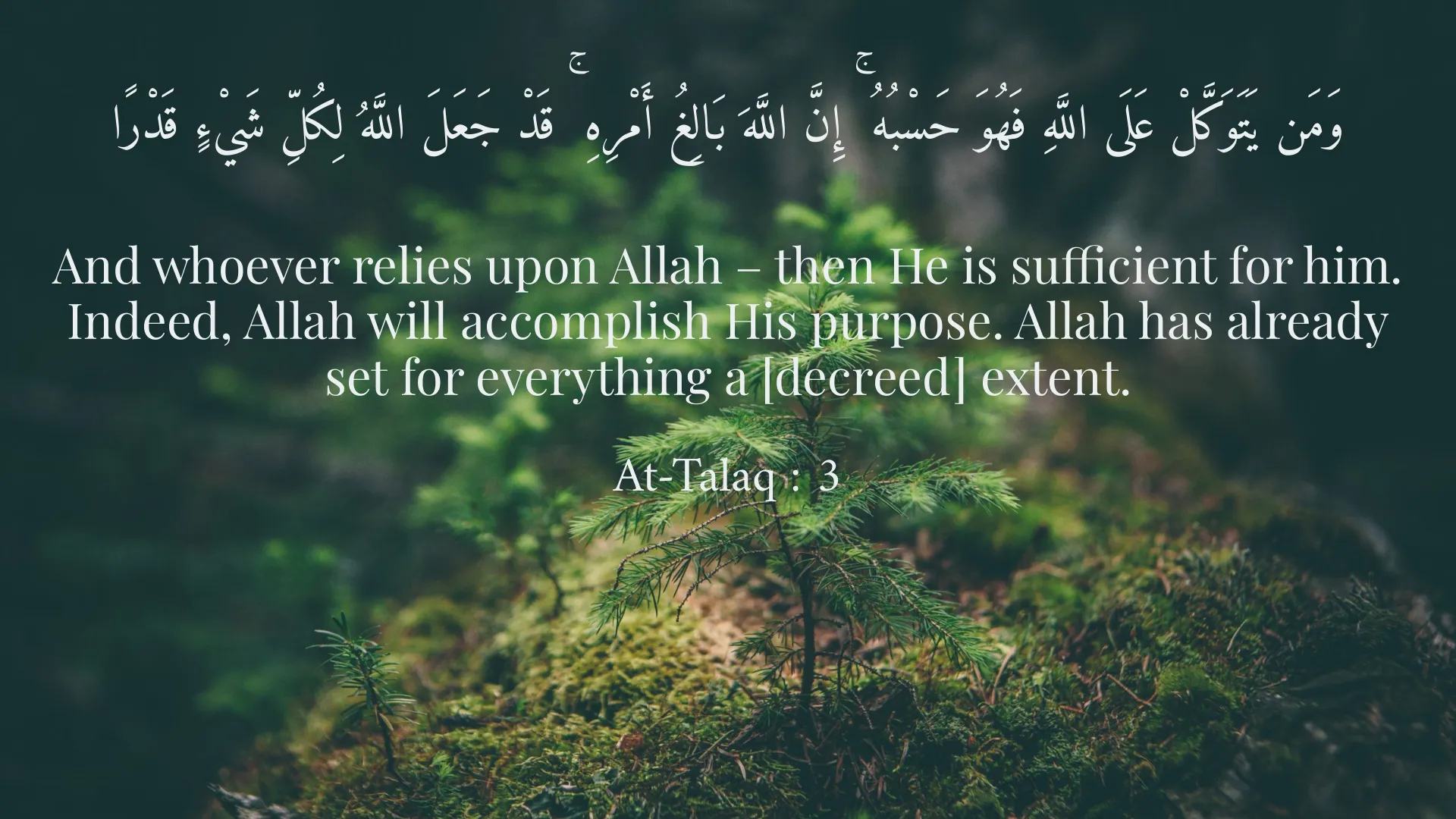
وَمَن يَتَوَكَّلْ عَلَى اللَّهِ فَهُوَ حَسْبُهُ ۚ إِنَّ اللَّهَ بَالِغُ أَمْرِهِ ۚ قَدْ جَعَلَ اللَّهُ لِكُلِّ شَيْءٍ قَدْرًا
And whoever relies upon Allah – then He is sufficient for him. Indeed, Allah will accomplish His purpose. Allah has already set for everything a [decreed] extent.
At-Talaq : 3
وَمَا أُمِرُوا إِلَّا لِيَعْبُدُوا اللَّهَ مُخْلِصِينَ لَهُ الدِّينَ حُنَفَاءَ وَيُقِيمُوا الصَّلَاةَ وَيُؤْتُوا الزَّكَاةَ ۚ وَذَٰلِكَ دِينُ الْقَيِّمَةِ
And they were not commanded except to worship Allah, [being] sincerely obedient to Him, inclined to truth, and to establish prayer and to give zakah. And that is the correct religion.
Al-Bayyinah : 5
يَا أَيُّهَا النَّاسُ إِنَّا خَلَقْنَاكُم مِّن ذَكَرٍ وَأُنثَىٰ وَجَعَلْنَاكُمْ شُعُوبًا وَقَبَائِلَ لِتَعَارَفُوا ۚ إِنَّ أَكْرَمَكُمْ عِندَ اللَّهِ أَتْقَاكُمْ ۚ إِنَّ اللَّهَ عَلِيمٌ خَبِيرٌ
O mankind, indeed We have created you from male and female and made you peoples and tribes that you may know one another. Indeed, the most noble of you in the sight of Allah is the most righteous of you. Indeed, Allah is Knowing and Acquainted.
Al-Hujurat : 13
Short Story
It is narrated that there was a Sheikh in his time who possessed a free spirit and an independent soul. People flocked to him from all directions, some praising and extolling him, while others criticized and rebuked him. But the Sheikh had a heart that neither swelled with pride from praise nor grieved from blame. One day, a disciple asked him, "O Master, how is it that you possess such tranquility, where neither the praise of people makes you arrogant nor their condemnation saddens you?" The Sheikh smiled and replied, "O son, whoever attaches their heart to the satisfaction of the Truth (God) no longer fears the displeasure of creation, nor hopes for their approval. For he knows that all judgments rest with Allah Almighty, and what remains is his sincere action and pure intention. What fear does a heart that only gazes upon the Beloved have of the judgment of strangers?" The disciple found peace in these words and understood that true freedom lies in releasing the heart from the bondage of people's validation and rejection.