Quranic Answer
Maintaining a continuous feeling of closeness to God is one of the most beautiful and profound aspirations of every believer, repeatedly emphasized and elucidated in the Holy Quran. The Quran not only affirms the existence of this proximity but also provides practical guidelines for strengthening and sustaining it. Understanding this closeness fundamentally stems from comprehending God's perpetual presence in our lives. In Surah Qaf, verse 16, Allah states: “And We are closer to him than [his] jugular vein.” This verse unequivocally demonstrates that divine proximity is an inherent reality; it doesn't need to be created but rather recognized and felt. The key to preserving this feeling lies in a continuous and conscious connection with the Creator, recommended through various means in the Quran. One of the most crucial and fundamental ways to maintain divine closeness is Dhikr, or the remembrance of God, in all circumstances. The Holy Quran emphasizes the importance of Dhikr in numerous verses. In Surah Ar-Ra'd, verse 28, we read: “Those who have believed and whose hearts are assured by the remembrance of Allah. Unquestionably, by the remembrance of Allah hearts are assured.” Dhikr is not merely the repetition of specific words; it encompasses a profound presence of heart and a constant awareness of God’s oversight of our actions, thoughts, and intentions. This heartfelt awareness encourages individuals to be mindful of their conduct and to avoid sins. Dhikr can take various forms, including recitation of the Quran, supplication (dua), glorification (tasbih), or even contemplation of God's creation and blessings. The deeper and more attentive the remembrance, the greater the feeling of proximity. For instance, when facing a challenge, instead of despairing, remembering God’s infinite power and mercy is itself a form of Dhikr that brings tranquility and strengthens the sense of closeness. Salat (prayer), as the pillar of faith and the believer's ascension, is another foundational practice for preserving divine proximity. The Quran states: “And establish prayer for My remembrance.” (Surah Taha, verse 14). Prayer offers a direct, unmediated conversation with God. The five daily prayers provide golden opportunities to renew one’s covenant with the Lord and cleanse the soul from worldly impurities. With every bowing (ruku) and prostration (sujud), the worshipper feels closer to God. The quality of prayer, specifically the presence of heart and attention to the meaning of the words, plays a significant role in deepening this feeling. A prayer recited hastily and without sincerity may only fulfill an obligation, but a prayer performed with humility and supplication truly connects the heart to God and enhances the sense of closeness. Recitation and reflection upon the Holy Quran are akin to love letters from the Beloved to the servant. The Quran is the word of God, and the more one engages with this divine word and contemplates its meanings, the deeper one understands God's wisdom and mercy. Consequently, the feeling of closeness to the Speaker of the Word increases. Reading the Quran with a beautiful voice, understanding its translation and interpretation, and striving to apply its injunctions in daily life all contribute to deepening this relationship. This practice helps one perceive God as ever-present and observant in their life, taking His words as guidance. Dua (supplication) and sincere invocation form a direct bridge to connect with God. In Surah Al-Baqarah, verse 186, Allah says: “And when My servants ask you, [O Muhammad], concerning Me - indeed I am near. I respond to the invocation of the supplicant when he calls upon Me.” This reassuring verse testifies that God is always near and listening. Dua is not solely for requesting needs; it is also an opportunity to express love, gratitude, repentance, and even to confide in God. These heartfelt conversations strengthen one’s trust and reliance on the Absolute Power, eliminating feelings of loneliness. Avoiding sins and continuous seeking of forgiveness (Istighfar) are also crucial for maintaining divine closeness. Sins create veils between the servant and the Lord, preventing a true perception of divine presence. The more one avoids sins and purifies oneself from impurities, the more these veils are lifted, and their heart becomes receptive to divine light. Istighfar and repentance are the paths back to God. Admitting mistakes and feeling genuine remorse are signs of humility and servitude, leading God to extend His mercy to the servant and welcome them back into His proximity. This continuous return strengthens the bond. Serving creation and doing good deeds (Ihsan) are other ways that bring a person closer to God. The Quran and Islamic traditions frequently emphasize helping the needy, honoring parents, maintaining family ties (sila al-rahm), and showing kindness to animals and the environment. When a person performs good deeds with pure intention and for the sake of God, they are truly walking on the divine path, and their heart becomes illuminated by divine light. These good deeds are a reflection of God’s merciful attributes within the individual and strengthen the feeling of alignment with divine will. Patience (Sabr) and gratitude (Shukr) in the face of life's adversities and blessings are vital tests that both measure and strengthen one's closeness to God. The Quran states: “Indeed, Allah is with the patient.” (Surah Al-Baqarah, verse 153). Patience in trials indicates reliance and trust in divine wisdom, while gratitude for blessings signifies spiritual insight and appreciation for God's boundless grace. Both qualities keep a person connected to the source of power and mercy, fostering a sense of divine support and love in the heart. In summary, maintaining the feeling of divine closeness is a continuous process requiring conscious and constant effort. This is achieved by deepening one's relationship with God through constant remembrance (Dhikr), establishing prayer with presence of heart, contemplating the Quran, sincere supplications, avoiding sins and repenting, and serving creation. The more sincerely and consistently these actions are performed, the veils of heedlessness will be lifted, and one will realize the truth of divine proximity, finding true tranquility in this closeness. This path is an infinitely beautiful journey, with each step bringing a heart closer to the truth of existence.
Related Verses
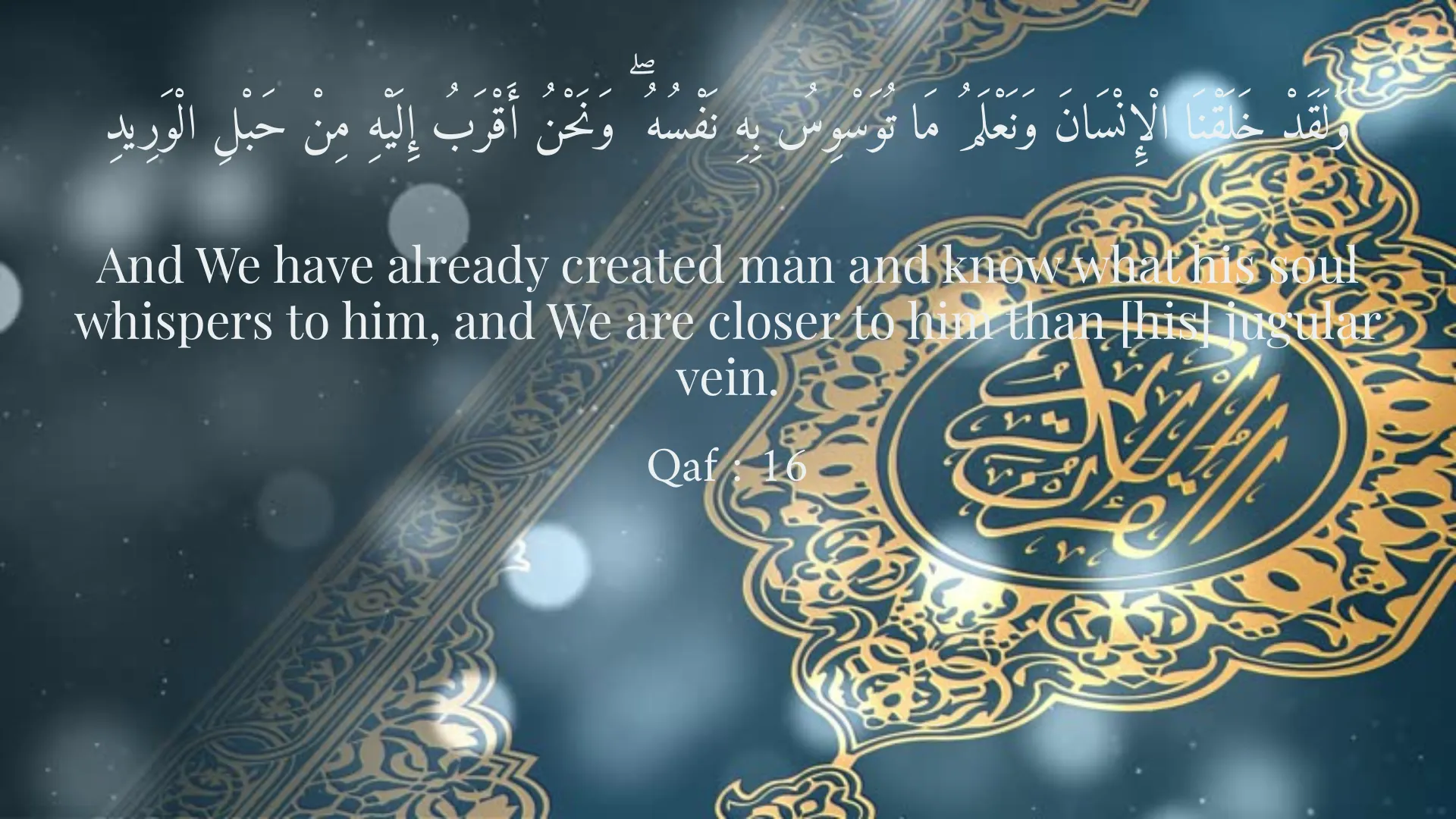
وَلَقَدْ خَلَقْنَا الْإِنْسَانَ وَنَعْلَمُ مَا تُوَسْوِسُ بِهِ نَفْسُهُ ۖ وَنَحْنُ أَقْرَبُ إِلَيْهِ مِنْ حَبْلِ الْوَرِيدِ
And We have already created man and know what his soul whispers to him, and We are closer to him than [his] jugular vein.
Qaf : 16
وَإِذَا سَأَلَكَ عِبَادِي عَنِّي فَإِنِّي قَرِيبٌ ۖ أُجِيبُ دَعْوَةَ الدَّاعِ إِذَا دَعَانِ ۖ فَلْيَسْتَجِيبُوا لِي وَلْيُؤْمِنُوا بِي لَعَلَّهُمْ يَرْشُدُونَ
And when My servants ask you, [O Muhammad], concerning Me - indeed I am near. I respond to the invocation of the supplicant when he calls upon Me. So let them respond to Me [by obedience] and believe in Me that they may be rightly guided.
Al-Baqarah : 186
الَّذِينَ آمَنُوا وَتَطْمَئِنُّ قُلُوبُهُم بِذِكْرِ اللَّهِ ۗ أَلَا بِذِكْرِ اللَّهِ تَطْمَئِنُّ الْقُلُوبُ
Those who have believed and whose hearts are assured by the remembrance of Allah. Unquestionably, by the remembrance of Allah hearts are assured.
Ar-Ra'd : 28
إِنَّنِي أَنَا اللَّهُ لَا إِلَٰهَ إِلَّا أَنَا فَاعْبُدْنِي وَأَقِمِ الصَّلَاةَ لِذِكْرِي
Indeed, I am Allah. There is no deity except Me, so worship Me and establish prayer for My remembrance.
Taha : 14
Short Story
One day, a pious and ascetic man was passing by and saw another man sitting by a well, weeping with a heavy heart. The ascetic asked him, 'My brother, what has befallen you that you weep so?' The sorrowful man replied, 'I regret my sins and fear being distant from God. I don't know how to feel that closeness again.' The ascetic smiled calmly and said, 'My friend, look at the water in this well. The smaller your bucket, the easier it is to fill it and draw near to the water. The human heart is similar; the more it is emptied and cleansed of the defilements of sins, and the more it turns to the Lord with sincere remembrance and supplication, the sooner it will be quenched by the pure spring of His knowledge. Divine closeness is a treasure found in pure hearts, not in clamorous demands. With every sincere repentance and every act of servitude, a new door opens to Him, and you feel that He is closer than ever.' The sorrowful man found peace in these words and decided to embrace the path back to divine closeness through remembrance and repentance.