Quranic Answer
In the journey of spiritual and devotional life, every human being may experience moments and periods when their heartfelt desire and enthusiasm for performing acts of worship, especially prayer (Salah) and supplication (Dua), diminish. This state is not unusual; rather, it is a common human experience that can stem from physical and mental fatigue, worldly concerns, satanic whispers, or simply the natural fluctuations of faith. The Holy Quran, with its profound understanding of human nature and its weaknesses, offers wise solutions for managing and overcoming these moments, all rooted in strengthening one's connection with the Creator and steadfastness on the path of servitude. The first and perhaps most fundamental principle emphasized by the Quran is the concept of "patience" (Sabr) and "steadfastness." Allah Almighty says in Surah Al-Baqarah, verse 45: "And seek help through patience and prayer. And indeed, it is difficult except for the humbly submissive [to Allah]." This verse explicitly states that prayer can be heavy and difficult for the human soul, but the remedy for this difficulty is to seek refuge in patience and in prayer itself. This means that even when our hearts do not feel the necessary enthusiasm for prayer, we should not abandon our primary duty, which is to establish prayer. Perseverance and steadfastness in performing the obligatory prayers, even in conditions where internal desire is weak, will gradually lead to the return of humility, presence of heart, and genuine yearning. Patience here does not merely mean enduring and waiting, but actively continuing the action despite internal difficulties and resistance. This type of patience is considered a form of spiritual struggle (Jihad al-Nafs) that prevents a person from succumbing to laziness and apathy, gradually strengthening their spiritual willpower. Every step taken with reluctance, solely for the sake of Allah's command, is a step towards a higher rank with the Lord. This steadfastness demonstrates that the servant remains faithful to their covenant with Allah even in the most challenging circumstances, embodying those whom Allah considers patient, as He states in Surah Al-Baqarah, verse 153: "Indeed, Allah is with the patient." The second essential and complementary solution is "Dhikr Allah" or abundant remembrance of God. In Surah Ar-Ra'd, verse 28, Allah Almighty beautifully states: "Those who have believed and whose hearts are assured by the remembrance of Allah. Unquestionably, by the remembrance of Allah hearts are assured." Often, a lack of desire for prayer and supplication stems from heedlessness, worldly anxieties, or spiritual heaviness that has afflicted the heart. The remembrance of Allah, whether through reciting verses of the Quran, repeating verbal supplications like "Subhanallah," "Alhamdulillah," "La ilaha illallah," "Astaghfirullah," or "Salawat upon the Prophet and his family," or through contemplation and reflection on the greatness of creation and divine signs, acts as a cleanser and a source of tranquility for the heart. This inner peace and removal of the dust of heedlessness from the heart provide the best ground for the return of fervor and eagerness for prayer and supplication. The Quran even establishes an unbreakable link between remembrance and prayer in Surah Ta-Ha, verse 14: "And establish prayer for My remembrance." This means that prayer is the essence of remembering Allah, and if this remembrance diminishes in daily life, the inclination towards prayer also declines. Therefore, increasing Dhikr in all waking hours nourishes our hearts spiritually and prepares them for a deeper and more fervent connection in prayer. This continuous remembrance removes the veils between the servant and the Lord, paving the way for the light of faith and healing a heart that has become sick from heedlessness. Thirdly, the solution lies in "seeking help from Allah Himself." In any moment when we feel weak and lack sufficient motivation to perform acts of worship, we must humbly turn to the Lord Himself and ask Him to restore our spiritual state and enthusiasm for worship. Surah Al-Fatiha, verse 5, shows the way to this seeking of help: "It is You we worship and You we ask for help." Praying for the ability to pray is itself an act of supplication and an expression of need before the Divine presence. The Compassionate Allah is aware of His servants' weaknesses and promises to help anyone who sincerely asks Him for assistance. This seeking of help can take the form of specific supplications, intimate whispered prayers in solitude, or even just a strong intention to change one's spiritual state. This action not only demonstrates the servant's admission of weakness but also, at the same time, displays their reliance on Allah's infinite power and their trust in His grace and mercy. Allah is capable of transforming hearts and igniting the yearning for worship within them, for He is the One who grants success in every good endeavor. Fourthly, a profound "reflection on the philosophy and effects of prayer" can act as a powerful motivator. In Surah Al-Ankabut, verse 45, the Quran states: "Recite, [O Muhammad], what has been revealed to you of the Book and establish prayer. Indeed, prayer prohibits immorality and wrongdoing, and the remembrance of Allah is greater." When we lack the desire to pray, perhaps we have become oblivious to the true significance of prayer and its countless benefits in our individual and social lives. Prayer is not merely a dry and lifeless obligation; rather, it is a strong shield against sins, an abundant source of inner peace, and a powerful tool for spiritual growth and elevation. Recalling how prayer purifies the soul, brings order and discipline to life, keeps a person away from impurities, and strengthens their connection with the Origin of existence can provide the necessary motivation to establish prayer, even during times of reluctance and apathy. This deeper understanding of prayer's place and role in worldly and eternal felicity can awaken dormant yearning and guide the heart towards the worshipped One, protecting a person from deviations and heedlessness. In addition to these points, it is essential to bear in mind the merciful and comforting truth that Allah Almighty never burdens His servants beyond their capacity. In Surah Al-Baqarah, verse 286, He says: "Allah does not charge a soul except [with that within] its capacity." This verse indicates that Allah is aware of human weaknesses and shortcomings and does not demand anything beyond our ability. Therefore, even in moments when we lack the enthusiasm and full presence of heart for prayer, merely performing it and persevering against the temptation to abandon it is acceptable and rewarded by Allah. The important thing is not to succumb to heedlessness and not to sever the connection with Allah. Even a short prayer, without initial fervor, is far better than abandoning it completely, for this effort to maintain the connection demonstrates the servant's sincerity, and Allah values this sincerity greatly. While optimal quality is always the goal, perseverance and the very act of connection, even in the midst of difficulties, are highly valued by the Lord. In summary, to manage times when we lack the desire for prayer, the Holy Quran teaches us: Firstly, to practice patience and steadfastness and not abandon prayer even in difficulty, because this perseverance gradually restores humility and enthusiasm and demonstrates fidelity to the Divine covenant. Secondly, to increase the remembrance of Allah (Dhikr Allah) at all times in life, because Dhikr brings peace to hearts, prepares the ground for a desire for prayer, and removes the veils of heedlessness. Thirdly, to humbly and urgently seek help from Allah Himself and ask Him to restore the spiritual state and enthusiasm for prayer, for He is capable of all things, the Most Giving, and the Most Merciful. Fourthly, to reflect on the philosophy and effects of prayer to strengthen our motivation by recalling its profound benefits in both worldly and eternal life and to understand the true value of this obligation. And fifthly, to always remember that Allah does not burden us beyond our capacity, and what is crucial is the principle of persistence and effort, even if the desired quality is not achieved, because every step on His path is valuable, and His mercy encompasses His servants. These solutions not only help us to overcome periods of reluctance but also contribute to our spiritual growth and maturity. For resisting the commanding self (Nafs al-Ammara) and satanic whispers is an inner struggle that holds immense reward with Allah. Every time we rise to perform prayer despite internal reluctance and compel ourselves to do so, we take a significant step on the path of servitude and strengthen our bond with the Creator of existence. This steadfastness is a sign of sincere faith and submission to Divine commands, which is highly praised in the Quran. Therefore, whenever such a state occurs, know that it is an opportunity to prove the sincerity of your intention and deepen your relationship with the Lord. This inner struggle itself transforms into a form of worship, and its reward will be far greater than acts of worship performed with abundant fervor. Finally, one must always be hopeful of Allah's boundless mercy and forgiveness and know that He values and rewards even the smallest efforts and sincerest intentions of His servants. This in itself is a tremendous source of hope and motivation to continue on the path, safeguarding a person from despair and guiding them towards success and salvation.
Related Verses
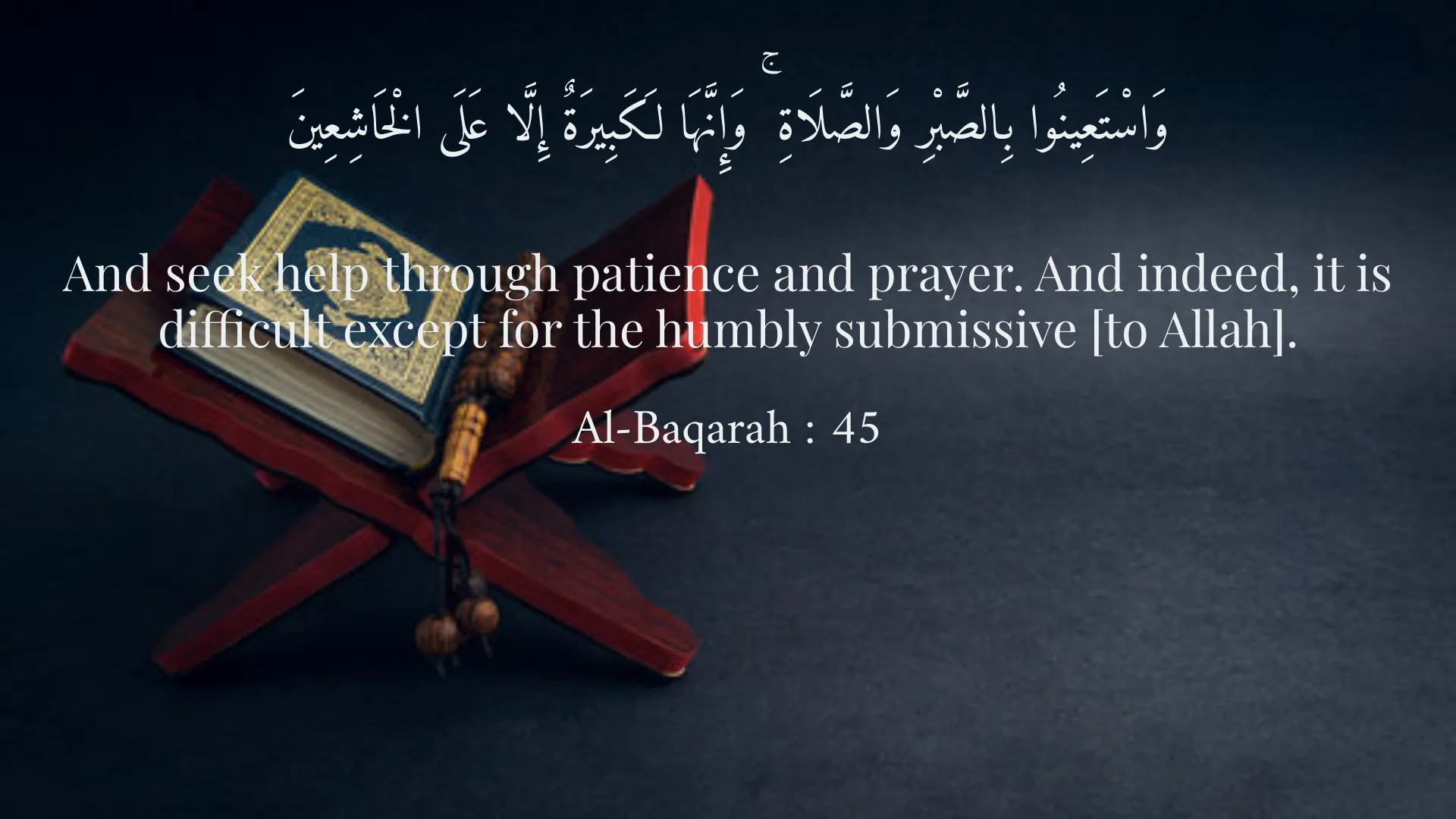
وَاسْتَعِينُوا بِالصَّبْرِ وَالصَّلَاةِ ۚ وَإِنَّهَا لَكَبِيرَةٌ إِلَّا عَلَى الْخَاشِعِينَ
And seek help through patience and prayer. And indeed, it is difficult except for the humbly submissive [to Allah].
Al-Baqarah : 45
الَّذِينَ آمَنُوا وَتَطْمَئِنُّ قُلُوبُهُم بِذِكْرِ اللَّهِ ۗ أَلَا بِذِكْرِ اللَّهِ تَطْمَئِنُّ الْقُلُوبُ
Those who have believed and whose hearts are assured by the remembrance of Allah. Unquestionably, by the remembrance of Allah hearts are assured.
Ar-Ra'd : 28
إِنَّنِي أَنَا اللَّهُ لَا إِلَٰهَ إِلَّا أَنَا فَاعْبُدْنِي وَأَقِمِ الصَّلَاةَ لِذِكْرِي
Indeed, I am Allah. There is no deity except Me, so worship Me and establish prayer for My remembrance.
Ta-Ha : 14
اتْلُ مَا أُوحِيَ إِلَيْكَ مِنَ الْكِتَابِ وَأَقِمِ الصَّلَاةَ ۖ إِنَّ الصَّلَاةَ تَنْهَىٰ عَنِ الْفَحْشَاءِ وَالْمُنْكَرِ ۗ وَلَذِكْرُ اللَّهِ أَكْبَرُ ۗ وَاللَّهُ يَعْلَمُ مَا تَصْنَعُونَ
Recite, [O Muhammad], what has been revealed to you of the Book and establish prayer. Indeed, prayer prohibits immorality and wrongdoing, and the remembrance of Allah is greater. And Allah knows that which you do.
Al-Ankabut : 45
Short Story
It is narrated that in a certain time, there was an old and enlightened Sheikh, who had a young disciple. This disciple would sometimes feel sluggish in his devotion and find languor in performing prayers. One day, he went to the Sheikh and, with shame, said: "O Sheikh, my heart sometimes loses its desire for prayer and devotion, and I lack the state of worship. What should I do?" The Sheikh smiled and said: "My son, your story is like that of the gardener who planted a good tree seed. Every day he watered that seed and softened its soil, even though for years he saw no fruit from it. But with patience and perseverance, that seed turned into a sturdy sapling, and then grew into a mighty tree that bore sweet fruits and cast its shade upon passersby. Now, that tree is the fruit of those very fruitlessly given waters." The Sheikh continued: "Prayer and supplication are also like this. Sometimes you may not immediately find the fruit of pleasure and presence of heart, and your heart may be reluctant. But know that every drop of tear of repentance, every word of remembrance, and every unit of prayer (rak'ah) that you perform despite reluctance and solely for the sake of Divine command, is like water you pour onto the roots of faith and the tree of servitude. This perseverance and patience, though it may seem difficult, will one day bear the sweet fruits of tranquility, closeness to the Truth, and true humility. So never stop watering the sapling of servitude, even if you are not thirsty!" The disciple took heed of the Sheikh's words and devoted himself to his acts of worship with greater resolve, and it was not long before he tasted the joy of servitude with his whole being.