Quranic Answer
Fear of death is a universally shared experience, a fundamental part of the human condition that many individuals confront throughout their lives. This fear often stems from the uncertainty surrounding the afterlife and what lies beyond our physical existence. However, the Holy Quran provides profound insights that can help believers reconcile this fear and find a sense of peace and acceptance regarding their mortality. According to the Quran, life and death are under divine control, reminding us that no one can delay their fate nor escape it. Specifically, Surah Al-Imran, verse 185, states: 'Every soul will taste death, and you will only be given your full compensation on the Day of Resurrection; whoever is removed from the Fire and admitted to Paradise has truly succeeded.' This verse emphasizes that death is not only inevitable but also a natural part of life, marking its significance and encouraging believers to view it without fear. ### Understanding Death as a Part of Life The notion that death is an integral aspect of life can lead to a transformative perspective for many individuals. Instead of viewing death as a finality, it can be understood as a phase in a continuum of existence. The Quran makes it clear that while physical life may come to an end, the soul continues its journey into the afterlife. This reality is further elaborated in Surah Al-Mu'minun, verses 99 and 100, which state: 'Until, when death comes to one of them, he says, 'My Lord, send me back so that I might work righteousness in that which I left behind.' No! It is only a word he is saying; and behind them is a barrier until the Day they are resurrected.' These verses underline the importance of living a life of righteousness and good deeds. The regret expressed in the verse indicates that when on the brink of death, individuals might wish to return and make better choices, but this is merely an acknowledgment of lost opportunities rather than a chance to change one’s circumstances. ### The Afterlife: A Source of Comfort One of the primary reasons why individuals fear death is the unknown nature of the afterlife. However, for those who believe in the teachings of Islam, faith in a life after death offers immense comfort. The Quran elaborates on the rewards of Paradise for the righteous and the punishment of Hell for those who lead a life contrary to divine guidance. This kind of assurance motivates believers to lead lives in accordance with Islamic tenets, emphasizing justice, kindness, and charity. By fostering a deeper belief in an afterlife, one can find purpose in their daily actions, alleviating fears related to death. Faith-based practices also play a critical role in shaping one's perception of mortality. Regular prayer, reflection on the Quran, and communal worship provide a structure for believers to confront complex feelings about death. Such practices help in cultivating a spiritual awareness that life is temporary and that this world serves as a preparation for the hereafter. Engaging in good deeds becomes not only an obligation but also an opportunity for securing a favorable position in the afterlife. Therefore, believers are encouraged to focus on righteousness, which can reduce anxiety about mortality. ### The Role of Good Deeds As highlighted in the Quran, one of the ways to ease the fear of death is through good deeds. The cultivation of righteous acts not only contributes positively to the community but also enriches one’s spiritual life. Good deeds are often seen as a means of preparing for the journey to the afterlife. Engaging in acts of charity, aiding the needy, and fostering kindness are prescribed Muslim values that lead to a sense of fulfillment and security. Such acts reinforce the idea that one's life has purpose and significance, which, in turn, can mitigate the fear of death. In addition, the encouragement to seek forgiveness from God is pivotal in alleviating fears surrounding death. Recognizing human imperfection and turning to Allah for forgiveness fosters humility and acceptance. The belief that Allah is merciful and compassionate offers an avenue for believers to seek redemption, further dispelling fears related to judgment after death. ### Cultivating a Relationship with Allah Central to overcoming the fear of death is the establishment of a heartfelt relationship with Allah. This connection helps individuals to develop trust in divine wisdom and timing. When believers engage in prayer, meditation, and heartfelt supplication, they open themselves up to a deeper understanding of life's purpose and the inevitability of death. Furthermore, faith provides a lens through which believers can reinterpret their experiences. Rather than viewing death as an end, it can be seen as a transition that is natural and divinely ordained. Accepting that life cycles include both life and death fosters an appreciation for the present moment and encourages individuals to live fully and with intention. Recognizing this divine plan allows believers to embrace death not as a frightening unknown, but as a necessary step in the journey of the soul. ### Conclusion In conclusion, the fear of death is a prevalent concern that many people grapple with throughout their lives. However, the teachings found in the Holy Quran provide powerful insights that empower believers to confront their fears and embrace their mortality. The understanding that every soul will taste death, coupled with a focus on righteous living and a strong relationship with Allah, serves as a foundation for overcoming death-related anxieties. Believers are encouraged to engage in good deeds, seek forgiveness, and cultivate their connections with God. By nurturing these practices, the fear of death can evolve into acceptance, allowing individuals to live meaningfully and purposefully in anticipation of the afterlife. Ultimately, death, as a profound part of existence, should not be feared but embraced, recognized as a reflection of life’s beautiful, inevitable journey.
Related Verses
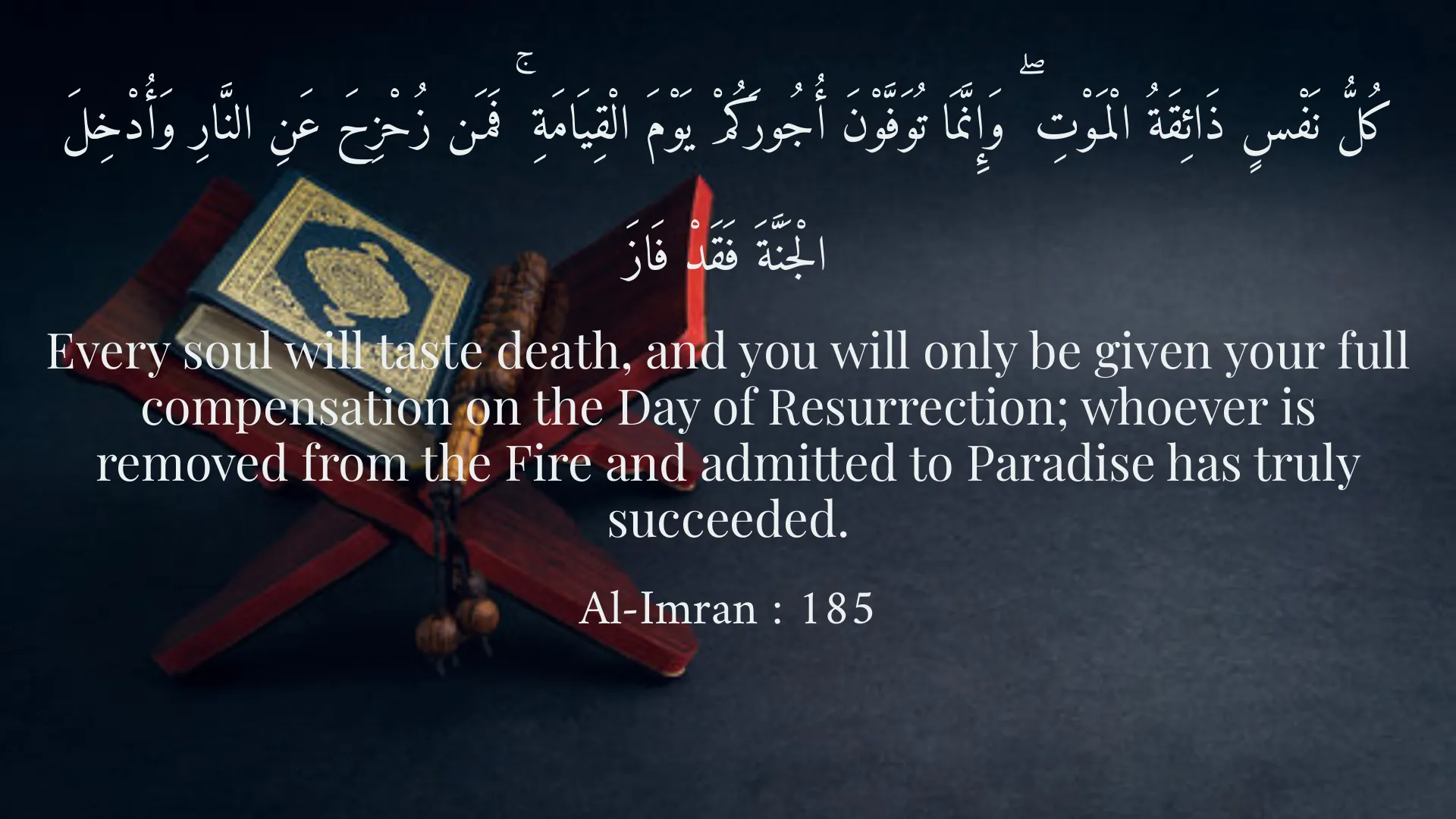
كُلُّ نَفْسٍ ذَائِقَةُ الْمَوْتِ ۖ وَإِنَّمَا تُوَفَّوْنَ أُجُورَكُمْ يَوْمَ الْقِيَامَةِ ۚ فَمَن زُحْزِحَ عَنِ النَّارِ وَأُدْخِلَ الْجَنَّةَ فَقَدْ فَازَ
Every soul will taste death, and you will only be given your full compensation on the Day of Resurrection; whoever is removed from the Fire and admitted to Paradise has truly succeeded.
Al-Imran : 185
حَتَّى إِذَا جَاءَ أَحَدَهُمُ الْمَوْتُ قَالَ رَبِّ ارْجِعُونِ
Until, when death comes to one of them, he says, 'My Lord, send me back.'
Al-Mu'minun : 99
وَمِن وَرَائِهِمْ بَرْزَخٌ إِلَى يَوْمِ يُبْعَثُونَ
No! It is only a word he is saying; and behind them is a barrier until the Day they are resurrected.
Al-Mu'minun : 100
Short Story
Ali was a young man who always feared death. One day, he was sitting with his friends, talking about life and death. One of his friends said to him, 'Ali, fearing death is like fearing to enter a new and unknown world. If you have a good relationship with God and are filled with hope and faith, you will never fear it.' At that moment, Ali fell into deep thought and decided to overcome his fears by engaging in good deeds and pure intentions. From then on, his life took on a new hue.