Quranic Answer
Anxiety is one of the most prevalent psychological and spiritual challenges in today's world, capable of profoundly impacting an individual's peace of mind and quality of life. Within the rich tradition of Islam, particularly in the luminous words of the Holy Quran, profound and effective strategies for combating anxiety and achieving true tranquility are offered. These solutions do not merely provide temporary relief but lay strong foundations for a life imbued with serenity and divine contentment. The Quran, as a book of guidance, repeatedly emphasizes the importance of reliance on God (Tawakkul), remembrance of God (Dhikr), patience (Sabr), prayer (Salat), acceptance of divine decree (Qadar), and a proper perspective on worldly life—all of which can serve as keys to liberation from the grip of anxiety. One of the most central Quranic concepts for dealing with anxiety is “Tawakkul,” or complete reliance on Allah. It signifies entrusting all one's affairs to God Almighty with full faith in His power and wisdom. When an individual, with complete faith in Allah's omnipotence and wisdom, commits all their life's matters to Him, feelings of loneliness and helplessness dissipate. Anxiety often stems from apprehension about the future, fear of the unknown, or a perceived lack of control over events. However, a person who practices Tawakkul knows that Allah is the best Disposer of affairs and Provider, and that He is always with His servants. This reliance lifts the heavy burden of worries from a person's shoulders, assuring them that even in the most challenging circumstances, Allah will not abandon them. The noble verse, “And whoever relies upon Allah – He is sufficient for him. Indeed, Allah will accomplish His purpose. Allah has already set for everything a [decreed] extent.” (Quran 65:3), clearly articulates that Allah is enough for anyone who trusts in Him. This verse serves as a beacon of light for anxious hearts, promising profound tranquility and stability. It reminds us that our efforts are important, but the ultimate outcome is in God's hands, alleviating the pressure of controlling every single variable. The second Quranic remedy is the “Dhikr” of Allah. Dhikr is not just the repetition of divine names but the constant remembrance of Allah's presence and majesty in every moment of life. The Holy Quran beautifully states: “Those who have believed and whose hearts are assured by the remembrance of Allah. Unquestionably, by the remembrance of Allah hearts are assured.” (Quran 13:28). This verse is one of the strongest and most explicit Quranic injunctions for achieving inner peace. When a person's heart is enlivened by the remembrance of God, there remains no room for satanic whispers, baseless fears, or unfounded worries. Dhikr, whether through recitation of the Quran, glorifications (Tasbih), supplications (Du'a), or contemplation of divine signs, acts like water poured on the fire of anxiety, extinguishing it. Remembering Allah's infinite power and His perpetual presence gives a person a sense of security and a strong refuge. This remembrance continually reminds an individual that they are not alone and are always under the protection and mercy of the Lord. It fosters a deep sense of connection, transforming fear into certainty and doubt into unwavering faith. “Patience (Sabr) and Prayer (Salat)” are two other fundamental pillars that the Quran refers to for overcoming difficulties and anxieties. In Surah Al-Baqarah, verse 153, we read: “O you who have believed, seek help through patience and prayer. Indeed, Allah is with the patient.” Sabr signifies steadfastness in the face of problems, enduring hardships, and never despairing of Allah's mercy. Patience helps a person maintain their composure in the face of adversity, enabling them to approach issues with a rational and trusting perspective. Salat, or ritual prayer, is a direct and unmediated connection with God. In prayer, a person distances themselves from worldly concerns and immerses their soul in the boundless ocean of spirituality. This connection is a vast source of positive and comforting energy. Prayer helps the believer lay down the heavy burden of anxieties and, by relying on Allah's eternal power, feel lightness and assurance. In essence, prayer is a spiritual sanctuary where one can share their worries with the Creator of the universe and seek His aid, finding solace and strength in His presence. It serves as a consistent reminder of one's purpose and reduces the feeling of being overwhelmed by daily stressors. Acceptance of “Divine Decree (Qadar)” also plays a crucial role in reducing anxiety. Many anxieties arise from trying to control all aspects of life and the future, even though many matters are beyond our control. The Quran teaches us that every event in the universe occurs with divine wisdom and planning. This does not mean that one should not strive; rather, one should exert their utmost effort and then entrust the outcome to God. By accepting the truth that Allah Almighty desires the best for His servants, a person can be freed from unnecessary worries about the future. This perspective allows one to face challenges with greater realism and, instead of being consumed by negative thoughts, to rely on practical solutions and trust in God. Understanding Qadar means recognizing that while we have free will in our actions, the ultimate outcome and circumstances are part of a larger divine plan, which brings immense peace. Furthermore, “Istighfar” (seeking forgiveness) and repentance can also play a significant role in cleansing anxiety from the human heart. Sometimes, the root of anxieties is a feeling of guilt, regret, or fear of divine retribution. By sincerely seeking forgiveness and repenting from sins, a person is freed from the psychological burden of sins, feeling light and pure, which leads to inner peace. This spiritual purification allows the heart to open up to divine light and mercy, reducing inner turmoil. Finally, a correct perspective on “this world (Dunya)” and the “Hereafter (Akhirah)” greatly contributes to reducing anxiety. The Holy Quran repeatedly emphasizes the ephemeral and transient nature of this world. When a person understands that what they gain or lose in this world is only temporary, and their true abode is the Hereafter, their attachment to material things diminishes, and the fear of loss also decreases. This elevated perspective on life frees a person from the grip of greed and avarice and the fear of poverty and failure, which are major causes of anxiety. Instead of focusing on what we have lost in this world, we contemplate what we have accumulated for the Hereafter, which itself is an unparalleled source of tranquility. Therefore, adherence to Quranic teachings and strengthening faith is not only a path to spiritual life but also a comprehensive prescription for mental well-being and deliverance from anxiety. It shifts one's ultimate focus to what truly matters, diminishing the power of worldly worries.
Related Verses
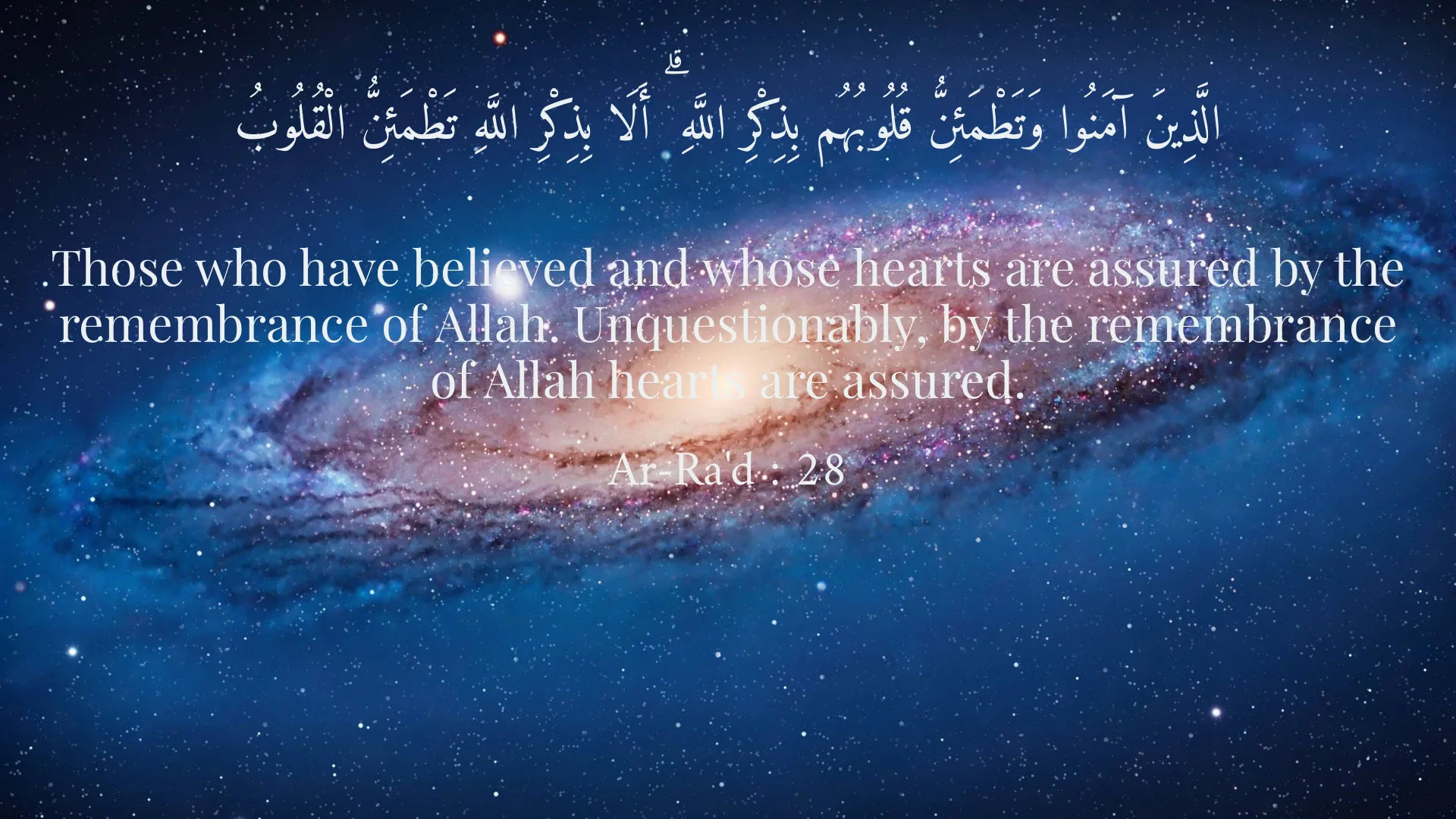
الَّذِينَ آمَنُوا وَتَطْمَئِنُّ قُلُوبُهُم بِذِكْرِ اللَّهِ ۗ أَلَا بِذِكْرِ اللَّهِ تَطْمَئِنُّ الْقُلُوبُ
Those who have believed and whose hearts are assured by the remembrance of Allah. Unquestionably, by the remembrance of Allah hearts are assured.
Ar-Ra'd : 28
يَا أَيُّهَا الَّذِينَ آمَنُوا اسْتَعِينُوا بِالصَّبْرِ وَالصَّلَاةِ ۚ إِنَّ اللَّهَ مَعَ الصَّابِرِينَ
O you who have believed, seek help through patience and prayer. Indeed, Allah is with the patient.
Al-Baqarah : 153
وَمَن يَتَوَكَّلْ عَلَى اللَّهِ فَهُوَ حَسْبُهُ ۚ إِنَّ اللَّهَ بَالِغُ أَمْرِهِ ۚ قَدْ جَعَلَ اللَّهُ لِكُلِّ شَيْءٍ قَدْرًا
And whoever relies upon Allah - He is sufficient for him. Indeed, Allah will accomplish His purpose. Allah has already set for everything a [decreed] extent.
At-Talaq : 3
Short Story
It is said that in ancient times, in a bustling city, there lived a wealthy merchant who, despite all his possessions, was constantly consumed by anxiety about his future and his trade. The more he accumulated, the more worried he became. One day, he passed by a monastery and saw a dervish, simply dressed and with a radiant face, sitting under a tree and singing. The merchant was astonished by his tranquility and approached him, asking, "O man of God, how is it that with all this simplicity, you are so carefree and joyful? I, with all my wealth, am never free from anxiety for a moment." The dervish smiled and said, "O merchant, the secret of my peace lies in being grateful for what I possess, and entrusting what I do not have to God's wisdom. Sa'di of Shiraz says: 'Bind your heart to the hands of the Beloved / And then be content with His decree.' I have placed my trust in God and I know that He is the Provider, not my calculations. Your anxiety stems from believing yourself to be the owner and manager, while everything is in His powerful hands. When you entrust your heart to Him, the heavy burden of the world is lifted from your shoulders, and lightness and peace take its place. If you accept that His decree is the best and that He is always your supporter, you will have no fear of the future." The merchant took heed of the dervish's words, and his heart found a peace he had sought for years, realizing that true tranquility lies in reliance and contentment, not in accumulating wealth.