Quranic Answer
Future anxiety, the unpleasant feeling of worry about potential events that have not yet occurred, can be an integral part of many people's lives in today's fast-paced world. However, Islam and the verses of the Holy Quran offer profound and effective solutions for confronting and overcoming this anxiety, rooted in reliance on God (Tawakkul), patience (Sabr), and remembrance of God (Dhikr). These solutions are not merely temporary alleviations but establish a solid intellectual and spiritual foundation for lasting tranquility. The first and perhaps most crucial step in overcoming future anxiety is understanding and embracing the concept of 'Tawakkul al-Allah,' or reliance on God. The Quran repeatedly advises believers to entrust the outcomes of their affairs to Allah after fulfilling their duties and making their utmost efforts. This does not imply inaction or passive submission, but rather, after exerting maximum effort, one should commit their heart to the unique Lord who is the ultimate orchestrator, desiring what is best for His servants. When a person knows that the entire universe is under the command of an absolute power, who is All-Knowing and All-Capable, and wills good for His creation, the heavy burden of worry is lifted from their shoulders. The verse “And whoever relies upon Allah – then He is sufficient for him.” (Surah At-Talaq: 3) clearly expresses this truth. This reliance not only brings peace but also enhances one's ability to act and their courage to face challenges, as one knows they are not alone and have eternal support. The second step is seeking refuge in 'Sabr (patience) and Salat (prayer).' The Holy Quran emphasizes in numerous verses that patience and prayer are powerful tools for achieving tranquility and enduring hardships. The verse “O you who have believed, seek help through patience and prayer. Indeed, Allah is with the patient.” (Surah Al-Baqarah: 153) instructs believers to seek assistance through patience and prayer. Patience here means enduring difficulties and afflictions with an open heart and hope for divine relief. This patience is not passive; rather, it is an active steadfastness that strengthens a person against problems and prevents undue distress and panic. Prayer, too, is not just a religious obligation but an opportunity for direct communion with the Creator, a mental and spiritual release, and a renewal of strength. During prayer, one disconnects from worldly concerns and, by focusing on God, experiences profound peace. Regular repetition of this connection throughout the day significantly helps in stabilizing inner peace and reducing potential anxieties. The third solution is 'Dhikr' or the remembrance of Allah. The Quran clearly states that the remembrance of Allah brings tranquility to hearts. The verse “Unquestionably, by the remembrance of Allah hearts are assured.” (Surah Ar-Ra’d: 28) explicitly states this truth. Dhikr includes reciting the Quran, uttering divine invocations (adhkar), contemplating creation, and any act that reminds a person of Allah. When the heart becomes accustomed to the remembrance of Allah, there is little room left for satanic whispers and negative thoughts. The remembrance of Allah is like an anchor that keeps the ship of one's being steady amidst the storms of life. This continuous reminder of Allah's power, mercy, and wisdom makes the small and large worries of the world seem insignificant in comparison to His grandeur. It leads a person to believe that nothing is outside His will and power, and that there is goodness and wisdom in whatever happens. This perspective transforms anxiety about the unknown into certainty. Furthermore, understanding the concept of 'Qada and Qadar' (Divine Decree and Predestination) plays a significant role in reducing anxiety. The Quran teaches us that every event in the universe, from the smallest to the largest, occurs by Allah's knowledge and will. The verse “Say, 'Nothing will ever befall us except what Allah has decreed for us. He is our Protector; and upon Allah let the believers rely.'” (Surah At-Tawbah: 51) clarifies this concept: nothing will afflict us except what Allah has ordained for us. This understanding does not negate effort and striving, but rather implies acceptance of outcomes after fulfilling one's duties. When a person knows that their destiny is in the hands of the One who ordains the best for them, they do not fear an uncertain future and continue their life with greater peace. This belief strengthens the sense of submission and contentment within a person, which is a great factor in alleviating anxiety. Moreover, the Quran reminds us that 'this world is transient' and one should not become overly attached to it. The verse “And what is the life of this world except amusement and diversion; but the home of the Hereafter is best for those who fear Allah.” (Surah Al-An'am: 32) indicates that worldly life is merely play and amusement, and the Hereafter is better for the righteous. When a person realizes that worldly problems are temporary and fleeting, and the main goal is eternal life in the Hereafter, many worries related to wealth, status, and worldly future diminish. This perspective allows one to enjoy what they have, strive for the future, but not fear what they might lose or what might happen without reason. Finally, 'Dua (supplication) and prayer' are direct ways to communicate with Allah and seek His help. The Quran repeatedly emphasizes the importance of dua, and Allah has promised to answer the prayers of His servants. Dua, besides being hopeful, makes a person feel not alone and know that they always have a secure and powerful refuge. This intimate connection with the Creator helps a person share the heavy burden of worries with Him and seek assistance from His infinite power. In summary, overcoming future anxiety from an Islamic perspective is not about denying life's realities, but about strengthening one's connection with Allah, relying on Him, utilizing spiritual tools such as patience, prayer, and remembrance, and shifting one's perspective on this world and the Hereafter. This approach not only eliminates anxiety but also imparts deeper meaning and purpose to one's life, bringing lasting peace.
Related Verses
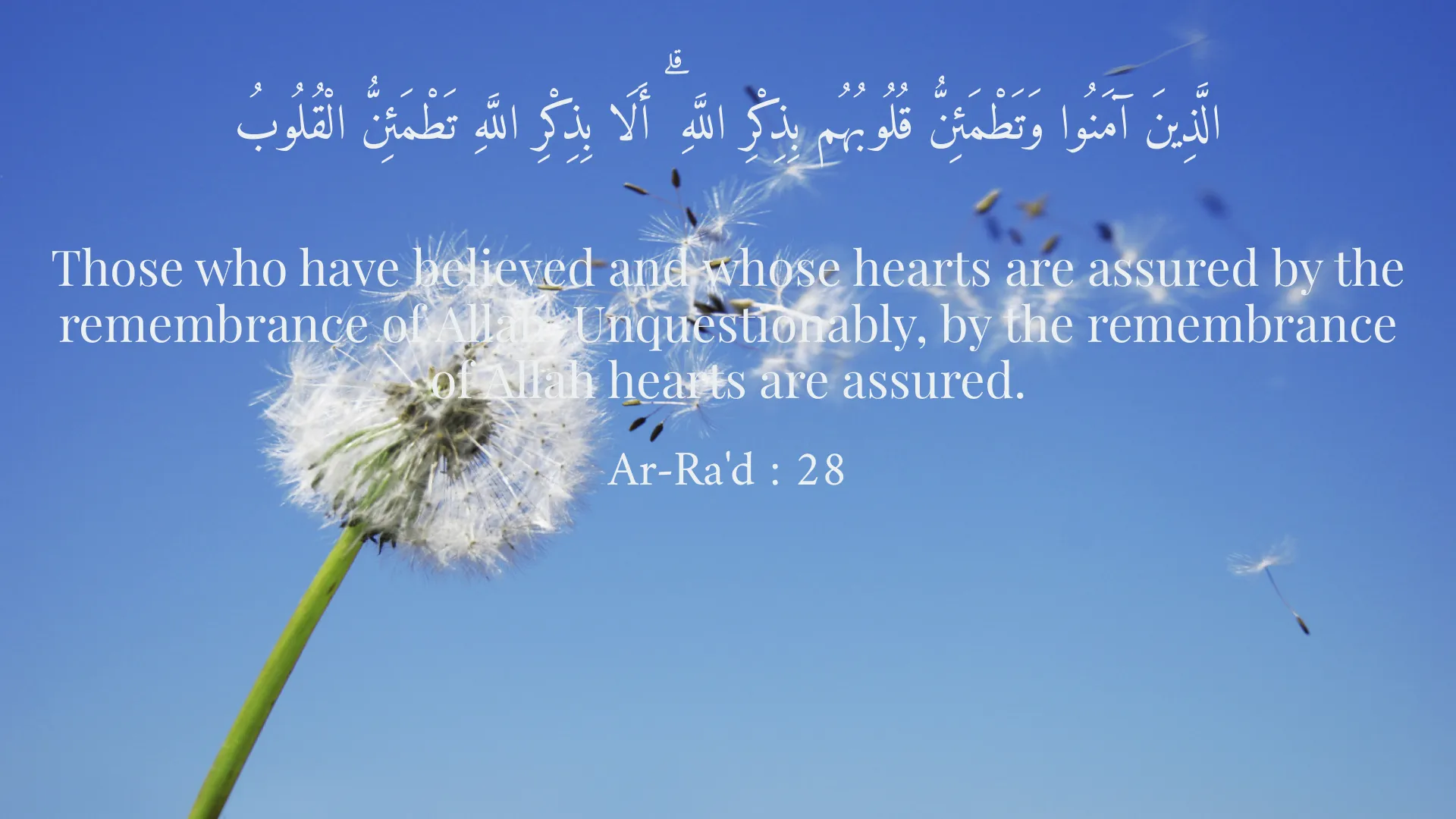
الَّذِينَ آمَنُوا وَتَطْمَئِنُّ قُلُوبُهُم بِذِكْرِ اللَّهِ ۗ أَلَا بِذِكْرِ اللَّهِ تَطْمَئِنُّ الْقُلُوبُ
Those who have believed and whose hearts are assured by the remembrance of Allah. Unquestionably, by the remembrance of Allah hearts are assured.
Ar-Ra'd : 28
يَا أَيُّهَا الَّذِينَ آمَنُوا اسْتَعِينُوا بِالصَّبْرِ وَالصَّلَاةِ ۚ إِنَّ اللَّهَ مَعَ الصَّابِرِينَ
O you who have believed, seek help through patience and prayer. Indeed, Allah is with the patient.
Al-Baqarah : 153
قُل لَّن يُصِيبَنَا إِلَّا مَا كَتَبَ اللَّهُ لَنَا هُوَ مَوْلَانَا ۚ وَعَلَى اللَّهِ فَلْيَتَوَكَّلِ الْمُؤْمِنُونَ
Say, 'Nothing will ever befall us except what Allah has decreed for us. He is our Protector; and upon Allah let the believers rely.'
At-Tawbah : 51
Short Story
Once upon a time, there lived a powerful and wealthy king who, despite all his possessions, suffered day and night from future anxiety and the worry of preserving his kingdom. Nearby, a simple dervish slept peacefully under the shade of a tree in the royal garden. The king, tormented by sleeplessness and anxiety, woke the dervish and asked with astonishment: "O Dervish, how can you sleep so calmly and carelessly with all your poverty and nothingness, while I, with all this wealth and power, cannot find a moment of peace?" The dervish replied with a serene smile: "O King! I have entrusted my affairs to the One who owns everything and provides sustenance to all by His grace. I have not attached my heart to this world, and I fear no loss, for what I possess is from Him, and what I do not have is also by His divine plan. But you cling to what you possess and fear losing it. My heart is at peace because I know my sustenance is from God, and I rely on His divine decree. This peace is a treasure no king can buy." The king took heed of the dervish's words, and some of the burden of his anxiety was lifted.