Quranic Answer
### The Challenge of Religious Obsession: Insights from the Holy Quran Religious obsession is a complex mental challenge that numerous individuals grapple with in their daily lives. It involves an overwhelming preoccupation with religious rituals, beliefs, or symbols that can hinder an individual’s overall mental health and social well-being. The importance of finding a balanced approach to faith is firmly affirmed in the teachings of the Holy Quran, which emphasizes moderation and discourages extremism. In today’s article, we will explore how the Quran articulates the principles of moderation in faith, the understanding of worship, and the reliance on Allah (God) in combating religious obsession. #### Understanding Religious Obsession Religious obsession can manifest in various forms, such as an excessive focus on minor details of faith, an unfounded fear of sin, or a compulsive need for perfection in religious practices. These obsessions can lead to anxiety, isolation, and a distorted sense of spirituality that detracts from the essence of one’s faith. The psychological toll of such obsessions not only affects spiritual health but also impedes personal and social life. Individuals trapped in cycles of religious obsession may distance themselves from family, friends, and their community, creating a vicious cycle of loneliness and despair. #### The Quranic Perspective on Faith The Holy Quran addresses the dilemmas of extreme behavior and obsession in matters of faith. For instance, in Surah Al-Baqarah (Chapter 2), verse 177, it is stated: "It is not righteousness that you turn your faces toward the East or the West, but [true] righteousness is in one who believes in Allah, the Last Day, the Angels, the Book, and the Prophets and gives his wealth, in spite of love for it, to relatives, orphans, the needy, the traveler, those who ask [for help], and for freeing slaves; [and who] establishes prayer and gives zakah; [those who] fulfill their promise when they promise; and [those who] are patient in poverty and hardship and during battle. Those are the ones who have been true, and it is those who are the righteous." This verse highlights that the essence of faith lies not in superficial rituals but in the sincerity of belief and the performance of good deeds. It calls on believers to focus on their core convictions and ethical behaviors rather than getting entangled in minute details or rigid practices. Believers must comprehend that obsessiveness over minor issues can distort the true essence of spirituality. By emphasizing moral and ethical behavior over ritualistic perfection, the Quran sets a foundation for a balanced approach to faith that encourages growth and understanding. #### Emphasizing Moderation in Worship Moderation in worship is another essential theme found in the teachings of the Quran. Extremes in religious practice can lead to burnout, disillusionment, and, ultimately, alienation from one’s faith. The Quranic approach encourages believers to engage in their spiritual obligations with a sense of balance and ease. In Surah Al-Baqarah, verse 218, it states: "And do not kill yourselves [or one another]. And whoever does that, in aggression and wrongdoing - then We will drive him into a Fire. And that, for Allah, is always easy." This verse underscores the importance of preserving one's mental and spiritual health. It implies that one should not engage in practices that might lead to harm to oneself or others, reinforcing the need for balance in all aspects of life, including worship. Moreover, the Quran teaches about enjoyment and gratitude as elements of faith. In Surah Al-A'raf (Chapter 7), verse 31, Allah advises: "And eat and drink, but be not excessive. Indeed, He likes not those who commit excess." This verse reflects the value of moderation and balance, promoting a lifestyle that is both spiritually fulfilling and enjoyable. Recognizing that worship and devotion to Allah should not result in self-neglect or hardship is crucial for maintaining healthy religious practices. #### The Role of Self-Confidence and Trust in Allah Self-confidence and reliance on Allah are pivotal in overcoming religious obsession. The Quran encourages believers to place their trust in Allah amidst their struggles. In Surah At-Talaq (Chapter 65), verses 2 and 3 state: "And whoever relies upon Allah - then He is sufficient for him. Indeed, Allah will accomplish His purpose. Allah has already set for everything a decreed extent." This notion of reliance on Allah signifies the importance of surrendering one’s worries and anxieties to God. When individuals trust in Allah’s wisdom and plan, they can free themselves from the shackles of obsessive thoughts and behaviors. Relying on Allah also promotes a sense of inner peace and stability. In times of uncertainty, turning towards Allah reinforces one’s faith and diminishes the grips of obsession. Recognizing that perfection is unattainable allows individuals to shift their focus toward gratitude, humility, and perseverance. #### Seeking Assistance from the Quran The Quran is not merely a religious text but a comprehensive guide that offers valuable insights on life, spirituality, and mental well-being. Its teachings inspire believers to foster a healthy relationship with their faith and those around them. By embracing the principles of moderation, understanding, and trust in Allah, individuals can navigate their spiritual journeys without succumbing to obsessions. Moreover, community support and engagement play crucial roles in addressing religious obsession. By fostering open discussions about faith, mental health, and spirituality, communities can create supportive environments where individuals feel safe to share their struggles and seek help without judgment. Approaching religious teachings collectively can help dispel feelings of isolation and provide pathways for healing and understanding. #### Conclusion In conclusion, overcoming religious obsessions is essential for achieving spiritual health and mental well-being. The teachings of the Holy Quran provide a comprehensive framework for believers to engage with their faith in a balanced manner, emphasizing avoidance of extremism. By focusing on the core values of belief, good deeds, and self-trust, individuals can navigate their spiritual journeys with confidence and peace of mind. It is through an understanding of moderation in faith and reliance on Allah that believers can rise above the challenges of religious obsession, ensuring their spiritual practices uplift rather than burden them.
Related Verses
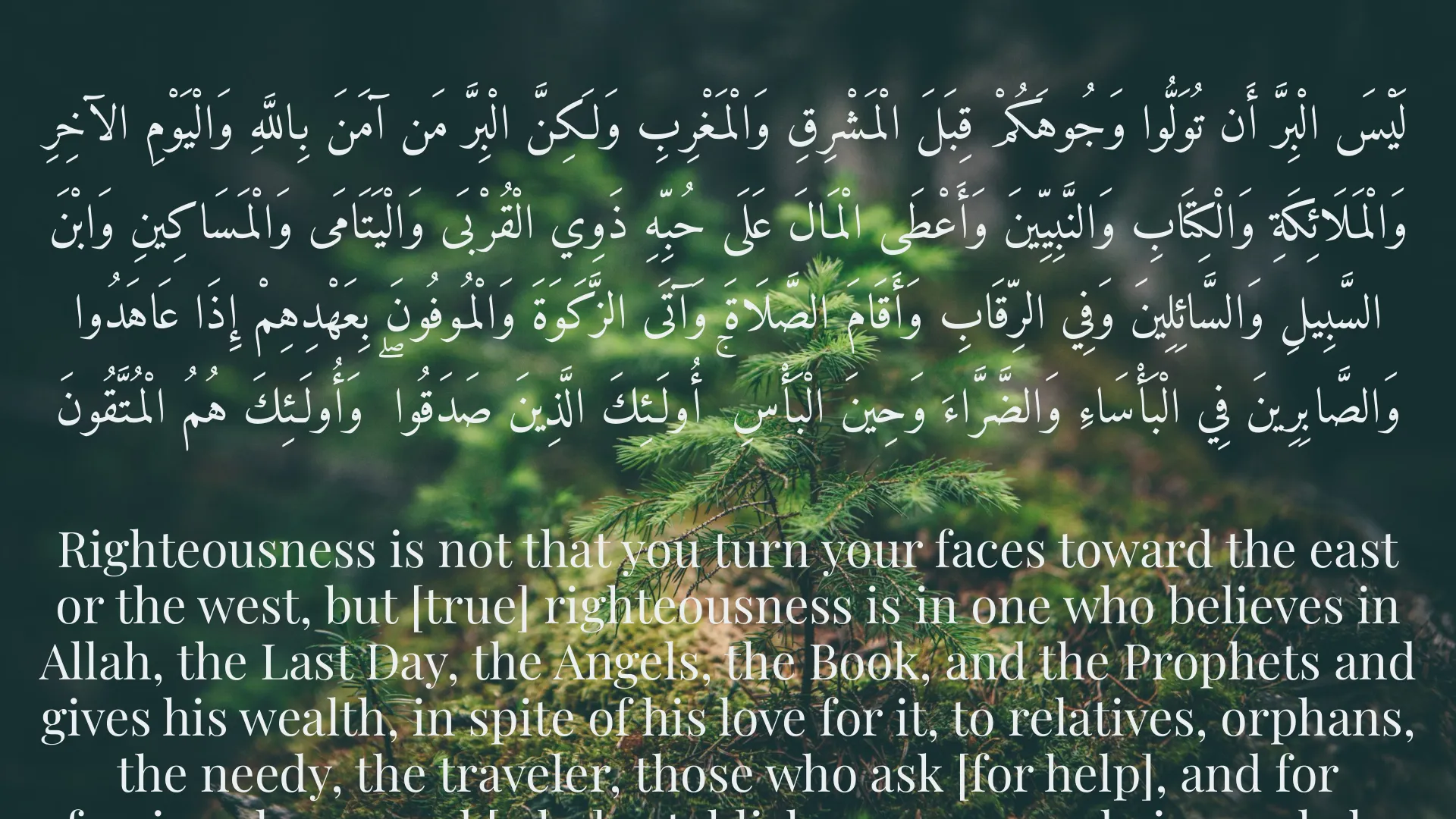
لَيْسَ الْبِرَّ أَن تُوَلُّوا وَجُوهَكُمْ قِبَلَ الْمَشْرِقِ وَالْمَغْرِبِ وَلَكِنَّ الْبِرَّ مَن آمَنَ بِاللَّهِ وَالْيَوْمِ الآخِرِ وَالْمَلَائِكَةِ وَالْكِتَابِ وَالنَّبِيِّينَ وَأَعْطَى الْمَالَ عَلَى حُبِّهِ ذَوِي الْقُرْبَى وَالْيَتَامَى وَالْمَسَاكِينِ وَابْنَ السَّبِيلِ وَالسَّائِلِينَ وَفِي الرِّقَابِ وَأَقَامَ الصَّلَاةَ وَآتَى الزَّكَوَةَ وَالْمُوفُونَ بِعَهْدِهِمْ إِذَا عَاهَدُوا وَالصَّابِرِينَ فِي الْبَأْسَاءِ وَالضَّرَّاءَ وَحِينَ الْبَأْسِ ۚ أُولَـئِكَ الَّذِينَ صَدَقُوا ۖ وَأُولَـئِكَ هُمُ الْمُتَّقُونَ
Righteousness is not that you turn your faces toward the east or the west, but [true] righteousness is in one who believes in Allah, the Last Day, the Angels, the Book, and the Prophets and gives his wealth, in spite of his love for it, to relatives, orphans, the needy, the traveler, those who ask [for help], and for freeing slaves; and [who] establishes prayer and gives zakah; [those who] fulfill their promise when they promise; and [those who] are patient in poverty and hardship and during battle. Those are the ones who have been true, and it is those who are the righteous.
Al-Baqarah : 177
وَمَن يَتَّقِ اللَّهَ يَجْعَل لَّهُ مَخْرَجًا
And whoever fears Allah - He will make for him a way out.
At-Talaq : 2
وَيَرْزُقْهُ مِنْ حَيْثُ لَا يَحْتَسِبُ ۗ وَمَن يَتَوَكَّلْ عَلَى اللَّهِ فَهُوَ حَسْبُهُ
And will provide for him from where he does not expect. And whoever relies upon Allah - then He is sufficient for him.
At-Talaq : 3
Short Story
On a beautiful and delightful day, Ali, a young man with strong faith, was engaged in prayer and supplication. He pondered how much he worried about the details of his faith and whether this worry was truly correct. After a little reflection, he decided to refer to the verses of the Quran. Ali realized that Allah is merciful and provides him with peace. He saw that relying on Allah and practicing moderation in faith are the keys to overcoming obsessions. From that day on, Ali lived with greater faith and love, departing from his obsessions.