Quranic Answer
The Day of Judgment, or "Yawm al-Hisab," is one of the most fundamental and crucial beliefs in Islam. This day is not merely a distant future event, but a profound reality that should constantly permeate our inner being and guide our daily lives. The Holy Quran repeatedly emphasizes the certainty of this day and calls upon us to prepare for it. But how can we effectively prepare ourselves for such a momentous day? This preparation is a comprehensive and all-encompassing journey that includes various dimensions of our faith, actions, ethics, and even our perspective on worldly life, a path smoothed by reliance on God and adherence to His commands. The first and most critical step in this journey is strengthening our faith and sincere monotheism (Tawhid). The Quran repeatedly emphasizes the Oneness of God and the avoidance of associating partners with Him. Surah Al-Ikhlas beautifully articulates this concept, teaching us that Allah is One, the Eternal Refuge, and has no partners. Belief in Allah Almighty, His prophets, His heavenly books, His angels, and the Day of Judgment forms the backbone of our preparation. This faith is not just a mental assent but a deep inner conviction that guides all our actions and intentions. Every action we undertake should be driven by the intention to gain the pleasure of our Lord and prepare ourselves for meeting Him. This inner conviction gives meaning to our actions, transforming them from mere habits into acts of worship. Following faith, righteous deeds (Amal Saleh) hold a special place. The Holy Quran frequently mentions faith alongside righteous deeds, as if they are inseparable. Righteous deeds encompass a wide range of activities that shape our spiritual and social lives: First and foremost, Prayer (Salat) is the pillar of religion and establishes a direct, daily connection with God. Prayer purifies the soul and deters from indecency and evil, as stated in Surah Al-Ankabut, verse 45: "Indeed, prayer prohibits immorality and wrongdoing." Establishing prayer with humility and heartfelt attention cleanses the heart from the rust of heedlessness and reminds us of the Day of Judgment, fostering a state of continuous presence with the Lord. Second, Charity (Zakat and Sadaqah); giving wealth in the way of Allah not only purifies one's possessions but also liberates the heart from greed and worldly attachments. The Quran promises that whatever we spend in the way of Allah will be returned to us in the best possible way on the Day of Judgment. Helping the needy, orphans, and the destitute is one of the best ways to gather provisions for the Hereafter and an expression of practical gratitude for divine blessings. Third, Fasting (Sawm); it is a spiritual exercise for self-purification, patience, and empathy with the hungry. Fasting teaches us how to overcome our carnal desires and strengthens our God-consciousness (Taqwa), awakening a sense of compassion for the less fortunate segments of society. Fourth, Hajj and Umrah; for those who are financially and physically able, performing the pilgrimage (Hajj and Umrah) is an unparalleled opportunity for sins to be forgiven and for a fresh start, signifying the unity of the Muslim Ummah before its Lord. Possessing good character (Akhlaq) and upholding the rights of others are other vital pillars of preparing for the Day of Judgment. The Quran repeatedly emphasizes justice, kindness, honesty, trustworthiness, and refraining from oppression, backbiting, slander, and envy. On the Day of Judgment, not only our acts of worship but also our interactions with others, the rights we have upheld or violated, will all be scrutinized. Surah Al-Hujurat beautifully outlines social and ethical conduct, urging believers not to ridicule one another, avoid negative assumptions, and abstain from backbiting. Upholding the rights of parents, spouses, children, neighbors, and even animals, all count as deeds that will hold weight in our scales of actions and are indicators of a person's true faith. Constant repentance (Tawbah) and seeking forgiveness (Istighfar) are gateways to divine mercy that are always open to servants. Humans are prone to error and may commit sins throughout their lives. The important thing is to immediately turn back to Allah after committing a sin, possess genuine remorse, and resolve not to not repeat that sin. Allah states in the Quran that He is Most Forgiving and Merciful, pardoning the sins of His servants. This opportunity for repentance continues until the moment of death and is one of the greatest divine favors upon humanity. Repentance purifies the heart and prepares the soul for meeting its Lord, offering a new hope for rectifying the past. Constant remembrance of death and the Hereafter also plays a significant role in preparing for the Day of Judgment. When a person remembers that worldly life is transient and the ultimate destination is the Hereafter, their perspective on life changes. This reminder helps them avoid being consumed by fleeting worldly pleasures and instead strive to build their eternal abode. Verse 18 of Surah Al-Hashr beautifully expresses this point: "O you who have believed, fear Allah. And let every soul look to what it has put forth for tomorrow - and fear Allah. Indeed, Allah is Acquainted with what you do." This awareness ensures that every action is performed with diligence and pure intention. Ultimately, preparing for the Day of Judgment does not mean isolation or withdrawal from life; rather, it means living with purpose and insight. It means cherishing every moment of our lives and spending it in the way of Allah's pleasure and serving His creation. This path is full of hope and mercy, for Allah is Just and Merciful and never diminishes the reward of those who do good. By trusting in Allah, being sincere in intention, and striving in action, we can hope to appear with honor and success on the Day of Judgment and proceed with our good deeds towards the promised Paradise. This preparation not only brings peace, purpose, and blessings to our worldly life but also ensures our success in the eternal abode, guiding us towards a balanced and fruitful life.
Related Verses
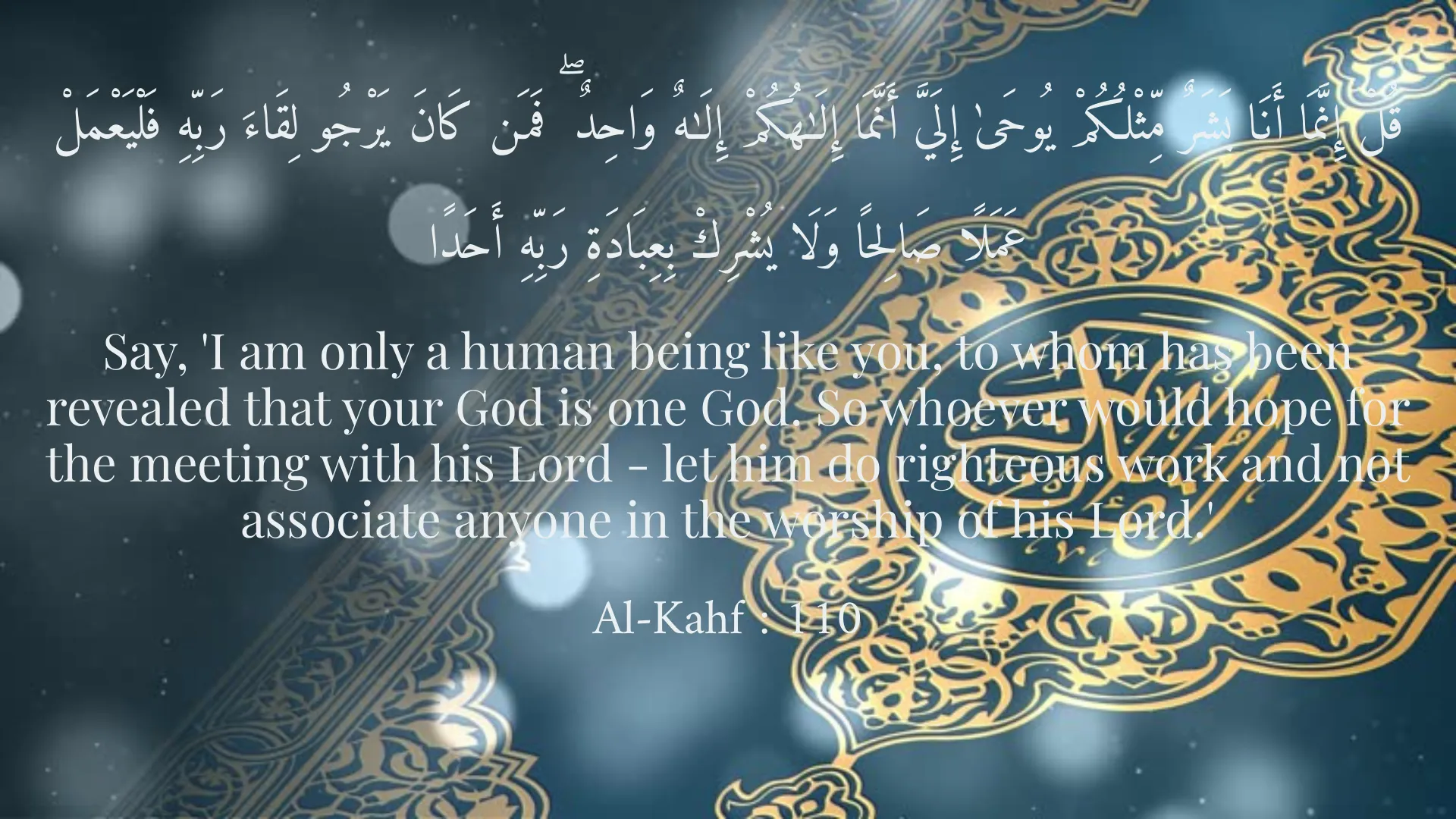
قُلْ إِنَّمَا أَنَا بَشَرٌ مِّثْلُكُمْ يُوحَىٰ إِلَيَّ أَنَّمَا إِلَٰهُكُمْ إِلَٰهٌ وَاحِدٌ ۖ فَمَن كَانَ يَرْجُو لِقَاءَ رَبِّهِ فَلْيَعْمَلْ عَمَلًا صَالِحًا وَلَا يُشْرِكْ بِعِبَادَةِ رَبِّهِ أَحَدًا
Say, 'I am only a human being like you, to whom has been revealed that your God is one God. So whoever would hope for the meeting with his Lord - let him do righteous work and not associate anyone in the worship of his Lord.'
Al-Kahf : 110
فَمَن يَعْمَلْ مِثْقَالَ ذَرَّةٍ خَيْرًا يَرَهُ
So whoever does an atom's weight of good will see it,
Az-Zalzalah : 7
وَمَن يَعْمَلْ مِثْقَالَ ذَرَّةٍ شَرًّا يَرَهُ
And whoever does an atom's weight of evil will see it.
Az-Zalzalah : 8
يَا أَيُّهَا الَّذِينَ آمَنُوا اتَّقُوا اللَّهَ وَلْتَنظُرْ نَفْسٌ مَّا قَدَّمَتْ لِغَدٍ ۖ وَاتَّقُوا اللَّهَ ۚ إِنَّ اللَّهَ خَبِيرٌ بِمَا تَعْمَلُونَ
O you who have believed, fear Allah. And let every soul look to what it has put forth for tomorrow - and fear Allah. Indeed, Allah is Acquainted with what you do.
Al-Hashr : 18
Short Story
Saadi, in his tales, often speaks of the value of good deeds and the transient nature of this world. There is a story told of a wealthy merchant in Samarkand who spent his entire life accumulating possessions and wealth. He had magnificent houses, fruitful gardens, and countless treasures. Nearing the end of his life, he fell ill and lay on his deathbed. An old friend and wise scholar visited him. The merchant lamented, "I spent my entire life gathering these riches, but now none of them will accompany me to the afterlife, and I will go empty-handed." The sage smiled and said, "My friend, true wealth is not what remains in this world, but what you send forth for your Hereafter. The good deeds you have done, the hands you have helped, and the hearts you have gladdened—these are your eternal provisions. Even now, there is still time to illuminate your path to the Hereafter through repentance and generosity." The merchant awakened from his heedlessness by this advice and spent the rest of his life engaged in good works and helping the needy, hoping to gather provisions for the Day of Judgment.