Quranic Answer
Raising children with Quranic ethics is one of the most important responsibilities of parents in Islam. This significant duty extends beyond mere physical care, as it encompasses the moral, spiritual, and emotional development of a child. The Holy Quran, regarded as the divine guide for Muslims, emphasizes the importance of proper upbringing through numerous verses that provide timeless advice on moral development. Among these guidance-laden passages is Surah Luqman, verse 31, where Luqman, a wise man, advises his son to recognize and respect God and uphold the rights and duties towards others. This particular verse serves as a cornerstone in understanding the broader concept of upbringing in the Islamic tradition, with profound insights for parents aspiring to raise children embedded with ethical principles drawn from the Quran. The significance of teaching children about the oneness of God (Tawheed) and the importance of moral conduct cannot be overstated. Children are impressionable, absorbing lessons from their environment, especially their home, where initial encounters with ethics and morality occur. This dynamic illustrates the parent-child relationship where parents act as primary role models. By setting a good example, mothers and fathers can effectively inspire their children to embrace virtuous behavior, leading them to a moral compass derived from Quranic teachings. The wisdom shared by Luqman resonates universally, urging parents to not merely proclaim religious values but to embody them in their daily lives, thus transforming ethical teachings into lived experiences. Furthermore, Surah Al-Imran, verse 6, reveals a remarkable truth about the shaping of children. Allah states, 'He it is Who shapes you in the wombs as He wills.' This verse emphasizes that the development of a child is both a divine and parental partnership. Parents hold the extraordinary responsibility of shaping their children’s character through their actions, beliefs, and the teachings they impart. By instilling Islamic moral principles and social norms early on, parents lay the foundational pillars on which children can build their knowledge, faith, and values. In this context, teaching about honesty, kindness, empathy, justice, and respect for others can profoundly affect children’s worldviews and interactions with people. Another crucial aspect of instilling Quranic ethics is the creation of a nurturing and spiritual environment at home. A household that openly discusses knowledge, faith, and the beauty of Islamic teachings fosters a conducive atmosphere for children to learn and grow. Activities like holding Quranic study sessions within the family not only enrich the spiritual experience but also serve to strengthen family bonds. During these sessions, parents can share the significance of specific verses and how they apply to daily life, making spiritual teaching interactive and engaging. Parents should also consider the importance of invoking the principles found in Surah Ta-Ha, verse 132, where Allah commands the Prophet Muhammad (Peace Be Upon Him) to instruct his family to perform prayer. This verse highlights the significance of leading by example – parents are encouraged to establish prayer and other forms of worship as an integral part of family life. Practices like daily prayers (Salah), fasting during Ramadan, and participating in community service not only draw families closer to God but also underscore the importance of communal values and responsibilities among peers. By establishing these routines, children learn to appreciate the role of spirituality in daily life while also cultivating a sense of belonging to the larger Islamic community. In encouraging children to develop a deep sense of spirituality, parents should focus on nurturing the heart and mind of their children. For instance, discussing the beautiful stories of the prophets as shared in the Quran can serve as powerful motivational tales that educate children on principles of faith, perseverance, and moral values. Not only do these stories captivate children's interest, but they also instill a sense of purpose, guiding them towards righteous paths in whatever they choose to pursue. Moreover, nurturing ethical behavior is not a one-way affair; it requires an interactive relationship between parents and children. Listening, understanding, and engaging in discussions on moral dilemmas faced daily can enrich the learning experience for children. By encouraging them to think critically about their choices and the implications of those choices, parents equip their children with the tools needed for ethical reasoning grounded in Islamic principles. Open communication fosters trust, allowing children to seek guidance from their parents when faced with challenges. In preparing their children for life in society, it is equally imperative that parents teach about the importance of community service and social responsibility. The Quran emphasizes helping those in need, and parents should engage their children in charitable acts – be it through volunteering, giving to the less fortunate, or simply showing kindness and compassion. These activities not only impart a sense of social awareness but also allow children to practice empathy and understand the importance of contributing positively to society. Lastly, it is vital that parents recognize their own growth in this journey. Raising children with Quranic ethics calls for self-reflection and continuous learning. Engaging in discussions, attending Islamic lectures, and seeking knowledge can empower parents to be better role models. Indeed, as parents grow spiritually and ethically, they provide a living example for their children to emulate, creating a legacy of faith that transcends generations. In conclusion, the responsibility of raising children with Quranic ethics is multi-faceted, requiring dedication, love, and persistence. Through embodying Islamic values, creating a nurturing environment, and engaging in consistent communication and action, parents can effectively guide their children to not only recognize God but also interact with their peers and society at large in a manner grounded in love, respect, and ethical conduct. Thus, parents must commit to this noble task, knowing that the future of their children and society rests in their hands, and that true success lies in raising a generation that embodies the timeless values of the Holy Quran.
Related Verses
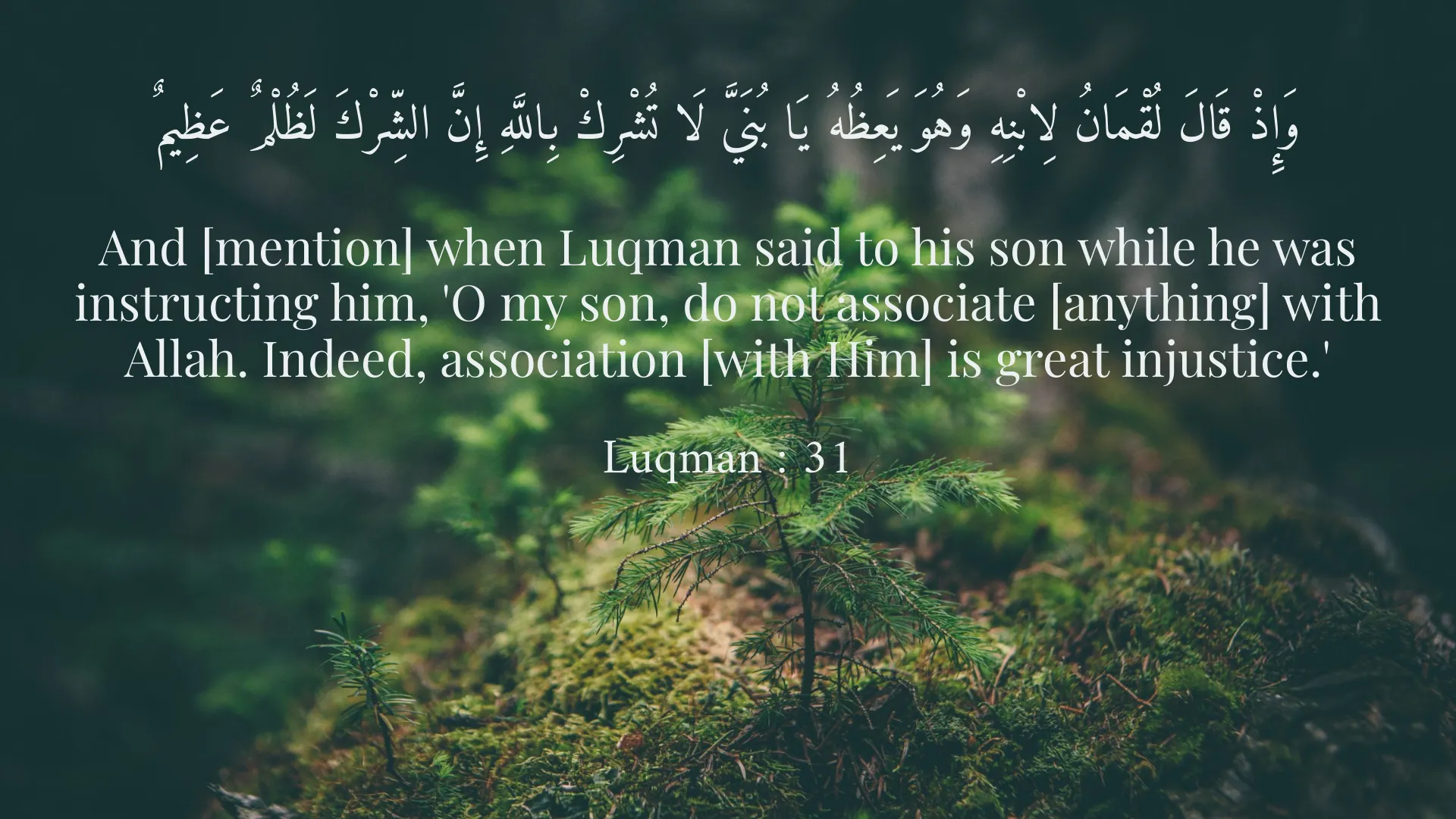
وَإِذْ قَالَ لُقْمَانُ لِابْنِهِ وَهُوَ يَعِظُهُ يَا بُنَيَّ لَا تُشْرِكْ بِاللَّهِ إِنَّ الشِّرْكَ لَظُلْمٌ عَظِيمٌ
And [mention] when Luqman said to his son while he was instructing him, 'O my son, do not associate [anything] with Allah. Indeed, association [with Him] is great injustice.'
Luqman : 31
هُوَ الَّذِي يُصَوِّرُكُمْ فِي الأَرْحَامِ كَيْفَ يَشَاءُ ۚ لَا إِلَهَ إِلَّا هُوَ الْعَزِيزُ الْحَكِيمُ
He it is Who forms you in the wombs as He wills. There is no deity except Him, the Exalted in Might, the Wise.
Al-Imran : 6
وَأْمُرْ أَهْلَكَ بِالصَّلاةِ وَاصْطَبِرْ عَلَيْهَا ۚ لَا نَسْأَلُكَ رِزْقًا ۖ نَحْنُ نَرْزُقُكَ ۖ وَالْعَاقِبَةُ لِلتَّقْوَى
And command your family to pray and be steadfast therein. We do not ask you for provision; We provide for you. And the outcome belongs to righteousness.
Ta-Ha : 132
Short Story
Once upon a time, a father named Hassan decided to instill good behaviors in his children. Every day, he would set aside time for reading the Quran and reflecting on its verses with his family. He would emphasize that respect for others and love for God should be a priority in life. Gradually, his children began to embrace loving and ethical behaviors, and Hassan witnessed positive changes in their lives.