Quranic Answer
Maintaining humility and modesty in the face of calamities and hardships is one of the most important ethical and spiritual virtues emphasized extensively in the Holy Quran. Calamities and trials are an integral part of human life, and Allah Almighty explicitly states in the Quran that He tests His servants with various matters to gauge their faith and patience. This Quranic perspective forms the basis of our understanding of how to deal with difficulties and how to maintain humility even in the midst of adversity. Understanding that all events, whether pleasant or unpleasant, originate from Allah and are based on His profound wisdom, is the first step towards true humility. One of the most central concepts in this regard is "patience" (Sabr). Patience is not merely passive endurance of hardships; rather, it is active perseverance in the face of problems, self-control during anger or despair, and steadfastness in obedience to Allah. The Quran repeatedly calls believers to patience and promises immense reward for those who are patient. In Surah Al-Baqarah, verses 155 and 156, Allah says: "And We will surely test you with something of fear and hunger and a loss of wealth and lives and fruits, but give good tidings to the patient, Who, when disaster strikes them, say, 'Indeed we belong to Allah, and indeed to Him we will return.'" These verses clearly indicate that calamities are part of Allah's divine tradition to test His servants, and the correct response to them is reliance on Allah and acknowledging His absolute ownership. Humility here means accepting that we belong to Allah, and everything we possess is His gift and can be taken back at any moment. This deep understanding prevents arrogance in times of ease and haughtiness when facing difficulties. Patience in the face of loss is a sign of submission and humility before the Creator's will, not a sign of weakness. Rather, it is the peak of spiritual strength that makes a person resilient against storms and brings peace to their heart. Humility in the face of calamities is also intertwined with the concept of "reliance on Allah" (Tawakkul). Tawakkul means entrusting affairs to Allah after exerting effort. In the midst of adversity, when a person feels powerless and weak, and sees that all human measures and solutions have reached a dead end, reliance on Allah grants them peace and strength. This means that the individual realizes that ultimate control of affairs is not in their hands, and only Allah possesses absolute power and can resolve difficulties. This awareness inherently brings humility, as one sees oneself as very small before the infinite grandeur and power of Allah and accepts that without His help, nothing can be achieved. Surah At-Talaq, verse 3, states: "And whoever relies upon Allah - He is sufficient for him. Indeed, Allah will accomplish His purpose. Allah has already set for everything a [decreed] extent." This verse provides a crucial lesson in humility and complete trust in divine providence in every situation, even in the most difficult circumstances. Tawakkul does not mean withdrawing or abandoning effort; rather, it means striving with all one's being and leaving the outcome to the Most Wise and Most Capable. This is the epitome of humility, where a person acknowledges that their knowledge and abilities are limited, and only Allah knows what is best for them. In addition to patience and reliance, "gratitude" (Shukr) also plays a significant role in maintaining humility. It might seem strange how one can be grateful during a calamity, but the Quranic perspective is that even in adversity, there are aspects for which to be grateful. For example, gratitude that the calamity was not greater, gratitude for the opportunity to repent and return to Allah, gratitude for being tested and having one's spiritual ranks elevated, and gratitude that Allah still pays attention to us and has not abandoned us. The Prophet Muhammad (peace be upon him) said: "If Allah wills good for a servant, He afflicts him [with trials] so that he cries out to Him." This perspective of calamity as an opportunity to draw closer to Allah and be purified from sins is the epitome of humility and prevents one from pride and self-admiration. Arrogance usually stems from blessings and abundance, where a person becomes proud instead of grateful; but when a person remembers Allah's hidden blessings even in hardships and shows gratitude, they escape the trap of pride and attain the status of gratitude and humility. Surah Ibrahim, verse 7, states: "And [remember] when your Lord proclaimed, 'If you are grateful, I will surely increase you [in favor]; but if you deny, indeed, My punishment is severe.'" Even in calamity, gratitude is a way to maintain modesty and increase divine favor, causing a person to always see themselves as needy and a servant. Furthermore, the Holy Quran directly prohibits arrogance and boasting, whether in times of ease or hardship. Humility in the face of calamities means not complaining about fate and divine decree, not boasting about past possessions, and not being conceited about one's worship or good deeds. Surah Luqman, verse 18, states: "And do not turn your cheek in contempt toward people or walk through the earth exultantly. Indeed, Allah does not like those who are self-deluded and boastful." This verse indicates that humility is a permanent characteristic that should accompany a person at all times, whether in ease or hardship. When a person remains humble in the face of calamity, they are in fact acknowledging that everything is from Allah and that they have no power to escape His divine will. This acceptance saves them from pride and leads them towards reverence and complete submission. This belief that all matters are in the hands of Allah's absolute power and that we are merely weak servants on the path of His will is the deepest root of humility, which reaches its peak during calamity. Ultimately, maintaining humility in the face of calamities requires a deep understanding that all events and occurrences, whether good or bad, happen within the framework of divine wisdom and knowledge. Allah Almighty is aware of everything that happens, and not a single leaf falls without His knowledge. This profound belief in divine decree (Qadar) brings peace to the human soul and makes one a humble individual who neither becomes intoxicated with pride during victory nor is overcome by despair and hopelessness during defeat. Rather, they always see themselves as a poor servant before an All-Rich, All-Wise Lord, who can test them at any moment and elevate or lower them. In such a state, calamities do not break a person; instead, they elevate them to a higher degree of knowledge and reliance on Allah, teaching them that real power belongs only to God, and humans must always be humble and submissive before Him. This path is the way of the Prophets and the righteous, who, in the most challenging conditions, demonstrated the epitome of humility and surrender, becoming role models for all humanity. Their lives serve as living examples of the truth that humility is not weakness but strength itself; a strength that originates from connection to the ultimate source of power and makes a person resilient against any storm, leading to true worldly and eternal success.
Related Verses
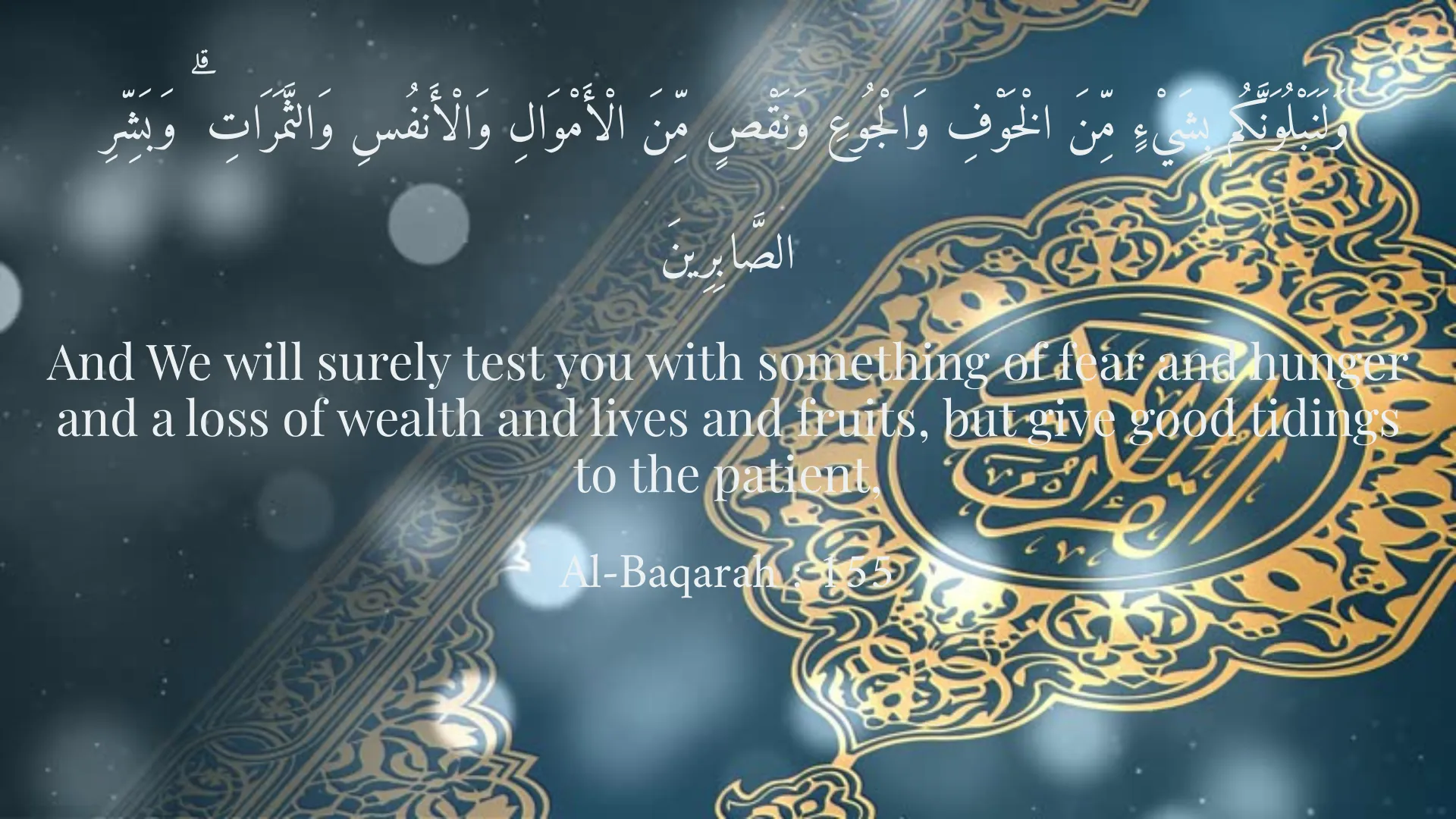
وَلَنَبْلُوَنَّكُم بِشَيْءٍ مِّنَ الْخَوْفِ وَالْجُوعِ وَنَقْصٍ مِّنَ الْأَمْوَالِ وَالْأَنفُسِ وَالثَّمَرَاتِ ۗ وَبَشِّرِ الصَّابِرِينَ
And We will surely test you with something of fear and hunger and a loss of wealth and lives and fruits, but give good tidings to the patient,
Al-Baqarah : 155
الَّذِينَ إِذَا أَصَابَتْهُم مُّصِيبَةٌ قَالُوا إِنَّا لِلَّهِ وَإِنَّا إِلَيْهِ رَاجِعُونَ
Who, when disaster strikes them, say, 'Indeed we belong to Allah, and indeed to Him we will return.'
Al-Baqarah : 156
وَلَا تُصَعِّرْ خَدَّكَ لِلنَّاسِ وَلَا تَمْشِ فِي الْأَرْضِ مَرَحًا ۖ إِنَّ اللَّهَ لَا يُحِبُّ كُلَّ مُخْتَالٍ فَخُورٍ
And do not turn your cheek in contempt toward people or walk through the earth exultantly. Indeed, Allah does not like those who are self-deluded and boastful.
Luqman : 18
وَمَن يَتَوَكَّلْ عَلَى اللَّهِ فَهُوَ حَسْبُهُ ۚ إِنَّ اللَّهَ بَالِغُ أَمْرِهِ ۚ قَدْ جَعَلَ اللَّهُ لِكُلِّ شَيْءٍ قَدْرًا
And whoever relies upon Allah - He is sufficient for him. Indeed, Allah will accomplish His purpose. Allah has already set for everything a [decreed] extent.
At-Talaq : 3
Short Story
In Saadi's Gulistan, it is narrated that there was a very proud and tyrannical king who boasted of his wealth and power and never showed humility. One day, an enemy army attacked his city and plundered all his possessions. The king was forced to flee into the desert, and in the height of hunger and thirst, he encountered a shepherd. The shepherd kindly gave him shelter and offered him a dry piece of bread and a cup of water. The king, who until then had considered himself the highest, felt ashamed in his heart upon witnessing this selfless kindness and realizing the worthlessness of fleeting wealth and power. For the first time, he tasted the true essence of humility. He realized that true honor lies in pure hearts and helping fellow human beings, not in crowns, thrones, or worldly possessions. This bitter experience transformed him into a humble and kind person, and he lived the rest of his life guided by the lesson he learned from this calamity, never allowing pride back into his heart.