Quranic Answer
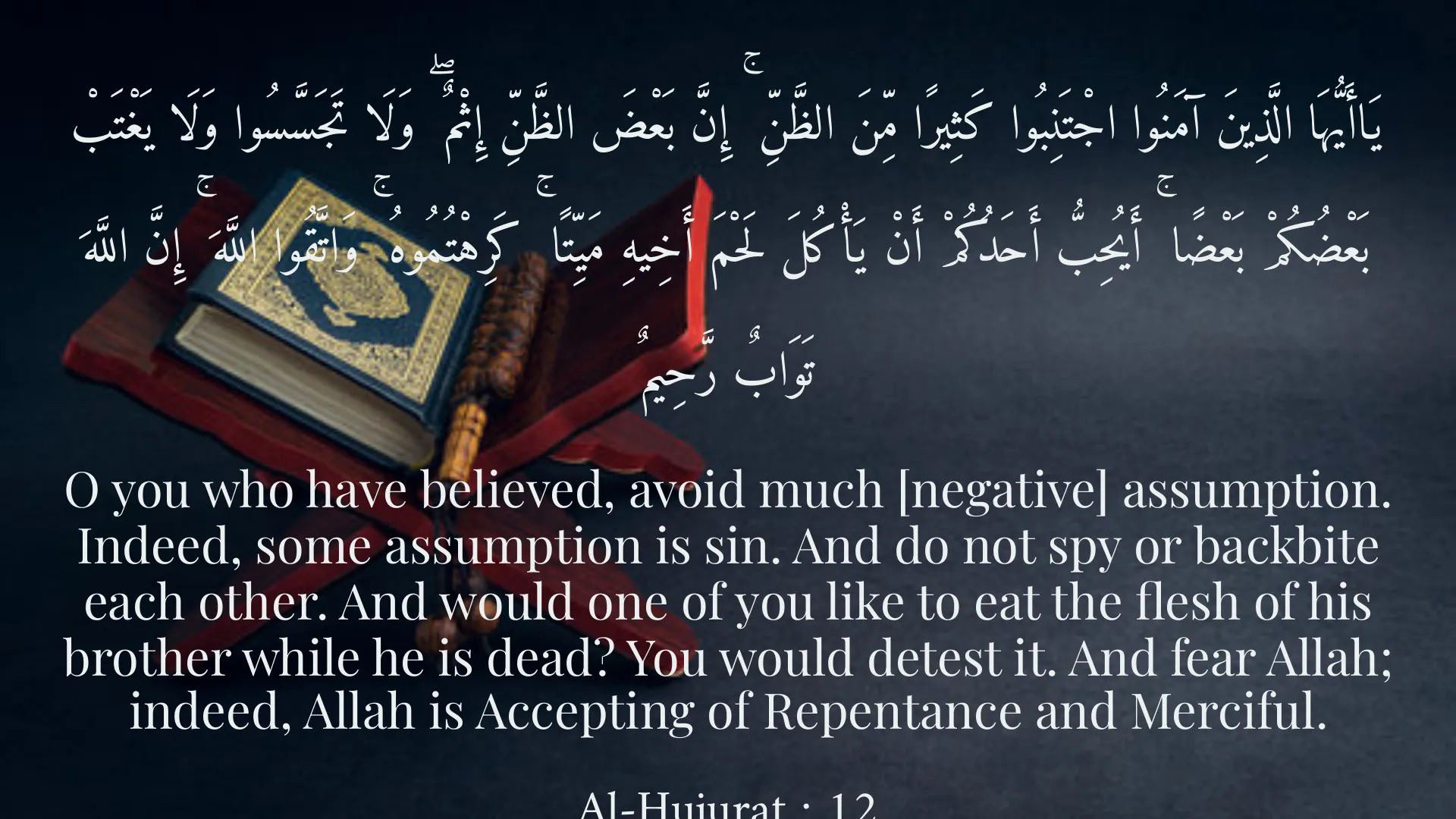
In the Holy Quran, there are numerous teachings that provide guidance for safeguarding ourselves against the slips of the tongue and committing to God's words. The significance of speech is paramount in Islamic teachings, as words hold immense power — they can uplift or destroy, heal or wound. The consequences of a careless utterance can have far-reaching implications for individuals and communities alike. It is within this context that Surah Al-Hujurat, verse 12, offers a clear divine instruction regarding our speech and interpersonal conduct. Allah states, "O you who have believed, avoid much [negative] assumption. Indeed, some assumption is sin. And do not spy or backbite each other. And would one of you like to eat the flesh of his brother while he is dead? You would detest it. And fear Allah; indeed, Allah is Accepting of Repentance and Merciful." This verse serves as a powerful reminder of the dangers that can emerge from our tongues, emphasizing that verbal slips can be rooted not only in intention but also in unwarranted assumptions and gossip. The opening admonition to avoid negative assumptions is striking, as it highlights a common pitfall that many fall into — assuming the worst of others. This can lead to a cascade of negative thoughts and ultimately harmful speech. The Quran recognizes that some assumptions can indeed lead to sins. This can translate to gossip or backbiting, which are both offensive actions that serve to erode trust and create division within the community. The metaphor of consuming the flesh of a dead brother is vivid and underscores the disgust one should feel towards such behavior. This analogy forces us to confront the moral repugnance associated with backbiting and to reconsider how we communicate about others when they're not present. Furthermore, the directive not to spy or backbite goes against the foundational principles of trust and respect that ought to characterize human interactions, especially among believers. Both action and intention should be guided by the precept of wishing the best for one another, which is why criticism and scrutiny not only harm others but reflect poorly on ourselves. When we engage in such negative speech, we not only tarnish our relationship with others but also with Allah as these actions represent a departure from the piety that is expected of believers. Additionally, in Surah Sad, verse 18, God underscores the importance of fostering friendships and love among believers to avoid verbal conflicts. This idea repeats the significance of positive communication in building relationships that are resilient to misinterpretations and conflicts. Positive relationships cultivated through sincere and considerate speech create an environment in which individuals feel safe and valued. When love and understanding serve as a basis for relationships, it naturally discourages negative speech and fosters an atmosphere of harmony and support. In today’s fast-paced world, where social interactions often occur in brief messages and social media interactions, the risk of verbal slips is magnified. The absence of context in text exchanges can lead to misunderstandings and negative assumptions that may not have arisen in face-to-face interactions. Therefore, Islamic teachings emphasize mindfulness in communication, encouraging believers to take a moment before speaking or messaging to consider the potential impact of their words. To prevent slips of the tongue, it is essential to cultivate a mindset of self-restraint and reflection. This can be achieved through regular practices such as engaging in prayer and contemplation, which help create a sense of awareness of our speech and its consequences. Moreover, it is beneficial to surround ourselves with individuals who embody kindness and respect in their speech. The company we keep can significantly affect our behavior, encouraging us to emulate positive communication habits. Moreover, fostering piety and consciousness of Allah plays a vital role in transforming our speech into words that are constructive and uplifting. When believers have a constant awareness of their Creator, they are more likely to consider the implications of their words and strive to articulate messages that align with divine commandments. Discipline in speech becomes an extension of one's faith, leading to verbal expressions that reflect compassion, empathy, and understanding. Cultivating virtues such as patience, humility, and forgiveness can further aid in minimizing verbal slips. When we practice patience, we allow ourselves the space and time to consider the impact of our responses. Humility reminds us that our perceptions may be flawed, and forgiveness allows for healing when words do pierce others’ hearts. Engaging in self-assessment regarding our speech and becoming open to constructive feedback from trusted companions can also enhance our communication and help prevent lapses. Ultimately, Islam encourages believers to elevate their speech. The Quran illustrates that our words must hold the potential for goodness; thus, even when addressing difficulties or grievances, our expressions should seek resolution rather than conflict. By focusing on what we say, we not only protect ourselves from the sins of poor speech but also align ourselves with a broader mission of spreading positivity and understanding in our communities. Therefore, the practice of mindful speech must be integrated into our daily lives as a reflection of both our personal growth and our commitment to living out the values of our faith. In conclusion, the Holy Quran provides clear directives that can profoundly shape our interactions and safeguard against the perils that arise from careless speech. The teachings in Surah Al-Hujurat and Surah Sad are reminders of the heavy responsibility we bear regarding our words. By establishing a foundation of love, empathy, and a steady remembrance of God, believers can aspire to transform their communication into a source of strength and unity, ultimately contributing to a more compassionate society.
Related Verses
يَاأَيُّهَا الَّذِينَ آمَنُوا اجْتَنِبُوا كَثِيرًا مِّنَ الظَّنِّ ۚ إِنَّ بَعْضَ الظَّنِّ إِثْمٌ ۖ وَلَا تَجَسَّسُوا وَلَا يَغْتَبْ بَعْضُكُمْ بَعْضًا ۚ أَيُحِبُّ أَحَدُكُمْ أَنْ يَأْكُلَ لَحْمَ أَخِيهِ مَيِّتًا ۚ كَرِهْتُمُوهُ ۚ وَاتَّقُوا اللَّهَ ۚ إِنَّ اللَّهَ تَوَابٌ رَّحِيمٌ
O you who have believed, avoid much [negative] assumption. Indeed, some assumption is sin. And do not spy or backbite each other. And would one of you like to eat the flesh of his brother while he is dead? You would detest it. And fear Allah; indeed, Allah is Accepting of Repentance and Merciful.
Al-Hujurat : 12
وَلاَ تَكُونُوا كَالَّذِينَ تَفَرَّقُوا وَاخْتَلَفُوا من بَعْدِ مَا جَاءَهُمُ الْبَيِّنَاتُ ۖ وَأُولَـٰئِكَ لَهُمْ عَذَابٌ عَظِيمٌ
And be not like those who divided and became divisions after the clear proofs had come to them. And those have a great punishment.
Sad : 18
Short Story
Once upon a time, there was a young man named Reza who was sitting with his friends in a park. They began discussing their neighbor, and each took turns backbiting. Suddenly, Reza remembered a Quranic verse that said, 'Do not backbite one another.' He told his friends that this behavior was wrong and that they should help one another and speak good words. His friends realized this and decided from that day on to only speak well about others.